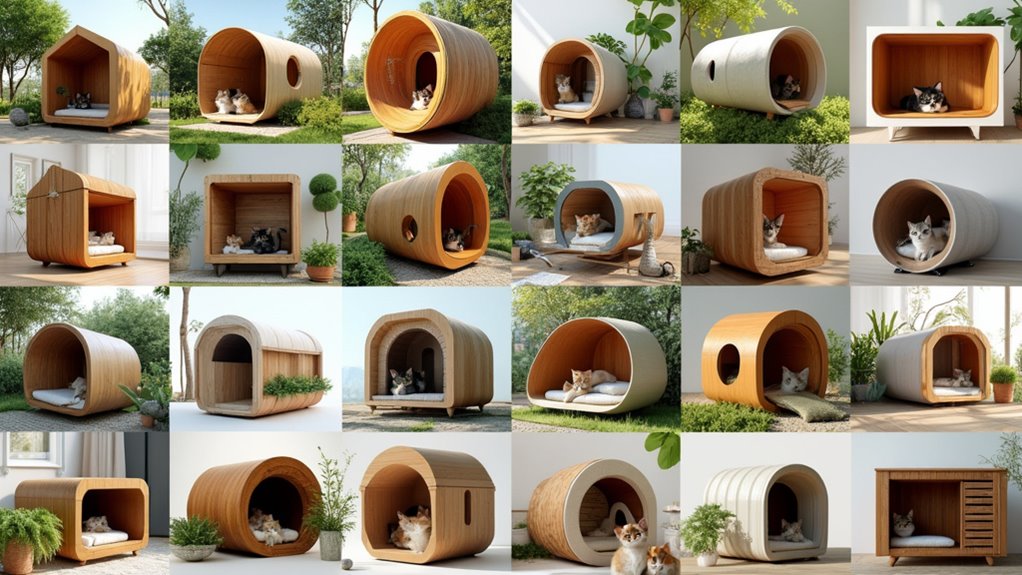
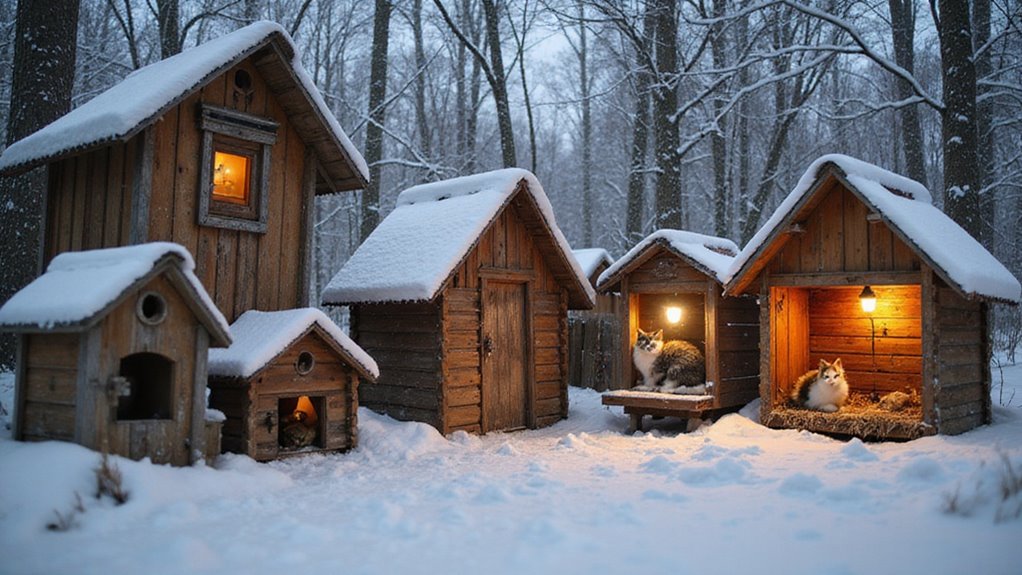
When winter sets in, ensuring warmth for feral cats becomes a priority. You’ll find there’s a range of creative and functional designs that can help these resilient creatures face the chill. From insulated wooden shelters to clever DIY solutions, there’s something for every budget. Let’s explore these 15 innovative ideas that promise comfort and safety, giving feral cats a cozy refuge while enhancing their winter experience. You’ll be surprised at how simple materials can make a world of difference.
Insulated Wooden Cat House
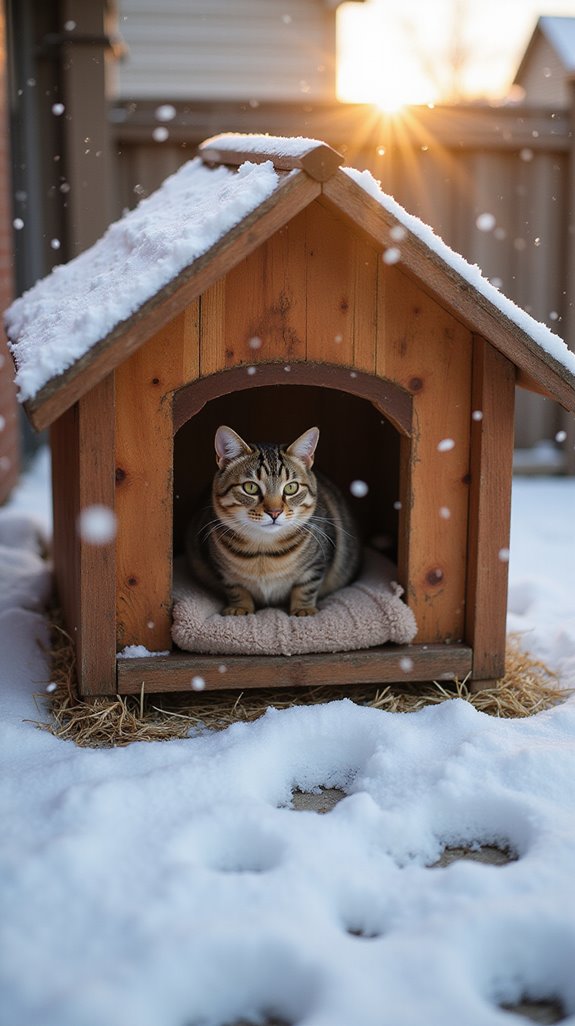
When the winter chill creeps in, creating a warm haven for feral cats becomes essential, and an insulated wooden cat house could be the perfect solution for their needs.
This structure offers protection from harsh winds and freezing temperatures, guaranteeing your feline friends stay cozy. You can customize the design, incorporating cat living room ideas by painting it to match your outdoor decor or adding a small porch for added charm. Additionally, consider integrating a creative dog feeding station to ensure all pets in your care are well accommodated.
Confirm proper insulation using materials like foam boards or straw to keep it warm. A well-built wooden house isn’t only functional but also a beautiful addition to your garden.
Styrofoam Cooler Shelter
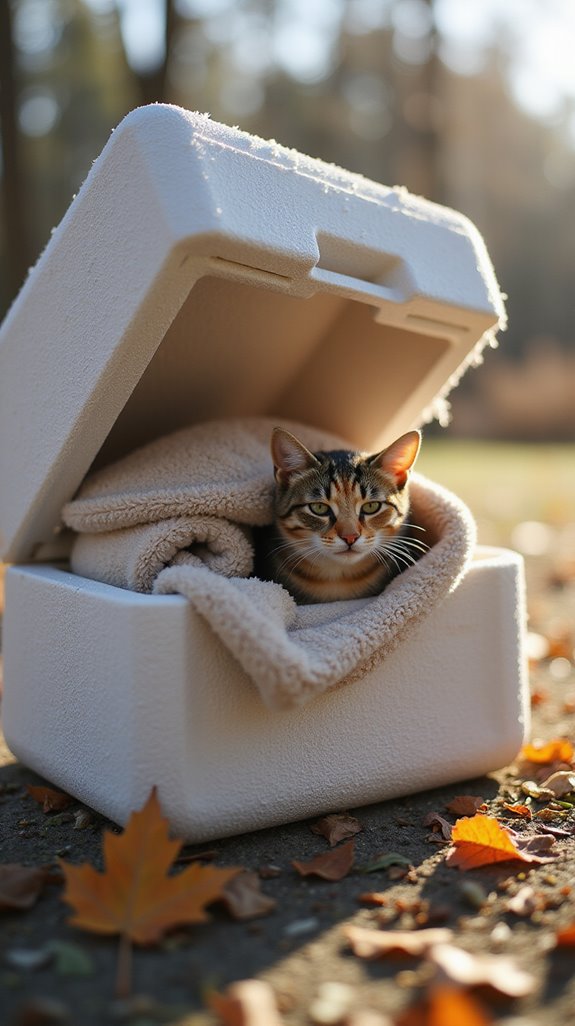
A simple yet effective solution for feral cats during frigid months is a Styrofoam cooler shelter.
These coolers provide excellent insulation, keeping your feline friends warm and safe from harsh weather. Additionally, providing proper shelter is essential for ensuring the health of your pets, especially during cold weather.
Here’s how to make one:
- Select a cooler: Choose a medium-sized Styrofoam cooler with a tight-fitting lid for ideal warmth.
- Create an entrance: Cut a small opening on one side, ensuring it’s low enough for cats to enter easily while keeping the elements out.
- Add bedding: Line the interior with straw or blankets to retain heat and comfort.
Your local cats will thank you for your thoughtful effort!
Repurposed Storage Bin Home

Repurposing a storage bin into a cozy home for feral cats can be a rewarding and practical project, especially as winter edges closer. Start by choosing a sturdy, insulated bin, ideally with a lid. You’ll want to cut an entrance hole, ensuring it’s big enough for your feline friends yet small enough to keep the warmth inside. Line the bottom with straw or blankets for extra comfort. Place the shelter in a quiet, safe location, and consider using multiple bins to accommodate a larger cat colony. Additionally, providing homemade cat food can help ensure the health of the cats during the colder months. With minimal effort, you can create a snug retreat that keeps these cats warm and protected.
Elevated Cat House With Heat Source
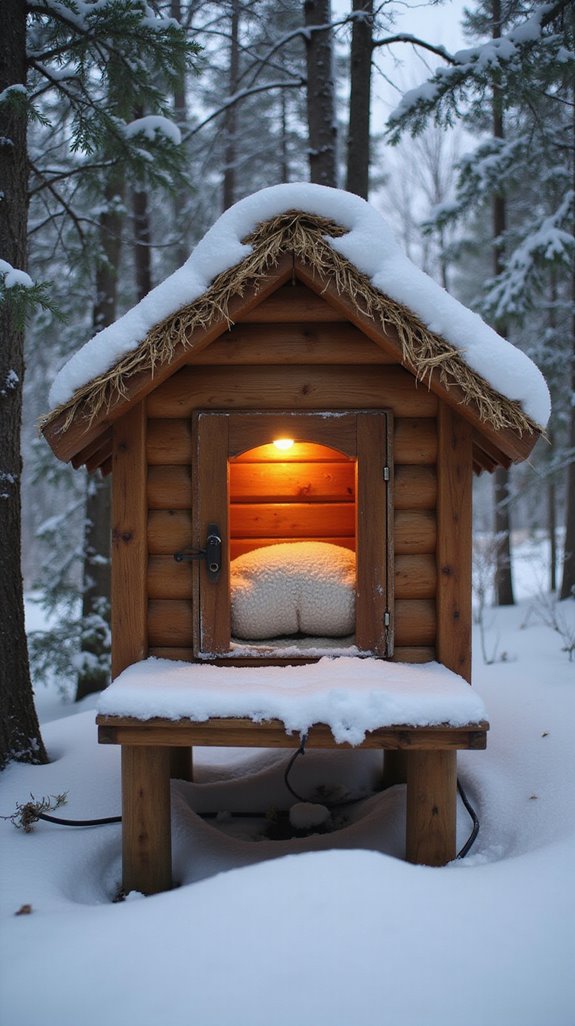
Creating an elevated cat house with a heat source is a fantastic way to provide warmth and shelter for feral cats during the chilly months.
By raising the house off the ground, you protect it from cold and dampness, and adding a heat source guarantees comfort.
Here are some ideas to contemplate:
- Heated Pad: Place a pet-safe heated pad inside for a cozy spot where they can snuggle.
- Solar Panel: Use a solar-powered heating element to generate warmth during sunlight hours.
- Insulated Walls: Insulate the walls with foam or straw to retain heat effectively.
Additionally, consider incorporating creative design elements to enhance the visual appeal of the cat house while providing shelter.
These enhancements create a welcoming oasis for your furry friends!
DIY Pallet Cat Shelter
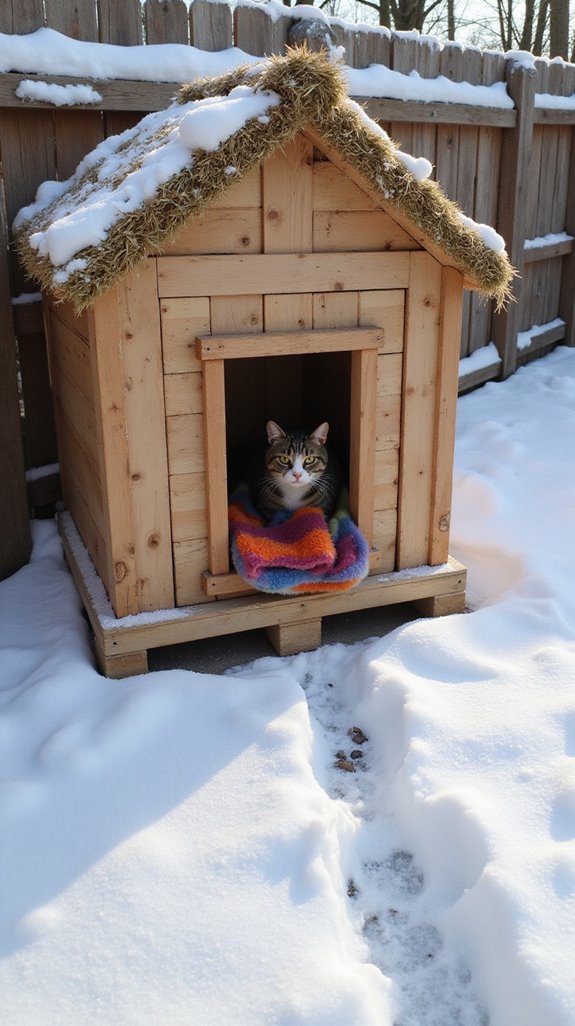
Transforming old pallets into a DIY cat shelter not only saves money but also provides a sturdy, warm haven for feral cats during harsh winter months.
Start by stacking two pallets to create an insulated base and secure the layers with screws. Add a third pallet roof to shield against rain and snow.
You can line the interior with blankets for extra warmth, but make certain there’s enough space for the cats to move comfortably.
Position it in a sheltered area, away from harsh winds. Additionally, consider incorporating cozy bedding for larger pets to maximize comfort.
With just a little effort, you’ll create a snug retreat that offers safety and comfort for wandering felines!
Straw-Insulated Cat House
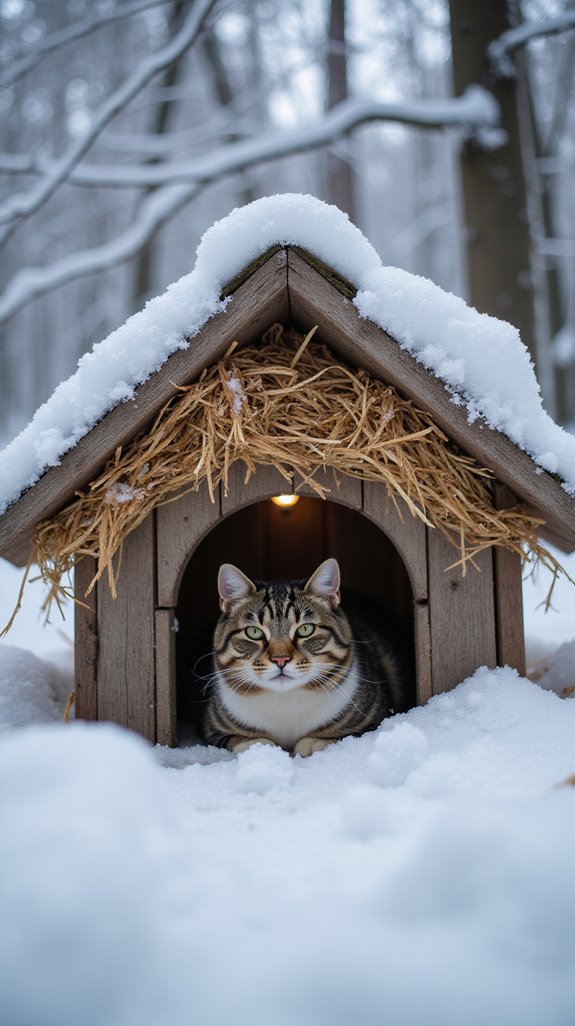
An incredible way to provide warmth for feral cats during freezing temperatures is by building a straw-insulated cat house. This type of shelter is efficient and cozy, allowing cats to stay snug and safe.
Here’s how to make it effective:
- Use Straw for Insulation: Fill the walls and floors with dry straw; it traps heat and keeps moisture out.
- Elevate the House: Place the shelter off the ground to prevent dampness and cold from seeping in.
- Create a Windbreak: Position a flap or add extra walls that shield the entrance from harsh winds.
Additionally, ensuring that the shelter is well-ventilated can prevent moisture buildup and keep your furry friends healthy. Your furry friends will thank you!
Compact Igloo Style Shelter
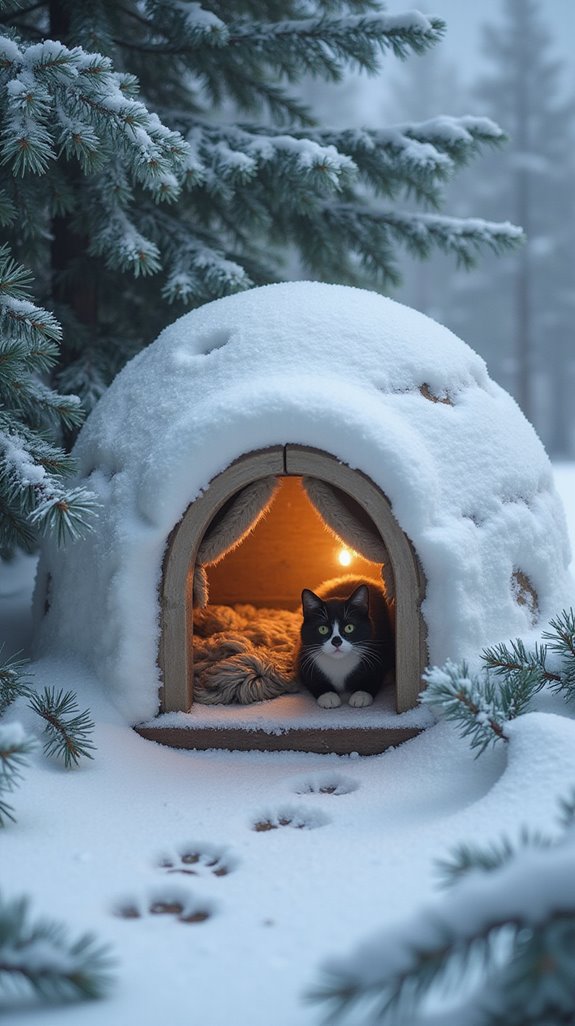
When temperatures plummet, a compact igloo-style shelter serves as an ideal refuge for feral cats, offering not just warmth, but a cozy nook that feels safe and secure.
These structures, often made from durable materials like polycarbonate or insulated plastic, keep the chilly wind at bay. Their circular shape prevents snow accumulation while promoting heat retention.
Inside, you can add straw or blankets for extra comfort, making it inviting. Position it in a quiet, sheltered area, and you’ve created a welcoming haven.
Additionally, ensuring that your feral cat has the right dog collar can also help keep them safe while they venture outdoors.
With a little effort, you’re helping guarantee that feral cats stay warm and protected throughout the harsh winter months.
Cardboard Box With Mylar Lining
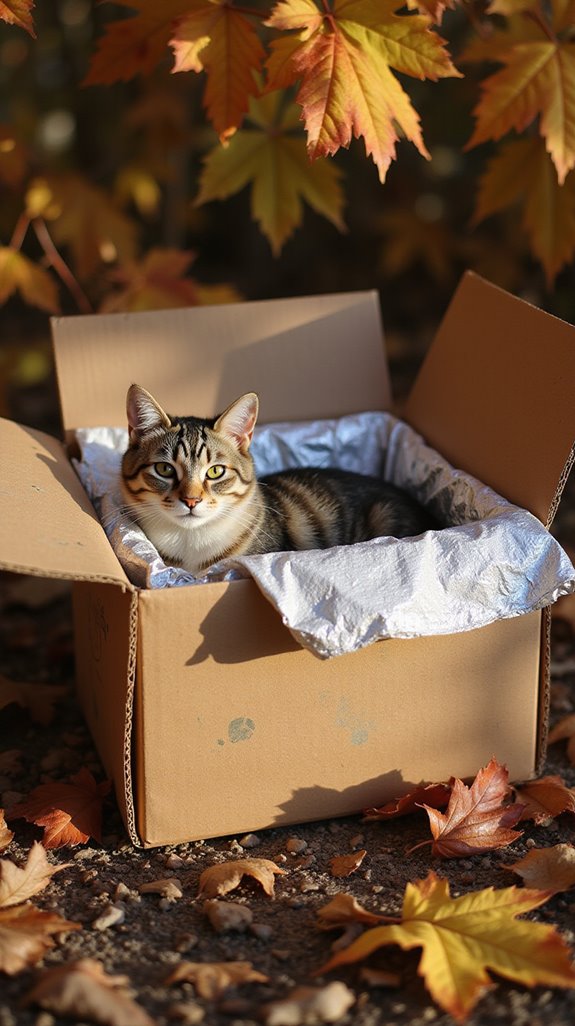
For a budget-friendly yet effective solution to keep feral cats warm during the frigid months, a cardboard box lined with Mylar can be surprisingly effective.
Mylar’s reflective properties help retain heat, keeping your feline friends cozy. To create this simple shelter, follow these steps:
- Choose a sturdy cardboard box: Make sure it’s large enough for cats to comfortably enter and curl up.
- Line the inside with Mylar: Secure the shiny side inward to reflect body heat.
- Add a soft bedding layer: Use straw or fleece for extra warmth and comfort.
In addition to this warm shelter, consider using natural ingredients for homemade grooming solutions, as they can enhance your pets’ coat health.
Your furry buddies will thank you for their snug retreat!
Conventional Doghouse Modification

Transforming a conventional doghouse into a cozy haven for feral cats is a rewarding project that can make a significant difference in their comfort during harsh winter months. To successfully modify the doghouse, consider these essential steps:
| Step | Description |
|---|---|
| Insulation | Add foam or straw for warmth |
| Entrances | Create a small flap for easy access |
| Ventilation | Drill holes for fresh air circulation |
| Weatherproofing | Paint or seal with waterproof material |
Additionally, you may want to include some cozy bedding materials to enhance comfort inside the doghouse.
PVC Pipe Cat House

Creating a PVC pipe cat house is a fantastic way to provide shelter for feral cats during the chilling winter months. This affordable, durable option can keep your feline friends warm and safe. Additionally, using a design that includes insulation materials can significantly enhance heat retention within the house. Here’s how you can build it:
- Materials: Gather PVC pipes, connectors, insulation, and a waterproof covering for protection.
- Design: Create a simple, insulated box shape with an entrance large enough for cats but small enough to trap heat.
- Placement: Position the house in a discreet, sheltered spot to keep it out of harsh winds.
With a little effort, you can create a cozy retreat for those furry wanderers!
Heated Cat House With Electrical Heating Pad
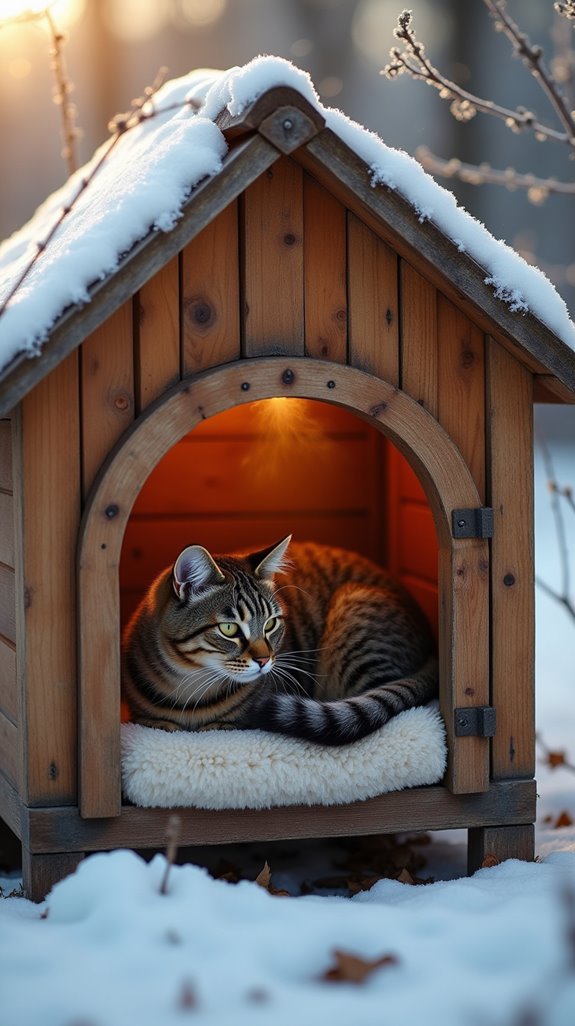
A heated cat house with an electrical heating pad can be a game changer for feral cats braving the bitter cold. Imagine providing a cozy sanctuary, where these resilient creatures can escape harsh winter winds.
The heating pad, typically thermostatically controlled, delivers warmth directly to the sheltered space, ensuring a toasty retreat. You can even insulate the house to maximize heat retention.
Place it in a discreet area where the cats feel safe, and you’ll create a perfect haven. This simple addition not only protects them from the elements but also improves their overall well-being, encouraging them to thrive in winter’s chill.
Woven Basket Cat Shelter
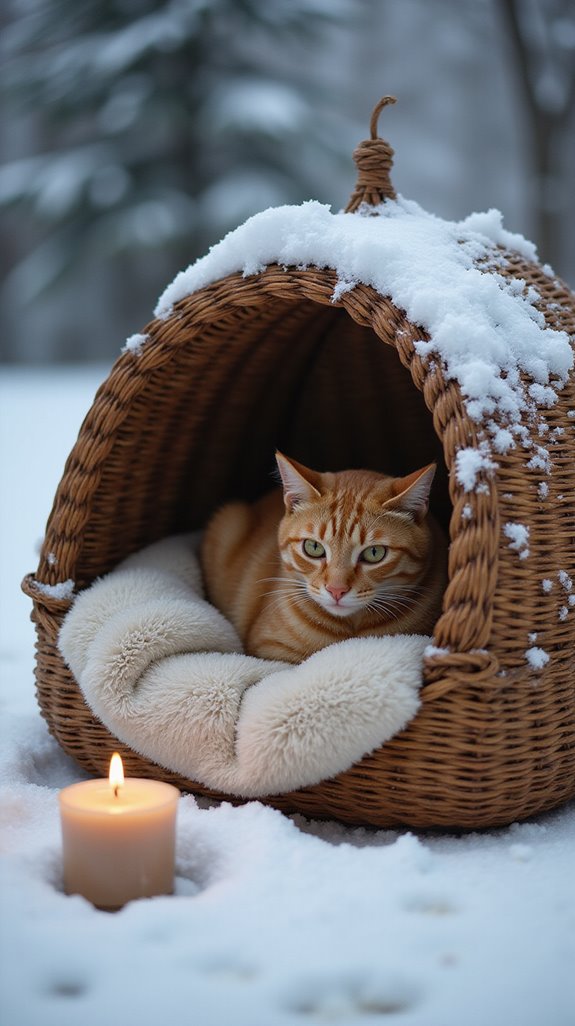
For those looking to shelter feral cats from the cold, a woven basket cat shelter can serve as a charming yet functional option.
These cozy havens provide warmth and safety while keeping those declawed adventurers snug.
To create your own woven basket cat shelter, consider these key elements:
- Insulation: Line the basket with soft, weather-resistant materials like blankets or straw.
- Entrance: Make sure there’s a small, covered entrance to protect against wind and snow.
- Location: Place the shelter in a discreet, sheltered spot, away from harsh elements, but visible enough for cats to notice.
Your furry friends will appreciate the effort!
Recycled Tire Cat House

Imagine transforming old tires into a cozy haven for feral cats, providing them shelter from harsh winter conditions.
Start by cleaning the tires thoroughly to guarantee a safe environment.
Stack two tires, placing a sturdy board between them for insulation, and fill the inner cavity with straw or insulating material. A small opening cut into the side allows easy access while maintaining warmth.
Paint the exterior to resist moisture and blend into the surroundings.
By using recycled materials, you’re not only helping feral cats but also supporting eco-friendly practices.
It’s a fulfilling project that makes a real difference in their lives!
Multi-Compartment Shelter Design
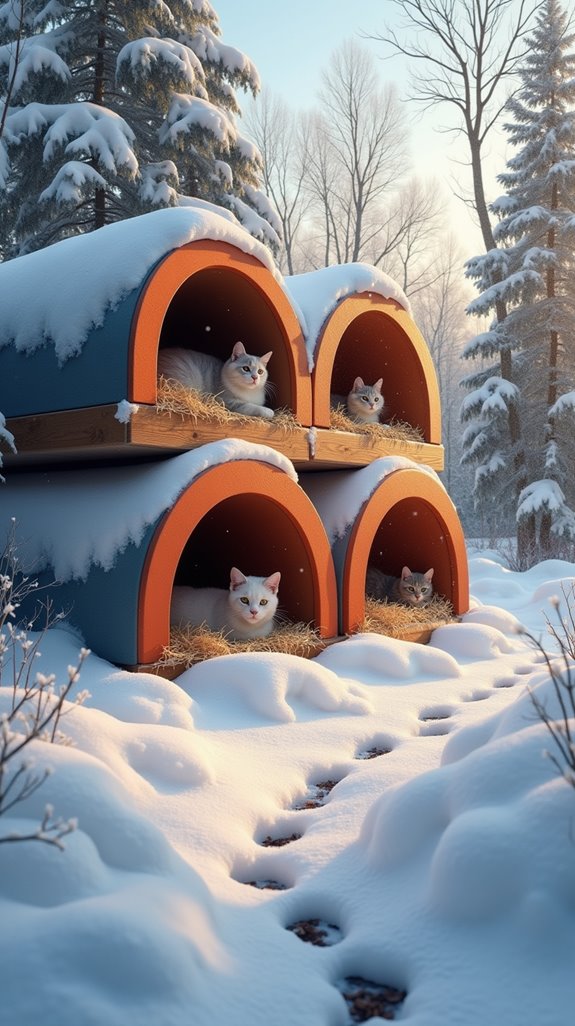
When considering how to protect feral cats during the frigid winter months, a multi-compartment shelter design stands out as a brilliant solution. This approach not only offers warmth but also creates a safe haven for multiple cats to cozy up together.
Here are three key benefits:
- Isolation: Each compartment can be insulated, ensuring every cat stays warm, even on the coldest days.
- Safety: It provides a secure space away from predators, giving cats peace of mind.
- Socialization: Cats can interact while still having their own space, fostering a sense of community.
These shelters can greatly enhance a feral cat’s winter experience.
Camouflaged Outdoor Cat House
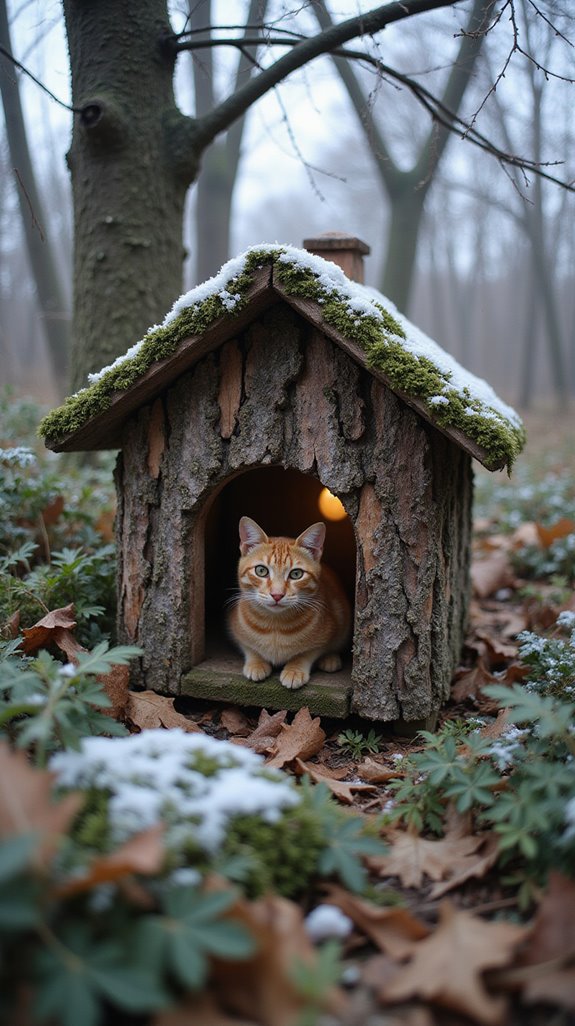
Crafting a camouflaged outdoor cat house can be a game-changer for feral cats braving the cold. Blending seamlessly with the environment, these shelters keep your feline friends warm while protecting them from predators. Consider using natural materials like wood or faux rock finishes. Here’s a simple overview to get you started:
| Material | Insulation | Camouflage |
|---|---|---|
| Wood | Great for warmth | Look like trees |
| Faux Stone | Decent insulation | Mimics rocks |
| Straw | Good for cold nights | Blends in grass |
| Hay | Fair insulation | Hides in garden |
| Vinyl Covered | Weather-resistant | Looks like debris |
Your feral cats will thrive in their cozy hideaways!

Amr Mohsen is a software engineer who traded his keyboard for a leash — at least on weekends. His love for dogs inspired him to share what he learns as a dog owner and enthusiast, bringing a detail-oriented, research-driven perspective to every article he writes. If it’s about dogs, he’s probably already looked it up twice.