
Finding the right dog barrier can be a game changer for pet owners. Whether you’re trying to keep your pup safe from hazards or simply want to designate specific areas for play, there are plenty of creative solutions out there. Let’s jump int11 Genius Dog Barrier Ideas Every Pet Owner Needs to Try!
Keeping certain areas of your home dog-friendly while still maintaining boundaries can be a challenge. Smart dog barrier ideas help create a safe, stylish balance between open living and controlled spaces. From sleek built-in gates to hidden dog zones, these clever solutions blend beautifully into modern homes. Here are inspiring ideas that prove dog barriers can be both practical and design-forward.
Minimalist Hallway Dog Gate
This airy hallway feels bright and welcoming with warm wood flooring, soft neutral walls, and carefully placed decor. The simple white slatted gate blends seamlessly into the entryway, quietly defining space without blocking light or making the room feel closed off. For a dog, it creates a safe boundary while still allowing them to see the activity around the home.
To recreate this look, install a modern wooden slat gate in a white finish that matches your trim or wall color. Pair it with warm wood flooring, a large floor mirror, minimal console furniture, indoor plants, and soft neutral wall art to keep the space feeling calm and open.
For safety, choose a gate with secure hinges and a reliable latch. Slatted designs work best because they maintain airflow and visibility while preventing curious dogs from wandering into restricted rooms.
📸 Photo credit: Instagram @tambourinehome
Cozy Built-In Dog Viewing Nook
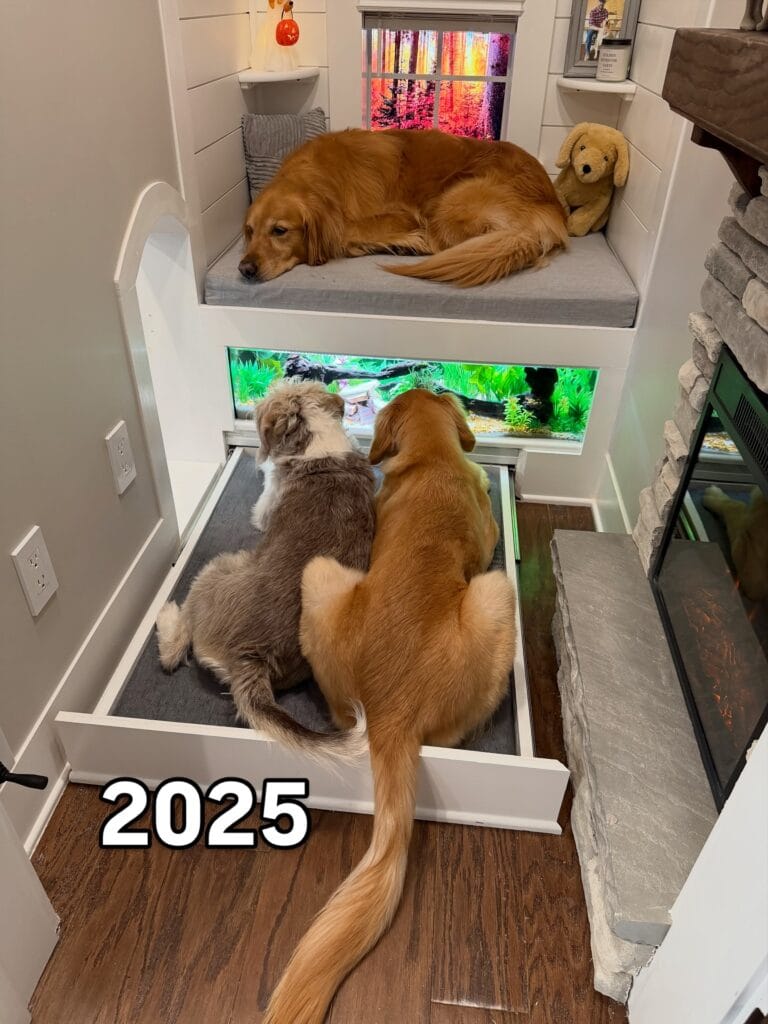
This clever dog nook feels like a miniature lounge built just for pups. A cozy elevated bed sits above a built-in aquarium window, creating a peaceful space where dogs can relax while watching the gentle movement of fish below. The soft lighting and snug design make it feel like a private retreat.
To recreate this setup, build a small recessed nook with a cushioned platform bed and integrate a glass aquarium panel beneath it. Add soft pillows, simple wall shelves, and warm accent lighting to make the area feel comfortable and inviting.
If building something similar, ensure proper ventilation and safe materials around the aquarium. Non-slip surfaces and washable cushions will also help keep the area clean and comfortable for everyday use.
📸 Photo credit: Instagram @aguyandagoldenn
Custom Dog Feeding Station Wall
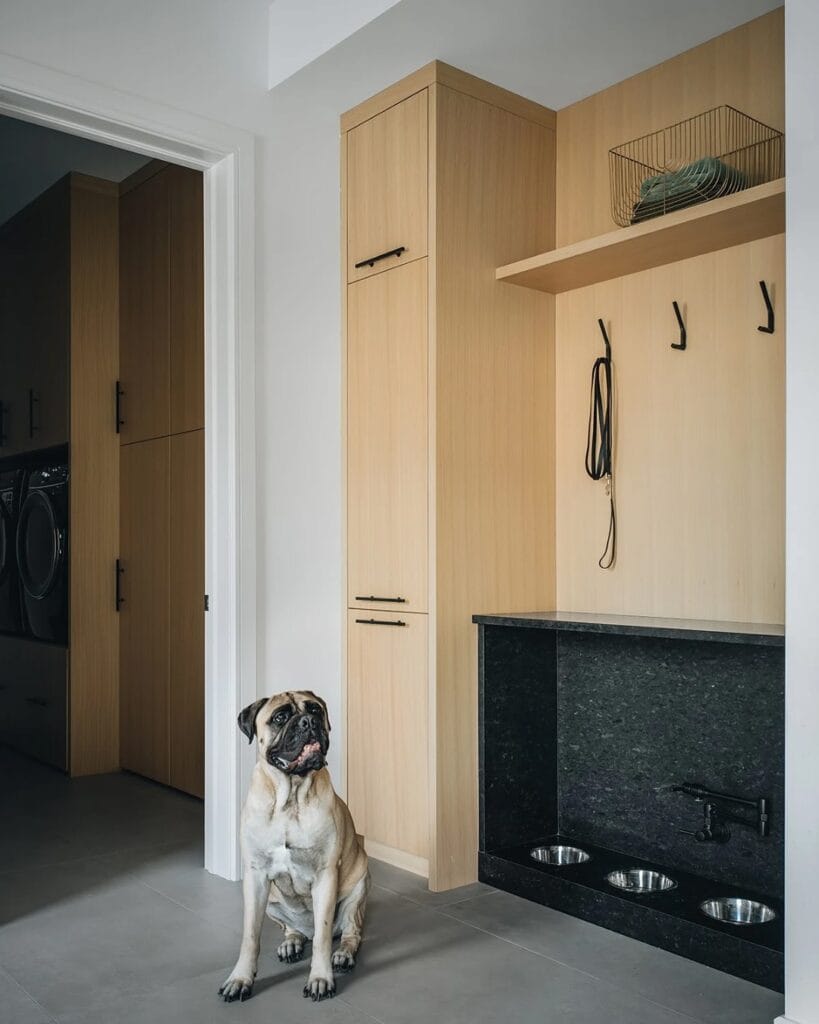
This sleek mudroom design proves that dog spaces can feel just as stylish as the rest of the house. The light wood cabinetry and dark stone feeding station create a modern contrast, while the built-in bowls keep everything tidy and organized. Dogs love the consistency of a dedicated feeding zone.
Recreate the look with tall minimalist cabinetry, a built-in stone or quartz counter cutout for stainless steel bowls, and wall hooks for leashes. Adding a small shelf above the feeding station helps store treats, towels, or grooming supplies.
Choose durable, water-resistant surfaces like stone or sealed wood to handle spills. Built-in feeding stations also help keep bowls from sliding around and reduce mess during mealtime.
📸 Photo credit: Instagram @dgi_designbuild
Compact Doorway Dog Barrier
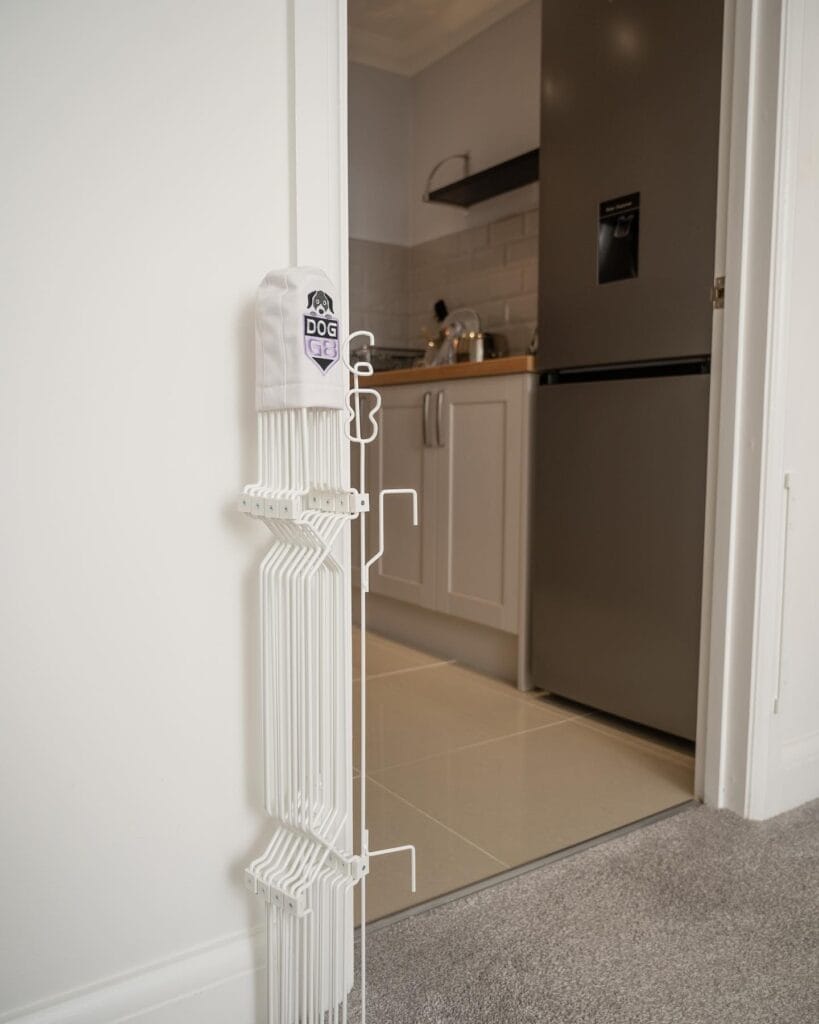
Sometimes the simplest dog barriers work best. This narrow doorway setup uses a slim vertical gate that blends neatly into the wall while keeping pets from entering certain rooms like kitchens or laundry areas. The design feels discreet and highly functional.
To recreate it, install a slim metal or wood gate that folds or slides when not in use. Pair it with neutral walls and minimal hardware so the barrier disappears visually into the space.
Look for gates that mount securely to the wall instead of pressure-mounted versions if you have larger or energetic dogs. This provides stronger stability and longer durability.
📸 Photo credit: Instagram @dogg8co
Built-In Half Door Kitchen Gate
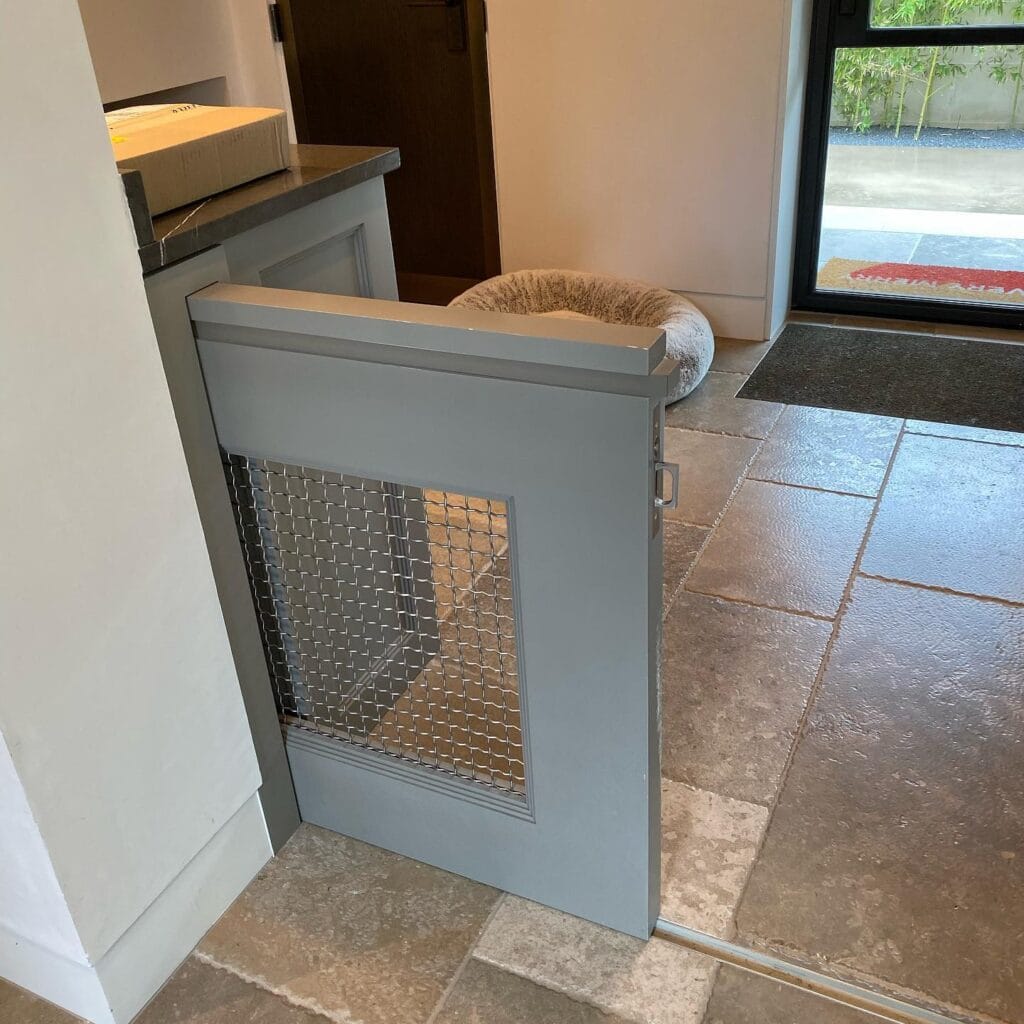
This charming half door barrier creates a classic farmhouse feel while still keeping dogs safely contained. The solid frame combined with metal mesh panels keeps visibility open, making it easy for dogs and owners to see each other while maintaining separation.
To recreate this style, build a custom half-height wooden gate with wire mesh inserts. Pair it with stone tile flooring and soft neutral cabinetry for a timeless kitchen or mudroom aesthetic.
Make sure the latch is positioned high enough that clever dogs cannot nudge it open. Metal mesh panels are also ideal because they resist scratching and allow good airflow.
📸 Photo credit: Instagram @garrettholloway_realestate
Decorative Stair Landing Dog Gate
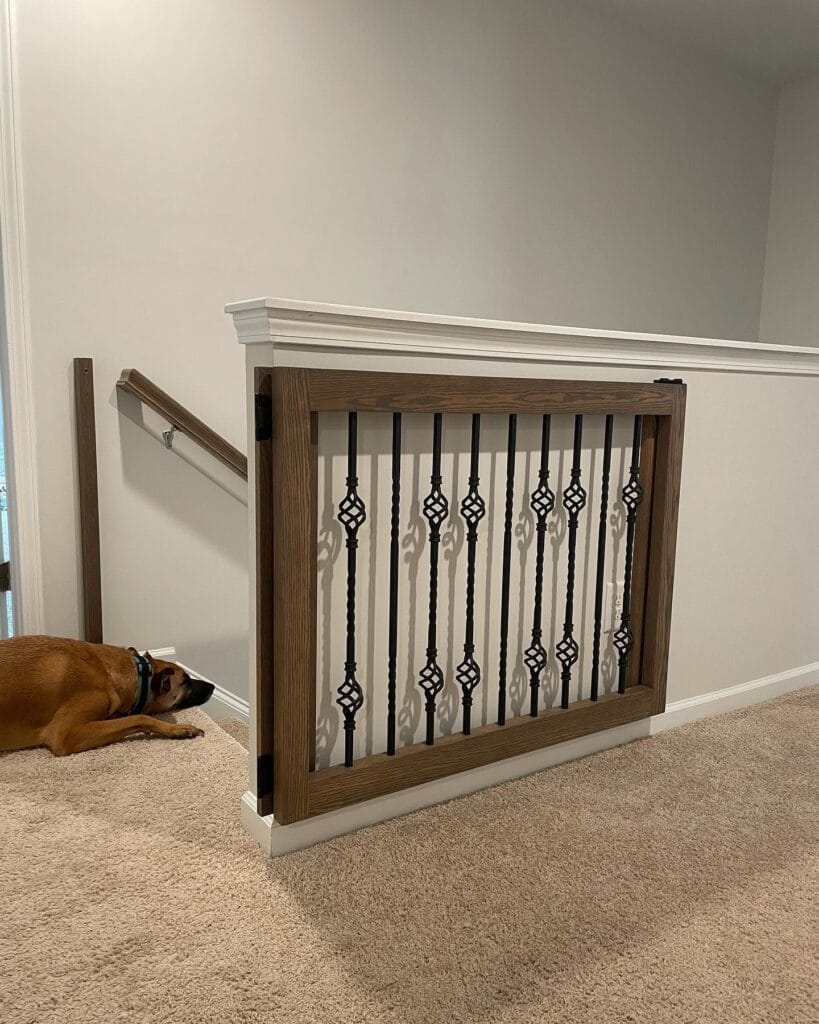
This staircase barrier doubles as a design feature. The wooden frame and decorative iron spindles mirror the staircase railing, making the gate feel like a natural architectural extension rather than a temporary pet barrier.
To recreate this look, match the wood tone of the gate to the stair railing and choose decorative metal balusters that complement the home’s existing design. Keeping the proportions identical helps it blend seamlessly.
Always ensure stair gates swing away from the stairs for safety. This prevents accidental falls and keeps the barrier functioning safely for both pets and people.
📸 Photo credit: Instagram @jillbmorgan
Modern Acrylic Dog Crate Barrier
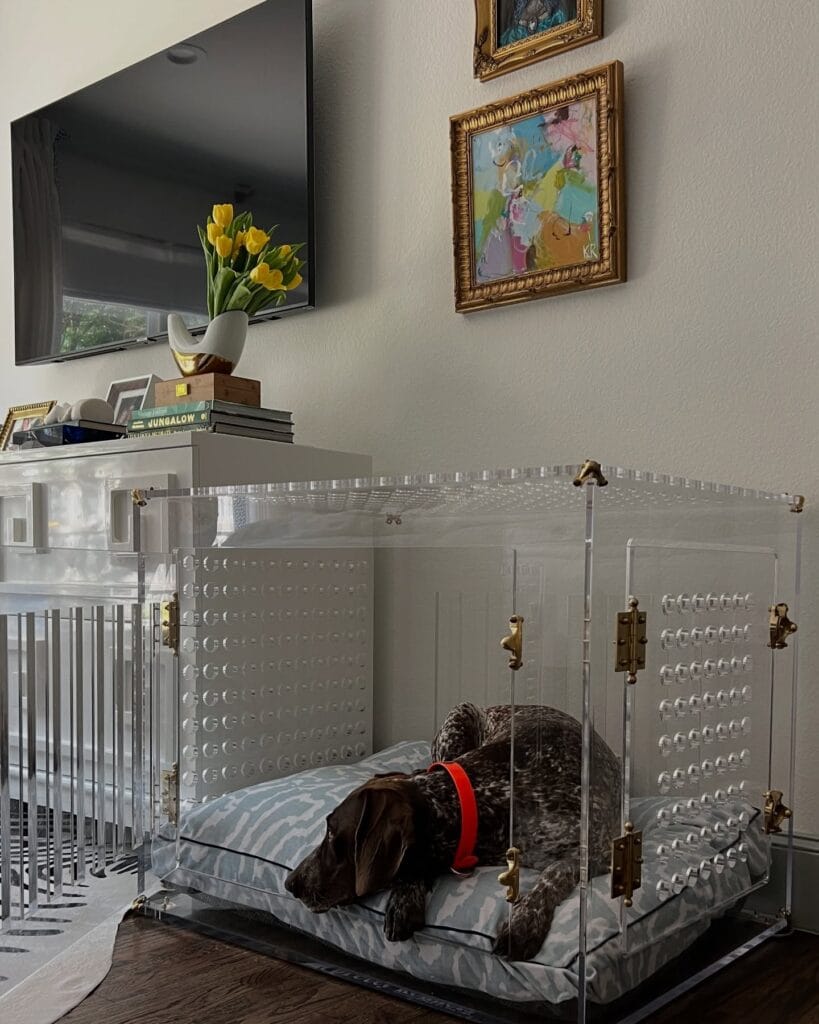
This transparent acrylic enclosure feels ultra modern and surprisingly elegant. Instead of bulky metal crates, the clear panels keep the space visually open while creating a secure resting area for a dog right in the living room.
To recreate this look, choose an acrylic dog crate or modular clear panels with brass or metal hardware. Pair it with soft dog cushions and minimal living room decor so the enclosure becomes part of the design.
Make sure the panels are thick and durable to prevent scratches or cracks. Acrylic barriers also work best for calm dogs who enjoy lounging rather than chewing.
📸 Photo credit: Instagram @studioten25
Under-Stairs Hidden Dog House
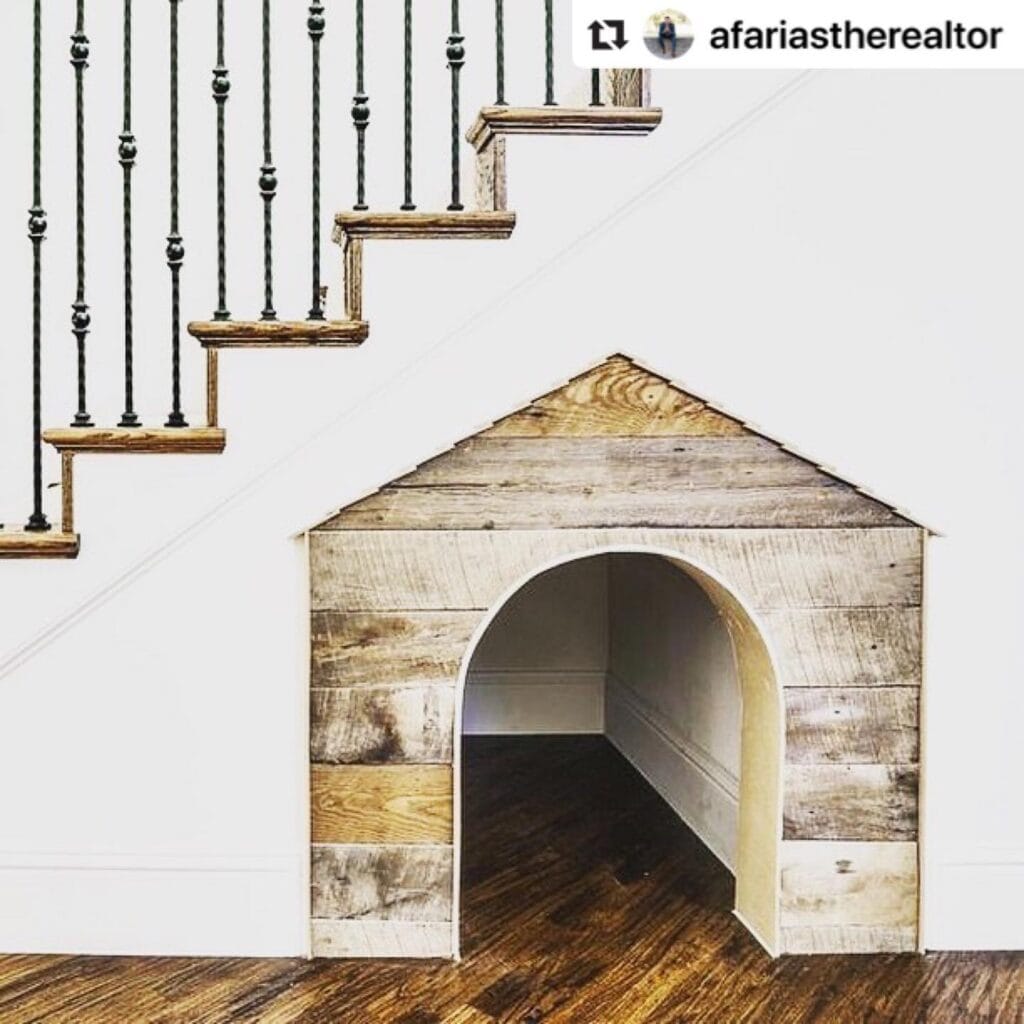
Unused space under the stairs becomes a charming dog hideaway in this rustic design. The wooden structure blends perfectly with the staircase while giving a dog their own quiet retreat tucked into the architecture of the home.
To recreate it, build a small wooden dog house frame under the stairs using reclaimed wood or rustic boards. Add a simple arch opening and soft bedding inside to keep it cozy.
Make sure the interior has enough airflow and lighting. A removable cushion or washable mat will also make cleaning quick and easy.
📸 Photo credit: Instagram @gabriela_a_team
Sliding Barn Door Dog Den
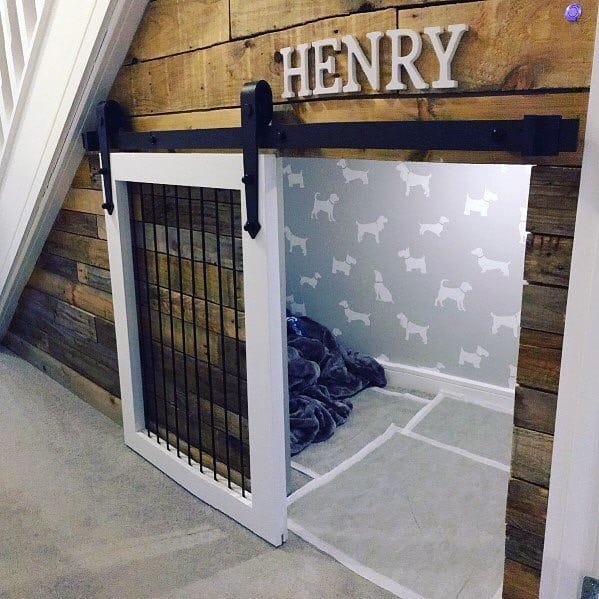
This under-stairs dog zone combines rustic wood panels with a sliding barn-style gate. The result feels warm, cozy, and surprisingly stylish while giving pets a comfortable enclosed area of their own.
To recreate it, install reclaimed wood panels along the walls and add a small barn-style sliding gate with black metal hardware. Soft blankets and a plush dog bed complete the look.
Barn door hardware is ideal for dog barriers because it slides smoothly and saves space compared to swinging doors. Just ensure the track is installed securely.
📸 Photo credit: Instagram @covacollectiverealty
Transparent Indoor Puppy Playpen
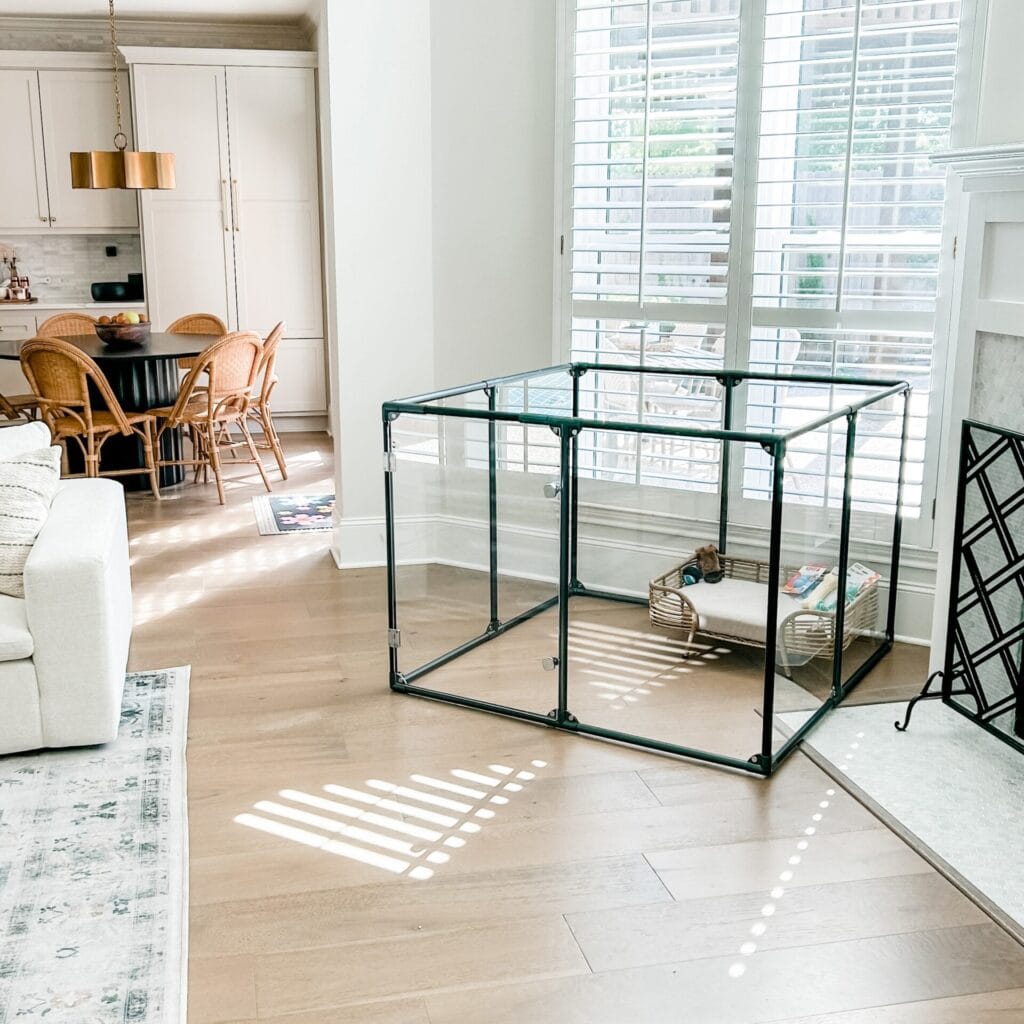
This glass-style playpen blends effortlessly into the bright living space. Natural light pours through large windows while the clear panels keep the puppy safely contained without visually cluttering the room.
To recreate the setup, use a modular glass or acrylic playpen system with slim dark frames. Place it near windows so the dog can enjoy sunlight and watch the household activity.
Adding a soft dog bed, chew toys, and a washable mat inside the play area helps create a comfortable and safe environment for puppies during training.
📸 Photo credit: Instagram @clearly_loved_pets
If you’re designing a dog-friendly home, smart dog barrier solutions like these allow you to protect spaces without sacrificing style. With the right materials and thoughtful placement, barriers can feel like a natural part of your interior design rather than a temporary pet accessory.

Amr Mohsen is a software engineer who traded his keyboard for a leash — at least on weekends. His love for dogs inspired him to share what he learns as a dog owner and enthusiast, bringing a detail-oriented, research-driven perspective to every article he writes. If it’s about dogs, he’s probably already looked it up twice.