Your dog’s food bowl is an eyesore. And I know you’ve been staring at that sad plastic dish sitting on your kitchen floor, completely ruining the aesthetic you worked so hard to create.
Girl, I felt this so hard last summer. I had my whole kitchen looking like a Pinterest board — warm wood tones, clean lines, the works — and then there’s Biscuit’s beat-up bowl just… sitting there. Completely out of place. Drove me crazy every single morning.
And the mess? Don’t even get me started. Food scattered everywhere, water splashing onto your floors, your golden retriever basically turning mealtime into a crime scene.
Here’s the thing — a DIY dog feeder actually fixes all of that. These 10 designs are equal parts practical and gorgeous, so your pup eats happy and your home stays cute.
#1: Wire Frame Elevated Dog Bowl Stand (The Pinterest-Worthy Feeder Your Golden Deserves)
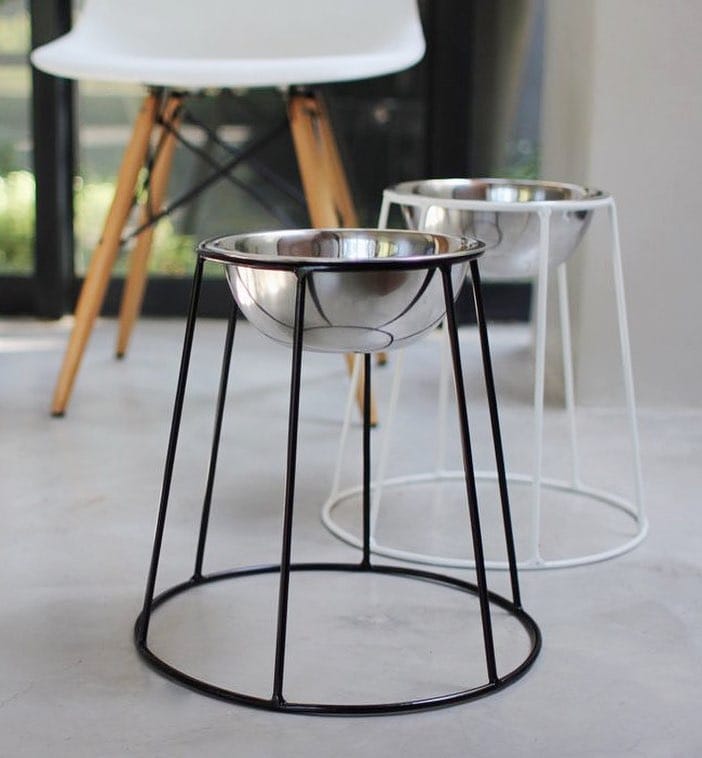
Okay, so picture this — your golden retriever is scarfing down dinner, her ears dragging through the bowl, water splashing across your freshly mopped floor, and you’re standing there thinking why is this so ugly AND messy? Yeah. Been there.
This wire frame elevated dog feeder is the one. Black or white powder-coated steel wire, a stainless steel bowl, clean lines — it looks like it belongs in a design magazine, not a pet store.
Materials & Tools:
– 4mm thick steel wire (black or white powder-coated)
– 1 stainless steel dog bowl (standard 6-cup capacity)
– Wire cutters
– Needle-nose pliers
– Epoxy or strong metal adhesive
– Sandpaper (220-grit)
Instructions
Cut six wire legs, each 12 inches long. Bend them outward at the base using your pliers — this creates that signature flared silhouette you see in the photo. Form a circular base ring from a separate wire piece, roughly 10 inches in diameter, and weld or epoxy each leg to the ring.
Next, create the top ring at 6 inches diameter — this cradles the bowl. Attach each leg to the top ring, spacing them evenly. Sand any rough edges so your pup doesn’t catch her fur.
And here’s why elevated feeders are actually worth it — raising the bowl to 8-10 inches reduces neck strain for larger dogs, meaning fewer vet visits down the road.
Quick note: If you love projects like this, 13 Genius DIY Dog Stuff Every Pet Parent Needs to Try Today! has some seriously good ideas.
Spray a second coat of paint after assembly for a cleaner finish.
Prep Time: 20 min | Active Project Time: 1.5 hours | Difficulty Level: Intermediate
📸 Photo credit: Instagram @designmilkpets
#2: DIY PVC Pipe Gravity Dog Feeder with Wooden Stand
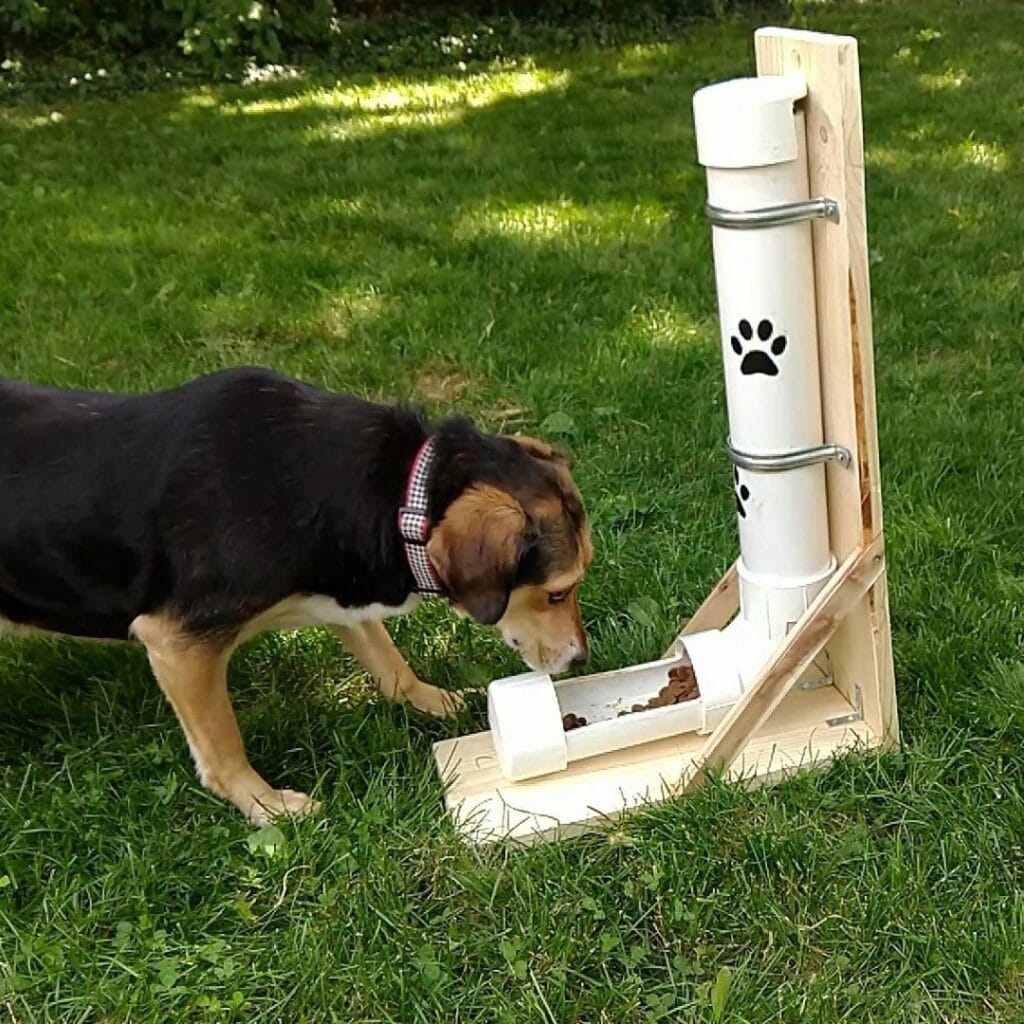
Your golden’s food bowl is empty again — and you didn’t even hear it happen. You’re in the kitchen, she’s staring at you with those eyes, and honestly? You’re tired of the twice-a-day scramble.
This feeder fixes that.
Materials & Tools:
– 4-inch diameter PVC pipe (white) — two 12-inch sections for the reservoir tower
– 1 short elbow PVC connector for the bottom dispensing curve
– PVC end cap for the top
– Black paw print stickers for decoration
– Two metal pipe clamps (standard U-bolt style)
– Pine wood planks — one vertical board and one angled base frame
– Wood screws, drill, sandpaper, wood glue
– L-bracket corner hardware
Instructions
Start by cutting your pine planks into an L-shaped frame — one tall vertical board and one flat angled base sitting at roughly 45 degrees. Sand every edge until it’s smooth enough that your dog won’t snag her fur.
Attach the two U-bolt clamps directly onto the vertical board, spacing them 6 inches apart. Slide your stacked PVC pipe sections through both clamps so the tower stands upright. The gravity does the work here — kibble loads from the top cap and drops down through the elbow curve into the bottom tray.
The angled base keeps the whole thing from tipping when she nudges it with her nose. And trust me, she will nudge it.
Drill the base boards together using your L-bracket hardware at every corner joint. Load kibble into the top, and watch it cascade straight into the tray below.
The gravity-feed design means food stays portion-ready without you hovering — that keeps her eating slower and gives you your mornings back.
Add the paw print stickers to the pipe for that Pinterest moment. Pair this with one of these 12 Heartfelt Designs for DIY Dog Accessories if you want a whole coordinated set.
Cut the bottom tray pipe section shorter than the reservoir — that slight height difference prevents kibble from jamming at the curve. Pine takes wood stain beautifully if you want the frame matching your patio furniture.
Prep Time: 20 minutes | Active Project Time: 1.5 hours | Difficulty Level: Beginner-Intermediate
📸 Photo credit: Instagram @jasonabalos
#3: Rustic Torched Wood Dog Feeding Station (Dog-Shaped Silhouette)
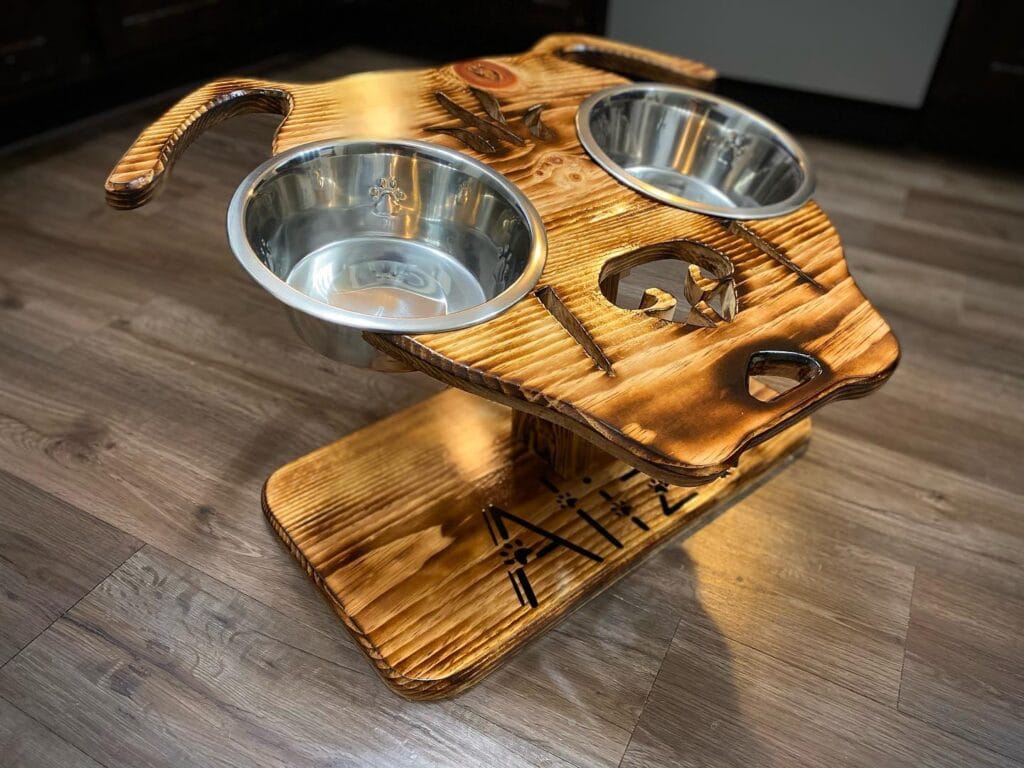
Okay, you know that thing where you’re padding through the kitchen in the morning, half-asleep, and you slip on the water your golden somehow splashed three feet from his bowl? Yeah. And then you’re mopping the floor before you’ve even had coffee. That was my friend Dani’s entire life before she built this.
Materials & Tools:
– 2-inch thick pine or Douglas fir lumber (torched with a propane torch for that warm, honey-brown finish)
– Two stainless steel dog bowls (standard 6-cup capacity)
– Jigsaw (for cutting the dog-shaped silhouette and decorative bone/paw cutouts)
– Wood burner tool (for etched name or paw print details)
– Food-safe polyurethane sealant
– Sandpaper (80 and 220 grit)
– Wood glue + 2-inch screws
– Drill with hole saw bit (sized to your bowls’ rim diameter)
Prep Time: 30 min | Active Project Time: 4–5 hours | Difficulty Level: Intermediate
### Instructions
Start by sketching your dog silhouette onto the lumber — ears, snout, the whole thing. Cut it out with the jigsaw, then sand everything smooth with 80-grit first, then 220-grit for a clean edge your golden won’t snag his fur on.
Torch the top surface using a propane torch in long, even passes. This is where the magic happens. The grain rises and darkens, giving you that rustic, Pinterest-board finish without any stain.
Use the hole saw bit to cut two circles into the top panel, sized so your stainless steel bowls drop in and sit flush at the rim. Bowls that sit exactly at chest height mean less neck strain for your dog during every single meal — that’s the feature-benefit-payoff right there.
Build a center pedestal from leftover lumber, glue and screw the top panel to it, then attach both pieces to a flat rectangular base board for stability. Use the wood burner to etch your dog’s name or decorative paw prints into the base. Seal everything with two coats of food-safe polyurethane.
And if you love this kind of functional-meets-beautiful pet furniture vibe, 14 Stylish DIY Dog Crate Furniture Ideas You’ll Love has more projects worth bookmarking.
Let the sealant cure a full 24 hours before your pup uses it. Rushing that step is how you end up redoing the whole thing.
📸 Photo credit: Instagram @randymoncus
#4: Elevated YETI Dog Bowl Stand (Blackened Wood + Teal Bowls)
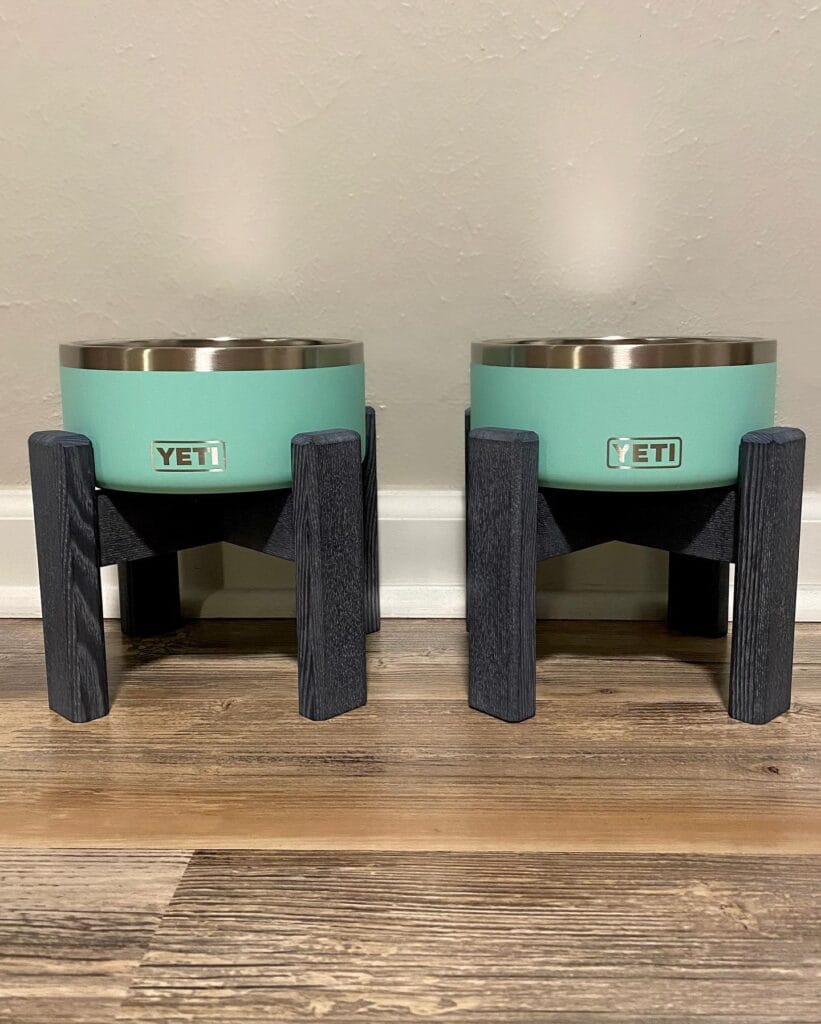
Okay, you know that moment when your golden finally stops splashing water everywhere — and it’s because the bowl actually sits still for once? That was me with my dog Koda, watching his bowl slide across my kitchen floor every single meal. I was done.
Materials & Tools You’ll Need:
– 2 YETI Boomer dog bowls (8oz or 4oz) in Seafoam/Teal
– Four 2×2 wood posts, cut to 4-inch lengths for legs
– Two flat wood crossbars, cut to 6-inch lengths
– Black wood stain or ebonizing solution
– Wood glue + 2-inch wood screws
– Sandpaper (120-grit, then 220-grit)
– Drill + drill bit set
– Paintbrush for stain application
Instructions
Sand all your wood pieces starting with 120-grit, then finish with 220-grit for that clean, furniture-grade feel. Apply your black ebonizing stain in long strokes and let it dry 24 hours — rushing this step kills the whole look.
Attach two legs to each crossbar using wood glue first, then reinforce with screws. The crossbar design keeps the bowl cradled without any clips or hardware showing. And that matters, because your kitchen deserves to look intentional.
Space the two stands about 3 inches apart — one for water, one for food.
The raised height reduces neck strain during meals, which means less post-dinner pacing and more couch cuddles.
Wipe with a damp cloth between uses — the ebonized finish holds up without resealing.
Prep Time: 30 min | Active Project Time: 2 hours | Difficulty Level: Beginner-Intermediate
📸 Photo credit: Instagram @lumberlabinc
#5: Striped Wood Dog Bowl Stand (The One That’ll Make Your Kitchen Look Like a Pinterest Board)
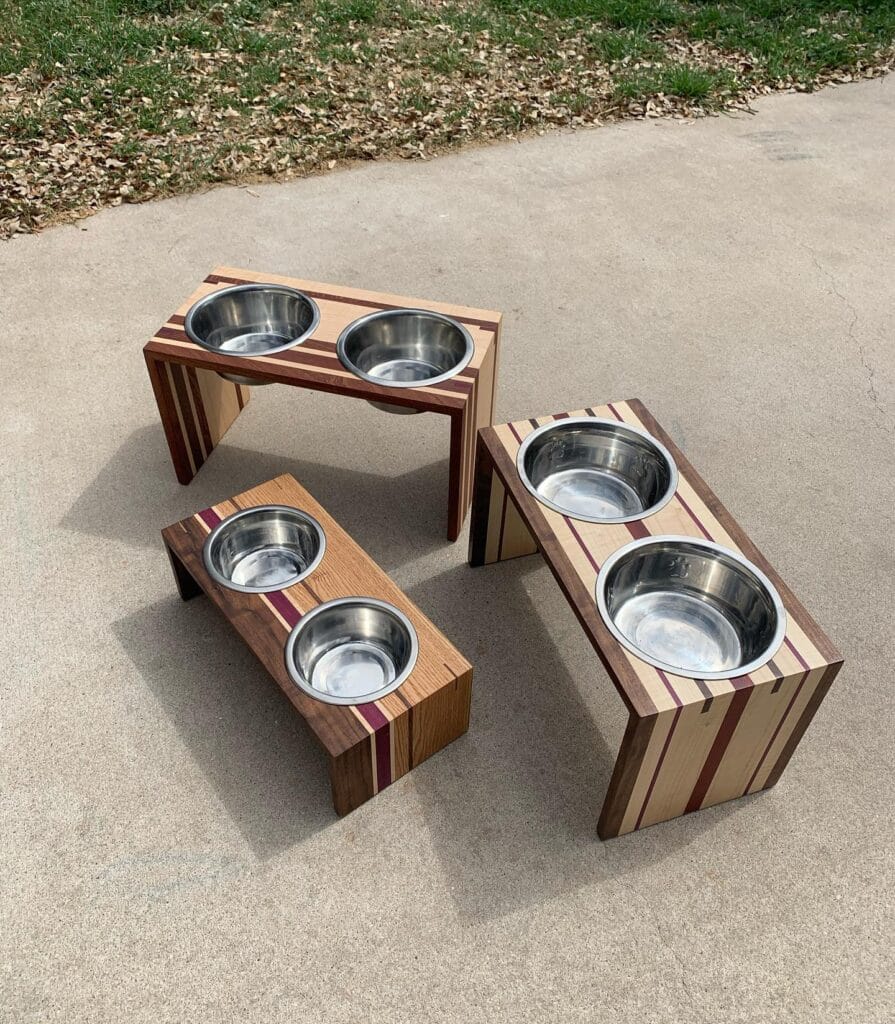
Okay, so you know that moment when your golden retriever is basically doing a full squat just to reach her water bowl, and you’re watching her slosh half of it onto your floor again? Yeah. That’s what this project is for.
Materials & Tools:
– Walnut, maple, and purpleheart wood strips
– Stainless steel dog bowls (2 per stand)
– Wood glue
– Clamps
– Table saw
– Router or hole saw bit
– Sandpaper (80, 150, 220 grit)
– Food-safe wood finish or mineral oil
Prep Time: 30 minutes | Active Project Time: 3–4 hours | Difficulty Level: Intermediate
### Instructions
Start by ripping your walnut and maple into ¾-inch strips, alternating them with thin purpleheart accents — those deep purple lines are literally what makes this thing look expensive.
Glue and clamp the strips together flat. Let that sit for a full hour.
Once dry, cut your top panel and two side panels to match your dog’s shoulder height. For a golden retriever, aim for 10–12 inches tall.
Use a hole saw to cut circles just snug enough to hold your bowls without dropping through. And honestly, test-fit your bowl before you commit — nothing worse than a circle that’s a half-inch off.
Sand through all three grits, going with the grain. Finish with two coats of food-safe mineral oil.
Raised feeding — the bowl sits at shoulder height, which reduces neck strain — means your girl isn’t hunching over every single meal. That payoff alone makes the whole Saturday afternoon worth it.
If your pup has a dedicated corner in your house, pairing this with a 7 Cozy DIY Indoor Dog Kennel Ideas setup honestly turns that space into something so intentional.
Real talk: seal the underside too. Moisture sneaks under wood stands faster than you’d think, and it warps the whole thing.
📸 Photo credit: Instagram @humbleroots_tx
#6: The 5-Gallon Bucket Gravity Dog Feeder That Keeps the Bowl Full All Day
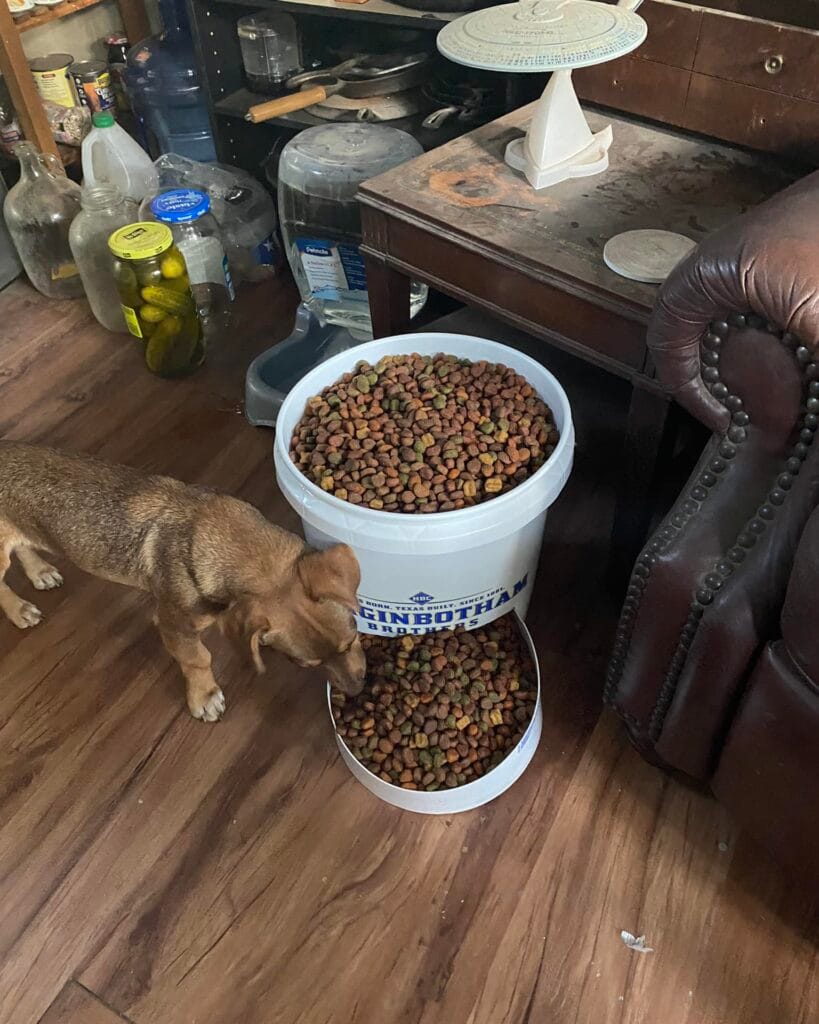
You know that moment when you’re in the middle of something — cooking, on a call, literally just sat down — and your golden is pawing at an empty bowl like it’s a personal attack?
Yeah. This DIY fixes that.
This gravity feeder uses two 5-gallon white plastic buckets (the kind from any hardware or farm supply store — you can spot the Higginbotham Brothers branding in the image) stacked so the top bucket feeds kibble down into the bottom one as your dog eats. It self-regulates. No timers, no batteries, no fuss.
Materials & Tools:
– 2 x 5-gallon plastic buckets with lids
– 1 hole saw bit (3–4 inch diameter)
– Power drill
– Sandpaper (120-grit)
– Measuring tape
– Marker
Instructions
Flip the top bucket upside down and mark a 3.5-inch circle centered at the bottom. Drill through it with your hole saw — this is your kibble release point, so take your time getting it centered. Sand the edges so no sharp plastic catches on the food.
Nest the drilled bucket on top of the second bucket. The kibble sits in the top, gravity pulls it down through the hole, and collects in the bottom bucket where your dog eats from.
Fill the top bucket with dry kibble — tri-color kibble like in the photo works great visually too, not that your dog cares.
And here’s the payoff: the gravity-release design keeps a steady supply of food available, which means fewer interruptions for you and less anxiety-eating for your dog.
Cut a small notch on the rim where the buckets meet so air can circulate — this prevents the kibble from clumping or getting stuck mid-flow.
Prep Time: 10 minutes | Active Project Time: 20–30 minutes | Difficulty Level: Beginner
The buckets are food-safe plastic, easy to rinse out, and hold enough kibble to last a medium-to-large dog 3–5 days between refills.
📸 Photo credit: Instagram @musichawk_
#7: DIY Elevated Three-Bowl Dog Feeder Stand (The Pinterest-Worthy One Your Golden Deserves)
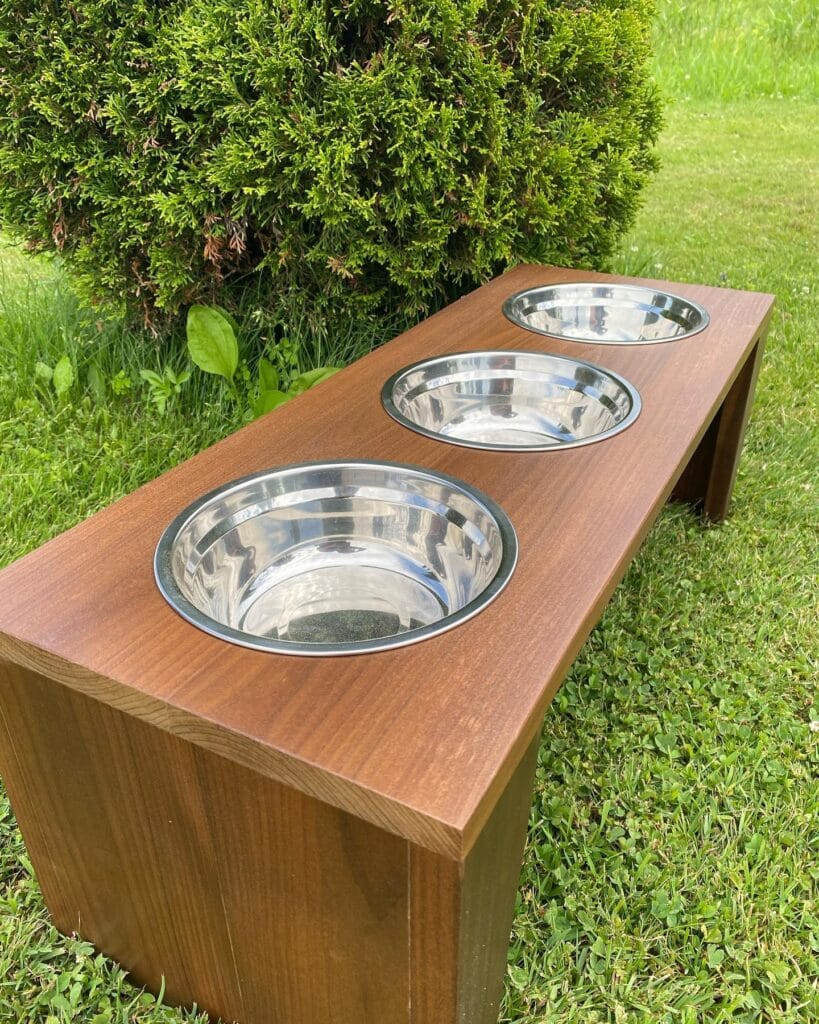
Okay so you know that moment when your golden retriever is basically face-deep in her bowl, water splashing everywhere, and somehow the kibble ends up three feet away on your kitchen rug? Every. Single. Morning. That was my life too until I saw this setup and literally gasped.
This feeder stand is made from solid oak wood finished in a warm walnut stain — that rich chocolate brown color that looks like it belongs in a Pottery Barn catalog. It holds three stainless steel bowls, which means food, water, and a second water station (because goldens are dramatic about hydration, we know this).
Materials & Tools:
– 3/4-inch oak plywood or solid oak boards
– Walnut wood stain + polyurethane sealant
– Three 6-inch stainless steel dog bowls
– Jigsaw or hole saw kit (6-inch diameter bit)
– Sandpaper (120-grit and 220-grit)
– Wood glue + clamps
– Measuring tape, pencil, safety glasses
Instructions
Cut your top board to 36 inches long by 10 inches wide. Then cut two side panels at 10 inches tall — this height keeps a large dog like a golden retriever from hunching her neck down, which actually reduces joint strain over time. That’s the feature-benefit-payoff right there: elevated height, less neck strain, happier dog at mealtime.
Sand your top board starting with 120-grit, then finish with 220-grit for that smooth, splinter-free surface. Mark your three bowl holes evenly spaced across the top — center your 6-inch diameter circles with about 2 inches between each. Cut them out with your hole saw or jigsaw, slow and steady.
Attach your side panels using wood glue and clamps. Let it cure for 24 hours before adding any screws for reinforcement. Apply two coats of walnut stain, letting each coat dry completely between applications. Seal everything with polyurethane so spilled water doesn’t warp the wood.
Drop your stainless bowls in. Done.
The stainless steel bowls pop right out for washing — no dried kibble glued to a permanent fixture. And because the whole stand sits solid and heavy, your golden can’t nose it across the floor mid-meal.
Staining the inside of those bowl holes matters more than people think. Unsealed wood inside the cutouts absorbs moisture from splashing bowls and warps from the inside out over time.
For a natural integration into a dog-friendly home setup, a 7 Creative Ideas for Your DIY Dog Washing Station pairs beautifully with this project if you’re building out a dedicated pet zone.
Prep Time: 30 minutes | Active Project Time: 3-4 hours | Difficulty Level: Intermediate
📸 Photo credit: Instagram @jdwoodworkinganddesigns
#8: Farmhouse Trestle Elevated Dog Bowl Stand (Natural Wood)
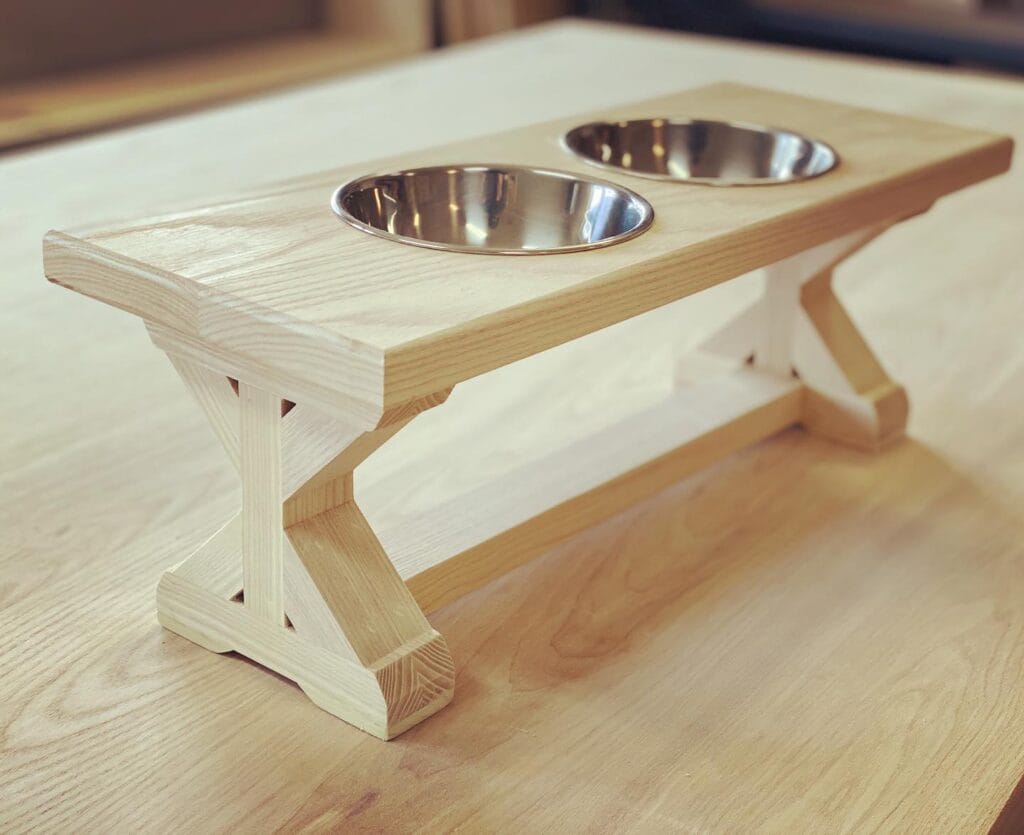
Okay, so you know that moment when your golden retriever finishes eating and just… walks away with water dripping from her chin, straight onto your kitchen rug? I watched my cousin’s dog do that every single morning for a year before she finally built one of these. Game changer.
This stand is giving full farmhouse dining table energy — solid ash or pine wood, natural unfinished finish, and that classic trestle base with the X-cross bracing on each side. It holds two stainless steel bowls (roughly 4-cup capacity each) and sits at about 6 inches tall — the sweet spot for medium to large dogs like goldens.
Materials & Tools:
– 1×6 pine or ash board (approximately 36 inches for the top)
– 2×4 lumber for the trestle legs and cross supports
– Wood glue + 1.5-inch wood screws
– Two 4-cup stainless steel dog bowls with rubber-grip bases
– Jigsaw, drill, sandpaper (120-grit then 220-grit)
– Optional: food-safe clear coat sealant
Instructions
Cut your 36×10-inch top board first, then sand every edge smooth — your dog’s ears will brush this thing constantly. Cut two identical trestle leg assemblies from your 2×4, each shaped like a capital A with an angled foot piece at the base for stability. Use wood glue first, then reinforce with screws so nothing wobbles mid-meal.
Trace your bowl openings with a pencil — 4-inch diameter circles spaced 6 inches apart — then cut them with your jigsaw. And this is where most people rush and crack the wood: go slow on the curve.
Attach the legs to the underside of the top board using corner brackets. The elevated height keeps your golden’s neck straight during meals, which reduces strain and helps digestion — she eats better, feels better, and your floor stays actually dry.
Lightly sand the whole piece one final time with 220-grit, then apply a food-safe beeswax or water-based sealant if you want it to last through years of wet bowl splashing.
Prep Time: 20 min | Active Project Time: 2–3 hours | Difficulty Level: Intermediate
Leave the wood raw for that Pinterest-worthy natural look, or stain it warm walnut to match your kitchen cabinets. Either way, this piece looks like something you’d spend $80 on at a boutique shop — but you made it for under $25.
📸 Photo credit: Instagram @rusticvalleywoodworking
#9: Built-In Walnut Dog Feeding Station With Quartz Countertop
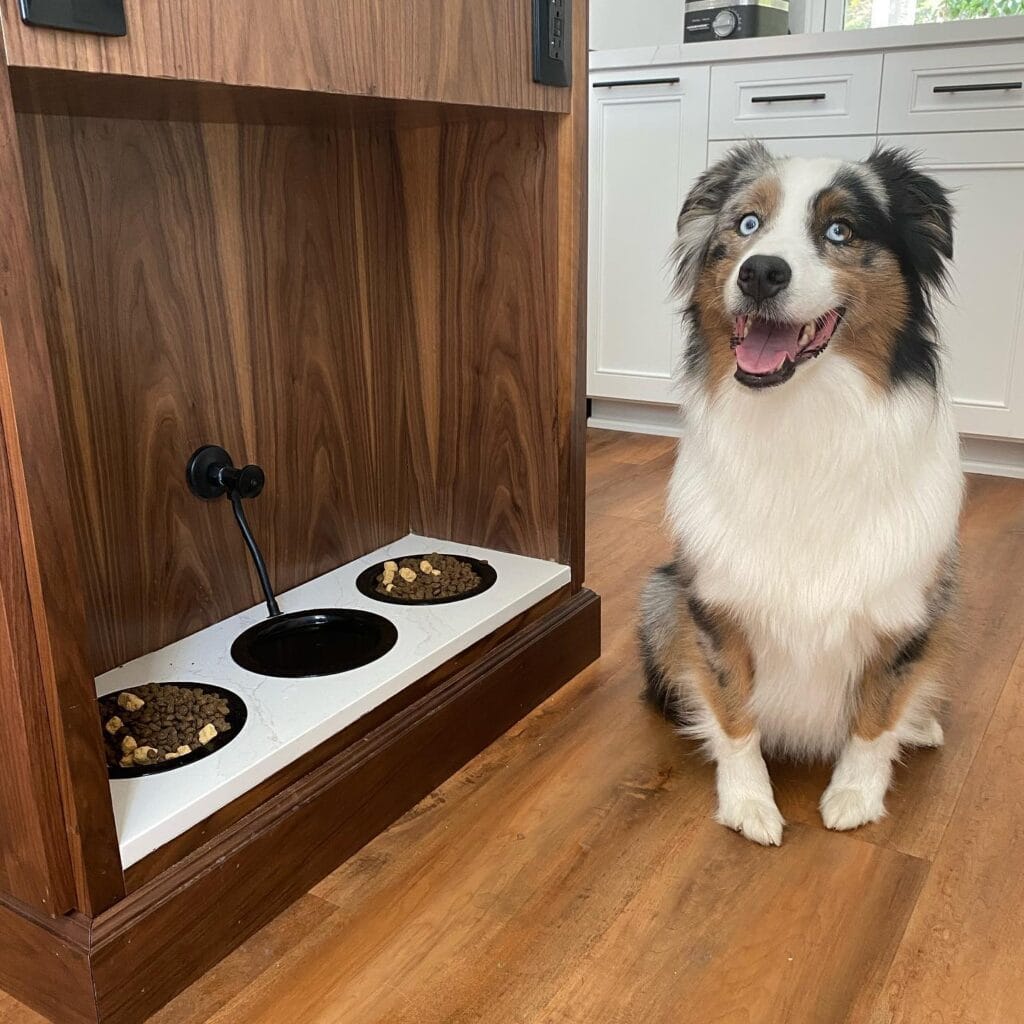
Your golden’s food bowls are always in the way. You’re stepping around them, kicking them across the kitchen tile, and watching kibble scatter every single time she dives in too fast. I had that exact chaos at my place until I saw this built-in setup and genuinely could not stop thinking about it.
This feeding station is built directly into a walnut wood cabinet panel, flush with the base of a kitchen island or mudroom wall. The surface is white quartz stone, with three recessed black metal bowls — two for food, one for water — sitting flush so your dog can eat without the bowls sliding. There’s even a wall-mounted black iron faucet spout for a water line hookup.
Materials & Tools:
– 3/4″ walnut plywood or solid walnut panels (for the alcove frame)
– White quartz slab (for the countertop surface)
– Three 8-inch recessed black stainless bowls
– Black iron wall-mount faucet + copper water supply line
– Jigsaw, drill, circular saw, wood clamps, construction adhesive, sandpaper (120 + 220 grit)
Instructions
Cut your walnut panels into a three-sided alcove box — two side walls and a back panel. Sand everything to 220 grit before assembly because walnut grain splinters fast if you rush it. Glue and clamp the panels together, then let them cure overnight.
Cut your quartz countertop to fit the alcove width. Have a stone shop pre-cut the three circular bowl openings — don’t attempt that with a home jigsaw. Drop the bowls in and confirm they sit flush. The recessed fit means your golden’s nose pushes in without the bowl skating across the floor, which eliminates that maddening scraping sound mid-meal.
Mount the alcove box into your wall or island base using construction adhesive and 3-inch wood screws into wall studs. Run your copper water supply line up through the back panel before the alcove goes in — that part is so much easier before it’s mounted.
Install your black iron faucet on the back wall panel of the alcove. Connect it to the copper line, seal the base of the faucet with plumber’s putty, and test for drips before you close anything up.
And that’s the payoff of built-in bowl recesses — your dog eats at a natural neck angle, which reduces gulping and bloat risk, and your kitchen floor stays clean.
Seal all walnut surfaces with food-safe Danish oil for water resistance, then apply a matte polyurethane topcoat.
Prep Time: 2 hours | Active Project Time: 6–8 hours | Difficulty Level: Advanced
If you love this style but want simpler versions first, 7 Creative Dog Feeding Station DIY Ideas has great starting points at every skill level.
The walnut grain will darken over time — that’s not a flaw, that’s character. Wipe the quartz surface with a damp cloth weekly and re-oil the wood every six months to keep that rich color from drying out.
📸 Photo credit: Instagram @sandiegocustomcabinets
#10: The Built-In Faucet Dog Feeding Station That’ll Make Your Kitchen Look Like a Pinterest Board
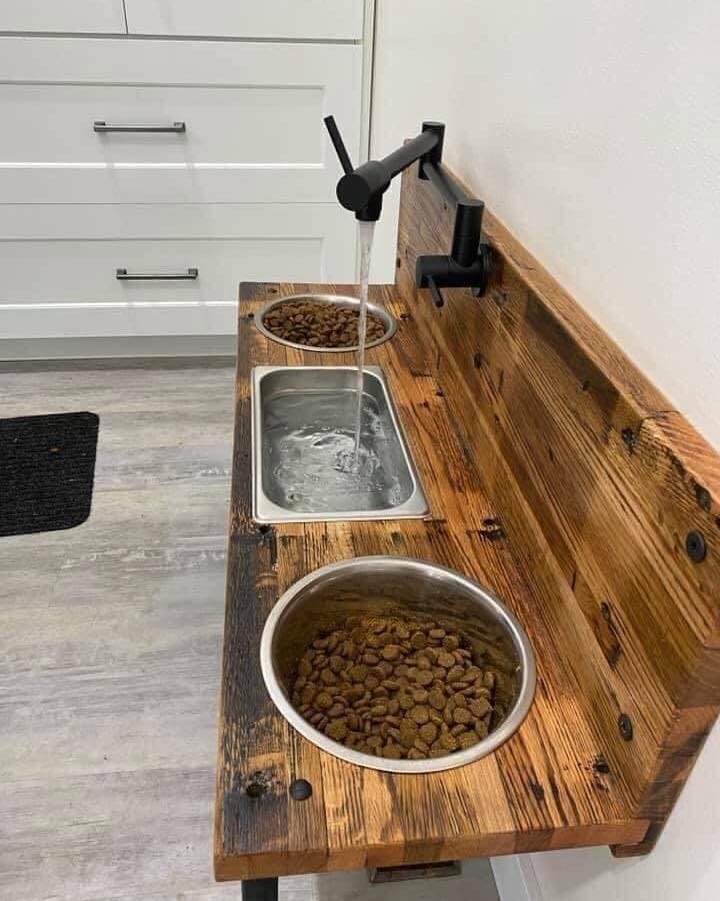
Okay, so you know that moment when your golden comes sprinting in from the backyard, slides across the floor, and dunks her whole face into the water bowl — and suddenly there’s a puddle the size of Lake Michigan on your kitchen tiles?
Yeah. That was my cousin’s life every single day until she built this.
Materials & Tools You’ll Need:
– Reclaimed pine wood planks (aged, knot-filled — that rustic brown tone in the photo)
– 2 stainless steel round bowls (one large, one small)
– 1 rectangular stainless steel basin (acts as the built-in water reservoir)
– Matte black wall-mount faucet with articulating arm
– Black metal pipe fittings for faucet connection
– Wood stain (dark walnut tone)
– Wood screws and sandpaper
– Jigsaw for cutting bowl cutouts
– Plumber’s tape and basic plumbing tools
– Metal legs or base frame (visible in the photo’s lower edge)
Instructions
Start by cutting your reclaimed pine planks to size — the station in the photo looks about 36 inches wide by 14 inches deep. Sand every surface until smooth, then apply two coats of dark walnut stain. Let it cure fully before touching anything else. Rushing this step shows.
Once dry, use your jigsaw to cut three recessed holes: two circular cutouts for the round stainless bowls and one rectangular cutout sized to fit your hotel pan basin flush into the wood surface. The basin sits lower than the bowls — that’s intentional. It catches overflow water directly from the faucet.
And here’s where it gets good. Mount your matte black articulating faucet directly to the wall above the station using the black pipe fittings. This faucet swings — meaning you can angle it over the water basin to fill it hands-free, then swing it away. Built-in faucet means fresh water on demand, which keeps your dog drinking more and you refilling less.
Attach your metal base frame legs underneath the wood top, bolting them securely. The elevated height shown in the photo is perfect for larger breeds — raised feeding reduces neck strain and slows down fast eaters.
One food bowl sits left. One sits right. The water basin stays center-front. That layout isn’t random — it separates the dry food from the splash zone.
The stain will darken beautifully over time, especially with a little water exposure. And honestly? That aged patina just adds character.
Use food-safe sealant on all wood surfaces near the water basin. Water and raw pine don’t stay friends for long.
Prep Time: 30 minutes | Active Project Time: 4–6 hours | Difficulty Level: Intermediate
📸 Photo credit: Instagram @simplyvintageva
The One Mistake That Ruins Most DIY Dog Feeders (And How to Skip It)
Here’s the thing nobody tells you — the bowl height is everything.
Most people build their feeder first, then realize the bowl sits too low or too high for their dog. I’ve seen this happen so many times, and it’s genuinely heartbreaking after all that weekend effort.
Measure your golden retriever’s shoulder height first. The bowl should sit about 6 inches below that point. This reduces neck strain and — bonus — cuts down on how much water she splashes everywhere. Your floors will thank you.
My friend Leila built this gorgeous cedar feeder last fall, totally Pinterest-worthy, wrong height entirely. She had to rebuild the whole base. Two weekends wasted.
Pro secret: drill your bowl holes slightly smaller than the bowl rim, not the same size. The bowls lock in without sliding around, and your dog won’t flip them mid-meal.
Also? Seal every wood surface before assembly, not after. Staining finished gaps is a nightmare, and dog drool gets into every single crack.
Your Dog Deserves a Clean Couch (And So Do You)
You’ve got the Pinterest board, the cozy throws, the whole vibe going. Don’t let muddy paws wreck it.
Pick one thing from this list and just start there. Seriously, even a waterproof blanket tossed over your cushions buys you so much peace of mind. And if you’re feeling crafty, a DIY dog bathing station means your golden walks in clean instead of tracking half the backyard inside.
Small changes add up fast. Your home can look good and survive dog mom life — I promise those two things aren’t fighting each other.
So tell me — what’s the one spot in your house your pup has fully claimed as theirs?

Amr Mohsen is a software engineer who traded his keyboard for a leash — at least on weekends. His love for dogs inspired him to share what he learns as a dog owner and enthusiast, bringing a detail-oriented, research-driven perspective to every article he writes. If it’s about dogs, he’s probably already looked it up twice.