Your outdoor cat is shivering through another brutal winter night — and that hits different when you’re tucked under a blanket with your golden hogging half the couch.
Last February, my neighbor’s cat, Biscuit, spent three nights huddled under a porch step because his little shelter did nothing against the cold. She felt awful. I felt awful just hearing about it.
And honestly? A basic cat shelter isn’t enough once temperatures drop hard. The wind cuts through, the floor stays freezing, and your cat burns through body heat just trying to survive the night.
That’s the thing about winter — it’s not just uncomfortable for outdoor cats, it’s actually dangerous.
But a well-built insulated cat house changes everything. These 16 ideas give your cat real warmth, real protection, and a cozy little space that’d honestly look cute on your back porch too.
#1: The A-Frame Triple-Entry Cedar Cat House That Fits Three Cats and Looks Adorable Doing It
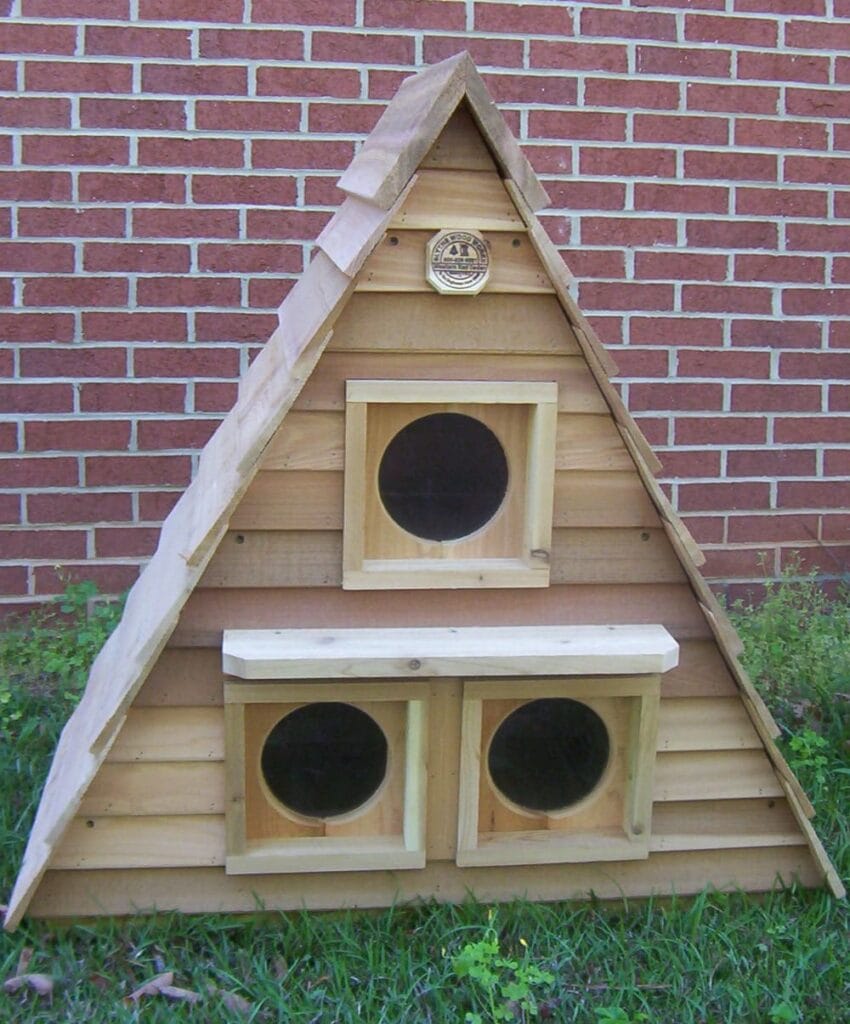
You know that moment when your golden is sprawled across the couch and you’re reorganizing your Pinterest board at midnight? That’s when you start wondering if the cats next door — or your own backyard strays — deserve something just as cozy. And honestly? This cedar A-frame is the answer you didn’t know you were looking for.
This thing is gorgeous. Built in a classic A-frame shape with natural cedar wood siding, it has three circular entry holes — one on the upper level and two on the lower — so multiple cats can come and go without fighting over the door. The overlapping horizontal planks on the facade mimic real house siding, which means it doesn’t look like a pet product. It looks like a tiny cabin you’d pin.
The whole structure is crafted from untreated cedar, which is naturally moisture-resistant and insect-repelling — cedar stays dry longer than pine, which means warmer cats in winter. That’s the feature-benefit-payoff right there: cedar construction keeps humidity out, so the interior stays warm even when temps drop.
The two-tiered interior separates the space into an upper loft-style room and a lower double room. Each circular entry measures roughly 6–7 inches in diameter, which fits most adult cats comfortably.
Real talk: if you’re housing feral colonies, line the interior floors with self-warming mylar blankets cut to size. No electricity needed. You can also check out these 15 warm feral cat house ideas for cold weather if you want to go deeper on winter setups.
Cedar weathers to a silver-gray over time outdoors — seal it with a clear outdoor polyurethane coat every spring to keep that warm honey tone you see here.
📸 Photo credit: Instagram @blythewoodworks
#2: The Hammacher Schlemmer Outdoor Heated Cat House That Keeps Your Neighborhood Cat Warm All Winter
You know that feeling when it’s freezing outside and you’re watching a stray cat curl up under your porch? That moment used to wreck me every winter.
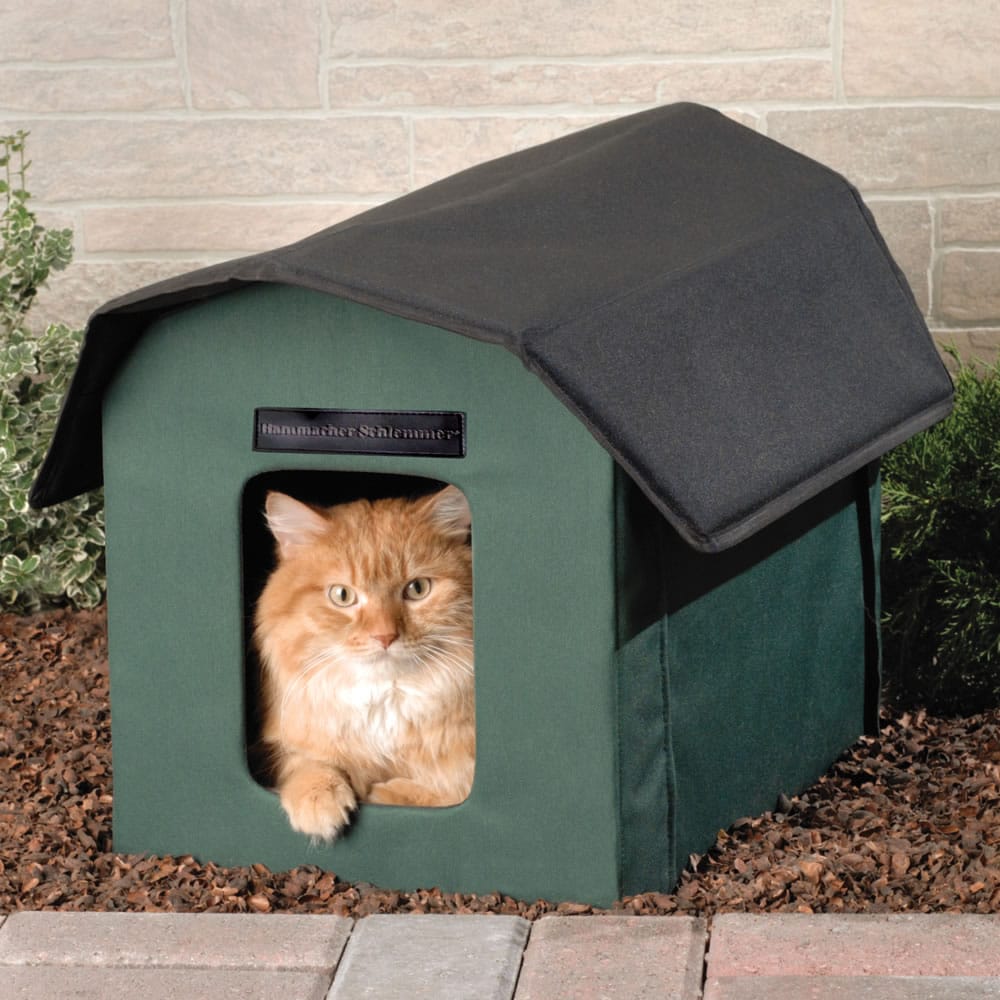
This is the Hammacher Schlemmer Outdoor Heated Cat House, and it’s the kind of thing that makes you feel like you actually did something good. It sits low to the ground in a forest green and charcoal black fabric shell — built from 600-denier polyester — looking sharp enough that it doesn’t ruin your landscaping vibe.
The body is hunter green with a black peaked roof that overhangs on all four sides to block wind and rain. That entrance opening is sized just right — big enough for a full adult cat but small enough to hold heat inside. And the interior walls are lined with mylar thermal insulation, which works like a sleeping bag, bouncing your cat’s own body heat back at them.
Setup is genuinely straightforward. The frame uses a fold-and-snap system so you’re not digging through an instruction manual at 7pm in the cold.
Place it against a wall or fence — like this image shows — so two sides stay protected from wind. Tuck it into mulch or gravel so the base stays stable.
If you want a budget-friendly alternative first, 16 fun cardboard cat house ideas on a budget are worth checking before committing.
The mylar lining traps heat without requiring electricity, which means zero cords and zero monthly cost — just a warm cat every single morning.
📸 Photo credit: Instagram @hammacherschlemmer
#3: The “Toozey” Elevated Pet House — A Cozy Cave Your Cat Will Actually Use
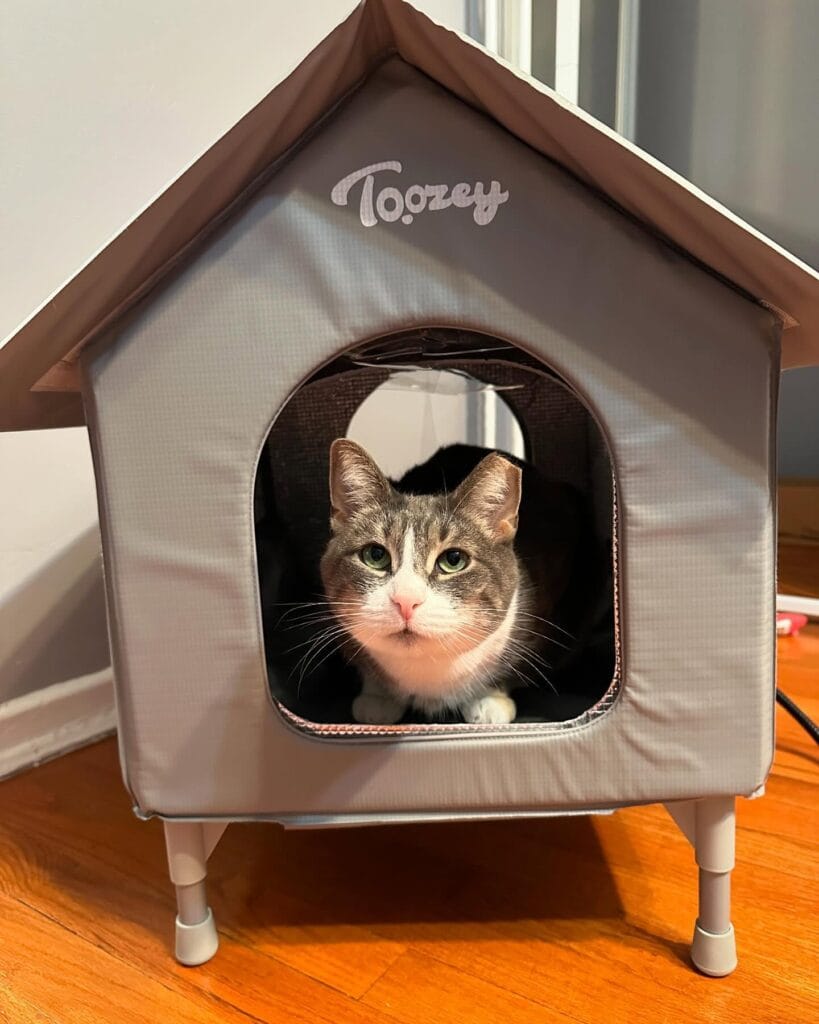
You know that moment when your golden has claimed every soft surface in the house — the couch, your favorite throw pillow, that one corner of the rug you tried to keep dog-free? Yeah. Cat owners deal with the same chaos, just with a lot more attitude involved.
This gray fabric cat house by Toozey is giving serious Pinterest-corner energy, and honestly it’s one of the most thoughtful pet shelter designs I’ve seen. The house-shaped silhouette features a peaked roof in a slightly darker taupe/brown tone, a rounded arch entryway, and sits elevated on four slim plastic legs — keeping the interior off cold hardwood floors. The whole thing looks like a tiny Airbnb your cat would leave a five-star review for.
The fabric shell appears to be a durable ripstop-style polyester — that slightly textured, woven look that resists snags and holds its shape. The interior looks fully enclosed except for the front opening, which creates that dark, den-like atmosphere cats actually crave. The legs are roughly 4-5 inches tall, creating airflow underneath — a small detail that makes a huge difference in temperature regulation.
To recreate this setup, grab the Toozey elevated pet house and place it near a window where indirect light hits the entrance — not direct sun, because the enclosed fabric traps heat fast. The hardwood floor placement here is doing real work too. Pair it with a small self-warming insert pad tucked inside (no cords, no electricity — the mylar lining reflects body heat back) and your cat has a temperature-controlled retreat year-round.
And if your cat’s the skeptical type who ignores anything new? Rub a little catnip on the inside lip of the arch entrance. Give it two days. They’ll own it like they chose it themselves — which, of course, they’ll fully believe they did.
The personalized “Toozey” script logo on the front panel is a cute branding touch, but what’s working harder here is the elevated base. Lift off the ground means less draft, less cold-floor chill in winter, and honestly? Less pet dander gathering in one low spot. If you love the idea of a more permanent, natural material version, 17 wooden cat house ideas for indoors and outdoors shows some gorgeous alternatives worth pinning.
Place it in a corner — exactly like this photo — so two walls create a natural sense of security around it. Cats choose corners instinctively. The house does the job, but the placement seals the deal.
📸 Photo credit: Instagram @catnip_queens
#4: The DIY Styrofoam Cooler Cat House That Actually Works
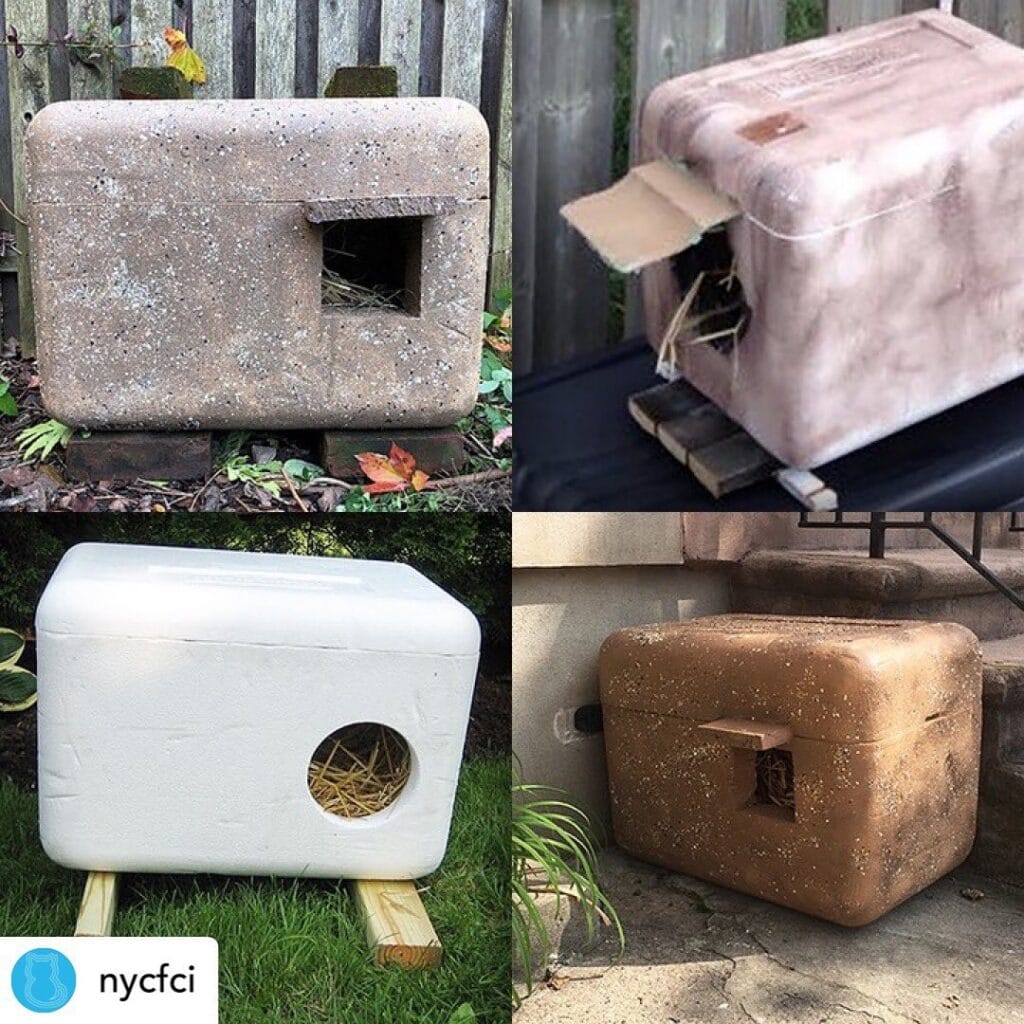
Okay, so you know how your golden retriever has that one spot in the yard she refuses to leave, no matter how cold it gets? Imagine a feral cat doing the exact same thing — except nobody’s bringing her inside. That’s the whole problem these little shelters solve.
What you’re looking at here is a styrofoam cooler repurposed into a feral cat shelter — and honestly, it’s one of the most practical DIY builds I’ve ever seen. The image shows four different versions, each made from large foam coolers (think the kind you’d grab at a hardware store for around $10-15). Some are painted in sandy beige or warm brown tones using exterior spray paint, which seals the foam and gives it that stone-like texture. Others stay white and get elevated on 2×4 wood legs to keep moisture out from underneath.
The entry hole gets cut to about 6-8 inches in diameter — big enough for a cat, small enough to block raccoons. Some builders add a cardboard ramp or small wooden door flap over the opening to trap warmth inside. The interior gets lined with straw (not hay — straw repels moisture, hay holds it).
Keep this in mind: the lid hinge matters more than people think. A loose lid lets cold air flood in. A few builders in this image used bungee cords or rope to secure the top tight.
Elevating the shelter on bricks or wood keeps the floor dry, which means the straw stays dry, which means the cat actually uses it. That’s the whole payoff.
For more cozy cat shelter ideas with a creative twist, 15 Crochet Cat House Patterns For Cozy Naps are worth a peek if you want indoor options that match your Pinterest aesthetic.
Spray two coats of paint minimum. The foam degrades fast in direct sun without it, and you’ll be rebuilding the whole thing by spring.
📸 Photo credit: Instagram @nycfci
#5: The Cedar-and-Char DIY Insulated Cat House That Looks Like a Pinterest Dream
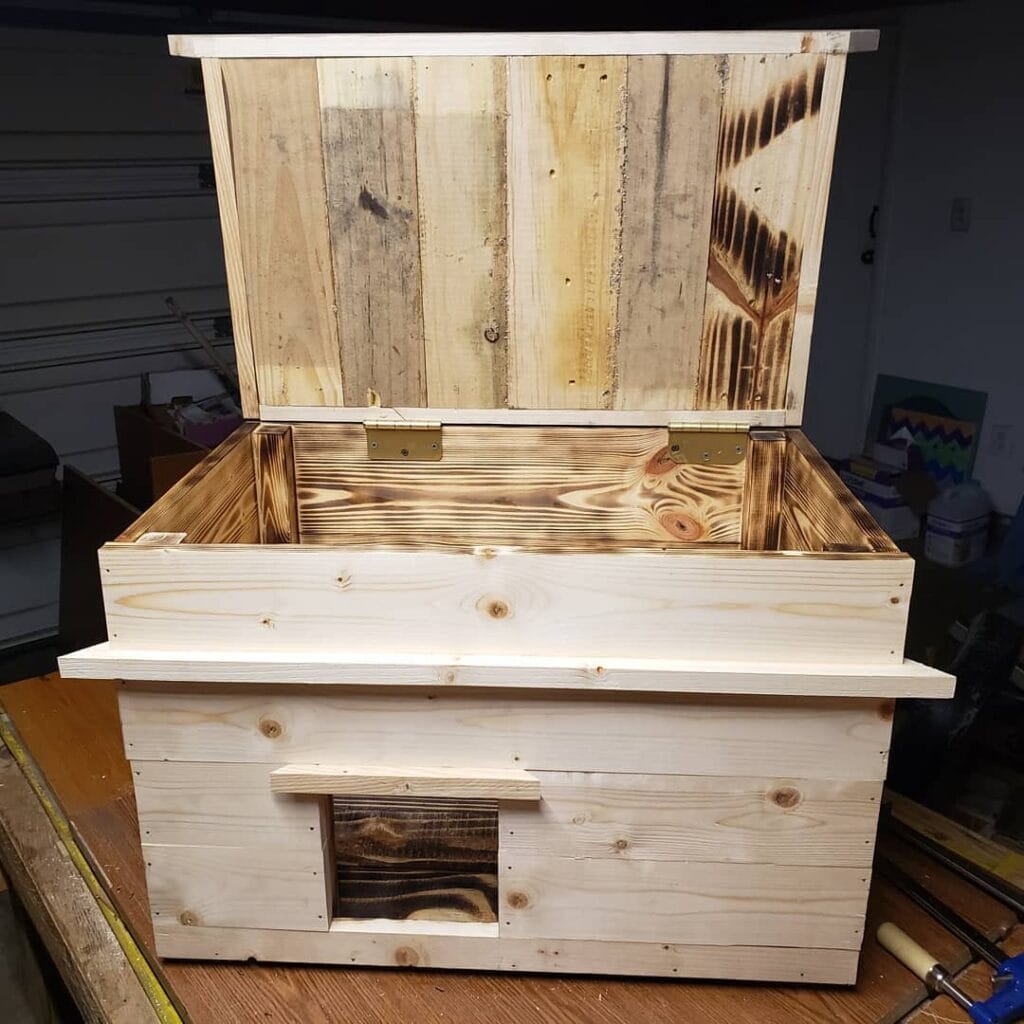
Okay, so you know how your golden girl tracks mud in and takes over every corner of the house? Cats do the same thing — but outside, in the cold, and with zero complaints. That’s exactly why this handbuilt cedar cat house stopped me mid-scroll.
This thing is made from natural pine planks with a torch-burned interior finish — that dark, smoky char you’re seeing inside isn’t damage, it’s intentional. It acts as a natural sealant and insulator, locking warmth in while keeping moisture out. The outside stays raw and pale, giving it that clean farmhouse look that would fit right into any backyard setup you’ve pinned.
The box is two-tiered — an upper sleeping chamber with a hinged lid (those are brass barrel hinges, by the way) that lifts for easy cleaning, and a lower entry section with a small rectangular opening just wide enough for a cat to squeeze through. That entry cutout keeps drafts from blasting straight into the sleeping area. Brilliant, honestly.
My cousin built something similar last winter for her barn cats using reclaimed pallet wood and a propane torch for the interior burn. She said the whole build took one weekend and under $40 in materials.
Sand the entry edges smooth — rough wood near that opening can snag fur or scratch little noses over time.
📸 Photo credit: Instagram @jbso_designs
#6: The Stacked Tire Cat Tower That Doubles as Outdoor Furniture
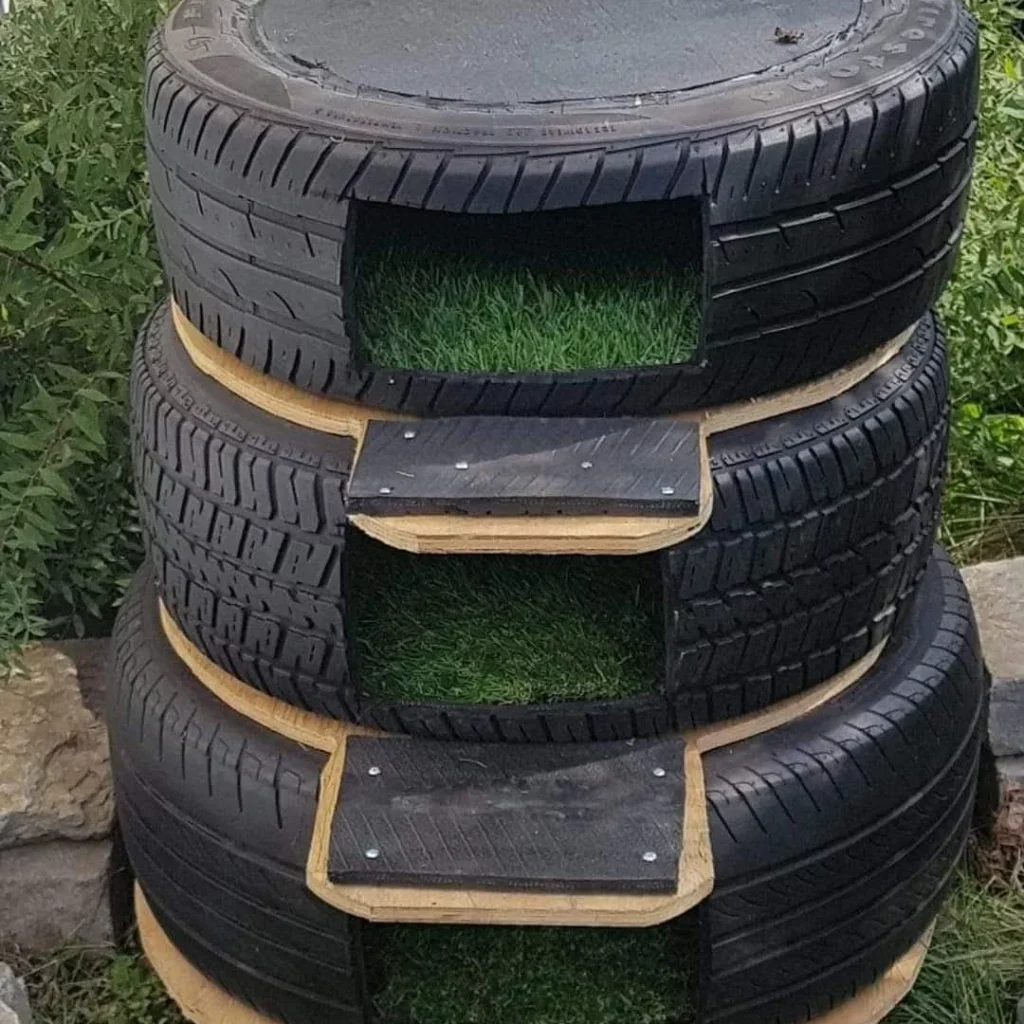
Okay, so you know how your golden is always stealing the cat’s bed and the poor cat ends up sleeping on the cold patio? That was my friend Dani’s exact situation until she spotted something like this and I literally screamed when she sent it to me.
This thing is three stacked car tires in graduating sizes — biggest at the bottom, smallest on top — with plywood shelves cut to fit each opening and artificial grass mat inserts lining every compartment. The whole structure sits on a flat plywood base and each tire has a cutout entry hole so the cat can pop in and out. It’s giving “rustic outdoor furniture” and the cat gets a whole tower to herself.
You need 3 used car tires (different sizes work best for that tiered look), ¾-inch plywood cut into circular base pieces and rectangular shelves, artificial grass strips, and rubber-tipped screws to attach everything. The wood trim around each tire opening keeps the structure tight and gives it that intentional, finished look instead of just… tires in a yard.
But here’s what makes this work for cold nights — the thick rubber tire walls trap heat naturally, so each compartment stays noticeably warmer than the outside air. That’s the insulation doing the heavy lifting, the cat stays warm, and you spend zero dollars on a fancy heated shelter.
Common mistake: people skip sealing the plywood base. One rainy week and that wood warps completely. Hit it with exterior waterproof sealant before assembly and it’ll hold up through seasons.
📸 Photo credit: Instagram @n.pourkamlvand
#7: The Two-Story Soft-Sided Cat House That Gives Every Cat Their Own Space
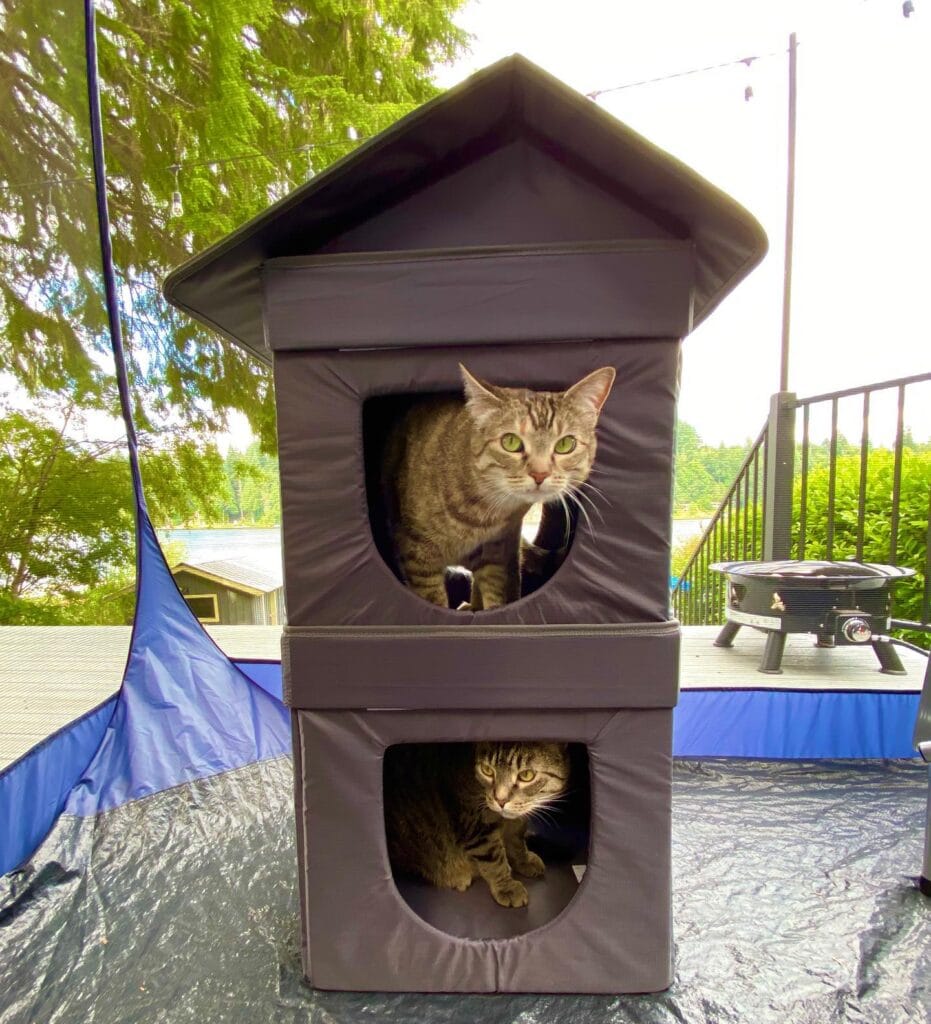
You know that thing your golden does where she claims the entire couch and you’re left sitting on the armrest? Cats pull the same move. My two boys used to fight over the same window perch every single morning — fur flying, zero chill.
This two-story collapsible cat house is the fix I didn’t know I needed.
The structure in this photo is a gray polyester fabric cat house with a peaked roof top, two separate compartments stacked vertically, and a square opening cut into the front of each level. Both openings are roughly 8–9 inches wide, just right for a medium-sized cat to slip in without squeezing. The whole unit sits on what looks like a tarp-lined tent floor, which honestly is a genius outdoor setup — sun, fresh air, and their own little house.
The bottom compartment is clearly the cozy, shadowed den for the more introverted cat. The top level? That’s the prime real estate. Better sightlines, closer to the roof, more light. In this photo one tabby is fully owning the top floor with those green eyes locked on the camera.
To recreate this setup outdoors, place a waterproof tarp or ground mat underneath to protect the base from moisture. The soft sides on this style of house compress flat for storage — fold it down in under 60 seconds and toss it in a bag when camping or traveling.
The separate floors mean two cats share one footprint without sharing one space, which cuts territorial stress and keeps your cats calm enough to actually enjoy being outside with you.
Look for versions with removable interior pads so you can swap them out between trips. A quick wash keeps smells from building up, especially after outdoor use.
📸 Photo credit: Instagram @hazelandremy
#8: This Guy Built a Foam Insulated Cat House That Actually Keeps Cats Warm All Winter
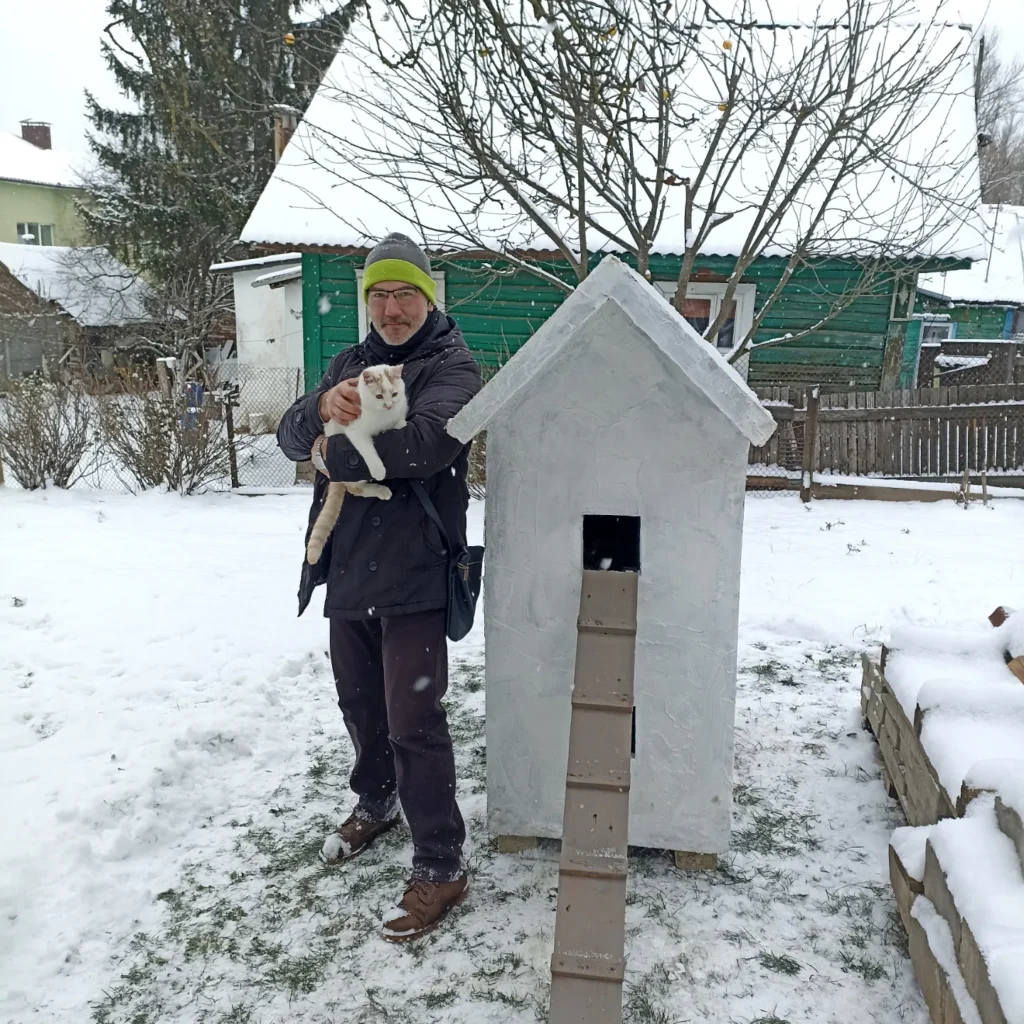
You know how your golden retriever has that one spot in the yard she claims as hers? Cats do the exact same thing — except when it’s freezing outside, they need actual shelter, not just a vibe. This photo stopped me cold (pun intended) because this guy built something that looks like a proper little house, not a sad cardboard box situation.
The structure here is built from expanded polystyrene foam (EPS), that thick white insulating material, cut and shaped into a full house silhouette — pitched roof, straight walls, the whole thing. The exterior is painted or coated matte white, and the base sits on a taupe/gray plastic step-ladder frame that lifts it off the snow-covered ground. The entry hole is cut center-front, roughly 6–8 inches square, just big enough for a cat, small enough to trap body heat inside.
That ladder base is doing real work here. Lifting the house off frozen ground prevents heat from escaping through the floor — insulated floor contact = warmth stays in longer. And when your outdoor cat has a dry, wind-blocked space like this, you stop worrying every time temperatures drop below freezing.
For the interior, line it with self-warming mylar blankets or thick fleece fabric — no electricity needed. Pack the walls with extra EPS foam scraps before sealing the panels if you’re DIYing this yourself.
If you love this whole outdoor-cat-setup energy, 19 Outdoor Cat Room Ideas That Cats Will Love will genuinely make your jaw drop.
The entry hole placement matters more than people think. Position it facing away from your prevailing wind direction — that single tweak cuts drafts completely and keeps the interior temperature noticeably warmer without any extra materials.
📸 Photo credit: Instagram @bolachau
#9: The Rooftop Feeding Station Cat House That’s Basically a Tiny Airbnb for Strays
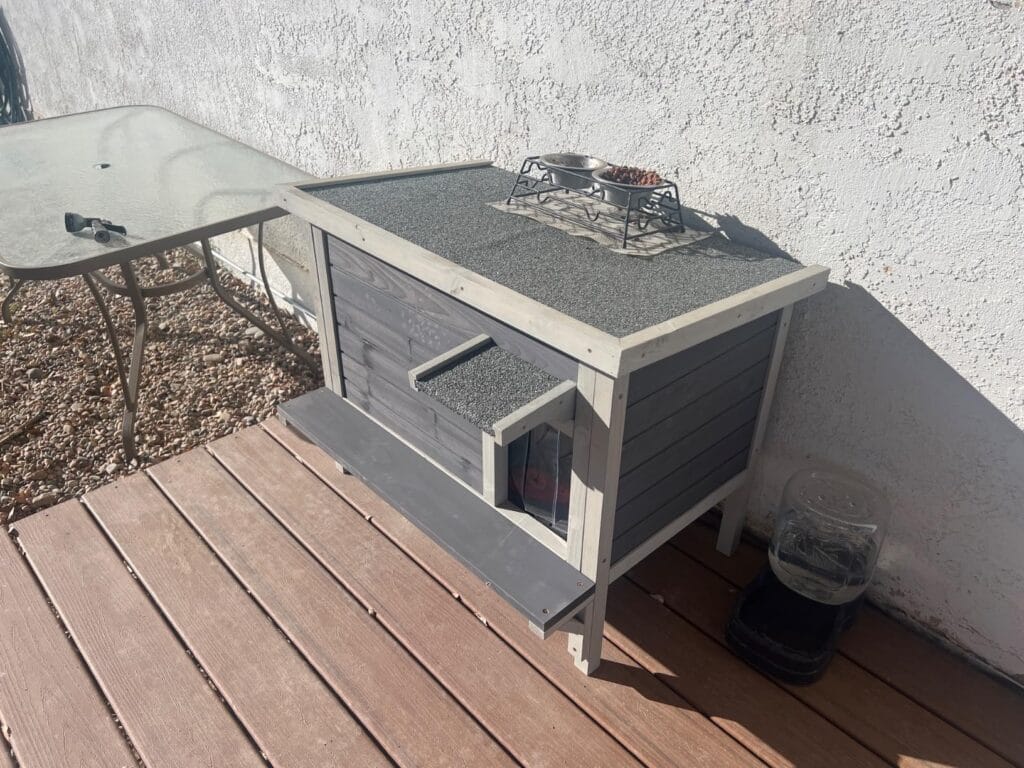
Okay so you know how your golden tracks mud across your porch and you’re always shuffling their bowl around trying to keep things tidy? Picture that energy, but for a colony of outdoor cats — bowls getting knocked over, food scattered everywhere, rain getting into everything. This setup fixes all of that in the most Pinterest-worthy way possible.
This gray-stained cedar wood cat house sitting on a composite wood deck is genuinely giving me architectural digest vibes. The flat roof is covered in charcoal roofing felt/mineral granule material — the same stuff used on actual house roofs — which makes it waterproof and durable. And the whole thing sits elevated on white-painted wooden legs, keeping the interior dry and away from cold ground temperatures.
The entry point is a small rectangular cat flap with a clear vinyl flap door — that vinyl strips door means cats push through easily but wind and rain stay out. Above the door, there’s a small covered porch/landing ledge with that same roofing felt surface, giving cats a dry spot to shake off before stepping inside. On top, a raised metal pet bowl stand holds two stainless steel bowls — bowls stay off the roof surface, keeping ants and debris out of the food.
Here’s the trick: place the feeding station on the roof instead of ground level. It keeps other wildlife like raccoons from easily accessing the food, and it gives the cats a reason to climb up and use the house regularly.
The gray wood stain ties everything together without looking like a random pet product dumped on your patio. It actually blends with outdoor furniture.
📸 Photo credit: Instagram @geguripets
#10: The Rudolph-Inspired Cat Cave That Makes Every Corner of Your Home Look Like a Holiday Pinterest Board
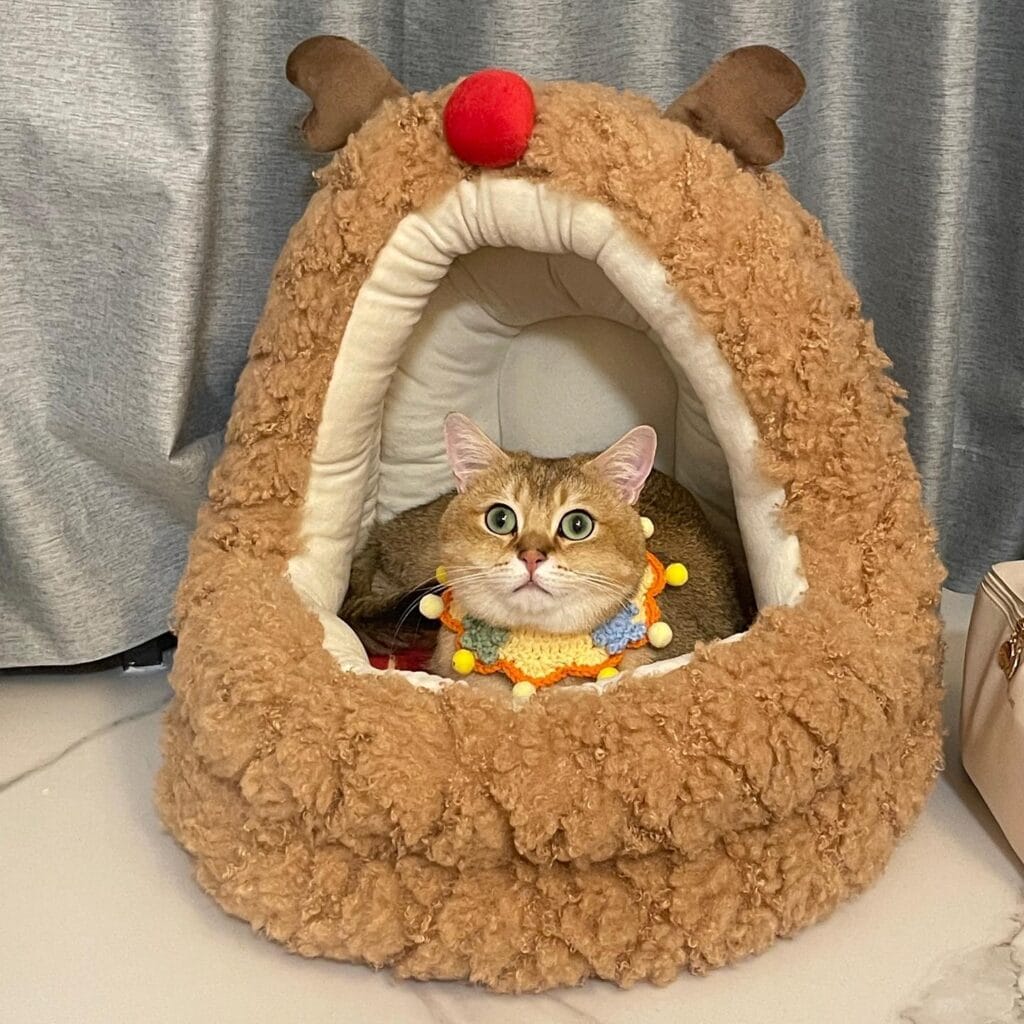
Your golden retriever has that one corner of the living room — the one where he circles three times, flops down, and sighs like the world owes him a nap. Cats do the same thing, and this little reindeer cave gives them a spot so cozy and cute, you’ll genuinely want it sitting out on display.
This is a sherpa-lined cave bed shaped like a round igloo, done up in warm caramel brown teddy fleece on the outside. Two little felt antler horns sit on top, and there’s a red felt pom-pom right between them — Rudolph, basically. The inside is lined in cream-colored plush, padded enough that the cat inside looks like it’s sitting in a cloud. And honestly? The cat’s colorful crocheted collar bib with yellow and orange pom-pom trim sends the whole look over the top.
To recreate this vibe, you need a cave-style cat bed with a hooded opening — look for ones made from boucle or sherpa fabric in warm neutrals like caramel, oat, or chestnut. The antler and pom-pom details are what make this specific bed read “holiday decor” instead of just “pet stuff,” so look for seasonal versions on Etsy or Amazon around October through December. The opening diameter matters — aim for at least 10–12 inches wide so your cat doesn’t feel squeezed going in.
The crocheted collar bib is a whole separate accessory, and it’s giving everything. If you crochet even a little, a simple flower collar with pom-pom edging takes maybe 30 minutes. Patterns are everywhere on Ravelry. If you want something similar for festive pet photos — think 17 Cat Halloween Costume Trends Winning Contests — this collar-plus-cave combo is genuinely one of the easiest setups to pull off.
Place the cave against a neutral curtain backdrop like the soft gray one in this photo. It does so much. The warm brown of the bed pops without competing with anything, and the whole setup photographs like a holiday card.
Sherpa and boucle fabrics trap warmth without needing any extra insulation — the enclosed dome shape holds your cat’s body heat in, which means zero drafts reaching them inside. That enclosed warmth is what keeps cats coming back to cave beds over flat mats, especially in winter.
📸 Photo credit: Instagram @jajasunnn
#11: The Clawsable Heated Cat House That Keeps Outdoor Cats Warm All Winter
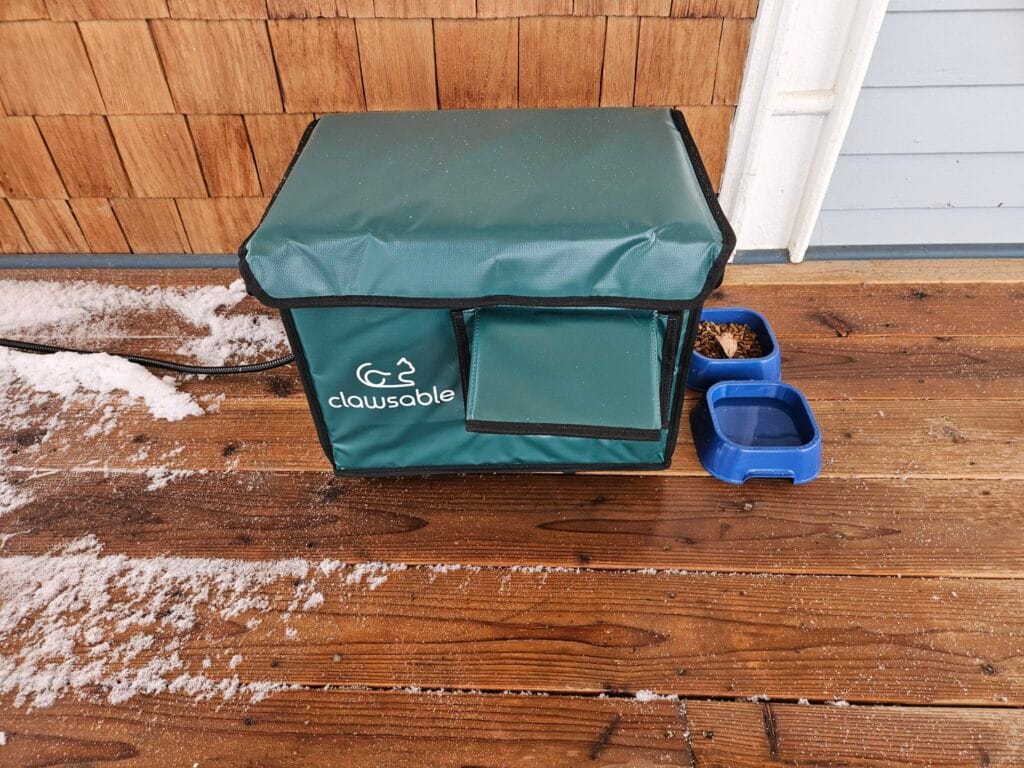
You know that moment when it’s freezing outside and you’re watching your golden retriever press his nose against the glass door, worried about the neighborhood stray huddled on your porch? Yeah. That got me too.
This is the Clawsable insulated heated cat shelter, and it’s sitting right on a wood deck with a light dusting of snow around it — which tells you everything about where this thing earns its keep.
The shell is made from heavy-duty PVC-coated tarpaulin fabric in forest green, with black binding trim along every edge. It’s not flimsy. The entrance is a front-cut flap opening, low enough for a cat to duck in but small enough to trap heat inside. Two blue plastic feeding bowls sit right beside it — one with kibble, one empty — which is honestly the setup you want when you’re caring for a feral or outdoor cat in winter.
The power cord runs out the back, meaning this connects to a heated interior pad that keeps the floor warm even when temps drop below freezing.
Place this against a wall or fence to cut wind exposure on three sides. That cord needs a weatherproof outdoor outlet — a GFCI outlet cover handles this for under ten dollars.
Stock both bowls daily. Cats in cold weather burn more calories just staying warm, so don’t skip the food bowl.
📸 Photo credit: Instagram @jasondockter
#12: The Spanish-Style Insulated Dog House That Looks Better Than Most Backyard Patios
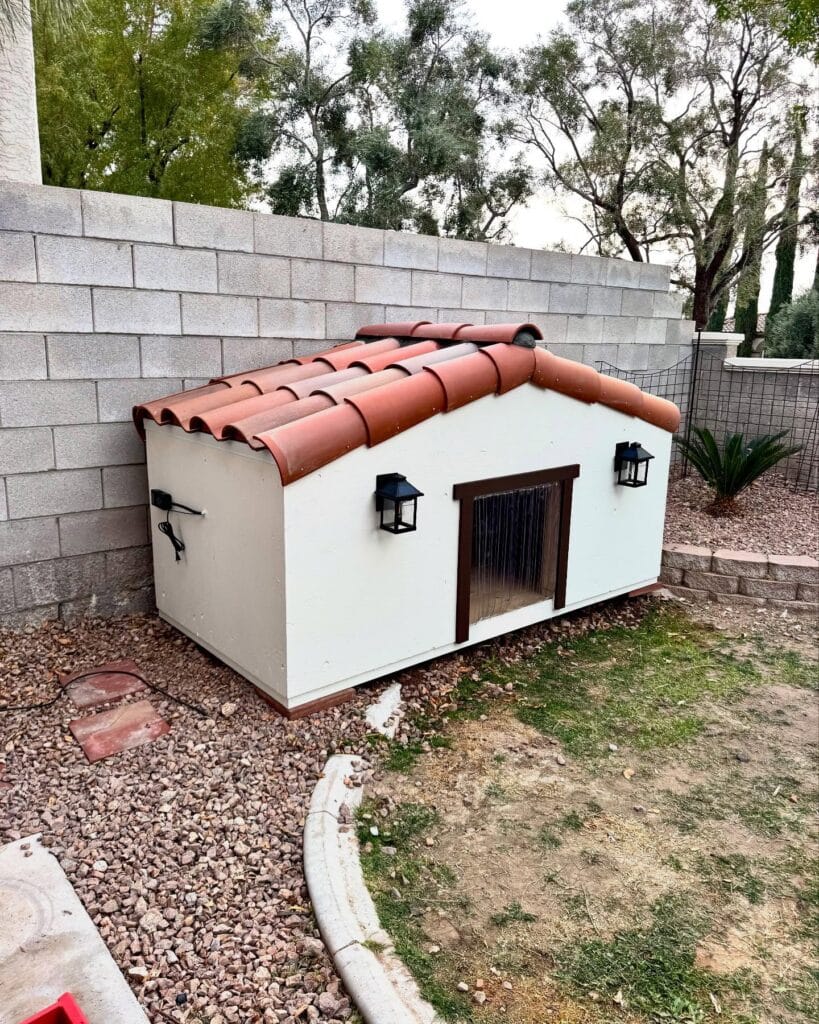
Okay, so hear me out — you know that feeling when you’re scrolling Pinterest at midnight and you see something that makes you physically stop? That’s exactly what happened to me when I first saw this setup, and I knew you needed to see it too.
This is a white stucco-finished insulated dog house with a genuine terracotta barrel-tile roof — yes, the same style as those dreamy Spanish Colonial homes — and it’s sitting right in someone’s backyard like it belongs on a magazine cover. Two black lantern-style wall sconces flank the entrance, and there’s a brown wood-framed doorway with a clear vinyl strip curtain that keeps the heat in without blocking your pup’s view.
The base structure is built from what looks like foam-core insulated panels wrapped in a smooth stucco finish. That insulation layer is the whole point — it locks in warmth during cold nights and blocks heat during summer, so your golden retriever isn’t roasting inside a plywood box. And the curved terracotta tiles aren’t just pretty — they shed rain and reflect sun, which is exactly what you want in a warm climate like Arizona or Southern California.
To recreate this, you’ll need 2-inch thick EPS foam insulated wall panels as your base — these are the same panels used in energy-efficient home construction. Cover the exterior with a fiber cement stucco coat in a warm white or cream tone. Source Spanish S-tile or barrel tiles in a burnt terracotta colorway from any roofing supply store. The tiles sit on a simple gable-style roof frame built from pressure-treated 2×4 lumber.
For the entrance, frame it out with dark walnut-stained wood trim and hang a clear PVC strip door curtain — these run about $15–$25 online and are a game-changer for insulation. My cousin built something similar for her two labs last winter, and she said the inside stayed 10–15 degrees warmer than the outside air on cold nights. The sconces are purely decorative but they’re wired to an outdoor extension cord along the left side wall, which you can see in the image — totally optional but such a cute touch if your backyard has an outlet nearby.
Place the house flush against a cinder block or masonry wall to cut down on wind exposure on at least one side. Add a rubber-backed outdoor rug just inside the entrance to catch mud before it spreads — you and I both know golden paws don’t come clean. Elevate the entire structure on a pressure-treated wood base (visible in the image) to keep moisture from wicking up through the floor panels.
📸 Photo credit: Instagram @hd_doghouse_jg
#13: DIY Blue Tote Insulated Cat House — The $10 Outdoor Shelter That Actually Works
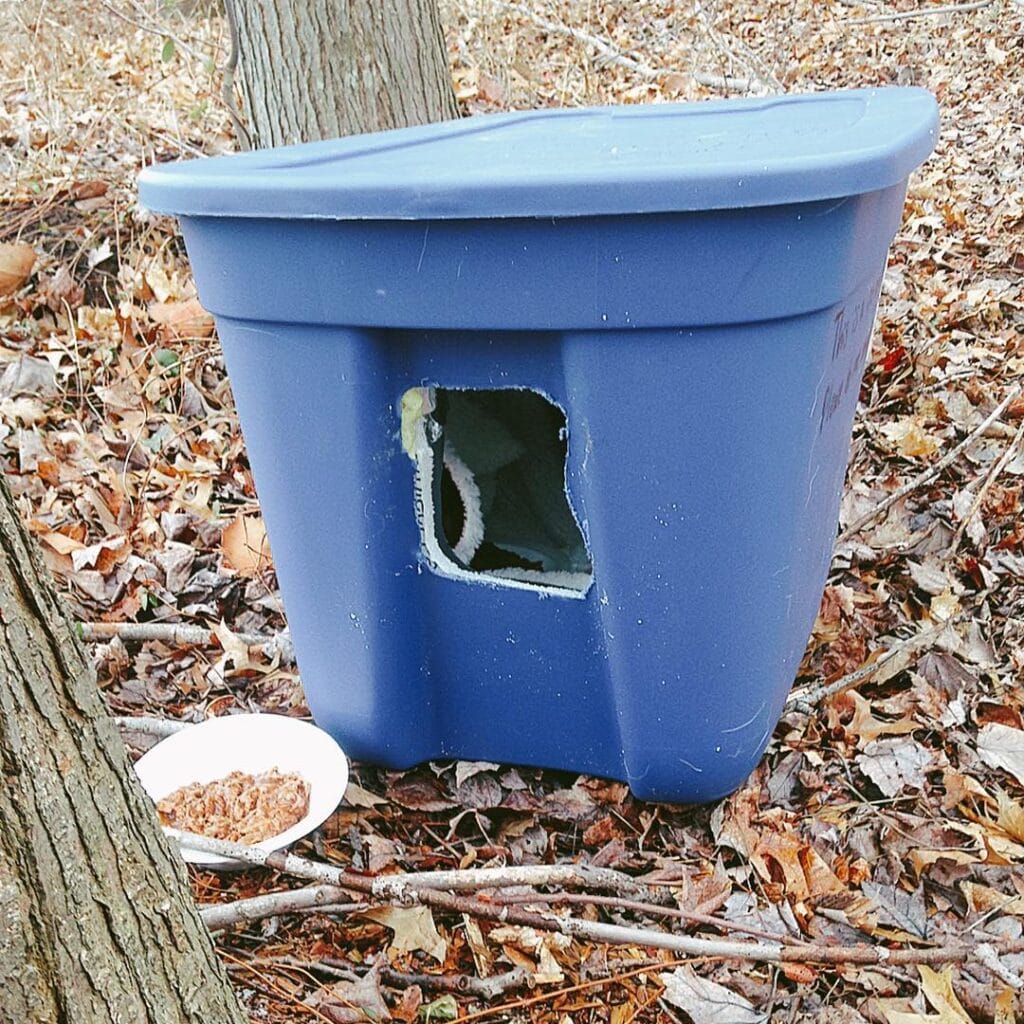
You know that feeling when you’re tucking your golden in for the night with his fluffy bed and his little blanket, and then you glance out the window and wonder about the neighborhood cats sleeping in the cold? Yeah. That guilt hits different in winter.
This shelter is built from a blue plastic storage tote — the kind you probably have stacked in your garage right now — with a square entry hole cut directly into one side, roughly 6×6 inches, and the edges softened with foam weatherstripping tape to protect little heads and paws from sharp plastic.
Inside, you can see black foam insulation board lining the walls. That foam layer is everything here — it traps body heat so the cat’s own warmth keeps the shelter at a livable temperature even when it’s below freezing outside. The lid sits snug on top, keeping rain and wind out.
To recreate this, grab a 18-gallon or larger tote, rigid foam insulation panels from any hardware store (cut them to fit the walls, floor, and ceiling), and food-safe silicone or foam tape for the entrance edges. A bowl of wet food nearby — like the white dish sitting outside the entrance — signals safety and draws skittish outdoor cats in.
Finally, placement matters more than people think. Tuck the opening side against a tree or fence facing away from the wind direction. Elevating the tote on a wooden pallet keeps moisture from seeping through the plastic floor overnight.
📸 Photo credit: Instagram @risa10sai
#14: The Barn-Style Insulated Cat House That Blends Into Your Farmhouse Aesthetic
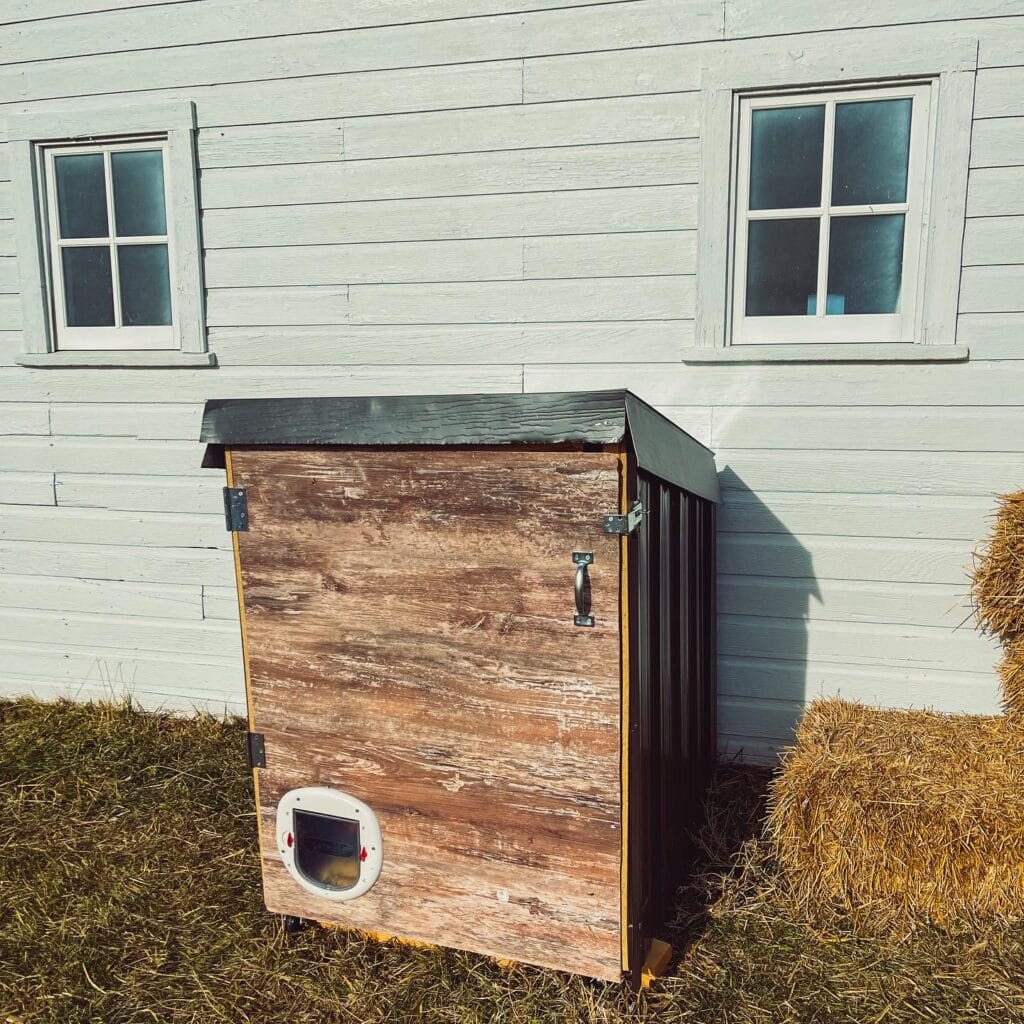
Okay, so you know how your golden retriever has that one spot she claimed in the yard and absolutely refuses to leave? Your barn cats are the same way — and this little insulated cat house gives them a spot that’s actually theirs, without looking like an eyesore next to your farmhouse siding.
This thing is genuinely so cute. The front panel is reclaimed-look wood, weathered brown with natural grain variation, and the roof is corrugated dark metal — the kind that sheds rain and snow without warping. It sits right up against a pale sage green barn wall, next to hay bales, and honestly? It looks intentional. Like decor.
The magic is in the cat flap door at the bottom — it’s a white circular pet door with a magnetic flap and those little red trim accents. That flap traps warm air inside, so the interior stays protected from wind chill. The hinges and latch on the front panel are gunmetal metal hardware, and the whole box looks like it was built to handle real winters.
For the DIY version, grab 1-inch rigid foam insulation boards for the interior walls, a corrugated metal sheet for the roof overhang, and cedar planks stained in a driftwood tone for the exterior. The cat flap itself — you can find SureFlap or PetSafe magnetic cat doors on Amazon for under $30.
Place hay bales on either side for windbreak. That simple placement cuts drafts dramatically without any extra build work.
📸 Photo credit: Instagram @theschoolhouseroad
#15: The “Meow” Brick Cat House That Looks Like Street Art
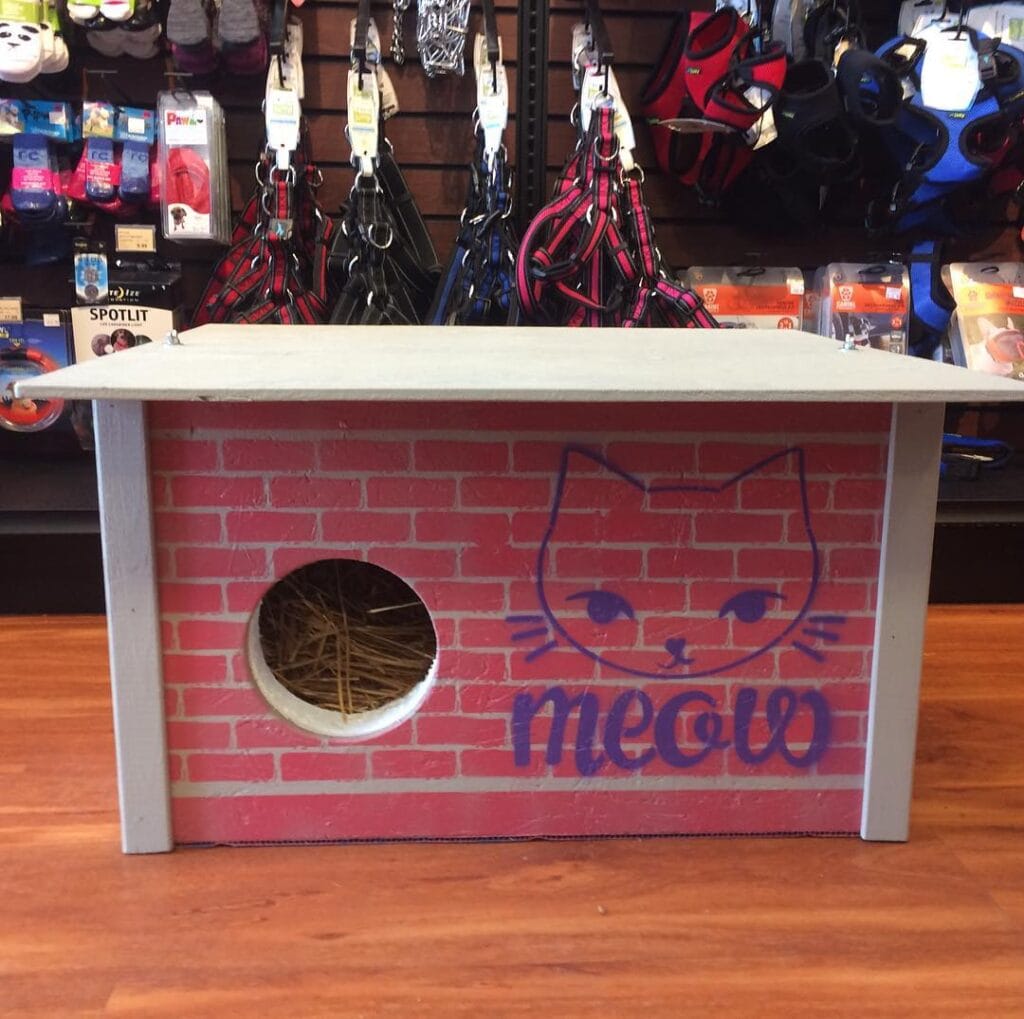
Okay, so you know how your golden retriever has that one corner of the living room she’s basically claimed as her throne? Cats do the same thing — except they want walls, a roof, and zero interruptions.
This little wooden cat house is giving full urban mural energy. The pink-painted brick pattern on the front panel, the purple spray-paint-style cat face, and that bold “meow” graffiti lettering make it look less like a pet product and more like something off a Brooklyn side street.
The house itself sits on four white wooden legs, keeping it slightly elevated off the floor — which actually helps with insulation since cold air doesn’t pool underneath it. The circular entry hole is lined in white and packed with natural hay bedding, giving your cat a warm, nest-like landing spot the moment she steps in. The flat white roof panel overhangs the sides just enough to block drafts from hitting the entrance directly.
To recreate this setup, grab a plain wooden cat hideaway box (look for ones with MDF or plywood panels, roughly 12″ x 18″ x 10″), paint the exterior with non-toxic brick-pattern stencils, then hit it with some acrylic craft paint in coral and white. The graffiti lettering? A purple paint marker does that in under five minutes.
Line the inside with compressed hay or fleece batting — hay holds warmth better in winter, fleece is easier to wash in spring.
And if your cat is more of a homebody creative type, 7 Fun Homemade Cat Toys Kitties Can’t Resist pairs perfectly with a cozy hideout like this one.
📸 Photo credit: Instagram @tlcanimalaid
#16: The Two-Story Outdoor Cat House That Handles a Blizzard Like It’s Nothing
Okay so you know that feeling when it’s freezing outside and you’re worried sick about the neighborhood cats? Like, you’re standing at your window with your golden retriever pressed against your leg, both of you watching the snow pile up, and you just know something needs to be done about it?
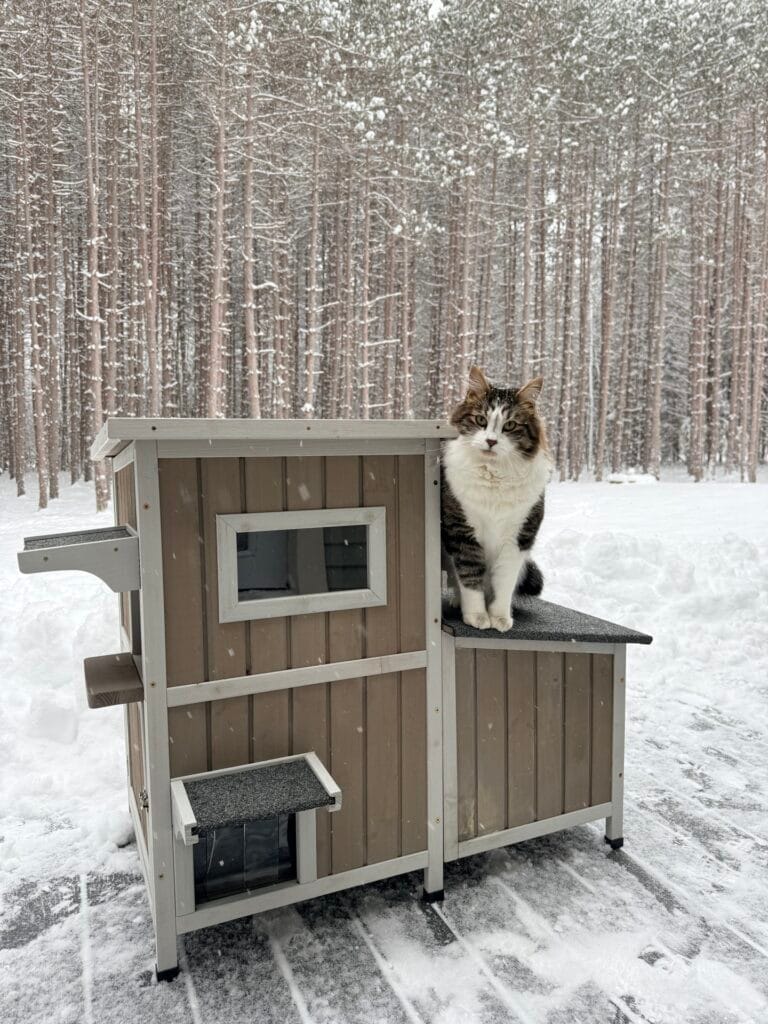
This two-story insulated wooden cat house is exactly that something.
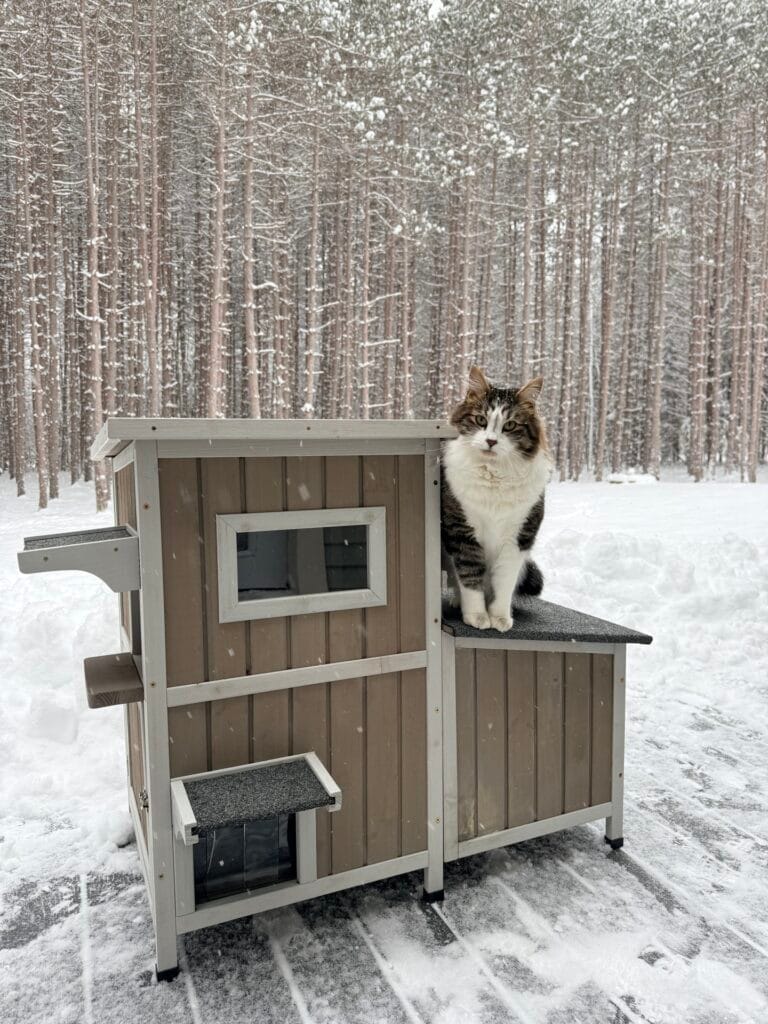
The structure in this photo is built from tongue-and-groove cedar planks finished in a warm greige stain — that gray-taupe color that looks like it came straight off a Pinterest board, honestly. It sits on raised plastic feet to keep the floor off the frozen ground, which is a big deal because ground contact pulls heat out fast. The roof has dark asphalt shingles — the same material used on actual homes — and each level has its own rubberized non-slip entry ramp with grip texture so cats don’t slip on ice.
There’s a small acrylic window on the upper level that lets light in without letting cold air through. And the lower entry door is a flexible vinyl flap, which cats push through easily but which seals back to trap warmth inside. The upper deck has a flat overhang — cats sit up there and survey everything like tiny snow leopards.
To get this setup, look for a two-story feral cat shelter rated to at least -20°F, like the Aivituvin or Petsfit outdoor models. Line the interior floors with self-warming mylar blankets cut to size — no electricity needed, they reflect body heat back. Pack the walls with Thinsulate batting if your winters hit hard. And place it with the entry door away from the wind direction.
Add a heated water bowl nearby — the kind with a 25-watt internal coil — so the cats have access to liquid water even when temps drop below freezing. Tuck the whole setup against a windbreak like a fence or tree line, just like in this photo, and you’ve basically built a winter refuge.
If you want to go the DIY route for indoor cat structures too, 7 Modern Cat Furniture DIYs for Stylish Homes has some seriously clever builds worth looking at.
The feature here is the raised two-story design with insulated walls — the benefit is that multiple cats can shelter without competing for one cramped space — and the payoff is that you stop worrying every time the temperature drops.
The cat in this photo is owning that top deck. Snowflakes landing on her fur, forest behind her, completely unbothered. That’s what a well-built shelter does — it gives them a reason to actually use it.
📸 Photo credit: Instagram @petscossetoffice
The Insulation Mistake That Leaves Outdoor Cats Shivering All Winter
Okay, real talk — most people buy an insulated cat house and stuff it with a fluffy blanket, thinking they nailed it. Girl, that’s actually the worst thing you can do.
Regular blankets absorb moisture. So when your cat comes in from the rain or snow, that blanket gets damp and stays damp — and wet insulation pulls heat away from their body faster than no insulation at all.
Here’s what actually works: mylar emergency blankets layered underneath a thin layer of straw (not hay — straw). Straw doesn’t hold moisture, it pushes it away, and it traps body heat like nothing else. My neighbor’s barn cats survived a brutal Colorado winter using exactly this setup.
The other thing nobody mentions? Door placement matters more than the insulation material. Face the opening away from your prevailing wind direction. Cold air rushing straight into the opening kills all your insulation’s hard work instantly.
And honestly, if your cat is crafty and destructive indoors too, pairing a safe outdoor house with something like these durable DIY cat scratcher ideas keeps everybody happier.
Your Golden Deserves a Clean Couch (And So Do You)
You’ve got the Pinterest board, the cozy throws, the whole aesthetic going. Don’t let muddy paws wreck it.
Pick one cover this week — just one. Test it. Wash it. See how it feels when your girl jumps up after her walk and you don’t even flinch.
That’s the moment you’ll thank yourself.
Your home can look good and survive a golden retriever. Those two things aren’t fighting each other anymore. So — which room are you tackling first, the sofa or the bedroom?

Amr Mohsen is a software engineer who traded his keyboard for a leash — at least on weekends. His love for dogs inspired him to share what he learns as a dog owner and enthusiast, bringing a detail-oriented, research-driven perspective to every article he writes. If it’s about dogs, he’s probably already looked it up twice.