Or… does this sound like your golden? The second your dog comes barreling through the back door, paws caked in mud, and begins heading for your cream-colored rug, your heart just breaks for you.
And, at the same time, you want her to run free. You want her tail wagging, her whole body wiggling with joy. Unfortunately your backyard is just a dirt patch with big dreams.
That’s the gap we’re fixing today.
I’ve been obsessed with dog park design lately and these dog parks are so cute they would fit right into my Pinterest boards. They are great spaces for your dog and also look cute doing it.
Here are 10 dog park design ideas that will keep your girl the happiest golden on the block… and your floors a little cleaner too.
#1: The Agility Playground That Makes Your Golden Retriever Forget the Backyard Even Exists
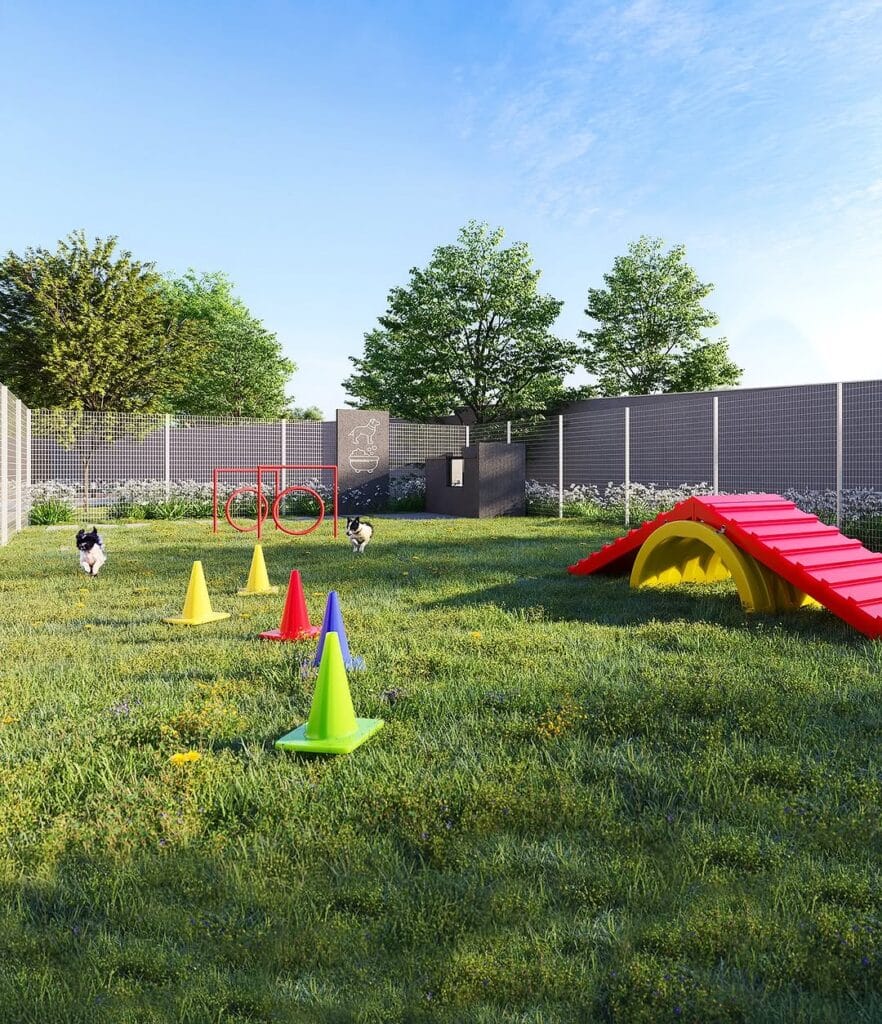
What a relief it is to the golden that she can finally get the full benefit of running around at full speed without you panicking she’ll run into the flower beds.
Linen shirts and dresses don’t stand a chance in this action-packed corner of the party — and really, it’s so well-thought-out it looks like a Pinterest board came to life. The setup has a lush green turf field enclosed by gray powder-coated wire mesh fencing that is tall enough to contain the determined retriever. Colorful traffic-style agility cones in yellow, red, blue and green are scattered in a weave pattern, paired with a red hoop jump frame and a red-and-yellow A-frame ramp with a textured surface.
Grab a set of heavy-duty agility cones (18-inch), a PVC jump ring set, and a wooden A-frame ramp, sealed with weather-resistant paint. The agility cones give the dogs something to weave through and with their energy burning fast and being mentally stimulated, it’s a win for me!
That dark stone structure in the back of the picture is the dog wash station, built into the fencing wall so the mud stays on the outside of the house.
Keep the grass a mix of natural turf and clover, for soft paw landings. Make sure you space your agility stations apart at least 6 feet, for safe turning room. 12 Heartfelt Designs for DIY Dog Accessories has some awesome and original doggie accessories you might like to try and make.
📸 Photo credit: Instagram @archviz.supply
#2: The Backyard Dog Playground Station That’ll Make Your Golden Retriever Lose His Mind
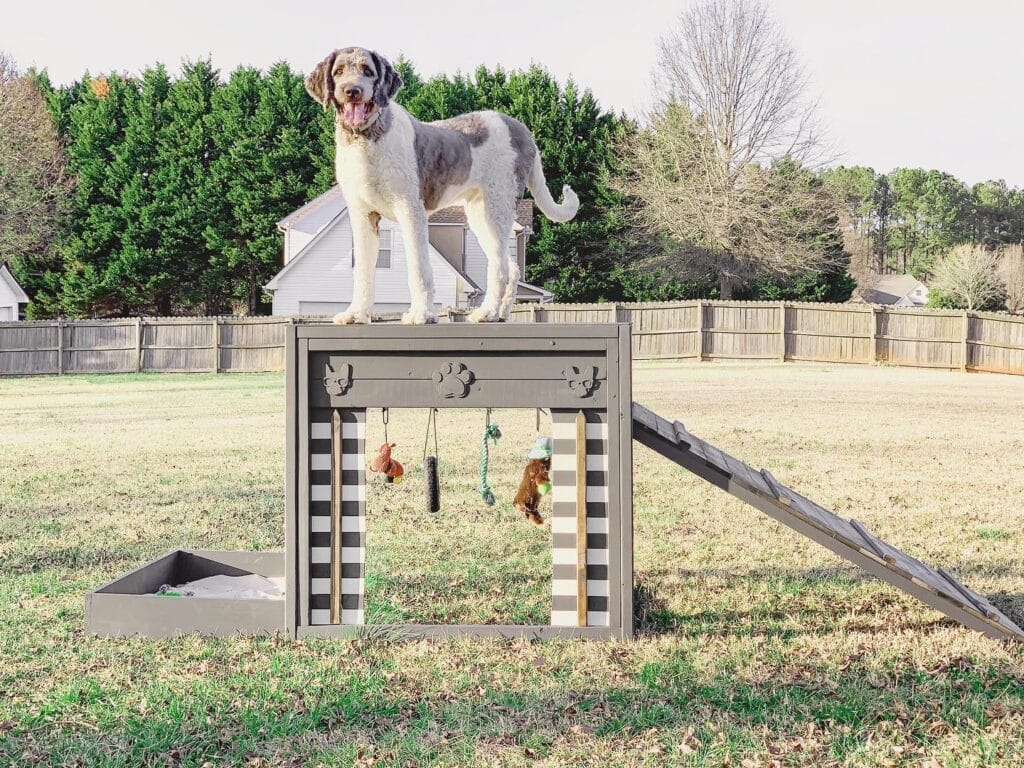
Have you ever had that moment where your dog is running around the yard and you’ve thrown the ball 17 times and your dog is still staring at you like “Throw it again?” This helps with that.
This pretty gray-painted wood platform station is giving me Pinterest board energy, and it’s actually functional. It has a ramp access point on the right side, some vertical slat panels painted in bold black-and-white stripes, and hanging rope toys for your dog to climb, explore, and bat at while you do nothing.
If you want to try and recreate this amazing idea all you will need is, pressure-treated 4×4 lumber for the frame, ½-inch plywood for the platform top, exterior gray paint, a jigsaw to cut out the paw prints on the top rail, S-hooks and carabiners to hang toys underneath and a shallow sand tray to sit next to it that is actually a dig box.
Paint the slats white and black alternately before assembling the blinds. It is easier than painting around them.
The best part: I put a platform top on the backyard exercise pen. Shy or anxious dogs get a “place” command spot up there. The extra height plus the space gives them a calmer, more focused dog when we’re out there training.
📸 Photo credit: Instagram @_ashleighlaurn
#3: The Dog Park Doghouse Photo Op Station
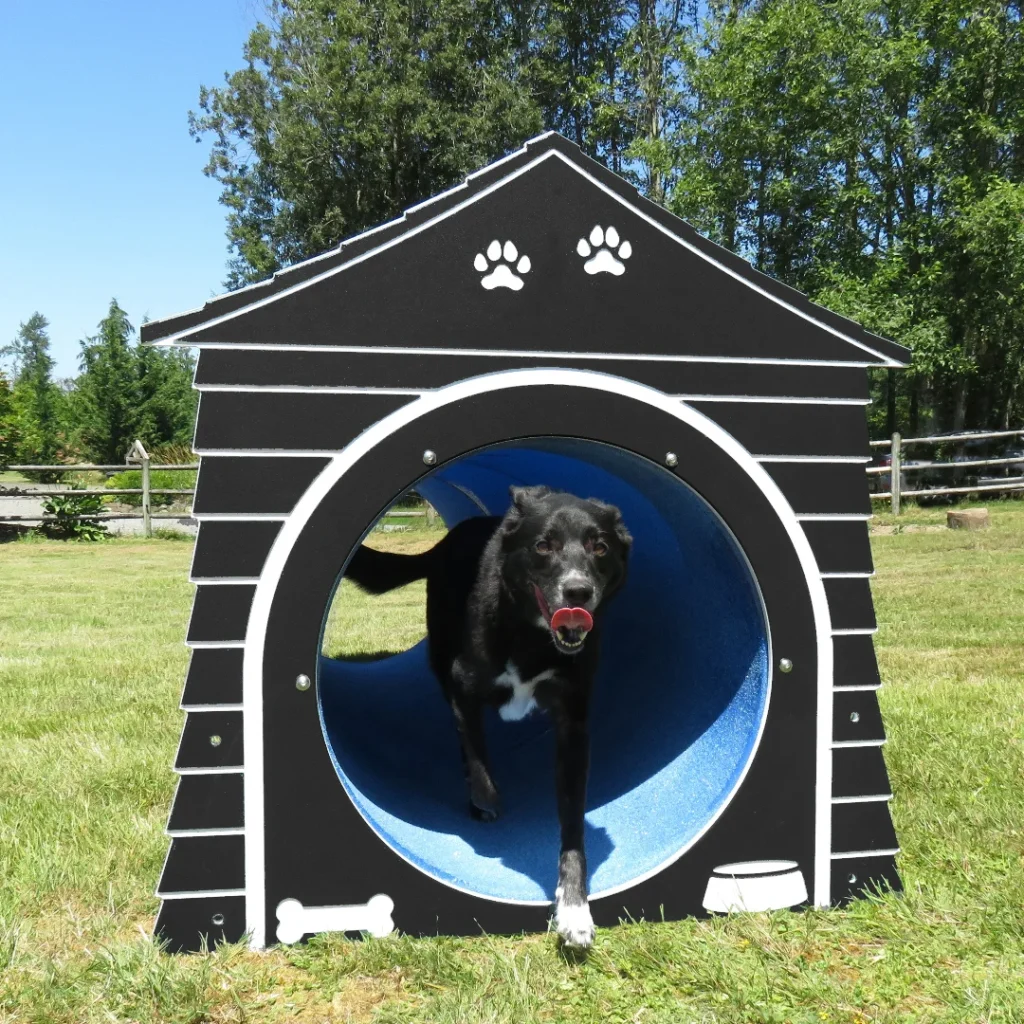
Your golden is always the star of the park so she deserves a set worthy of her energy!
This black foam board or painted plywood doghouse façade is built as a photo booth prop, not an actual shelter. The front panel features a circular tunnel opening lined with a piece of blue glitter fabric. White paw print cutouts can be seen near the peaked roofline. A bone and bowl are hand-painted on the base. Dogs will walk through the tunnel, you will snap the picture, and everyone will be in awe of your photos on Instagram!
DIY: How to recreate this look on your door? It’s easy! All you need is the following: • ¾-inch plywood sheets, paint them matte black and attach white vinyl trim to the edges.• A 24-inch diameter circle for the opening.• A blue sequin or glitter fabric tube. This was simply stapled to the back of the plywood circle. You can get cute white vinyl paw prints on Etsy for under $10.
Attach the facade to the wall using L-brackets (you can then screw them into a wooden base frame. This is why you will not have to worry about it falling over when kids step up to the top (it has a grassed area). If you’re worried about it falling over when your park is windy, you could weigh down the base with sandbags.
Make sure it’s modular. That way, you can break the facade down into two bolt-together panels and store it flat between events.
📸 Photo credit: Instagram @dogonitparks
#4: The Ramp-and-Stair Agility Platform That Makes Dog Training Actually Fun
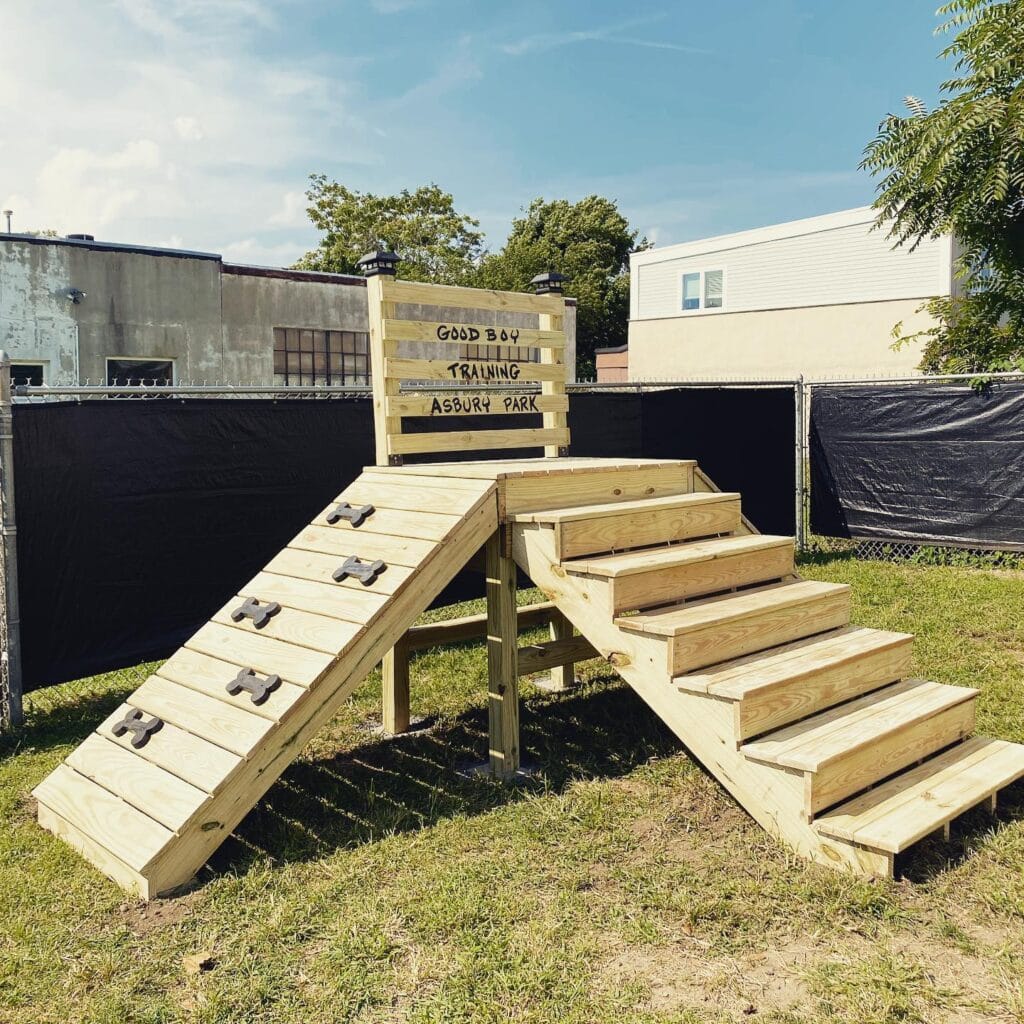
Your golden dog comes bounding towards you with her tail going absolutely feral. You are standing there hoping she doesn’t take out your knees again. She just has so much energy.
This pressure-treated pine agility platform from Good Boy Training in Asbury Park has a bone-grip ramp on the left side and a 4-step staircase on the right side, both leading up to a raised platform in the middle that seems like a jungle gym built for dogs. The natural tones of the wood would even look good on a Pinterest pin.
You will need: 2×6 pressure-treated lumber to make the steps, non-slip rubber bone-shaped treads (the dark pieces that cover the ramp), and 4×4 posts for the main structure of the tower. The back panel of the house is actually a sign board that you can personalize with your dog’s name using exterior black spray paint.
If you’re building a ramp for a cat, try to build it at a roughly 30-degree angle. This steep enough to be a challenge for her, but not so steep that she’ll give up halfway up. The grip treads on the bottom should give her extra traction.
Make sure you sand the edges before putting it together. Golden retreivers will mouth everything, which means they will mouth the edges. Splinters are not fun for their mouths.
📸 Photo credit: Instagram @cameroncustoms13
#5: The Elevated Concrete Perch — A Dog Park Lookout Spot Your Pup Will Actually Use
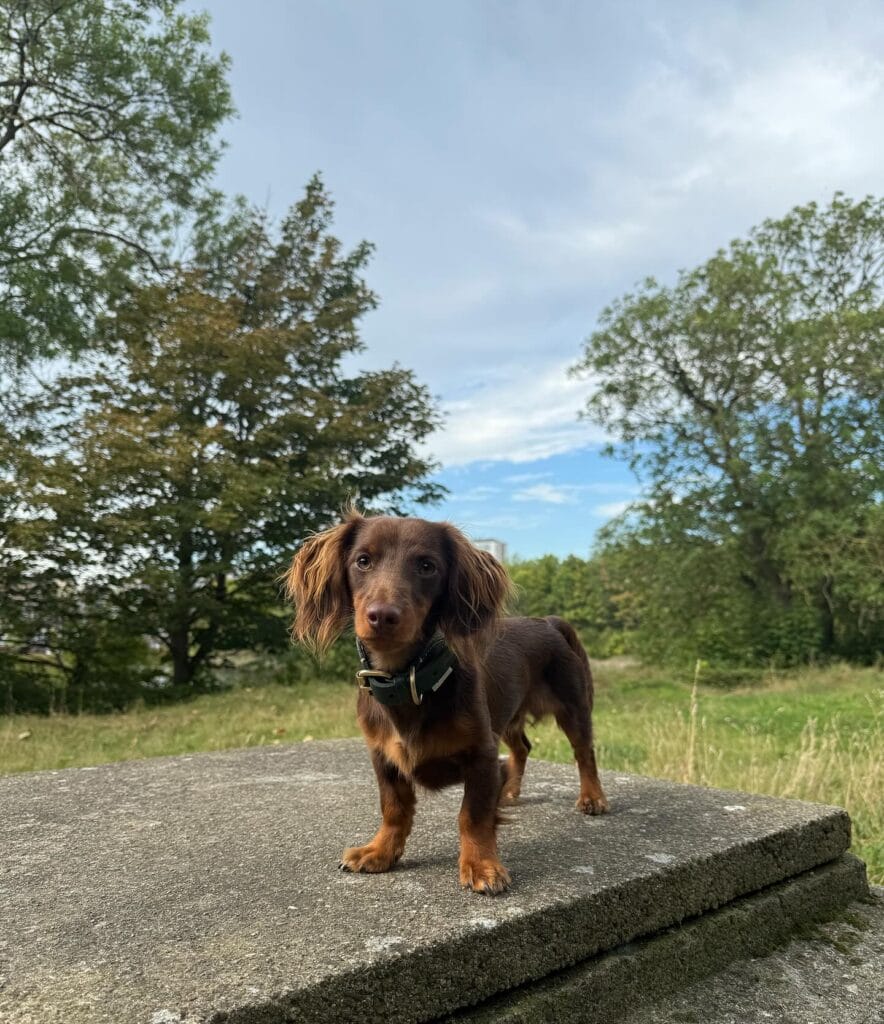
You know that moment when your golden is sniffing around the park and she just refuses to move from the spot she found her throne in. This design is what I would imagine her throne looks like.
The running area is a low-profile concrete platform, roughly 6-8 inches off the ground, and on a natural rise in an open green space. It gives dogs a defined spot to “own” and gives them less anxiety in a busy park. It has tall native grasses surrounding it, and a few mature deciduous trees so that the area is shady, but not blind to the surroundings.
If you have time, make your own version of the photo above. It requires a pre-cast concrete stepping stone or landscape slab. I purchased a 24×36 inch stepping stone from Home Depot. I planted a few ornamental wild grasses loosely around the perimeter of the stepping stone, so that they appear to be growing wild.
Place it in an area that catches the afternoon sun but is still close enough to the shade of the trees so that your dogs have shade to lounge in. It is also a fact that dogs instinctively go to the top of things to view their surroundings. Now they will have a comfortable place to sit and watch without always rushing the fence.
📸 Photo credit: Instagram @minidoxiehouston
#6: The Agility Ramp + Stepping Pods Setup That Every Dog Park Needs
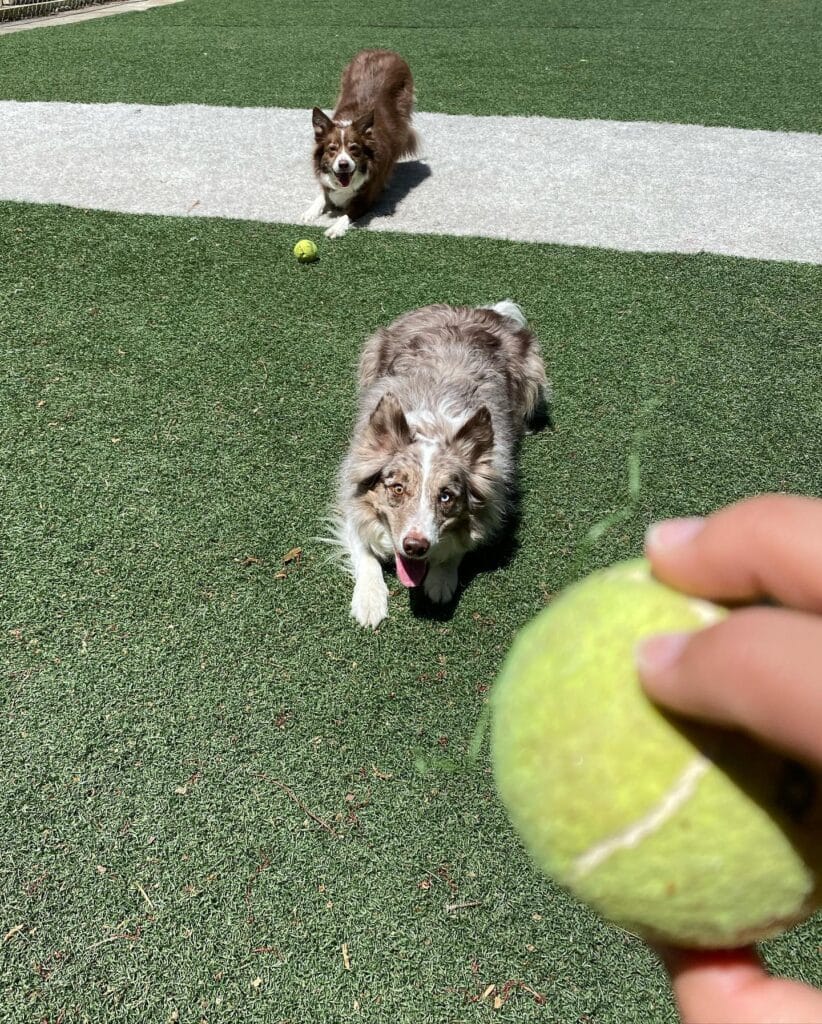
Your dog is running around in the yard like a maniac burning up zero structured energy and you are just standing there holding a tennis ball thinking “is this it?” That is where a setup like this can help.
This agility corner has a curved ramp with a bone-patterned blue rubber surface and a trio of circular stepping pods, mounted on wood frames. The blue recycled rubber grip gives the dogs good traction, so they don’t slip and slide, and the curved shape encourages the dogs to climb (great for timid or shy dogs) on a truly natural-shaped structure. The bone cut-outs aren’t just cute; they act as tactile markers, helping the dogs figure out where to put their feet.
First, you need to have an arched ramp (roughly 6–8 feet long) with non-slip rubber matting, and several individual stepping pods (12-inch diameter circular platforms) set at different heights. The base can be made out of wood chip mulch, as this will absorb the impact of the paws, and prevent it from becoming a muddy mess.
Keep this in mind: space the pods about 8-10 inches apart so medium to large breeds can pass thru with out having to jump from one to the other.
Lay the ramp on the ground at one end so older, or timid dogs can choose to use it or not. A small detail, but one that makes the ramp more inclusive without costing anything.
📸 Photo credit: Instagram @familypetretreat2019
#7: The Raised Platform Pause Station Every Dog Park Needs
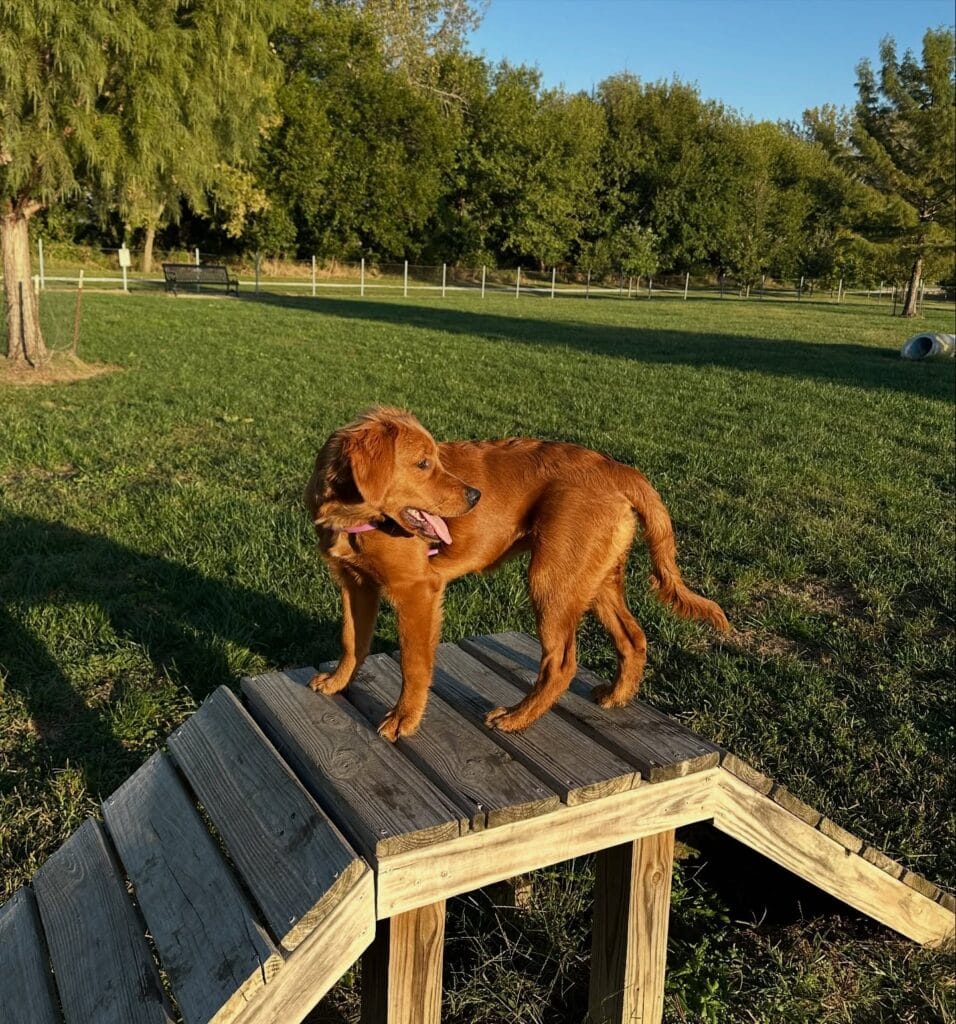
And when the golden hops up on something elevated and just owns it, with her tongue out, surveying her kingdom — that is what this setup is all about.
It’s a wooden pause platform, made of pressure-treated pine, and raised about 12 inches off the ground on four sturdy corner posts. The weathered gray planks on top contrast with the fresh wood frame underneath, and make it feel like a broken-in, safe-feeling sturdiness that dogs love.
I used 2×6 pine boards for the surface, and 4×4 posts for the legs. I used exterior wood screws. The top slats are not tightly sealed to each other so water can escape and the surface will be grippy after a rain.
Space the slats about ¼ inch apart so that mud and debris fall through, or it will collect there. Sand the edges before you assemble it. A splinter on your dog’s paw pad is the end of the park day.
If you have room in your yard, consider making a dog potty area to have nearby where you can get the dog to do his business on a routine basis. This way you can have a place for training moments and a place for potty.
The raised height makes them feel confident and they pause and rebalance, earning that silly tongue-out face.
📸 Photo credit: Instagram @navythenugget
#8: The Tire Jump Obstacle — A Classic Dog Park Agility Feature That Actually Works
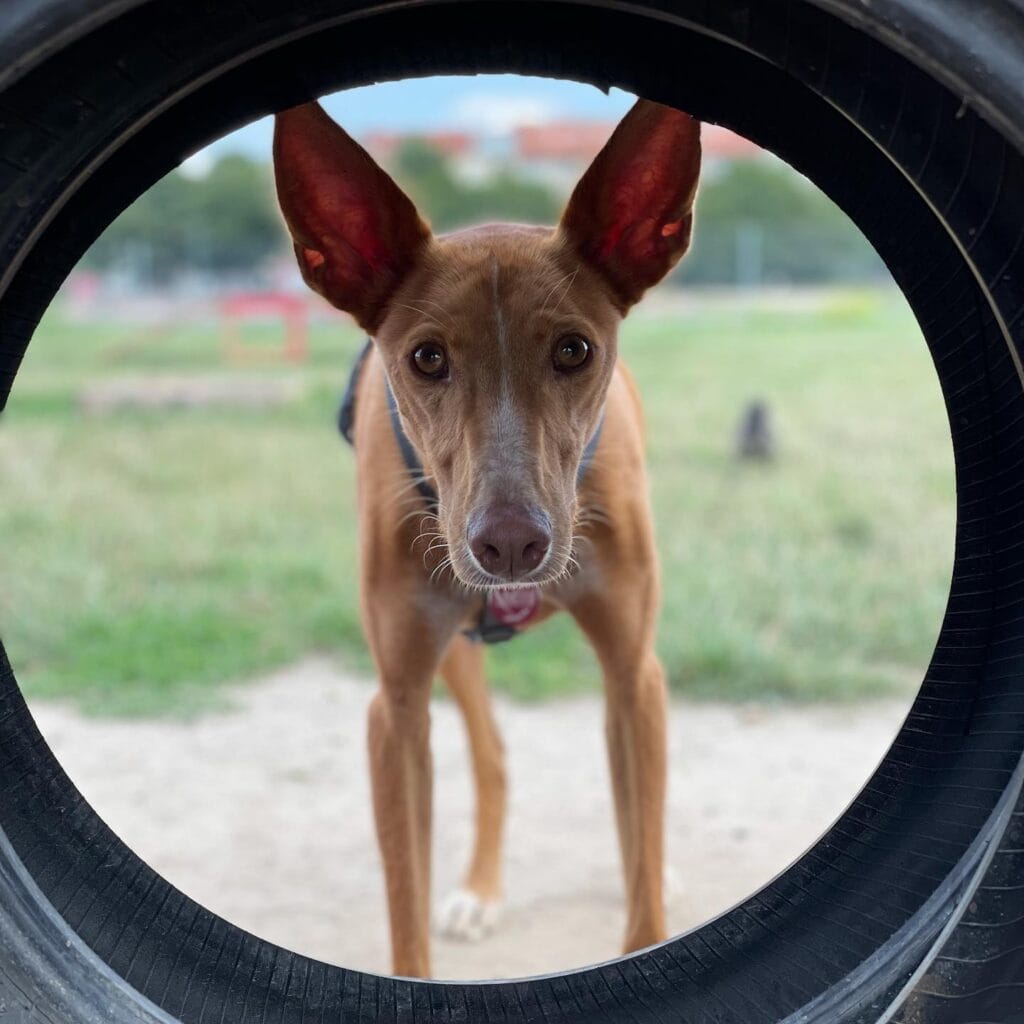
A suspended tire obstacle inside a black rubber tire on the ground. This one picture tells you a lot about a well designed agility course. Notice the sandy ground and the open grass field behind this obstacle. A great place to practice the run and reset.
The tire here is a standard 24″ diameter automotive tire, either hanging from a steel A-frame stand or mounted inside a galvanized pipe frame bolted into the ground. You want the center opening to sit around 18-20 inches from the ground for a medium breed dog. You will want to put a layer of something like compacted decomposed granite or coarse sand underneath the grass, so that the landing pad will not be muddy after a rain shower.
Additionally, you can paint the tire frame a color that is high contrast to the tire, such as red or yellow. Doing so will help dogs read the obstacle faster during training, and fewer hesitations will result in cleaner runs.
Set your tire level and check your mount weekly. Wobbly tires do not give you confidence.
📸 Photo credit: Instagram @nico.the.canario
#9: The Agility Course Setup That Makes Your Golden Actually Tired
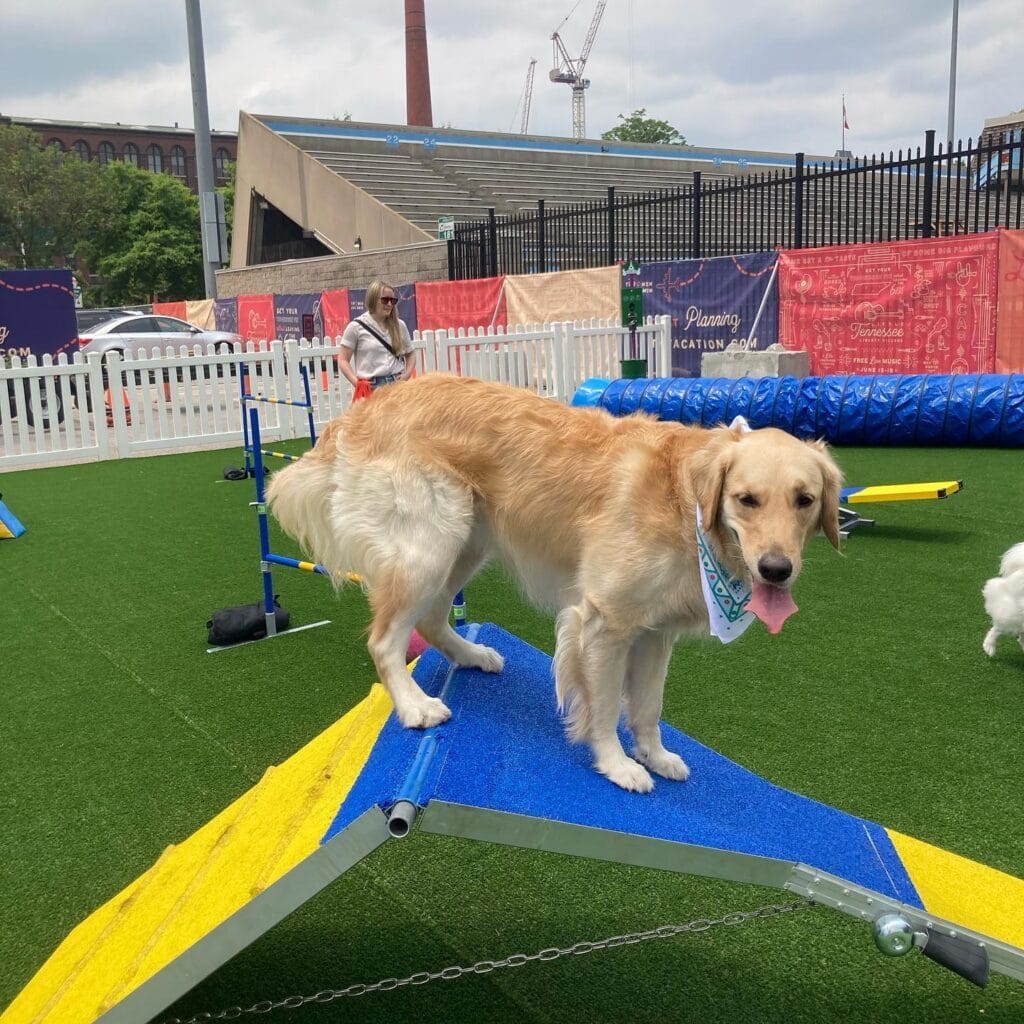
Your golden retriever has infinite energy. You’ve tried everything, from long walks, to fetch, to treat puzzles. What else is there? Still zooming around at 9pm.
A training agility course that provides dogs with an outside adventure. An outdoor agility course features a blue and yellow A-frame ramp built from powder-coated steel pipe framing and rubberized grip surface carpeting in high-contrast colors. Dogs work their muscles and their brains, and you’ll have a thoroughly wiped-out dog by dinnertime.
A friendly, blue tunnel of the standard 24-inch diameter, adjustable, yellow and blue, PVC jump bars and a peaked A-frame contact obstacle – a blue carpeted ramp that your golden is standing on. The whole course is setup on a synthetic turf that is mud free and paw friendly.
A-frame’s non-slip textured surface keeps paws from sliding off the incline. It will build confidence, making your dog feel more comfortable and less fearful when off leash.
Surround it with a white picket fence to keep things in. Add some colorful banner signs to it for that festival feel.
Space your obstacles at least 6 feet apart so your golden can build momentum between challenges without crashing into equipment.
📸 Photo credit: Instagram @nina_furever
#10: The Shaded Enrichment Corner — A Dog Park Nook Your Pup Will Actually Use
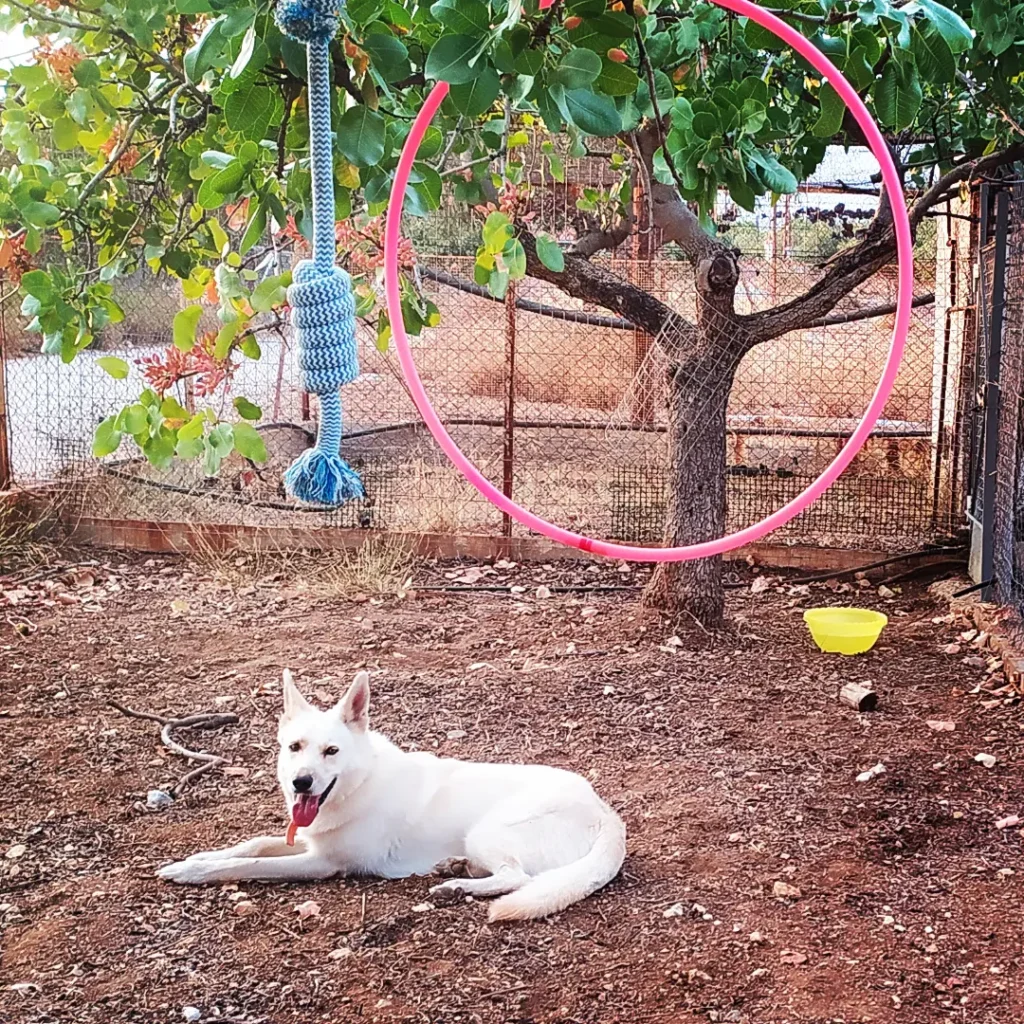
That moment that our golden dog flops down in the yard and stares at us, “okay, but what are we doing?” Well, that’s what this setup fixes.
It’s no wonder this outdoor nook has such a good energy — it’s dappled in shade by a real tree, with a hanging rope toy, and a pink hula hoop propped against the tree trunk for agility fun! What would your dog think of this set-up?
The bones of this setup: a large-diameter hula hoop (standard 36-inch pink HDPE plastic) hung or leaned against a tree as a jump-through training prop, a blue braided rope pull toy hung from a low branch with paracord, and a yellow silicone bowl tucked nearby for water. The ground is packed reddish decomposed granite. There’s a low perimeter fence of black welded wire mesh.
Do this today: Wrap the rope toy at your dog’s nose height not overhead. That is the spot that will get your dog engaging with it and not ignoring it.
I wanted to mention that I’ve been using a hula hoop to help with recall, the more we do it the calmer she gets, the calmer she gets the less throw pillows get destroyed inside. So win, win.
📸 Photo credit: Instagram @the.country.loft
The One Dog Park Design Mistake That’ll Cost You a Full Renovation
here’s the other thing no one wants to talk about: drainage.
The general public usually gets excited about their dog park for the “fun” stuff, like agility equipment and cute zone signs, etc. A few months later though, they have a swampy mud pit that their golden retriever loves to roll in before she bolts through the front door.
I’ve seen this happen so many times.
Very good point! I design the drainage before I pick the surface. Crushed granite drains better than pea gravel and maintains its shape under a heavy paw. In the turf zones, the grade should be at least 2% so that water does not run onto the high activity areas of the surface but away from them.
Also, and this one is a biggie: take your dog to two separate parks. One where your dog can run around and play and be himself and another where he can sniff and chill. Dogs regulate each other better and it cuts down on scuffles between a hyper lab and a senior dog just vibing.
Get the bones right first then the pretty stuff can come later.
Your Golden Deserves a Spot That Actually Works for Both of You
You have already done the hardest part, which is to figure out what your dog actually needs instead of just guessing. Now it’s time to build it!
pick one project. ONE. for this weekend. get your supplies out and put it on the floor. let your golden supervise. you know he will.
By: Tessa Stowe on September 13, 2018 @ 8:00 am In: Uncategorized Tags: , , , , The biggest thing I learned about dogs this week is that they deserve their own space. That is what a new dog area did for our pup. It also did wonders for our Pinterest-worthy furniture.
Which project are you starting first and will your golden help you or just sit there and look cute while you do all the work? 😉

Amr Mohsen is a software engineer who traded his keyboard for a leash — at least on weekends. His love for dogs inspired him to share what he learns as a dog owner and enthusiast, bringing a detail-oriented, research-driven perspective to every article he writes. If it’s about dogs, he’s probably already looked it up twice.