You know that moment when your golden comes bounding in from the backyard and you just know before you even look down?
Mud. Everywhere. On the rug you just styled for your entryway.
I’ve totally been there with the muddy dog phase. My dog, Koda, loves to pick the muddiest corner of the yard to poop in and it drives me crazy trying to keep my floors clean.
It should come as no surprise to you that your dog will not use a spot that you would choose if he/she had a choice. If they do not have a designated spot, they will just choose one!
A diy dog potty area can help solve this problem. It provides a special place for your dog to go potty and saves your sanity (and your floors).
Real talk: These 10 designs are doable over the weekend, and some of them are actually cute enough to keep your backyard Pinterest-ready.
#1: Build a Sand-Based Dog Potty Area (Like This Genius Park Setup)
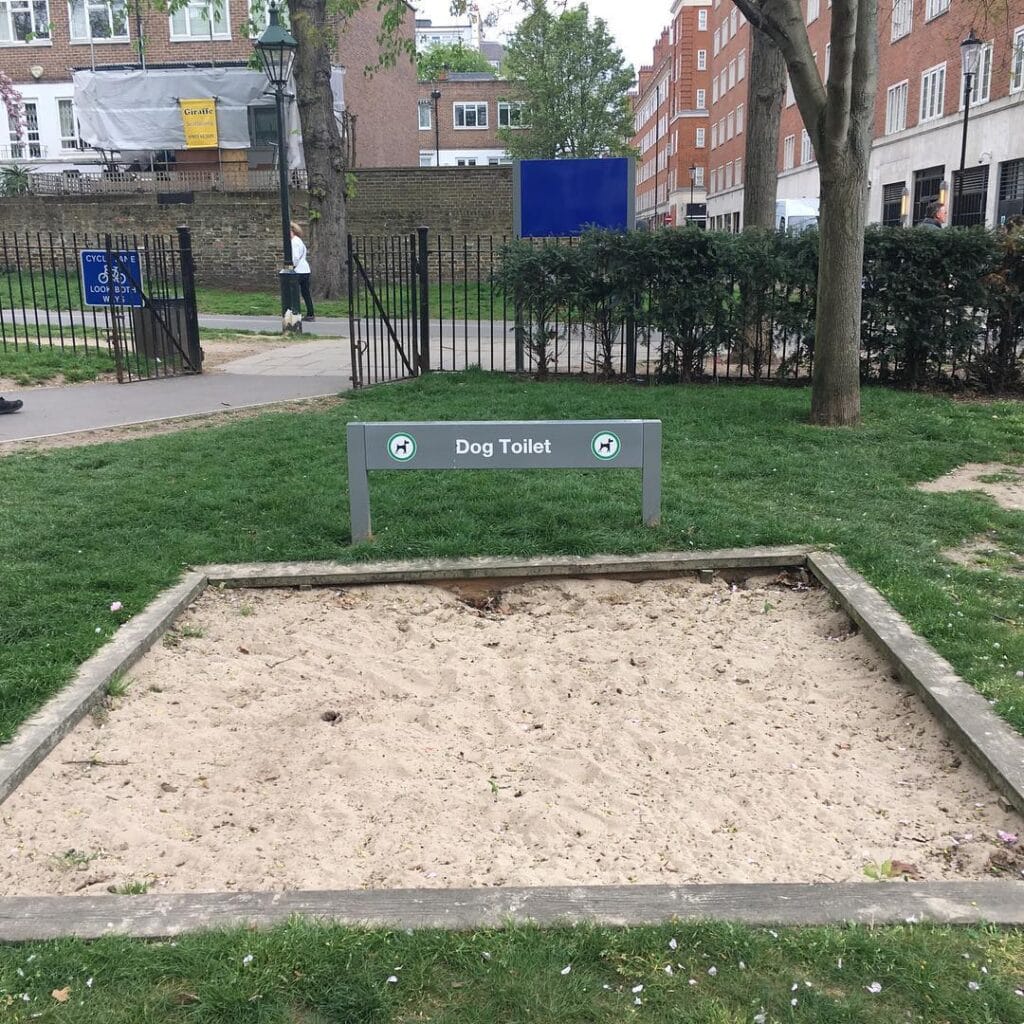
You know that moment when your dog has already peed on three different spots in the backyard and you are just standing there in your slides with a bag and you’re just wondering why you even have grass anymore?
Yeah. Same.
Prep Time: 30 min | Active Project Time: 2–3 hours | Difficulty Level: Beginner
Materials & Tools:
– 4 wooden landscape timbers (3.5″ x 3.5″, pressure-treated)
– 2–3 bags of play sand (fine-grain, 50 lbs each)
– Galvanized corner brackets + screws
– Weed barrier fabric
– A drill, mallet, and measuring tape
– One metal sign post + custom engraved sign (optional but adorable)
Instructions
Choose a location that’s somewhat out of the way, but your dog already likes to visit. Clear a 4×4 foot patch of grass, dig down about 3 inches, and lay the weed barrier flat. This keeps the sand from mixing with the soil, making it easier to clean out in the future.
I attached my pieces of timber to the outside perimeter with galvanized brackets and hit them down with a mallet to sit flush against the ground.
In the box I place “fine-grain” play sand. This type of sand encourages dogs to dig and sniff, which mimics their natural instinct to find a spot. The sand absorbs moisture fast and drains without pooling, and stays odor-controlled longer than grass. My neighbor did this last summer with her lab mix and told me she no longer smelled anything within a week.
Also, the best part is you get zero muddy paw prints tracking across your kitchen floor.
The easiest way to make sure your dog knows what to do is to place a piece of their used waste in the sand on day one. It will let them know that this is the spot.
Scoop the waste daily and replace the sand fully every 3-4 months. If you like this idea, 12 best dog play areas for your furry friend has some more setups that blend into a real backyard.
📸 Photo credit: Instagram @carterkusteraphoto
#2: Indoor Airport-Style Canine Relief Station (With Fake Grass + Fire Hydrant)
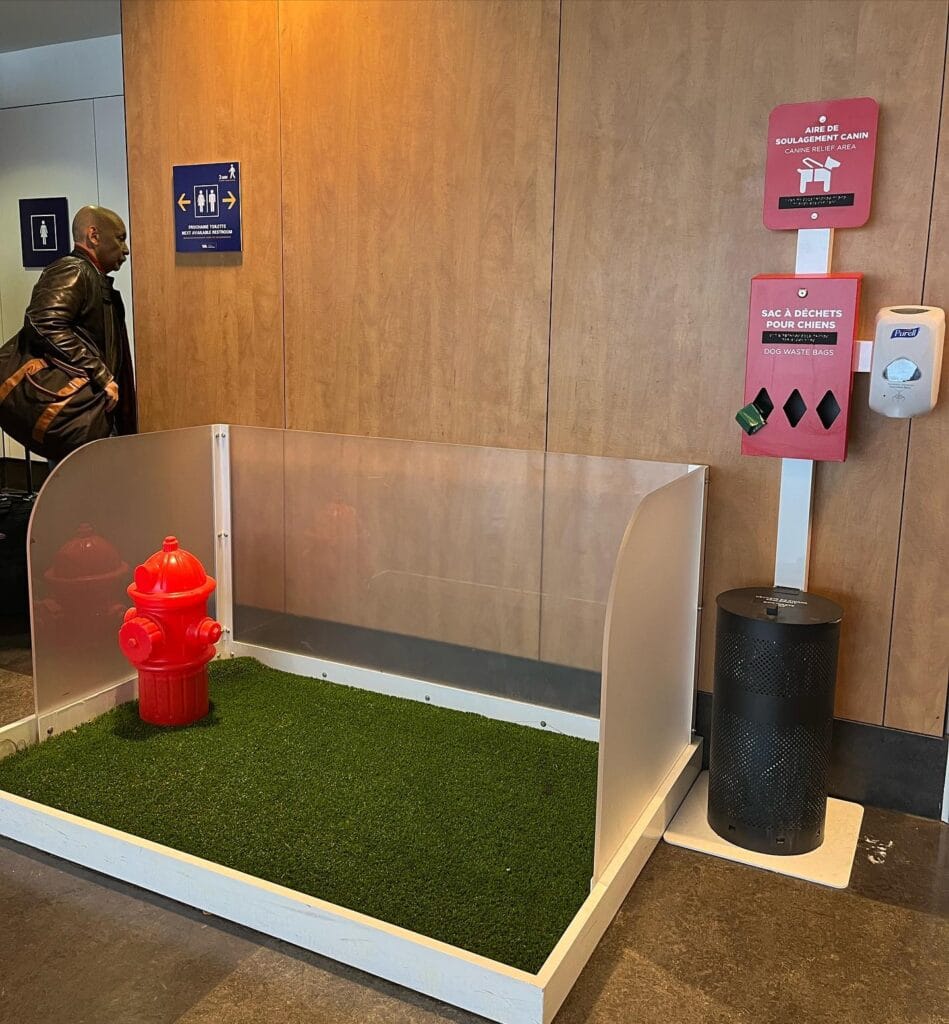
Also, I wanted to share this set up for avoiding the chaos when my golden decides to sniff every corner of my entry way. It is the moment right before an accident.
I saw this at the airport and couldn’t help but laugh. It’s a dog potty station! Indoors! And it has fake grass and a cute little red fire hydrant! So much nicer than some sad pee pad shoved in a corner.
Materials & Tools:
– 1 wooden frame box (approx. 24″ x 36″ x 4″ depth) — pine boards work great
– Artificial grass mat cut to fit (24″ x 36″)
– Clear acrylic panels (3 sides, roughly 18″ tall) for splash protection
– Small red plastic fire hydrant (decorative + functional cue for your dog)
– Dog waste bag dispenser (wall-mounted, red)
– Purell hand sanitizer dispenser (wall-mounted)
– Small cylindrical waste bin with lid
– Drill, screws, silicone sealant, sandpaper
Instructions
If you’re not already doing so, build your pine wood frame first. That means you should have 4 boards, and they should form a shallower 4 inch deep rectangle. Make sure you sand every edge of the boards so that they are nice and smooth. You will also want to seal the inside bottom of the frame with a silicone sealant, and let it cure fully so the urine doesn’t leak into the wood.
Lay your artificial grass mat directly inside the frame. Cut the matting so it fits snugly inside the frame, so it doesn’t move when your pet goes on it.
Attaching the clear acrylic panels is easy – one over the back of the frame, and one on each side, with corner brackets drilled into the frame. This way, the acrylic will not splatter but will still allow you to see the inside and keep your dog from feeling trapped.
If you have a red fire hydrant, put it in one corner of the grass. Dogs are drawn to the color of red so it trains them faster. Less accidents outside the station. Every time you are happy because your floor is clean.
First thing, your bag dispenser and hand sanitizer should be mounted right next to the station, at arm height. Also add the waste bin right underneath it.
Prep Time: 30 min | Active Project Time: 2–3 hours | Difficulty Level: Beginner–Intermediate
You should also rinse the grass mat once a week with a mix of white vinegar and water. Not only will it neutralize the odor without using harsh chemicals, but it might also help to lessen the odor that might bother your dog’s nose. You might also place one of his pee pads under the grass mat for a day to help ease him in.
This little guy matches up really well with the other DIY dog stuff over in 13 Genius DIY Dog Stuff Every Pet Parent Needs to Try Today! if you want to keep going on a dog-friendly home makeover.
📸 Photo credit: Instagram @colour_me_bel
#3: Real Grass Indoor Potty Tray (The “My Dog Refuses to Go Outside” Fix)
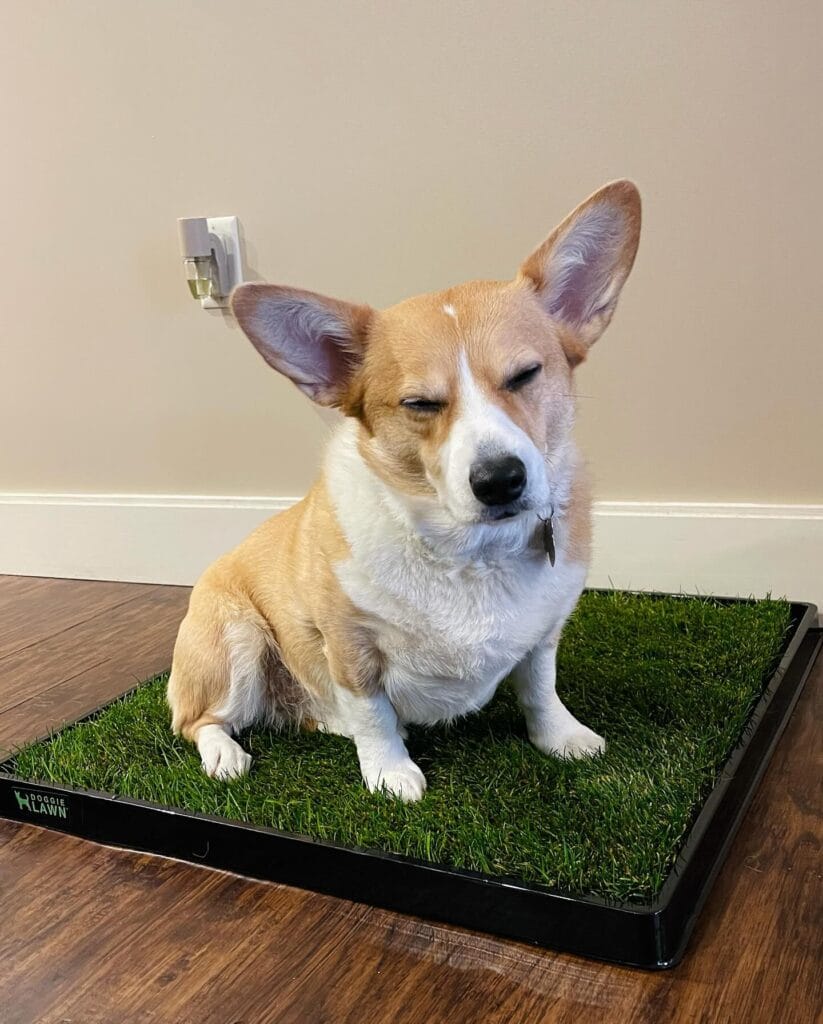
Has your dog ever been staring at you for 20 minutes and it’s pouring outside and you’re both just standing there, dumbfounded as to what to do? Well, you’re in luck. This is the answer.
I saw this on a friend’s Instagram and texted her to tell her how cool her corgi was. He just put it down and did his business.
Prep Time: 15 min | Active Project Time: 20 min | Difficulty Level: Easy
– DoggieLawn real grass replacement tray (the one I’m using is an 18” x 24” black plastic tray shown here) – Fresh sod cut to fit inside the tray (or a pre-grown DoggieLawn insert) – Wall-mounted odor plug-in (the white nightlight-style unit shown keeps the corner fresh) – Hardwood or tile flooring underneath for easy cleanup – Optional: waterproof tray liner
Instructions
Place your tray flat against the wall (back corner of room). It gives your dog a sense of privacy which will make them use it quicker. The real grass insert goes into the black rimmed tray. I press the edges down so that there is no gap for accidents to escape underneath.
Pour the odor neutralizer into the tray and plug it into the outlet above the tray. Since real grass is able to absorb the liquid and control the smell, there is no need to scrub the living room daily.
There is a bonus for your dog when choosing grass to go on and that is it will trigger their instinct to ‘go’ and because of the fact the tray catches it all you won’t have to walk them in the rain at 6am.
If you have a dog that hesitates to use the grass insert, you can rub a tiny amount of the dog’s scent on the grass, and they will “get it.” I typically swap out the grass insert every 1-2 weeks.
If you love keeping your dog’s space stylish and functional, these 11 creative dog areas to create in your home spaces will get you excited.
📸 Photo credit: Instagram @croutonpotato
#4: Pea Gravel Dog Potty Station With Stone Border (The One That Actually Stays Clean)
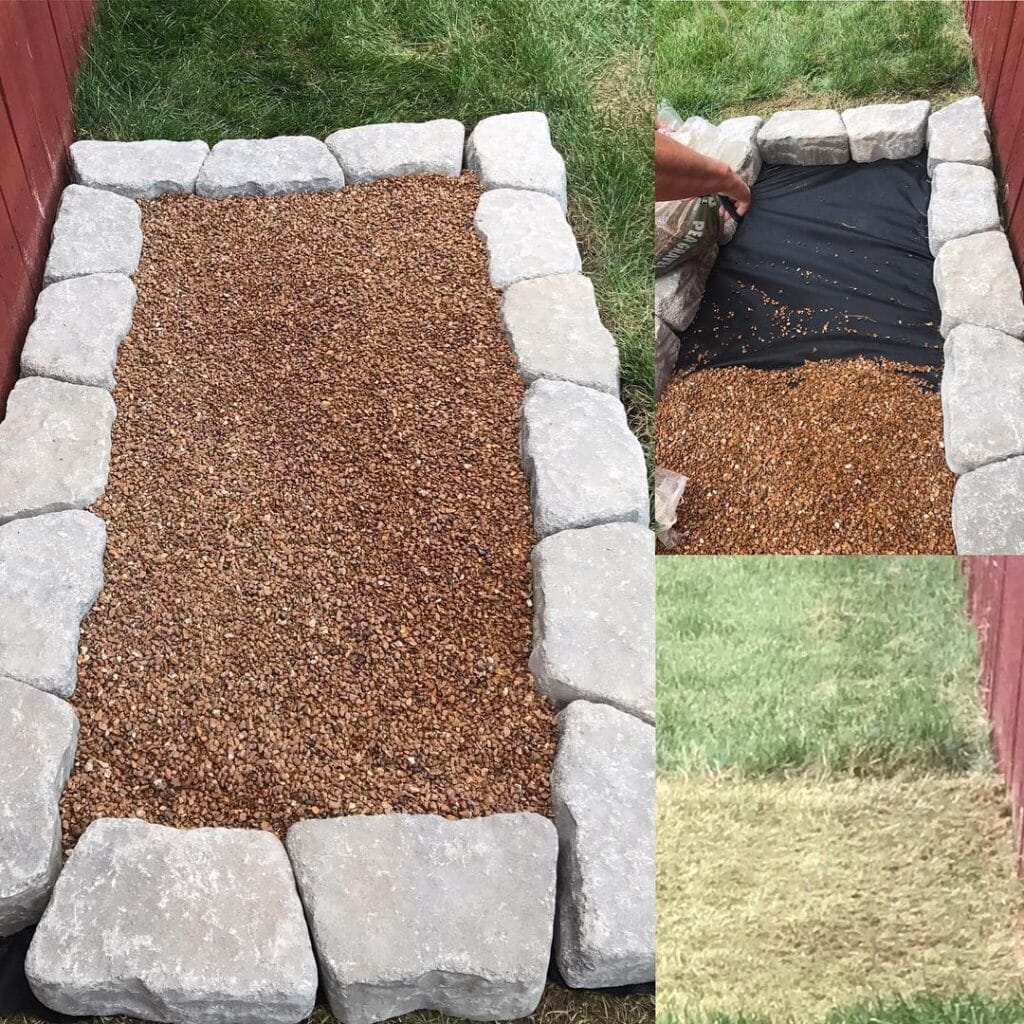
You know what I’m talking about if you have a dog. The one that comes back inside after she’s finished her business in the mud and drags her paws across your entryway rug? Yeah, that one. And I experienced it every single morning last summer and I was done.
Prep Time: 30 minutes | Active Project Time: 2–3 hours | Difficulty Level: Beginner
Materials & Tools:
– Gray tumbled stone border blocks (roughly 4–6 inches each)
– Pea gravel in a warm cedar-brown tone (approximately 2–3 bags for a 3×5 ft space)
– Black landscape weed barrier fabric
– Garden scissors or utility knife
– Measuring tape
– Hand tamper or flat shovel
Instructions
Start by clearing away the dead or sparse grass. Look at the bottom-right photo, that’s what a sad, muddy mess looks like before fixing it up with some boards.
Place your weed barrier fabric on the bottom first. This is the trick to having this all work so well. Once you’ve got the bottom all covered, go ahead and spread out the gravel.
Border the outside of the area with a line of tumbled stone blocks, two rows high on either side. Stagger the blocks into the soil, firm enough so that they won’t shift when your pup paws around.
Pour your pea gravel over the fabric and spread it about 2-3 inches deep. The gravel drains fast, so you won’t get soggy paws or muddy tracks. And it’s not too bad to smell, since you can rinse it once a week.
And the stone border does double duty as a barrier keeping the gravel contained, but it also gives the whole spot the Pinterest board look you’d actually want in your backyard.
Once a week, rinse the gravel with a garden hose, and once a month, spray a pet-safe enzyme cleaner on it.
📸 Photo credit: Instagram @jeremy___perryman
#5: The Fenced Flagstone + Gravel Dog Potty Yard (With a Lamp Post Your Neighbors Will Actually Compliment)
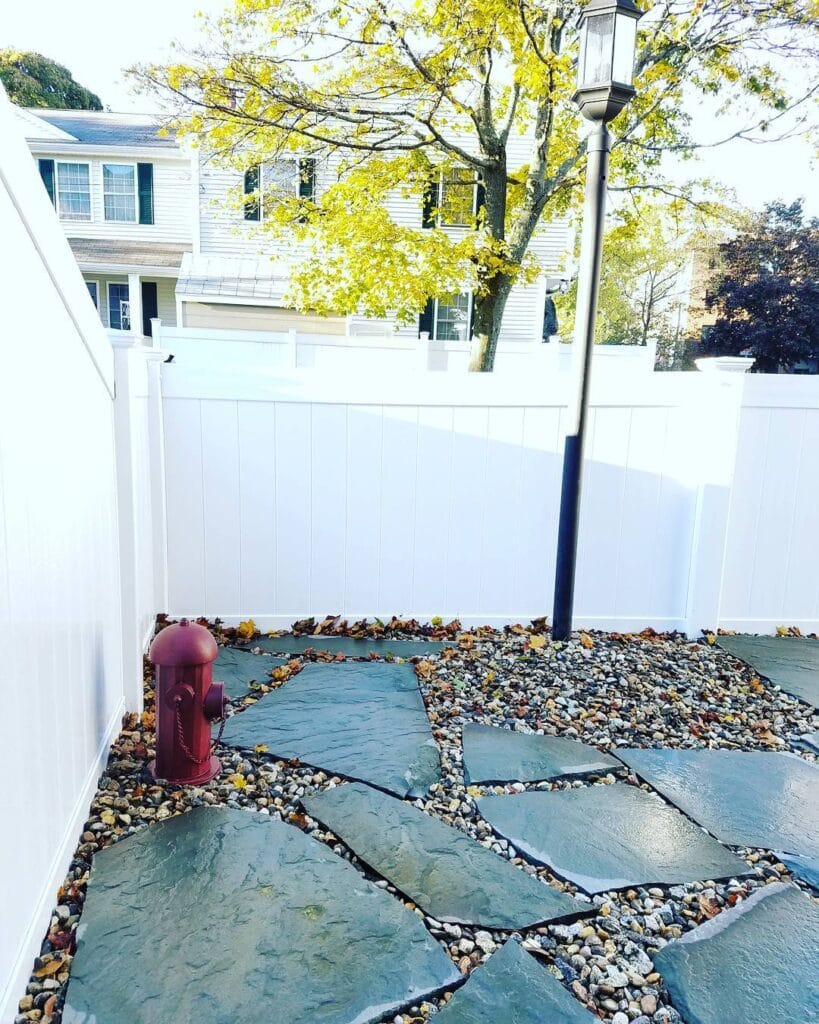
Yep, we all know that moment when you open the back door and your golden just bolts into the grass, coming back in with muddy paws and a wet belly. This is the answer to that chaos.
DIY dog potty area made out of irregular bluestone flagstone over a river rock gravel base, enclosed by a white vinyl privacy fence. There is also a mini red fire hydrant marker in one corner (so adorable) for your dog to pee on. Also a black iron lamp post for night time bathroom runs so no need for a flashlight!
Materials & Tools:
– Bluestone flagstone slabs (irregular cut, 1.5–2 inches thick)
– River rock gravel (1–2 inch mixed stones)
– Landscape fabric (weed barrier underneath)
– White vinyl privacy fence panels (6 ft tall)
– Decorative red fire hydrant post marker
– Black powder-coated lamp post with solar or wired lantern top
– Rubber mallet, level, garden edging
Instructions
First you lay down your fabric and then the gravel over the top. This stops weeds coming up and keeps the gravel on top from sinking into the soil over time.
Pour your river rock gravel 3–4 inches deep over the fabric. Rake it level before you put down the flagstone. This step is more important than you think. If the gravel isn’t level, your dog won’t jump on the flagstone and will skip the whole area.
Insert your bluestone slabs one by one and press each piece down firmly into the gravel. Leave between 1-2 inches gap between slabs and fill in with loose gravel. The irregular shaped pieces will look like a puzzle no two yards are the same.
Place your lamp post in a footer of concrete near the center-back line, away from the main stone path. Place the fire hydrant marker in the corner near the fence to provide a visual target for the dogs to use this single spot.
On day one, wipe a small amount of your dog’s urine on the hydrant; it sounds weird, but it works immediately.
Another effect of the gravel drainage and the stone path is that the rainwater drains and doesn’t sit for days after a storm.
Wash the stones with the garden hose every week and change out the gravel patches every season to cut down on odors.
Prep Time: 1–2 hours | Active Project Time: 4–6 hours | Difficulty Level: Intermediate
📸 Photo credit: Instagram @love.lab.lewis
#6: DIY Wire Mesh Potty Tray Station (The One That Actually Stays Clean)
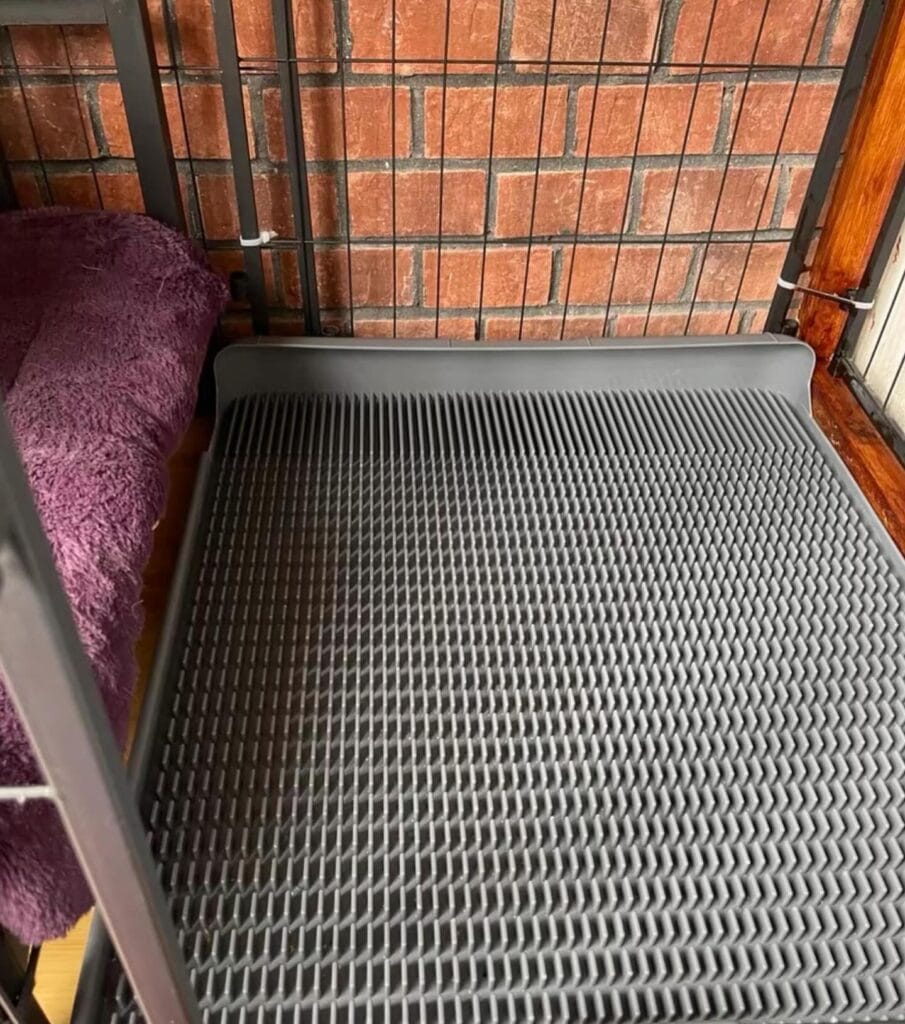
Or this: You know when your dog goes outside and comes back in to do her business and her paws are covered in some sort of whatever was outside? Same here: my friend Mia had the same issue — muddy prints on her cream-colored rug every morning.
This setup fixes that.
Prep Time: 20 minutes | Active Project Time: 1–2 hours | Difficulty Level: Beginner
Materials & Tools:
– Dark gray powder-coated wire mesh panel (floor grate)
– Black metal kennel frame with grid walls
– Plastic drip tray (fits flush under the mesh)
– Purple sherpa dog bed or cushion
– Zip ties or panel clips
– Measuring tape
– Wire cutters
Instructions
First, make sure you measure the inside of the floor of your kennel frame to ensure the wire mesh grate will fit with no gaps at the edges. The wire mesh grate is raised up a bit so the liquid will fall straight through into the tray underneath. The tray will catch all of the liquid and keep your kennel floor dry.
Clip the gray plastic mesh panel into the base of the metal frame with zip ties at each corner. Snap the black drip tray underneath. It slides out for cleaning in under two minutes.
Take the purple sherpa cushion and tuck her into one corner so she has a cozy, comfy place to sit – away from the potty.
I love that it lifts her paws off the wet floor. I have a happier floor and happier paws on those rainy Texas mornings.
If you’re building this in a larger dog house, I recommend pairing it with one of these 7 cozy DIY indoor dog kennel ideas! For more photos of this dog house click here.
Make sure to rinse the tray every other day with a white vinegar and water mix. This will cut down on odor without harsh chemicals near your pup.
📸 Photo credit: Instagram @petlover.thailand
#7: White Picket Fence Garden Gate Potty Station
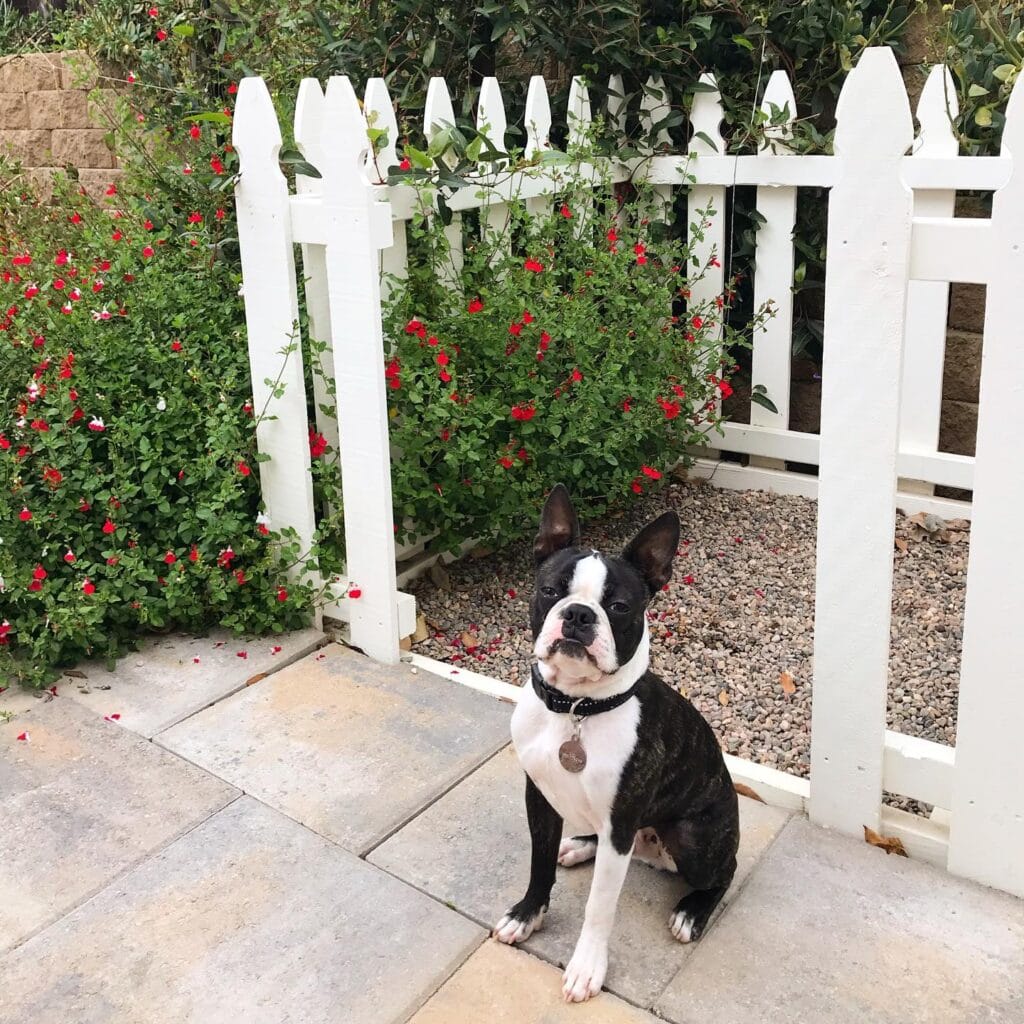
You know that moment when your little golden has already gone in the flower bed – again – and you’re standing there in your slippers holding a little bag just… sighing?
yeah, I do too. My neighbor built something like this and I couldn’t stop thinking about it on my drive home.
This is the setup: a white vinyl picket fence with a gate frame for our dedicated potty corner. We have pea gravel and river rock lined about 2-3 inches deep so that the urine drains through. The potty corner is tucked against a stone wall and lined with red salvia bushes for a Pinterest worthy garden nook…NOT our dog bathroom. This is the goal.
Materials & Tools:
– White vinyl picket fence panels (pre-cut gate kit works great)
– Galvanized gate hinges and latch hardware
– Pea gravel — approximately 1–2 cubic feet depending on space
– River rock border stones
– Landscape fabric (weed barrier layer)
– Level, drill, post anchors
– Flagstone pavers for the approach path
Instructions
Lay down the landscape fabric first. This will be your secret weapon to keep the weeds from coming up through the gravel. Cut the fabric to fit your corner space and overlap the edges by 4 inches.
Set your vinyl post anchors in the ground every 4 feet. Make sure you use a level on every single post before you tighten them. One crooked post will throw off the gate and you will notice it everyday.
Attach the fence panels between the posts, then hang the gate on it using galvanized hinges which will not rust after a day or two of rain or a hose-down. The gate swings inward so your dog steps onto the gravel when she wants to and you do not have to nudge her.
Layer the pea gravel over the landscape fabric in a layer of 2 inches deep, then add a layer of river rock on top. The gravel helps drain the urine down and away, so you have no smell on the surface and muddy paws on your flagstone path. Your dog also has a clear defined area to go, which speeds up potty training because it will feel different under his paws.
Prep Time | 30 minutes | Active Project Time | Half a day | Difficulty Level | Beginner–Intermediate
I’d recommend adding red salvia or some similar low maintenance flowering shrubs along the fence. This will hide the bottom of the fence and make the area look a little nicer. If you want some more ideas for the rest of your yard, check out 7 Creative Ideas for Your Outdoor Dog Area.
Rinse the gravel with a garden hose one time a week. You would be surprised how long it stays fresh.
📸 Photo credit: Instagram @patrycja_sandiego
#8: DIY Indoor Potty Station Using a Clear Storage Bin (Balcony-Friendly!)
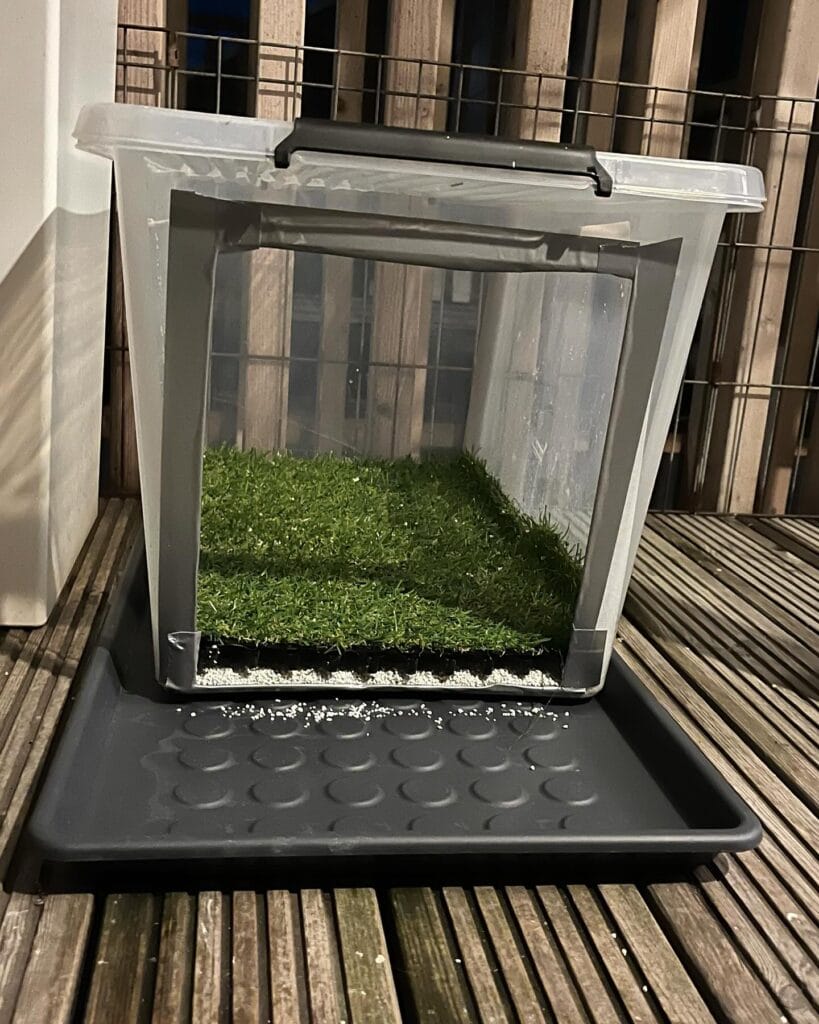
So for the last 20 minutes, my Golden has been starring at me and its pouring cats and dogs outside and I just can’t ? Thank god for this setup, it’s exactly what saved my sanity.
Prep Time: 20 minutes | Active Project Time: 45 minutes | Difficulty Level: Easy
Materials & Tools:
– Large clear plastic storage bin (with a snap-lock lid)
– Black plastic drip tray (sized larger than the bin base)
– Artificial grass mat (cut to fit the bin interior)
– Small white pebble drainage layer (about 1 inch deep)
– Box cutter or utility knife
– Measuring tape
Instructions
Use your box cutter to cut a large square window in the front of the storage bin. Make sure to leave at least a 2-inch border around the edge, so the structure will remain stable. The window lets your dog step into the storage bin without jumping.
Lay down your white pebble layer first. That way it catches the liquid and keeps the grass elevated so that you don’t get that nasty soggy bottom smell.
Take your cut artificial grass mat and place it directly on top of the pebbles. The grass will sit perfectly without moving.
Slide the bin over your black drip tray so any spillage goes on the tray rather than your deck.
The top also works as a splatter guard when it’s flipped back during use.
You should rinse the grass weekly and replace the pebbles monthly to keep everything fresh.
📸 Photo credit: Instagram @tabithaslifejourney
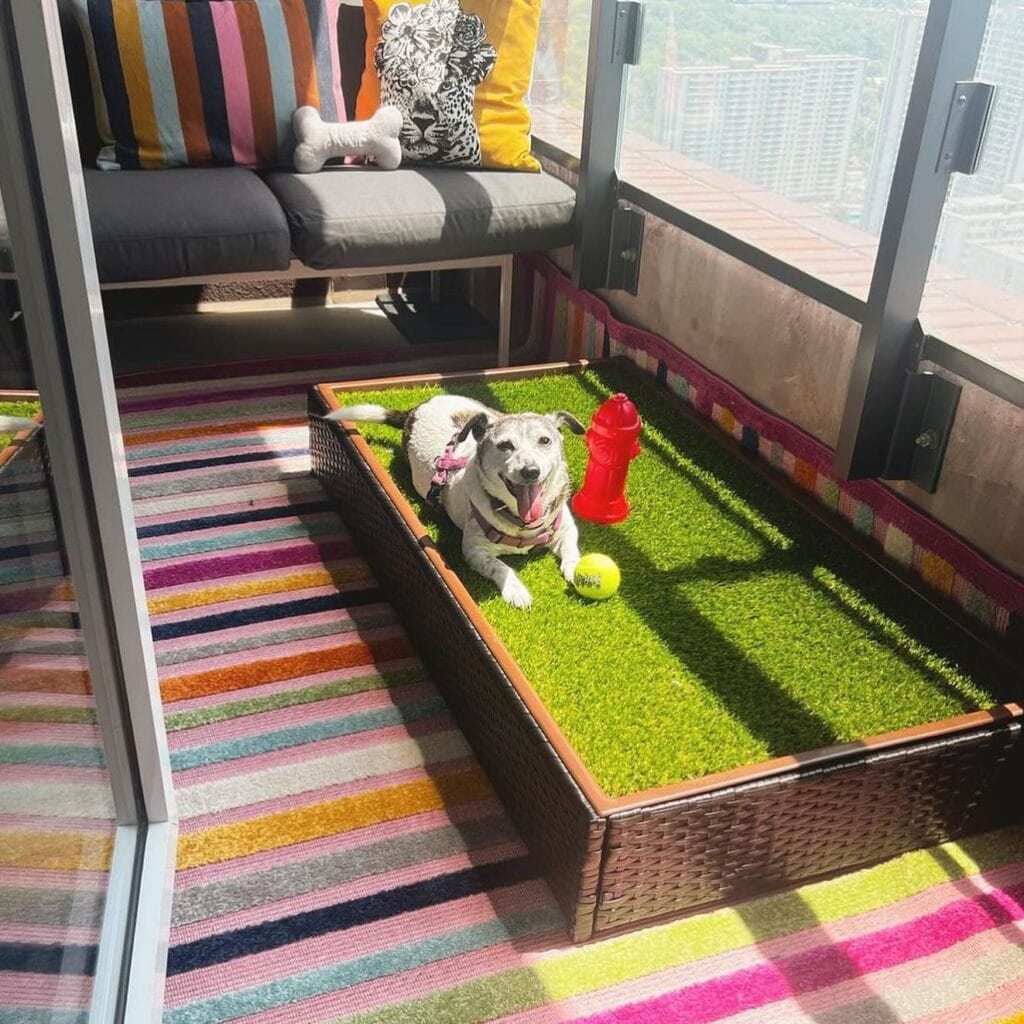
#9: The Raised Grass Potty Box With a Mini Fire Hydrant Marker
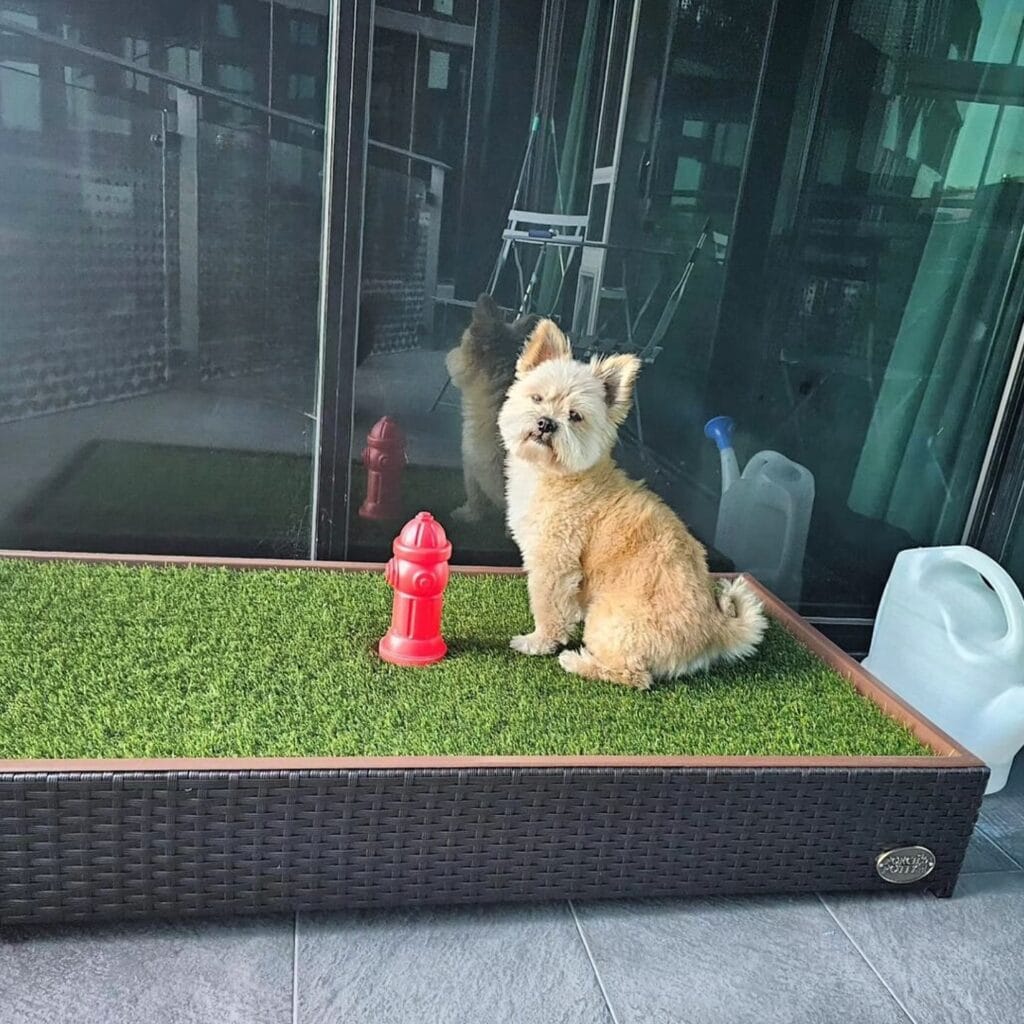
Your dog is standing at the door, again. It’s raining, you are in your socks and you are starting to wonder how long it takes to towel off the mud on their paws. Been there, done that. Only in my case, I live in a high-rise apartment with no yard. So I’ve had to create a better way.
This one caught my eye on Instagram and I gasped at the beauty of it! It is a raised wicker-panel potty box filled with artificial turf with a red plastic fire hydrant marker right in the center as a scent anchor for her training. I can picture it sitting against a glass wall perfectly!
Materials & Tools:
– Dark brown resin wicker planter box (roughly 24″ x 48″ x 6″ deep)
– Artificial grass mat cut to fit the interior
– Red plastic fire hydrant (decorative marker)
– 1-gallon jug for rinsing the turf weekly
– Box cutter or scissors
– Measuring tape
Instructions
Measure your planter box interior. Make the grass mat fit as close to the interior of the planter as possible. I cut my piece of artificial turf mat with a box cutter, along a straight edge. Press the mat into the interior of the planter so that it lays flat and has no curled corners.
Place the red fire hydrant marker slightly off center toward the front. Dogs tend to target vertical objects so this will help draw the dog to the marker spot to go to the bathroom.
Place the whole box near a glass door or wall to help your dog see its reflection. Some dogs find the sight of themselves in the box comforting and reassuring. It helps to put a 1-gallon rinse jug beside the box for a quick, once-a-week pour-through so that odor doesn’t build up in the turf fibers.
It’s a good idea to rotate the turf mat every two weeks so that it wears evenly.
Prep Time: 10 min | Active Project Time: 20 min | Difficulty Level: Beginner
📸 Photo credit: Instagram @porchpotty
#10: Fenced Gravel Dog Potty Station With a Fire Hydrant Focal Point
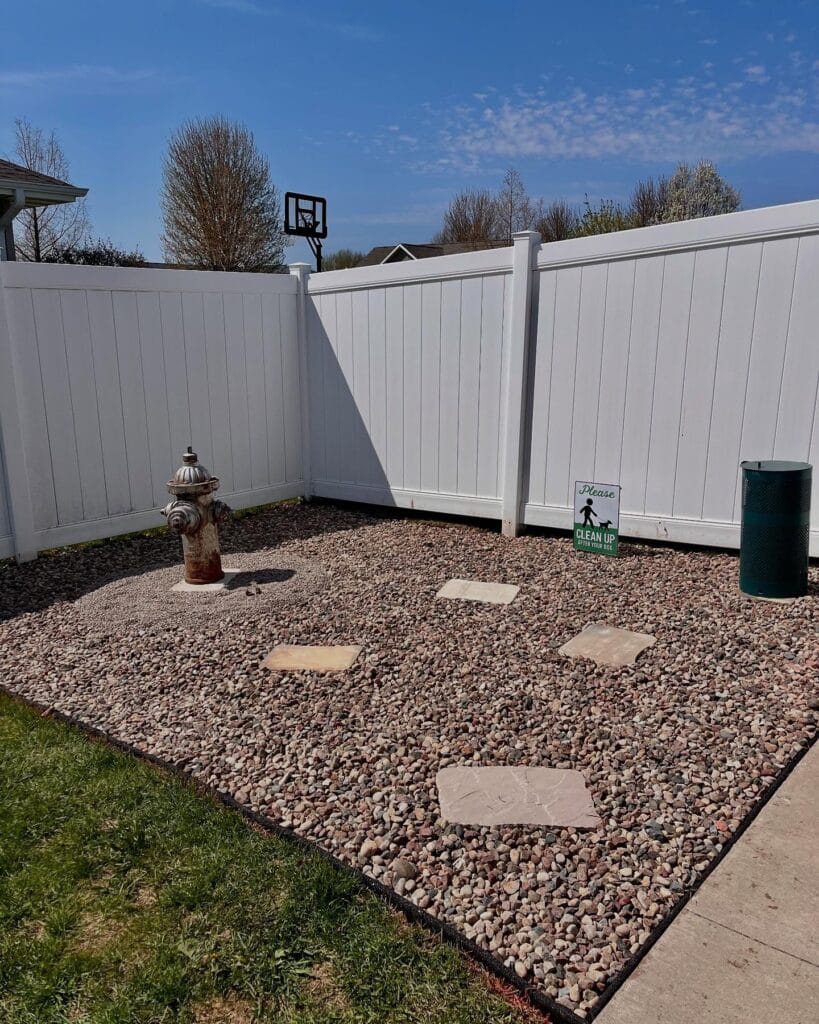
But that moment your golden comes barreling inside, who just did her business in the muddy grass – paws caked with mud – and you’re standing there with a towel in your hand wondering why you thought grass was a good idea.
Yeah. This setup fixes that.
Materials & Tools You’ll Need:
– Pea gravel or mixed river rock (plan for 2-3 inches deep)
– White vinyl privacy fence panels (this one uses 6-foot panels in an L-shape corner)
– Flat sandstone stepping stones (roughly 18×24 inches each)
– Decorative cast iron fire hydrant (purely for the aesthetic — and honestly for your dog’s excitement)
– Black metal landscape edging to border the gravel area
– Green mesh waste bin with lid
– “Please Clean Up” sign (12×8 inch green printed sign)
– Rubber mallet, measuring tape, level, shovel
Instructions
I started by picking a corner of the yard that had a fence line already (or that I built one) because a white vinyl L-shaped fence corner was going to be the back boundary of the yard. The whole look feels so much more put-together.
First up I dig out the grass inside the square then dig down about 4 inches so that the gravel is flush with the edge of the lawn. I lay down my black metal edging and press it into place with a rubber mallet to lock the gravel in.
Pour the river rock mixture in the back yard, and rake it level to about 2-3 inches deep. Also, press the flat sandstone steppers down slightly into the gravel so they will not slide around and you dog will not slide when he uses it.
I put the cast iron fire hydrant in the corner of the room. My golden always went there to “go” so this spot made potty training consistant faster.
Put your green waste bin at the edge of the entryway. If you share the space with neighbours, put your “Please Clean Up” sign against the fence.
Gravel drains, so the rain just runs through. No mud and no mess for the rugs.
If you are one of those who likes building space for your dog outside then 15 DIY Dog Playground Ideas for Your Backyard is the must read for you.
Might have to hose down the gravel every couple weeks and rake it back into place. That’s about it.
Prep Time: 1 hour | Active Project Time: 3-4 hours | Difficulty Level: Moderate
📸 Photo credit: Instagram @debbiewilliamsonaloha
The Drainage Secret That Saves Your DIY Dog Potty Area From Total Disaster
So, most people skip this step and then wonder why their dog’s potty area smells like a gas station bathroom after two weeks.
As with the case of materials used, the slope matters more than the material you pick.
Also, your base should be at least a 2% grade, so that when you pee on it, the urine will run away from the base instead of pooling under it. (I learned this the hard way after my cousin got a cute pea gravel setup for her lab and by summer it was basically a swamp.)
And most important of all, don’t just dump gravel directly onto the soil. Lay a weed barrier on the ground first, then put two inches of crushed granite beneath your top layer of material. The crushed granite will compact and lock in, providing better drainage and avoiding the sinkhole effect.
What this means for you: your golden retriever has a clean spot with no odor, and you don’t have to start over in 6 months.
Also, wash the area around her box with an enzyme cleaner (used once a week, not once a month – smell attracts you, but bacteria attract flies).
Your Golden Deserves a Clean Home Too
So, just to clarify, you don’t have to choose between loving your dog and loving your home. You can do both. I promise.
Pick one of those products and just try it. You have nothing to lose! Your sofa, your rugs, your sanity — they’ll all thank you.
And watching your golden flop around on a clean couch without you worrying about the fur, you know what I mean? That’s what we’re here for.
which room in your house does your dog own at this point? ☺️ .

Amr Mohsen is a software engineer who traded his keyboard for a leash — at least on weekends. His love for dogs inspired him to share what he learns as a dog owner and enthusiast, bringing a detail-oriented, research-driven perspective to every article he writes. If it’s about dogs, he’s probably already looked it up twice.