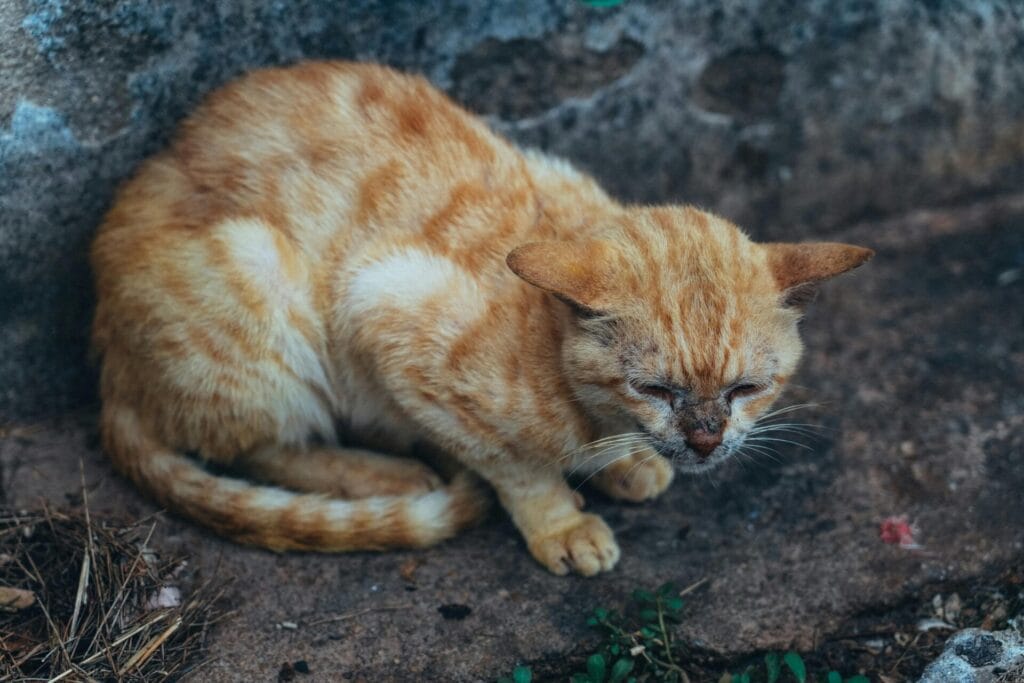
You don’t want your cat to come out and tell you she’s sick. In fact, that’s the exact instinct that makes it so hard to know when something’s wrong. A dog will whimper or limp, but your cat has been wired to hide her weakness, potentially to the detriment of her health in your home. You could be thinking everything is fine and your cat is suffering from a urinary blockage, kidney disease, or diabetes. The secret is knowing which changes matter.
Key Takeaways
- Cats hide pain instinctively; watch for subtle changes like decreased grooming, reduced appetite, or seeking solitude before symptoms worsen.
- Sudden litter box changes—straining to urinate, unusual clump sizes, or blood—require immediate veterinary attention for potential emergencies.
- Loss of appetite exceeding 24 hours or increased thirst signals serious conditions like kidney disease or hepatic lipidosis.
- Check gums for pale or blue color, monitor breathing while sleeping, and note weight loss or lumps during home assessments.
- Seek emergency care for rapid breathing, inability to urinate, seizures, or prolonged vomiting; document symptoms to aid diagnosis.
Why Cats Are Masters at Hiding Their Pain
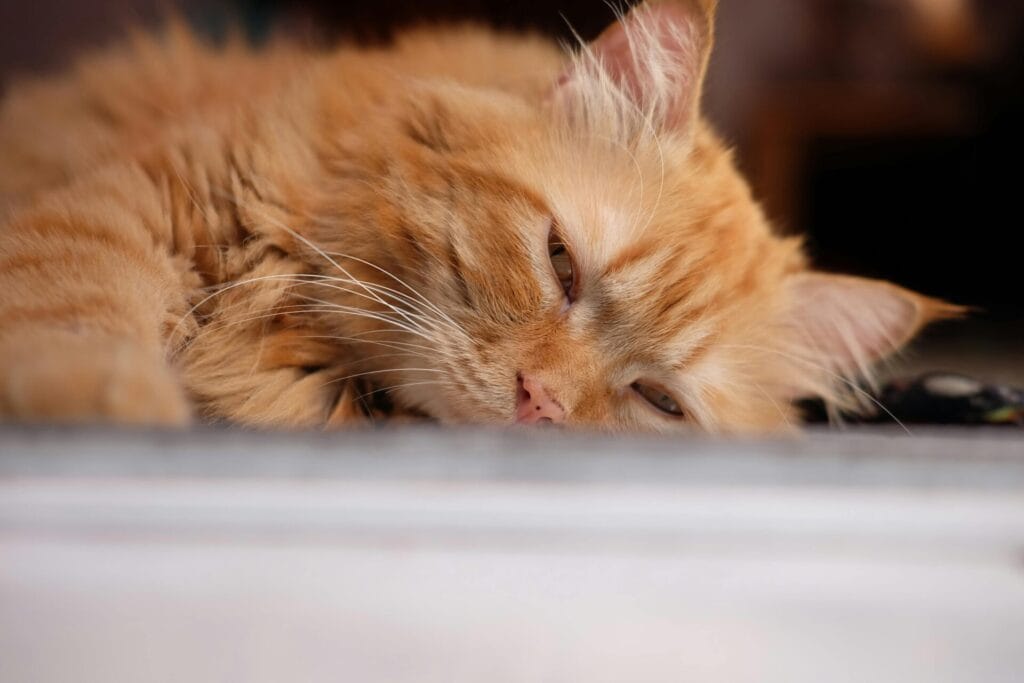
Cats’ wild ancestors learned to live by never showing any weakness. Your cat’s distant ancestors lived by never showing any weakness. That instinct is still present in your modern house cat, which is why your house cat will hide any pain, discomfort, or illness until he or she can’t hide it anymore.
In the wild, if a cat was limping or whimpering, it was an easy target. Evolution chose the stoics.
Like you do for quality dry dog food your pet needs, also keep an eye on any subtle changes in your cat’s behavior.
The natural survival instinct that makes your cat pretend everything is completely fine
In the wild, weakness is a death sentence. Cats haven’t forgotten the bitter lesson and even after all these years of domestication.
2. Because their ancestors had to be very good at hiding their illness and pain from predators and competitors (as they wanted to eat weak prey), this behavior is deeply ingrained in your cat today.
Your cat’s stoic front means they’ll keep acting like everything’s okay even if it’s not.
- Eating small amounts to appear interested in food
- Grooming briefly to maintain appearances
- Hiding discomfort through controlled movements
- Purring even when experiencing pain
- Seeking solitude rather than displaying symptoms openly
That’s a survival tactic that saved their life once, but makes it nearly impossible for you to even know your cat is sick.
Why waiting for obvious crying or limping usually means you waited too long
The only time cats will show the obvious symptoms of pain like crying out or limping is when they’re already in serious distress that’s been building up for days if not weeks. It’s like a time bomb that suddenly explodes. What looks like an overnight problem to you has probably been growing for a while.
If your cat only meows when you touch it, it may be a sign of severe arthritis, a serious infection, or an injury that’s become really bad. A limp that you can’t miss usually means the pain is unbearable, not that it has just begun.
Like your cat’s last chance to tell you something is wrong, not the start of a problem. By catching subtle changes early – your cat jumping less, grooming less, a slight change in appetite – you’ll be able to address the problem when it’s easier to fix, less painful and cheaper. It’s like you’re giving your cat homemade cat treats for good behavior at the vet’s office. Making it positive for your pet to be checked out regularly will make it easier to spot problems early in your pets.
Bathroom Habits That Point to Hidden Health Issues
1. Your cat’s litter box habits. “Your cat’s litter box habits may tell you more about his health than almost any other daily activity,” says Dr. Lahti. “Sudden changes can be a sign of more serious problems such as kidney disease, bladder infections, or gastrointestinal issues.”
If you use the box often (which you should), you’ll see the box size change, or the size of the urine clumps, or changes in the consistency of your pet’s poop, or you’ll find accidents outside the box. All of these are signs of hidden illnesses.
Other bathroom changes require urgent attention, like not being able to pee without straining (which can quickly become a life-threatening emergency in just a few hours).
Tracking sudden changes in urine clumps to spot early kidney or bladder trouble
How often do you really look at what’s inside your cat’s litter box? Most of us scoop and go, but those clumps tell a tale. Changes in urine patterns can indicate kidney disease, a urinary tract infection or bladder stones before your cat shows signs.
Watch for these warning signs:
- Unusually large clumps that seem twice the normal size
- Multiple tiny clumps scattered throughout the box
- Very dark or pale-colored urine staining the litter
- Strong ammonia smell that’s noticeably different than usual
- Blood-tinged clumps with pink or red discoloration
If these symptoms are still apparent after 2 days, call your vet.
If you catch it early, you’ll give your cat a better chance to recover. As I’ve mentioned in my dog food for allergies article, it’s equally important to keep an eye on your cat’s urinary health.
What diarrhea, constipation, or peeing outside the box actually tells you
If your cat suddenly starts pooping or peeing outside of the litter box, it’s not that he’s being mean or just plain silly. It’s likely a medical red flag.
If you have diarrhea for more than 24 hours, it may be parasites, IBD, or food allergies.
Constipation (and if it lasts more than 2 days it could be dehydration, megacolon or an obstruction)
It could be urinary tract infections, bladder stones or diabetes.
Blood in the stool or urine is an emergency situation and needs to be treated as such. You will need a vet to look at it.
The cat will stay away from the litter box if it’s associated with constipation or UTIs. This is why it can be so frustrating.
Cats and dogs have different digestive systems, but they can still get constipated. If this happens, consult with your vet for a treatment plan.
10. Accident tracker: If your dog has a favorite spot to have an accident, tracking the frequency and consistency of those accidents will help your vet figure out the puzzle pieces they need to diagnose the problem.
The specific litter box struggles that require an emergency vet trip today
There’s not many litter box problems that are urgent, but there are signs your cat is dying right now.
This is a pretty tough post to write, as it will likely bring up some unpleasant emotions. But it is one of those things we need to be aware of. I’ve seen it a few times in my career, and I’ve seen it from friends. It’s a tough way to go out.
1. The situation cannot wait. 2. You need to act fast. 3. You have no time for anything else. 4. You need to fix it now.
Run to the vet if you see:
- Straining without producing urine – This signals a blocked urethra, especially deadly in male cats
- Bloody urine with visible distress – Could indicate a life-threatening urinary obstruction
- Repeated trips with crying or yowling – Pain this severe suggests a critical blockage
- Distended, hard abdomen – A swollen belly means urine is backing up dangerously
- Weakness or collapse near the box – Toxins are building up in their system
A blocked urine can kill within 24-48 hours.
No. No. Not tomorrow. Now.
But what about your dog? He can have an emergency too. Like a yeast infection that can also be serious if not treated in time.
Appetite and Thirst Changes You Should Never Ignore
Your cat’s eating and drinking habits can be some of the first signs of an underlying health problem, so don’t ignore them.
If your cat is drinking as much water as a camel that has just crossed a desert, it might be a sign of diabetes or kidney disease.
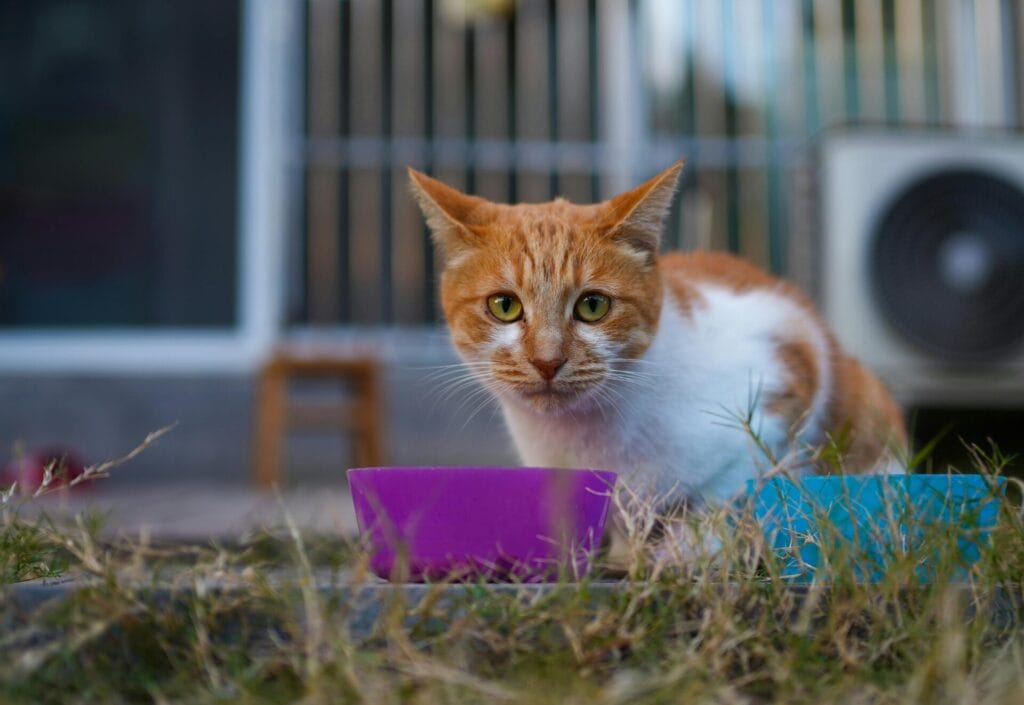
Or, if your cat is being difficult and doesn’t eat out of her food bowl for more than a day or two, then this is no longer a picky cat situation.
And, if you’re watching your cat’s health, then you should also consider creating a cozy bed in a quiet area where your sick cat can lay down and rest as he heals.
Why a sudden, intense obsession with the water bowl is a major red flag
Have you ever noticed your cat—a cat who doesn’t care for anything on earth, ever—find something so awesome in the middle of the desert that they just can’t believe their luck? If so, they’ve just found what we’re calling polydipsia—and it could be that your cat is in serious trouble and needs a vet stat.
If your cat is drinking too much, these conditions may be occurring:
- Diabetes mellitus – your cat’s body can’t process glucose properly
- Kidney disease – failing kidneys struggle to concentrate urine
- Hyperthyroidism – an overactive thyroid speeds up metabolism considerably
- Urinary tract infections – inflammation causes increased drinking
- Liver disease – compromised liver function affects fluid regulation
Step two: Find out how much water your cat is drinking a day. If he is drinking more water for 2 days straight, take him to the vet.
Catch them early because the earlier you detect them, the better the outcome.
You can’t ignore thirstiness. Symptoms such as vomiting in pets requires immediate vet attention to rule out something serious.
When skipping regular meals crosses the line from picky eating to true illness
But don’t go to the other extreme either: your cat shouldn’t be drinking too much water. But also, don’t forget that another common problem is if your cat suddenly refuses to eat out of his food bowl. A missed meal here or there isn’t a reason to panic, especially if your cat can be a little picky.
But if your cat misses two meals in a row or doesn’t eat for 24 hours, that’s a red flag. Cats who don’t eat for 48-72 hours can develop hepatic lipidosis, a serious liver condition.
Does your cat get near the food bowl but walk away? That’s nausea. If you see weight loss, lethargy, or vomiting with no appetite, this is a medical emergency.
These symptoms are usually a sign of a bigger problem, such as kidney disease, dental problems, or infections. If your cat is having digestive problems and is also changing its eating habits, try some of the dietary solutions above to help ease your pet’s tummy until you can get them to the vet.
Behavioral Shifts That Tell You Your Cat Is Hurting
If something’s wrong with your cat, you can tell by his behavior—even if he doesn’t meow. Changes can be as simple as grooming problems, or as dramatic as a complete personality change.
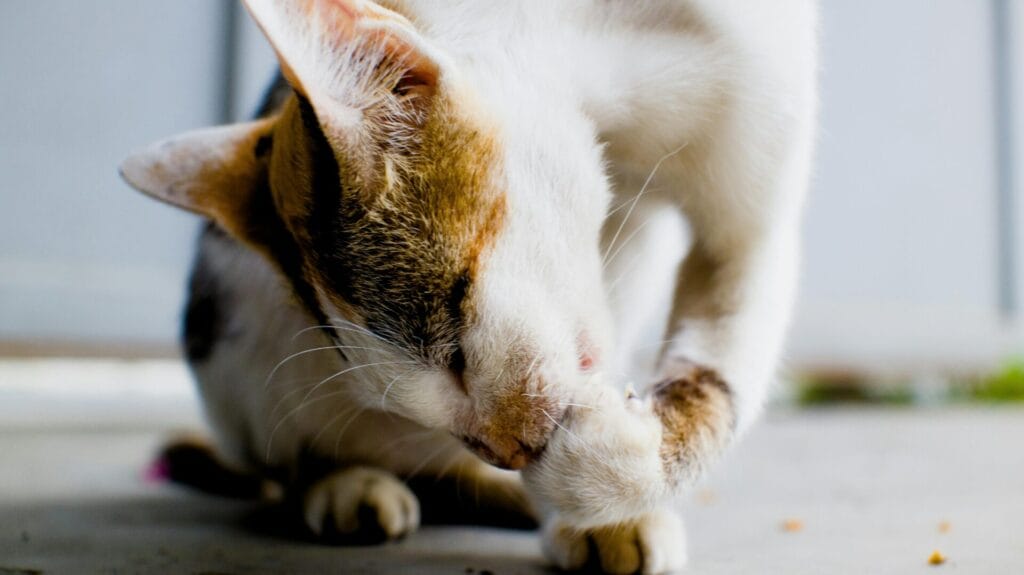
A coat that hasn’t been cleaned for a while is a sign that your cat isn’t feeling well enough to groom herself properly. The coat looks matted, greasy or balding.
If your friendly lap cat suddenly becomes distant and hides away in dark corners or spends days under furniture they’ve never shown any interest in before, they’re probably feeling pain that they can’t express any other way.
Noticeable changes in daily grooming, from a greasy coat to sudden bald spots
One of the first signs that something might be wrong with your cat is that they stop grooming themselves as well as they used to.
This cat, who has always had a coat like silk, now has a dull, greasy coat that is oily to the touch and mats forming in areas that they never had before.
But, watch out for the following grooming red flags:
- Unkempt, matted fur that wasn’t there before, especially around the hindquarters
- Bald patches or thinning spots from excessive licking in one area
- Greasy, unwashed appearance despite your cat being awake and active
- Dandruff or flaky skin becoming visible through their coat
- Neglected claws that grow too long or thick
It could also be medical problems like dental pain, arthritis, obesity, or hyperthyroidism. These conditions can make grooming uncomfortable or impossible. The result is an unkempt cat.
Why your normally social, cuddly cat is suddenly hiding deep under the guest bed
Besides the obvious changes in grooming, your cat is likely to shy away from her favorite spots and people when she’s under the weather.
If your usually cuddly tabby has been hiding under the couch for hours, it’s your cat’s primal survival instinct. Wild cats hide when they’re vulnerable to avoid being eaten by other animals, and your housecat’s DNA has that programmed in, too.
This means pain, nausea, fever or respiratory distress. Your cat may opt for dark, quiet places like closets, under beds or behind appliances.
It’s not because of last week’s vet visit. It’s not because she’s mad at you. She’s trying to tell you something hurts.
If your cat is hiding because of dental disease, urinary tract infection or arthritis, you can be sure she’ll be somewhere quiet. If she’s been in hiding for more than 12-24 hours, take her to the vet right away.
Physical Symptoms You Can Safely Check at Home
Besides just watching your cat, there are some basic physical checks you can do at home that can give you a lot of information on how healthy your cat is.
You can do this test yourself by looking at their gum color, feeling for irregularities along their body and watching their breathing. No equipment or special training is required.
The cat will likely glare at you while you’re doing this, but better to get to the bottom of it before it becomes a bigger problem.
How to gently check their gum color for signs of healthy blood circulation
You can quickly see your cat’s gum color to assess circulation. Discover how here in seconds. Lift your cat’s upper lip to reveal the gums above their teeth. They should be relaxed and calm.
Healthy gums should be pink—just like yours!—and they should feel slightly moist to the touch.
1. Biting inappropriately (biting ankles, shoes, hands, etc)
2. Not being able to go down stairs (if your dog normally can go down stairs)
3. Vomiting frequently (if your dog doesn’t normally do this)
4. Not lameness (if your dog was limping but now is standing fine)
5. Hiding (if this isn’t typical of your dog)
- Pale or white gums indicating possible anemia or shock
- Bright red gums suggesting inflammation, overheating, or hypertension
- Blue or purple gums signaling oxygen deprivation, a medical emergency
- Yellow gums pointing to liver problems or jaundice
- Tacky, dry gums showing dehydration
Check the color of your gum monthly as part of your routine health check.
Feeling for strange lumps, heat, or sneaky weight loss right along their spine
If you gently run your hand down your cat’s back as you pet her every day, you may be able to spot potential health issues before they become critical.
Start with the neck and work your way down to the tail. Feel for any unusual bumps or swelling, or areas that are warmer to the touch. You should be able to feel each vertebrae with a little pressure, but not be able to feel them too prominently.
If your cat’s spine feels sharp and angular, it could mean that your cat has lost weight. This could be a sign of diabetes, hyperthyroidism or kidney disease.
If the lump is larger than a pea, this will also pique your vet’s interest, as will any hot spots that may indicate an infection or inflammation.
Make this a weekly check-in part of your bonding routine.
Counting their resting breathing rate while they sleep to catch respiratory distress
But if your cat is taking a nap on the couch, you can use this downtime for one of the most valuable health checks you can make: Counting their resting breathing rate. This quick test can reveal respiratory distress, heart disease, or fluid in the lungs before your cat shows any symptoms.
If you want to make sure that the email is not a hoax, you can try the following:
- Watch your cat’s chest rise and fall for 60 seconds
- Count one breath as a complete inhale-exhale cycle
- Normal cats breathe 20-30 times per minute while sleeping
- Anything above 40 breaths consistently signals a problem
- Record the number and repeat weekly for comparison
If you notice your cat breathing rapidly, breathing through its mouth, or having difficulty breathing, call your vet right away.
It’s often an indication of something that needs medical attention immediately.
What to Do Once You Realize Your Cat Needs Help
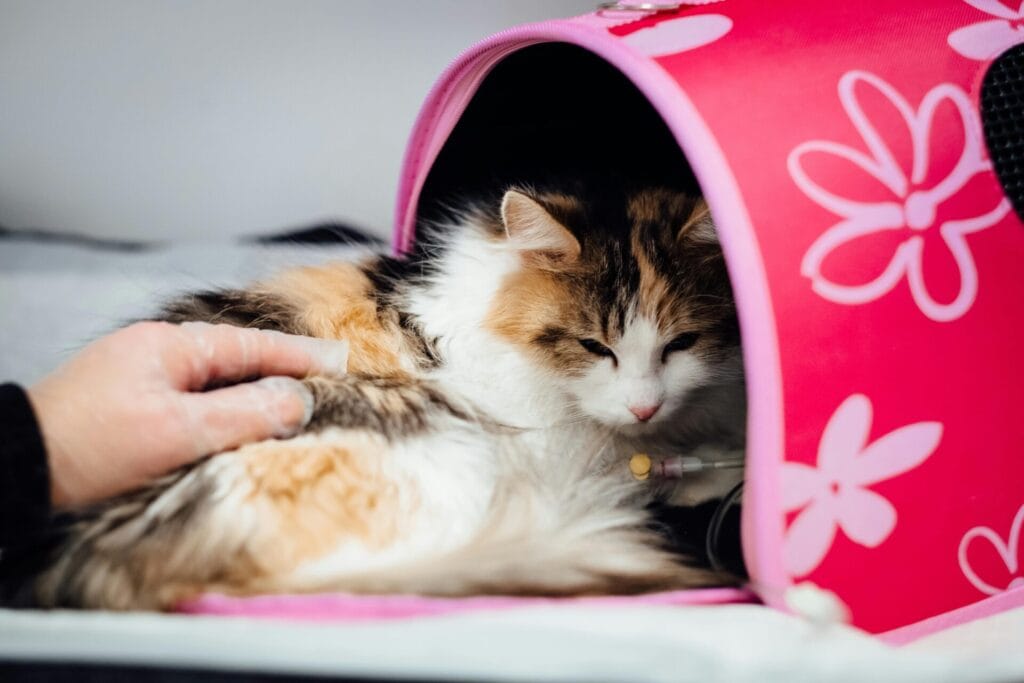
Now that you know the signs to watch out for, be a detective and write down the details. How many times did the cat use the litter box today? Did they eat their entire meal, or just nibble? What time did the symptoms first appear?
Your vet needs to know this in order to diagnose the problem. Write down when the vomiting happens, how much is vomited and any unusual behavior you observe.
The hardest part is deciding if your cat needs an appointment this week, or if it needs to be rushed to the emergency room right now and we’ll help you make that decision.
Gathering concrete details about food intake and bathroom trips for your vet
They are going to ask you a lot of questions when you call to make the appointment. You’ll have to tell them about your cat’s eating and bathroom habits. Having this information handy saves time and helps them determine whether they need to schedule the appointment as soon as possible.
Track these items for at least 24-48 hours before you visit.
- Food consumption: Note how many meals refused, portions eaten, and any preference changes
- Water intake: Measure if your cat’s drinking considerably more or less than usual
- Litter box frequency: Count urination and defecation instances over 24 hours
- Stool consistency: Describe if it’s runny, hard, bloody, or contains mucus
- Vomit characteristics: Record frequency, color, and whether food appears digested
Your vet will love you for this, and your pet will be diagnosed more quickly.
How to confidently decide between a scheduled clinic visit and the emergency room
You’re ready to make the call. But do you need an appointment tomorrow, or do you need to run to the emergency room? Go with your gut.
If your cat is struggling to breathe, actively bleeding, having seizures, can’t urinate, or has been vomiting for more than 24 hours, get to the ER now. This isn’t a wait-and-see situation.
If on the other hand your dog is losing weight slowly, is a bit tired or is vomiting occasionally, you may be able to wait for the next-day appointment.
If you’re not sure, give your vet clinic a call and explain what you’re seeing. They’ll know. Most clinics have a triage protocol in place for just this sort of thing, and they’d rather you called to prevent a potential disaster.
Frequently Asked Questions
How Often Should I Take My Healthy Cat for Veterinary Checkups?
In general, take your healthy adult cat to the vet once a year.
If your cat is a kitten under one year old, she’ll need more frequent visits—likely every 3-4 months for vaccinations and wellness checks.
Senior cats over 7 years of age should be seen twice a year. Diseases that are age related like kidney disease and hyperthyroidism can progress quickly.
Regular checkups can help you find problems early before your cat shows signs.
What Vaccinations Does My Cat Need to Prevent Common Illnesses?
Does your cat require core vaccines like FVRCP (to protect against feline viral rhinotracheitis, calicivirus, and panleukopenia)?
The last shot is a rabies vaccine, which is mandatory in most places.
If your cat goes outside or lives with other cats, your vet may recommend FELV (feline leukemia) protection.
Kittens need a series of vaccinations beginning around 6-8 weeks and then boosters every 1-3 years depending on lifestyle and risk factors.
Are There Specific Breeds More Prone to Certain Health Conditions?
Yes, some breeds are more prone to certain conditions.
Persians and Exotics can develop polycystic kidney disease, while Maine Coons can suffer from hypertrophic cardiomyopathy.
These are the kids who most likely have asthma and dental problems.
This mutation can also cause joint problems in Scottish Folds which can be painful.
The Bengal breed is also prone to progressive retinal atrophy.
If you’re getting a purebred cat, ask your vet what the breed is prone to and what screenings you should get.
How Much Does an Emergency Vet Visit Typically Cost?
An emergency vet visit is $100 – $300 just for the exam. No diagnostics. No treatment. Just the exam.
If your cat requires blood work, X-rays or ultrasounds, you’re looking at another $300-$1,500.
Day costs can be anywhere from $500 to $3000.
Surgery? That’ll cost you $800 – $5000 depending on the complexity of the surgery.
Pet insurance or an emergency fund can be useful in situations like this.
Can Pet Insurance Cover Pre-Existing Conditions in Cats?
What is good about most pet insurance policies is that they do not cover pre-existing conditions in your cat. That means anything that had symptoms before your coverage started.
Some companies will pay for curable conditions like UTIs or ear infections if your cat is symptom free for 6-12 months.
It’s for this reason that it’s a good idea to register your cat while they’re young and healthy, before any issues arise.
Conclusion
Your cat depends on you to notice when something’s off, and now you’ve got the tools to catch those sneaky early warning signs. Trust your gut—if your feline friend seems different, even slightly, don’t wait it out. Reach out to your vet, share what you’ve observed, and get professional guidance. You’re your cat’s best advocate, and quick action today could mean a healthier, happier tomorrow for your beloved companion.

Hi, I’m Ali Tarek, co-founder of Animalsman. I’ve always been passionate about pets, especially dogs and cats, and I created this website to share practical tips, easy recipes, and helpful care advice for fellow pet lovers. My goal is to make pet care simple, enjoyable, and accessible for everyone. When I’m not writing or curating content, you’ll usually find me spending time with my furry friends or learning new ways to keep them happy and healthy.