Your dog deserves better than living in a sad, crooked, plastic kennel shoved in the corner of your yard. You know the one, the sun bleached, cracked, smelly, old rain, kennel that you never go near. Every time I see one I just want to cry.
Not that I’m complaining, but girl, I know you. You’ve already got Pinterest board full of ideas and a golden retriever that has made half your couch his own. Why should his outside be an after thought?
Last summer, I helped my cousin redo her pup’s backyard setup. The before and after pictures brought me to tears. A real shelter stopped muddy paw prints from reaching the back door and her dog even chose to nap outside.
These 10 dog shelter ideas outdoor are super cute, doable, and I’ll even admit, gorgeous enough to pin on your next Pinterest board!
#1: Architect-Designed Steel Kennel Units That Make Your Backyard Look Like Modern Art
Your golden is outside and the sun is beating down and she’s just laying on the hot concrete because her plastic igloo fell over again. Yeah. We’ve been there.
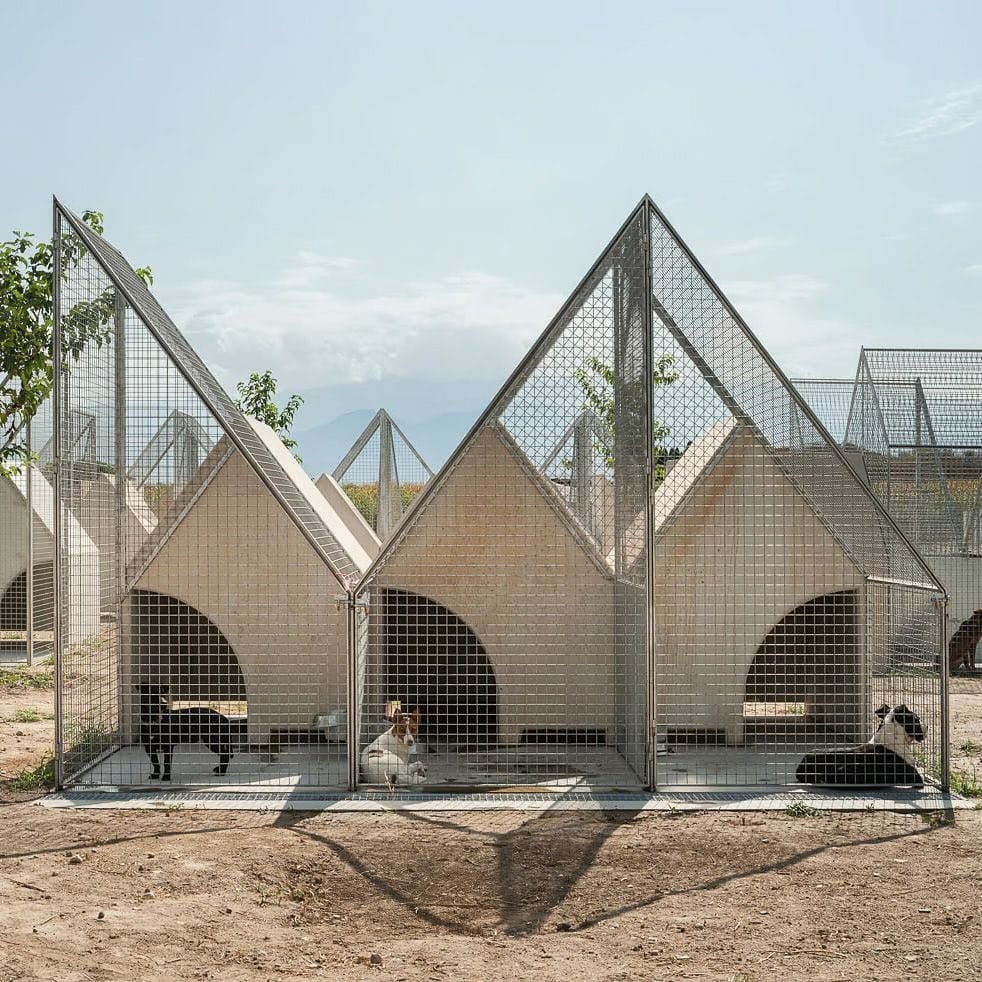
The kennels were made up of three connected kennel units made out of galvanized steel mesh panels and of a few pale concrete block shelters, with a sharp triangular A-frame roof top. The arched openings on each door makes it feel like the dogs had their own den space and with the mesh walls it never feels like a furnace inside the kennels.
To recreate this effect you will need to have: a. 1.5-inch square galvanized wire mesh, b. steel tubular framing, c.compressed concrete fiber boards for the solid back and side walls, d. the triangular roof frame is welded together at a 45 degree angle, and, e. flat concrete slab base for the rain to drain off.
If you are planning to weld the frames together, you get a shared wall kennel which saves material costs. A shared wall kennel is made using half the amount of steel but is twice as stable.
Keep this in mind: Try staggering the roof heights between units a bit. It will reduce wind load and give each dog a “room” feeling that might reduce territorial barking.
If you want to get some more inspirations for your outdoor dog kennel, I recommend you to check out 12 Creative Outdoor Dog Kennel Ideas for Your Furry Friend.
📸 Photo credit: Instagram @designboom
#2: Indoor Dog Kennel Building With Chain-Link Runs
Your dog has been outside all morning and now she comes in the door, shakes off, and runs to your couch. You love her, but girl — you need a space that’s hers!
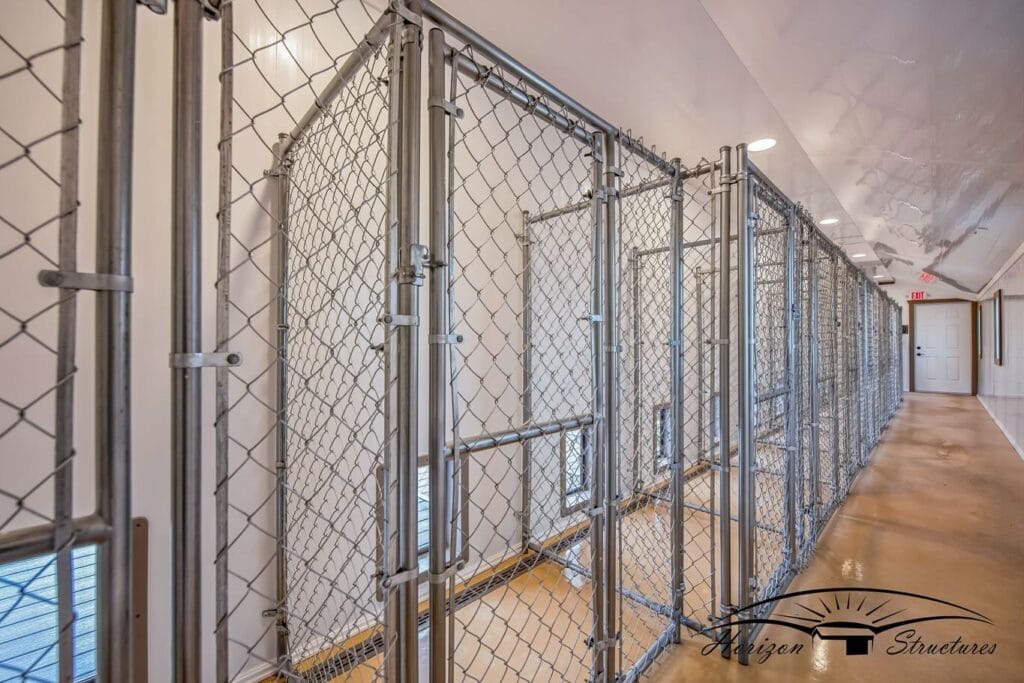
It kinda reminds me of the spiffy professional boarding setup at the barn, just make it home. Galvanized steel chain-link panels mounted to heavy-duty pipe frame connectors, lined up along a white-painted interior wall. The floor is polished concrete in a warm honey tone, that wipes clean in seconds, and we’re happy.
Each run has a small dog door panel built into the lower portion of the chain-link wall so your dog can walk between the indoor and outdoor runs without having to be let out by you. There is a recessed ceiling light built into the top of the run.
The chain-link panels are attached to vertical galvanized posts using standard clamp fittings. So, you can easily add runs as you get new dogs. Or, if you’re the do-it-yourself type, we have 7 Budget-Friendly Outdoor DIY Dog Kennel Ideas to show you how to build a dog pen on the cheap.
Run the drain channels along the bottom of the concrete floor before you put the cover on. I don’t have to worry about cleaning up the mess then it only takes me about thirty seconds.
📸 Photo credit: Instagram @horizonstructures
#3: Indoor Dog Kennel With Outdoor Access Panels
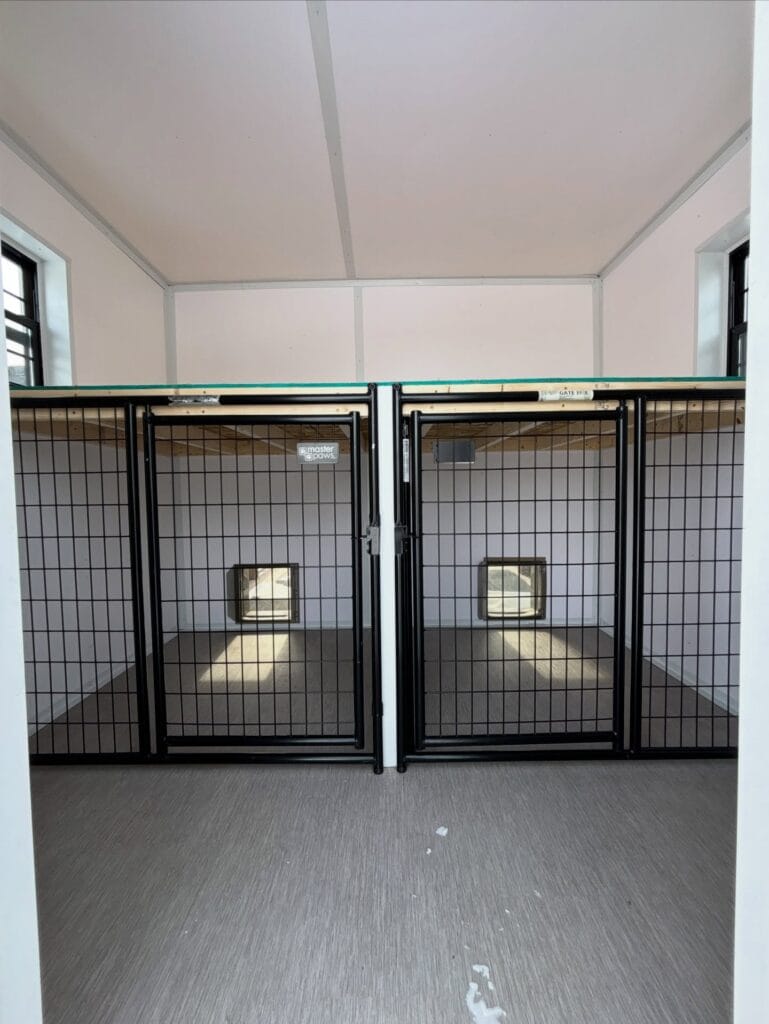
This set-up is everything a golden owner dreams of. Two side-by-side kennel runs with black powder-coated steel wire panels, white tile walls and small dog door cut-outs built into the back wall so your dog can step out whenever she wants. It’s clean, structured, and feels more like a boarding suite at a boutique than a backyard kennel.
The bones here are called Master Paws kennel panels with a full-swing gate door per run. The walls are white subway tile for easy hose-down and no grout-drama, and the floor is dark rubberized flooring so she doesn’t slip when she barrels inside muddy. And then a plywood shelf runs along the top for leashes, treats, or a small fan.
We do have a small dog door flap centered on the back wall low to the ground. She has access to the outdoors at all times so I don’t have to stand outside in the cold waiting for her to go potty when it’s raining every Tuesday.
For more convenience, keeping the same size of runs for both sides would be great. So that you can always pair dogs for boarding or play dates without moving the panels around. Use a waterproof epoxy grout sealer to seal the tile grout before the dog steps in it. It makes your deep scrubbing sessions a lot easier.
📸 Photo credit: Instagram @driftless_backyard_structures
#4: A Free-Roam Dog Sanctuary Setup That Actually Works
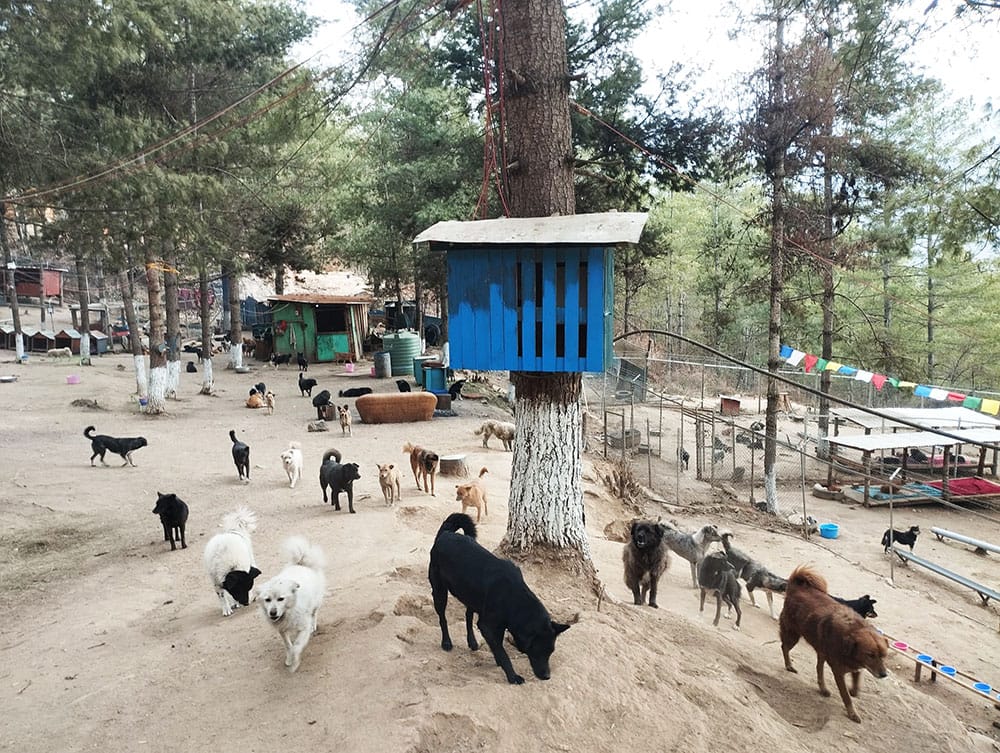
I let my golden out back a minute ago and she was nose deep in the sand ignoring my new $80 bed that I bought for her. I need to remember that dogs want space, texture, and freedom far more than they want our attention.
The space is large and open air. The base of the ground is a compacted sandy soil. There is no grass to kill or mud puddles to form after rain. There is a blue-painted wooden shelter box attached directly on a large pine tree trunk. The shelter is elevated and shady from the outside. A colorful prayers flags are hanging from the chain-link perimeter fence.
Our elevated dog shelter is made with pressure-treated timber for the box, and galvanized chain-link panels for the perimeter fence. The sandy ground is almost free, it drains very fast and keeps the dog paws dry.
Real talk: There are several small covered kennel stations scattered around the space, providing dogs with shade from the hot summer sun during afternoons.
It’s a good idea to keep a couple of bowls of water handy at your dog’s level. As you can see in the photo, I use those bright blue plastic ones which my dog loves to chew on. I keep them on the floor in a couple of places so she doesn’t have to fight over one bowl and no crowding.
If you have multiple dogs, separate one chain-link enclosure zone from the open area for the shy dog to run into when it feels scared, but not to be isolated.
📸 Photo credit: Instagram @kuenselnews
#5: Multi-Bay Galvanized Dog Kennel Block with Insulated Panels
So, your dog’s finally napping after some zoomies, but you’re eyeing that muddy patch that’s sprung up by the back door. You know she needs her own space outside, and not just a plastic crate shoved against the fence.
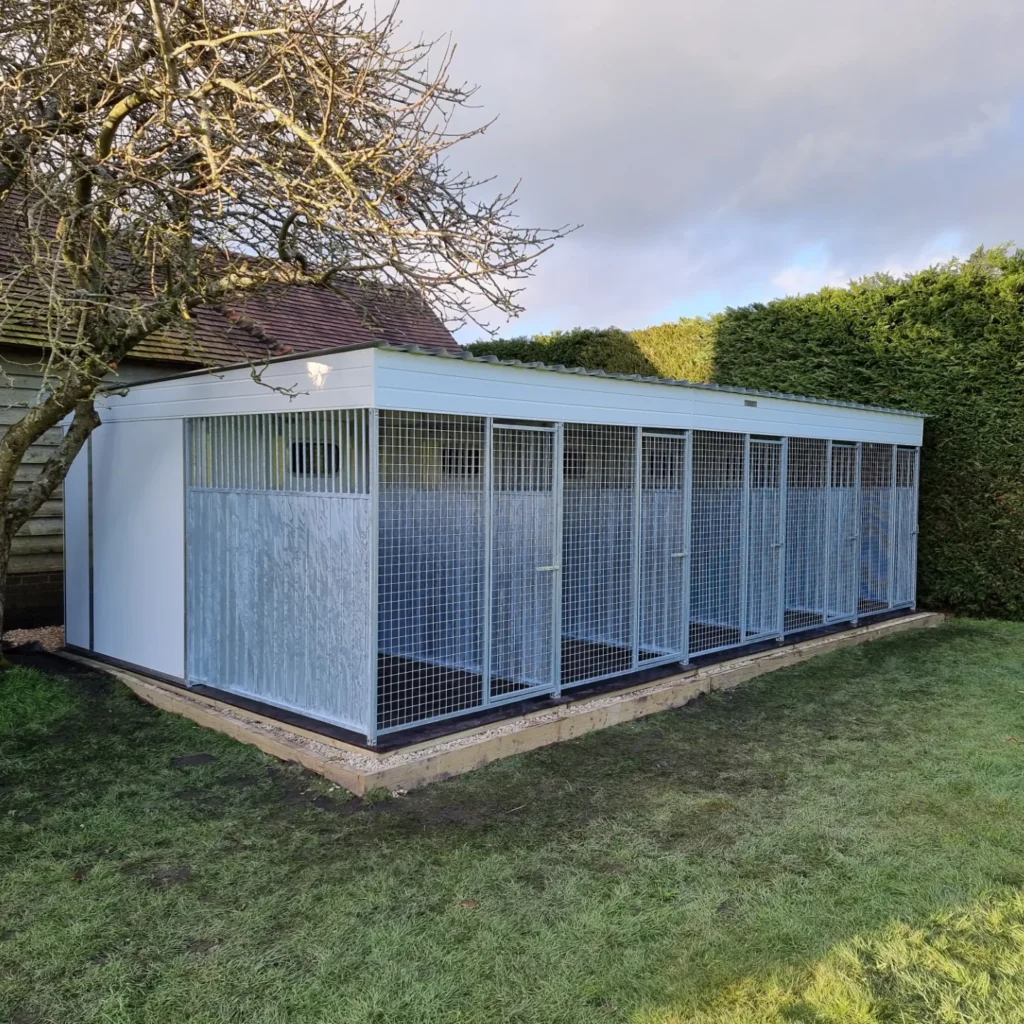
This kennel block is exactly what a block for outdoor dogs should be like. White-painted tongue-and-groove timber panels line the solid back wall while hot-dip galvanized steel mesh panels front each bay ensuring the kennel will last many years of Golden retriever enthusiasm.
It’s built in six individual bays with its own latched mesh door. A corrugated green roof with integrated fascia boards keeps the rain out and avoids the tin-shed feel. A black rubberized base perimeter sits on a pressure-treated timber foundation frame that lifts it off the damp ground – the framing is moisture resistant so no rot or sagging floor.
For starters, each bay includes a ventilation louvre high on the back panel. Up top heat can be pulled out without creating a draught at dog level, so your girl won’t shiver in October but stay cool in July.
Each bay should be a minimum of size 6ft x 4ft per dog (My dogs are quite big). Gravel infill between the timber frame and the grass line really helps with drainage (again, it keeps their paws cleaner after an outside session).
📸 Photo credit: Instagram @buchanskennelsltd
#6: Turf Play Court With Built-In Ball Zone for Active Dogs
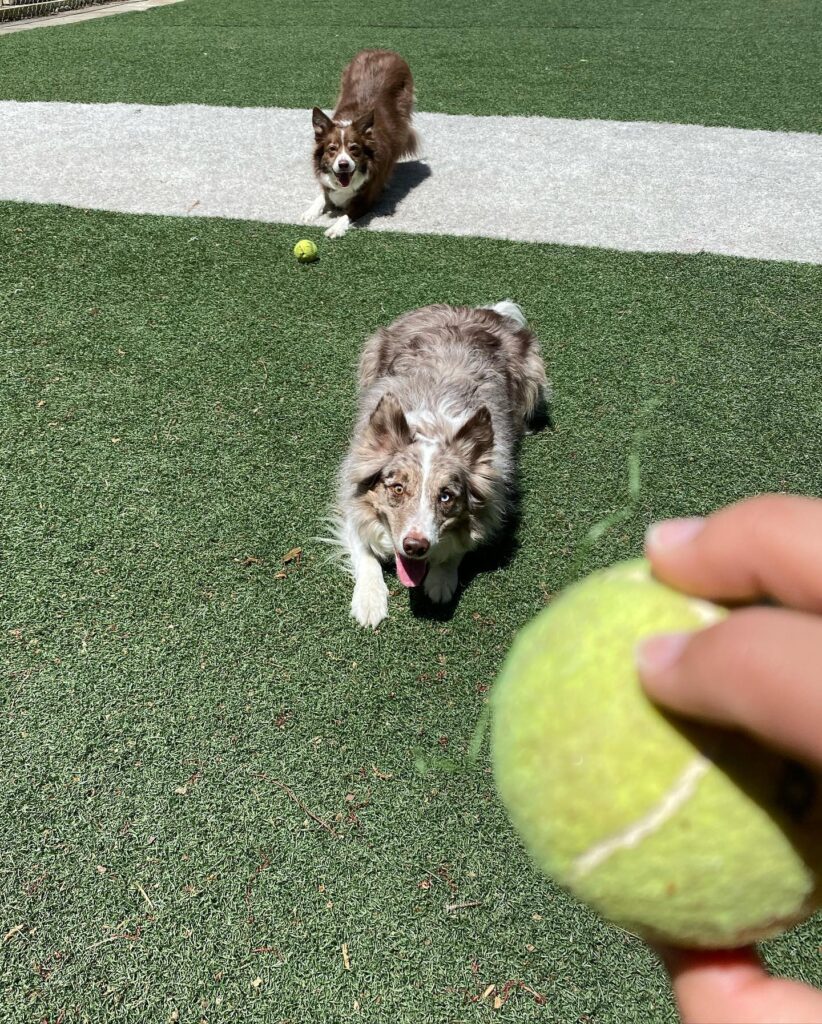
Two border collies are “living their best life” in this gorgeous artificial turf court. Your golden retriever would lose her mind here! It’s sunny and open, and enclosed by low fencing around the perimeter. This could be a dog sports court for all we know! We’d want to hang out here too.
The bones of this setup: this could be used for an artificial turf field (20x30ft) with a white boundary stripe that is either painted or taped directly onto the turf. the fencing can be a low chain-link or welded wire fence so that the area feels open, but secure enough that no one will be bolting. the only other things you’ll need are a couple of standard 2.5-inch tennis balls.
I’ve had good luck laying turf directly on top of a compacted gravel base rather than a concrete base. Turf laid on gravel drains mud and rain away more quickly, so your dog’s paws won’t be soggy when he comes inside after play time. I learned this the hard way when my cousin’s dog turned her concrete play area into a slip-and-slide this summer.
2-3 balls being rotated around the space. Your girl will always have something to chase and that herding instinct in the working breeds means they will play until you physically stop them so built in ball stations are a must!
📸 Photo credit: Instagram @familypetretreat2019
#7: Dog Agility Backyard Setup (The Outdoor Playground Your Retriever Is Desperately Waiting For)
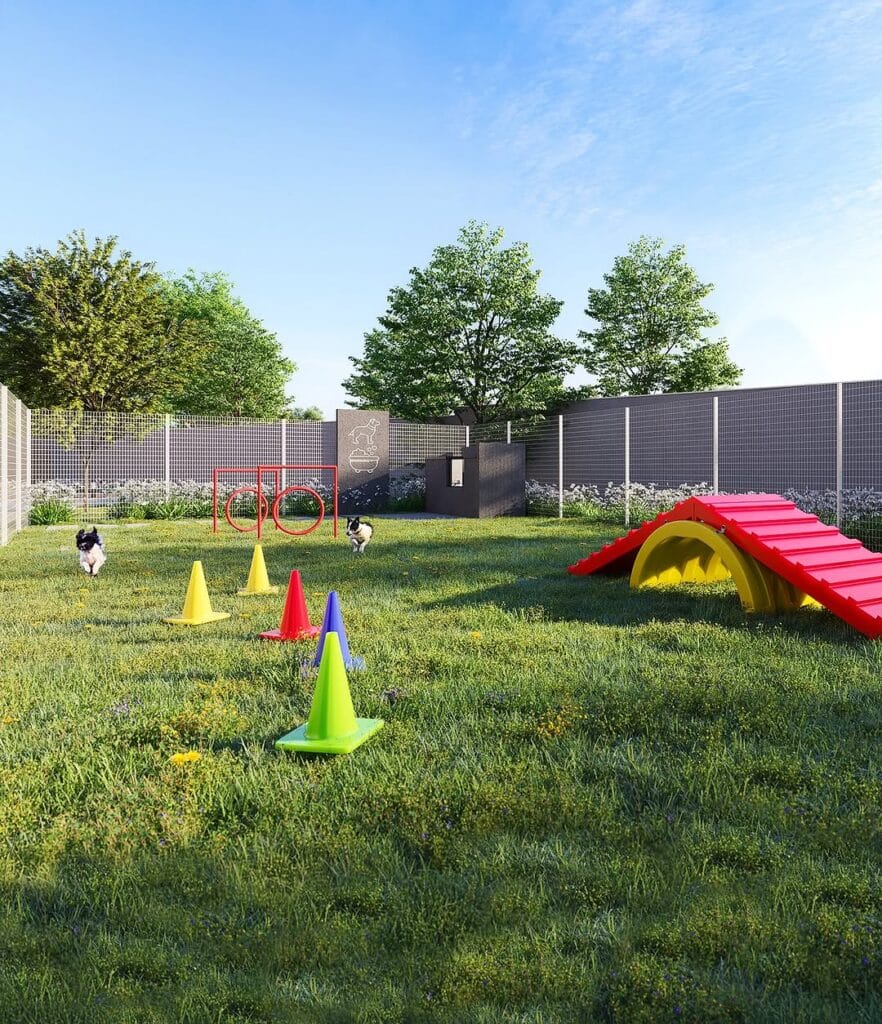
Picture this: yeah, the golden is zooming laps around your yard knocking over your garden decor and losing her mind cuz she has nowhere to put all that energy.
What dog couldn’t have a blast in a setup like this? A fully enclosed outdoor run (with lush grass), colorful cones, jump rings, a red and yellow A-frame ramp (who wouldn’t want to play on that? My dogs go crazy for textured surfaces to climb on)… The whole space feels playful but intentional.
To recreate this, you will need: plastic agility cones (yellow, red, blue and green), PVC jump hoop frame (red), fibreglass A-frame dog ramp (the type with a non-slip ridged surface) and welded wire mesh fencing (mounted on white steel posts). This is to keep escapes impossible.
I always let my dogs lay on natural grass, not the fake grass that dogs can’t regulate their body temperature on. There should be no reason for that dog to die, if it was laying on real ground.
Place the cones in a zigzag pattern at least 3 feet apart so that students have to weave between the cones.
One thing to remember: Always mount your A-frame on flat, compacted ground, so it won’t move when your pup is climbing up.
📸 Photo credit: Instagram @archviz.supply
#8: The Hula Hoop Jump Ring Setup That Turns Your Backyard Into a Dog Training Zone
Your golden is bored. You can tell because she has eaten two throw pillows this week and has stared at you like you ruined her life. This is the cure for the bored golden.
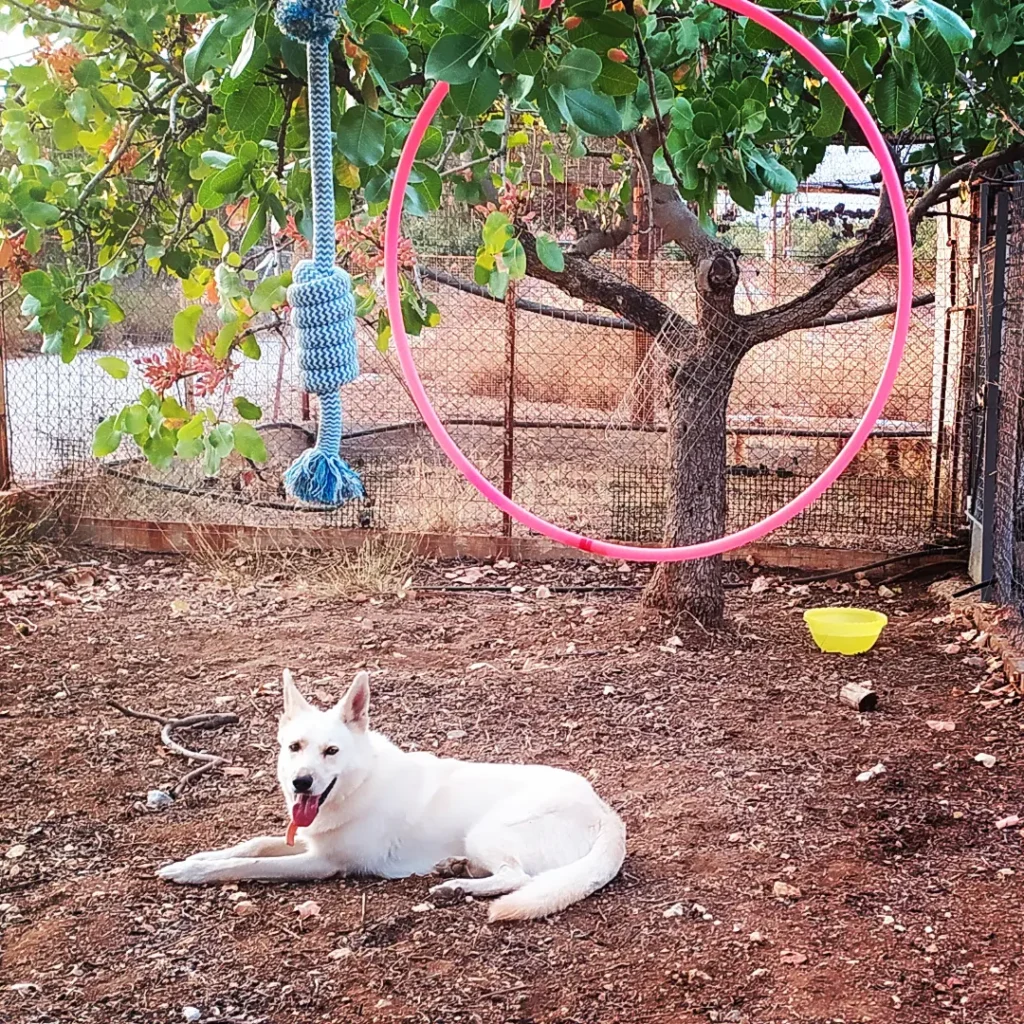
This is one of my girls. A simple pink hula hoop hanging on the branch of a tree with a rope creates a agility jump ring. The white shepherd in this picture looks to be smiling with her tongue out. She’s laying in the dirt under the shade of a tree after a good training session.
I grabbed a 36-inch plastic hula hoop in a bright color (the pink one is really cute against the greenery), braided cotton rope toy that was hung from a second branch, and a small yellow bowl for water breaks. The tree became its own shade shelter… no extra structures needed.
Attach the hoop at shoulder height to your dog using paracord or zip ties. Start low and reward each jump, then raise it a couple inches at a time. The hoop’s shape catches their eye and signals “game time” which makes for a calmer dog by dinnertime.
And if your girl needs a little more space to play with, here’s 12 Creative Dog Room Ideas for Your Furry Friend to inspire you!
Rotate toys that she hangs from weekly. The novelty of a new toy will keep her interested much longer than expensive equipment.
📸 Photo credit: Instagram @the.country.loft
#9: Let Your Dogs Run Free on a Sloped Play Hill
Can you picture it? The dog you’ve always dreamed of. Golden, zooming down your backyard slope, ears flopping, the chaos energy between her ears, and zero furniture casualties.
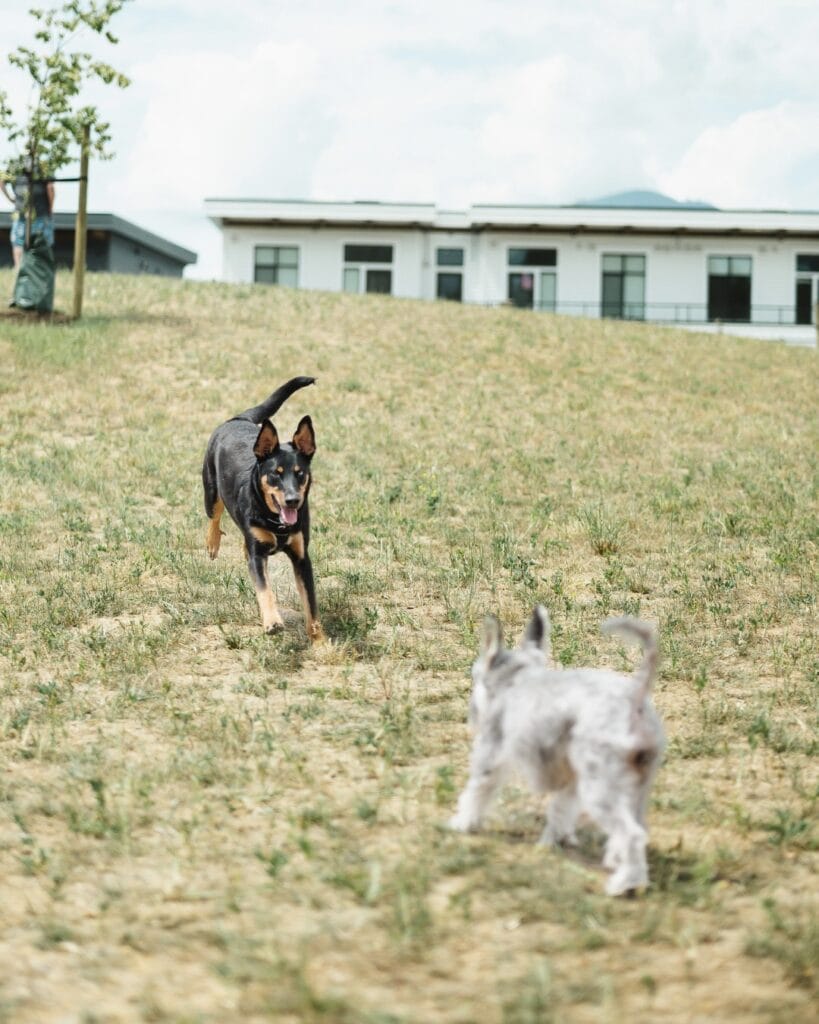
The overall vibe of this image is that of two dogs enjoying their lives on a gently graded grass hill with a low profile white modern building at the top of the hill as a backdrop. The slope of the hill provides dogs with a natural running track that burns off their energy quickly and without the need for fencing.
A key feature of the yard is its terraced grass slope cut at a 15-20 degree grade and a sprinkler system. The slope is lined with drought resistant patches of turf so it does not turn into a mud pit from the heavy paw traffic. A young slim-trunk shade tree provides a landmark for dogs to rally around at the upper corner of the yard.
Furby filled in the base with low-maintenance native grass seed mix. It covers up the bare, sandy patches of dirt in our backyard and helps keep the soil in place. You don’t want mud on those paws and ending up on your cream linen sofa!
Keep it mowed short. Dogs prefer to run around on grass shorter than 2 inches, and you’ll be able to see any holes dug before someone twists their ankle. If you’ve got a large fenced area where your dog gets to roam, 17 Creative DIY Dog Run Ideas for Your Furry Friend has some cool designs you might want to copy.
and honestly, you can’t beat a sloped yard with high energy dogs.
📸 Photo credit: Instagram @westbowhomes
#10: Personalized Wooden Dog Tag Station for Your Outdoor Shelter Setup
Your golden retriever comes tearing back into the house after rolling in the mud in the back yard with her collar jangling and her tags scratching against each other. You look and realize half the engraving on the old collar is already worn off.
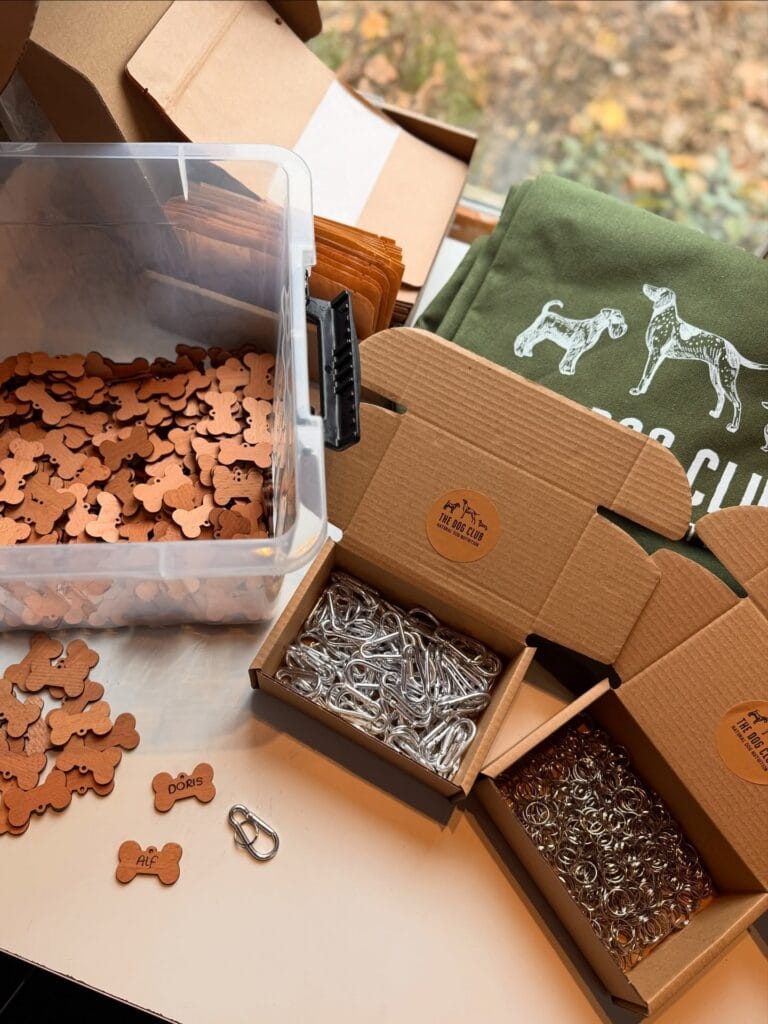
These gorgeous dog tags were created by The Dog Club. I love how simple yet pretty they are. There’s no need for anything more, we have it all. These laser engraved wooden bone-shaped tags are a warm walnut-brown tone. The tags come with a silver split ring and a gold-toned key ring for attachment. The green canvas tote is also printed with dog silhouettes.
If you’re looking for a simple tag system, a clear storage bin, two small cardboard organizer boxes and order the tags in bone-shaped birch wood blanks that you can have laser engraved with the names of your dog, Alf, Doris, or whatever your golden’s name is.
Engraved wood is a better choice for outdoor tags because it will not reflect the harsh sunlight like metal tags do, so your dog won’t be burned by the hot metal tags on her chest.
I keep a few extra split rings in a small tin beside my outdoor shelter entrance. Tags get lost and I don’t want to have to panic!
📸 Photo credit: Instagram @thedogclubhq
The One Outdoor Shelter Mistake That’ll Cost You a Full Rebuild
I realize that most people build their dog’s outdoor shelter facing the wrong direction. This is one of the easiest things to fix before you begin the project, however.
In no case should the entrance to your shelter point north or in the direction where your most severe wind comes from. I learned this after watching my neighbor’s golden retriever, Biscuit, refuse to sleep in his brand new cedar house all winter. The wind funneled directly into the entrance.
Either open to the east or southeast. This will allow your girl to get the morning sun on her space and the back wall will block the harsh afternoon sun.
Another trick my friend told me about was to raise the floor up at least 4 inches off the ground. She told me that the cold and damp air from the ground got trapped underneath the bedding and my dog felt it.
I like the larger footprint and removable floor panel so that I can clean underneath without dismantling it.
And if you’re thinking about doing some changing around in your yard anyway these genius dog barrier ideas will look great with a dog house.
Your Dog’s Comfort Is Worth Every Penny
I want you to pick one from this list. Just one. And you can choose whatever you like. Don’t read on down the list and change your mind. Just choose one.
Your golden deserves a spot that will actually hold up to everything she brings in from the backyard. And so does your floor.
If you’re obsessed with making your home look beautiful and dog-proof, you will also love these DIY Elevated Dog Bed Ideas!
so tell me does your girl have a favorite nap spot that you’re trying to save now ?

Amr Mohsen is a software engineer who traded his keyboard for a leash — at least on weekends. His love for dogs inspired him to share what he learns as a dog owner and enthusiast, bringing a detail-oriented, research-driven perspective to every article he writes. If it’s about dogs, he’s probably already looked it up twice.