Your golden retriever is living his best life out there, and your backyard is the worst for it.
Then, the mud on the patio. The scratches on the fence. That one corner of the yard that is so destroyed. I’ve been there, with my dog Koda. One Saturday morning I stood outside with my coffee getting cold, just staring at the mess thinking, “there has to be a better way.”
Having an outdoor space for your dog doesn’t necessarily have to wreck your budget or ruin the look of your outdoor space.
If you have a dog, you know that dog kennel ideas are a necessity. Sometimes it’s a big dog, sometimes it’s a small dog, sometimes it’s not a dog at all. It doesn’t matter if you have one dog or ten, you’ll need some type of kennel in your backyard. These 7 dog kennel ideas outdoor DIY cheap solutions are designed for the regular person and their budget. They can also make your backyard look a little bit more Pinterest worthy.
#1: The Elevated Outdoor Dog Cot With a Canopy Shade Cover (No Tools Needed)
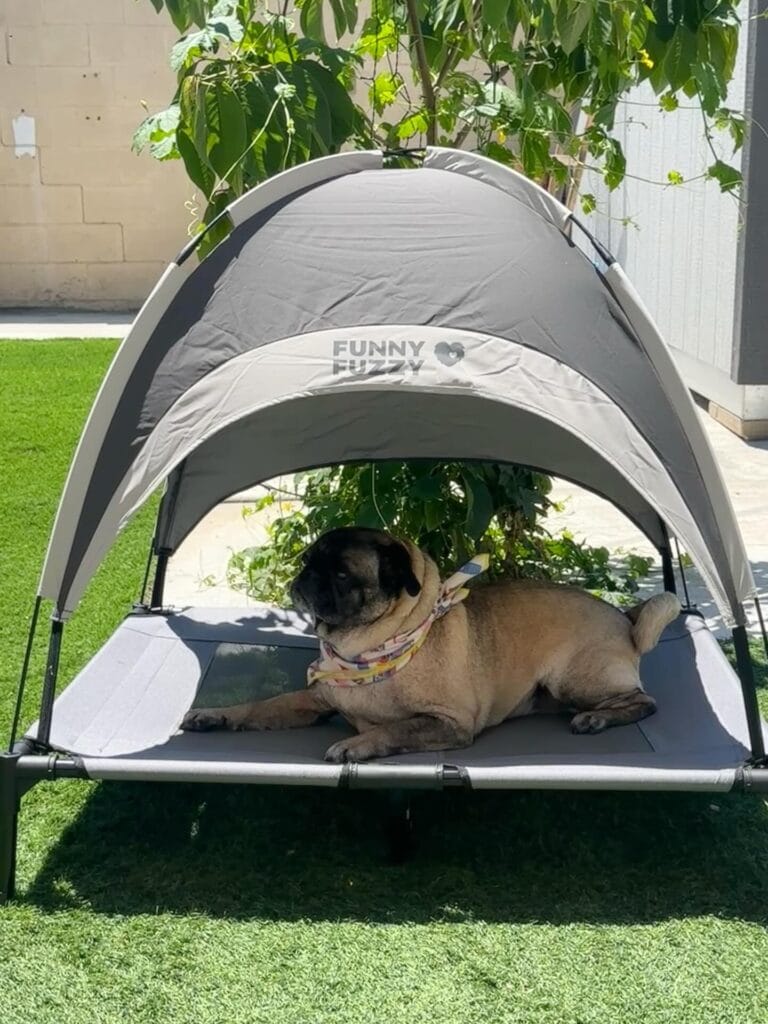
There’s something that tugs at your heartstrings, when your little golden is out in the yard panting on the hot, hot grass. You feel that little pang of guilt that says, “I should have something better for her out there.” I had this feeling last summer when I saw my neighbor’s dog just laying in the sun and melting.
This is everything, and it looks so good I think I would sit on it.
Materials & Tools You’ll Need:
– Funny Fuzzy elevated dog cot with built-in canopy (available on Amazon, approx. $45–$65)
– Gray Oxford fabric canopy top
– Steel powder-coated frame legs (usually 4 legs, pre-attached)
– A colorful pet bandana (optional but adorable)
– Artificial turf or a shaded patio spot for placement
Instructions
First, place the cot frame flat on the grass. Next, insert the four steel legs into the corner brackets. No screwdriver or hardware is required. Simply snap each leg into place until you hear it click.
Next, put the two canopy arch poles through the fabric sleeve on the top panel. The poles are flexible, so bow the poles slightly and then clip the ends of the poles into the slots in the side of the cot frame. With the two arches in, the Oxford fabric canopy will stretch taut on its own. It takes less than eight minutes from box to backyard.
Try placing it somewhere that has at least some shade from a tree or fence so the tree’s shade doubles the coverage. Your dog will be exposed to a little bit of airflow from under the mesh cot surface which will help to cool her down quicker, and she will be more comfortable so she will want to lay in her bed longer.
Need more inspiration? Check out some of these fun ideas for an outdoor hangout zone for your pup from Best Dog Backyard Ideas for a Safe and Fun Outdoor Space.
The canopy arc height is around 22 inches which is roomy enough for a medium to large dog to shift positions without bumping their head.
Wipe the fabric down with a damp cloth once a week. It holds up well but tends to collect pollen in spring.
Prep Time: 2 min | Active Project Time: 8–10 min | Difficulty Level: Beginner
📸 Photo credit: Instagram @haroldpug_life
#2: Indoor-Outdoor Slatted Wood Dog House With a White Frame (Woof.rs Style)
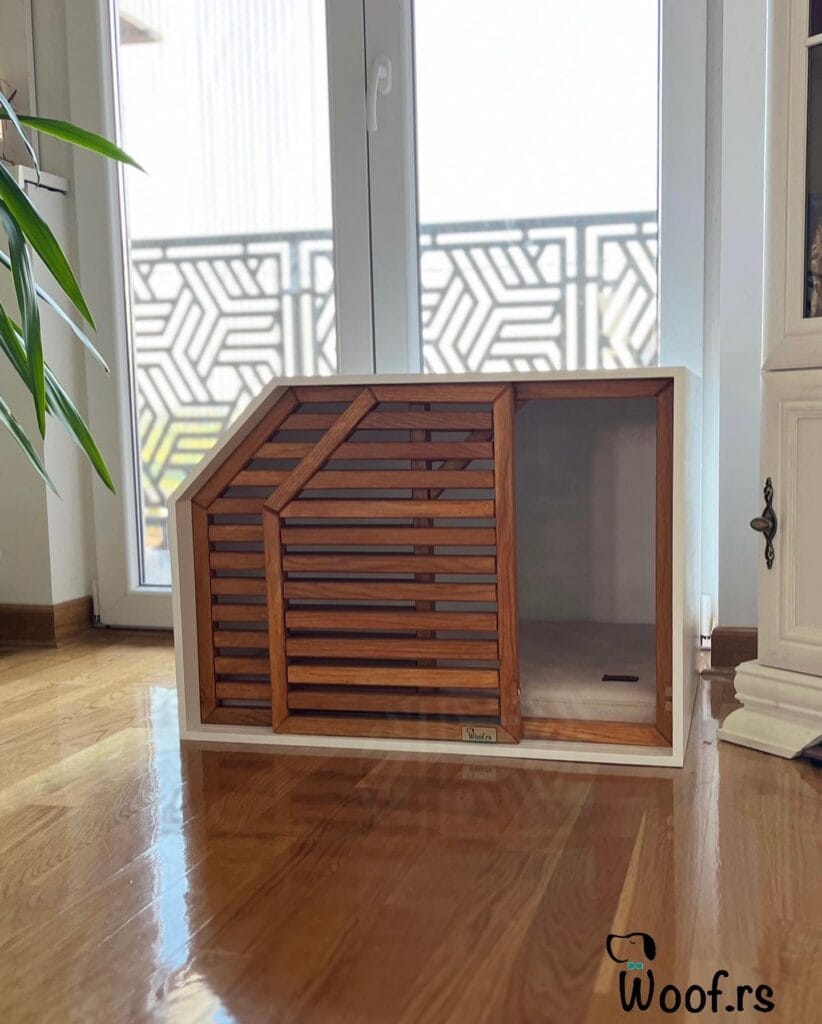
Your golden retriever circles the living room three times before flopping down on the middle of the floor in an area you almost trip over her again on the way to the kitchen for coffee. She needs a spot of her own, not a sad little plastic kennel shoved in a corner.
This build is everything.
Prep Time: 1 hour | Active Project Time: 6–8 hours | Difficulty Level: Intermediate
Materials & Tools:
– MDF or plywood panels (white-painted) for the outer frame — ¾ inch thick
– Solid oak or walnut slats — cut to 1.5 inch width, ¼ inch gaps between each
– Wood stain (warm walnut tone)
– L-brackets and wood screws (1.5 inch)
– Sandpaper (120 and 220 grit)
– Jigsaw for the angled roof cut
– Drill + drill bits
– Soft cushion insert — 2 inch foam wrapped in washable fabric
– Wood glue
– Miter saw for clean slat cuts
### Instructions
Start by cutting your white MDF panels into five pieces. You will have two sides, a back, a bottom, and the roof panel. The roof panel is at roughly a 30 degree angle which gives the kennel a nice modern A frame look. I used my jigsaw to cut the angled portion of the front side panel.
Sand all the edges of the MDF with 120 grit and finish with 220 grit. Paint all five panels matte white and allow to dry completely.
Use a jigsaw to cut your oak slats. You will need 22–24 pieces depending on the size of your dog. The slat runs horizontally across the front-facing panels and is attached to the inside of the kennel using wood glue and a 1.5 inch screw. Leave a ¼ inch gap between each slat to allow airflow through the kennel.
The thing that most people may do is stain the slats BEFORE you screw them in place. Apply two coats of walnut stain and let cure overnight.
This is the key: Now frame the slatted front with a 3/4 inch oak border piece on all four edges. This is what makes the front look custom and not so home made.
Assemble the white frame using L-brackets at each interior corner. Screw in the bottom panel then the back panel and then the two side panels. Slide in your 2 inch foam cushion. Your girl will love it.
For those of you who love the structure of a dog run, 17 Creative DIY Dog Run Ideas for Your Furry Friend has some really cute builds that use similar materials.
seal all the oak slats with a clear matte wood sealer to protect from the moisture of a dog’s breath and the occasional water bowl splash. it also makes the surfaces easy to wipe clean, meaning you spend more time on the couch with her.
Leave it on the windowsill like in the picture. She’ll claim it in about 4 minutes.
📸 Photo credit: Instagram @woof__rs
#3: Turn an Old Wine Barrel Into the Coziest Outdoor Dog Den (For Almost Nothing)
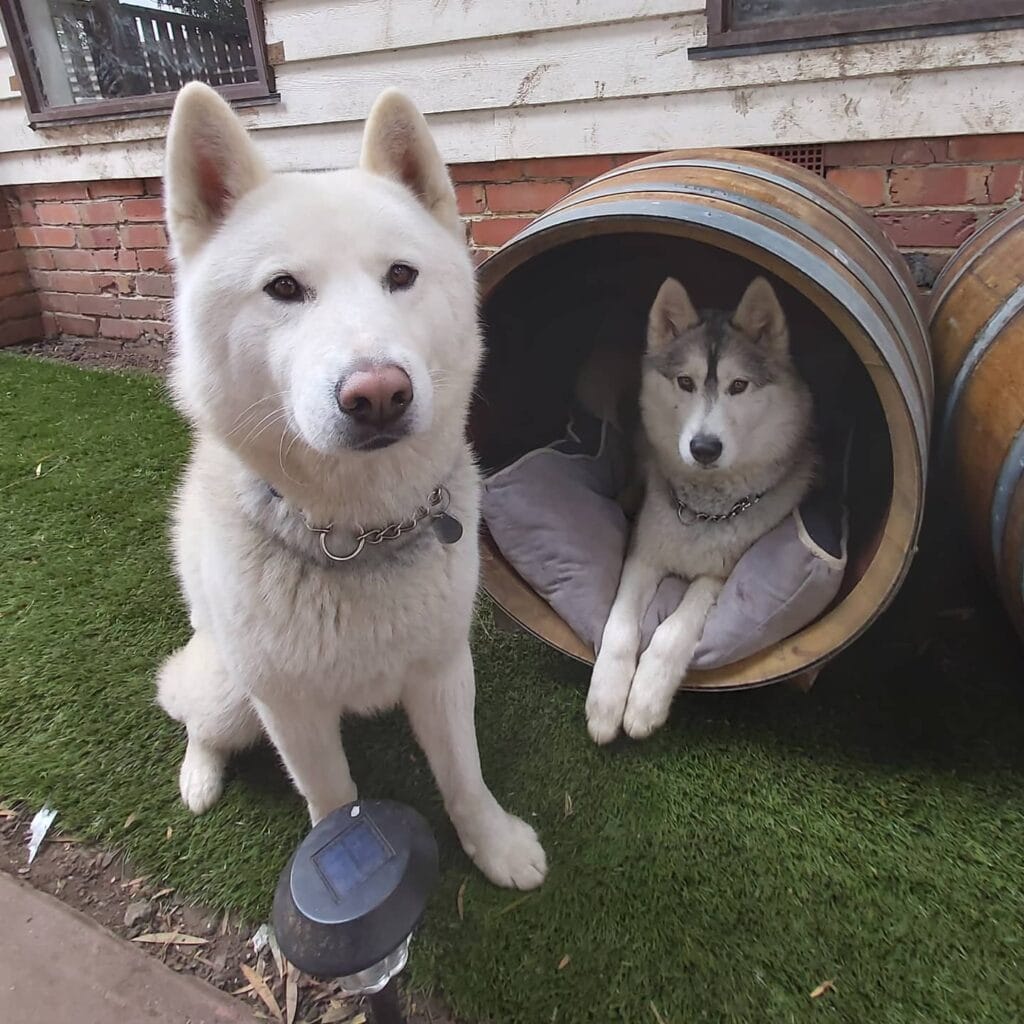
Have you ever had a wet dog come running in from the yard, and it just needs to lay down, but doesn’t realize it is going to flop all over your porch furniture? Yep, this project is for you.
I saw this on Instagram and couldn’t stop staring! It’s so cute. Two reclaimed oak wine barrels turned into amazing dog kennels! I would love to take my pups here. They have such cute dog beds in there, the gray cushion is so pretty and the wood tones against the brick wall just make them look like little boutique hotels!
And the dogs are obsessed. I just know it.
Materials & Tools:
– 1 used wine barrel (around 23–25 inches in diameter opening) — grab one from a local winery or Facebook Marketplace for $20–$40
– Jigsaw or reciprocating saw
– Sandpaper (80-grit and 120-grit)
– Wood sealant or exterior varnish
– Round bolster dog cushion (fits a 22-inch opening)
– Metal barrel rings (usually already on the barrel)
– Optional: waterproof cushion cover in gray or neutral tones
Instructions
Begin by finding a used wine barrel. The smell inside alone is incredible, the faint smell of oak and wine helps to mask any outside odors inside the den. The barrel should be set on its side, with the round top facing forward. This will be the entrance for the dog.
Sand the entire outside with 80-grit sandpaper first, knocking down any splinters or rough patches. Then switch to 120-grit to make the edge nice and smooth, so your dog’s coat won’t snag on it. This step is more important than you think — if your dog’s back gets scratched every time they go inside, then you will regret it.
If your barrel already has an open end, cut nothing. But if both ends are sealed, cut off one end completely with a jigsaw, cutting along the inner edge of the ring for a cleaner appearance.
Applying two coats of exterior wood sealant with two hours drying time between each coat will protect the wood from the rain and morning dew. Keeping the wood from rotting means the kennel will last your dog years not months.
Slide the round bolster cushion inside. The cushion hugs the curved interior walls, creating a cozy nest which small or nervous dogs love. Your golden will probably claim it.
If you want your barrel to stay put, it can be stable against a wall or fence, or it can be pressed slightly into the grass. If you want it to stay in place, two L-bracket anchors can be screwed into the base board.
Before you decide: I bought two barrels and stacked them side by side (as shown in the photo) so that each dog could have his own space and cut down on the squabbles over territory.
If your barrel still has gaps in between the wooden slats, fill them with exterior wood filler before you seal the exterior. This will keep drafts out during the cooler months and make the barrel feel more solid. Also, turn the cushion cover inside out and wash it once a month. Surprisingly, outdoor cushions get dirtier than you might think.
Prep Time: 30 minutes | Active Project Time: 3–4 hours | Difficulty Level: Beginner–Intermediate
📸 Photo credit: Instagram @wilburrheaandfig
#4: Build a Cedar Porch Dog Kennel With a Covered Deck (Your Golden Will Never Want to Come Inside)
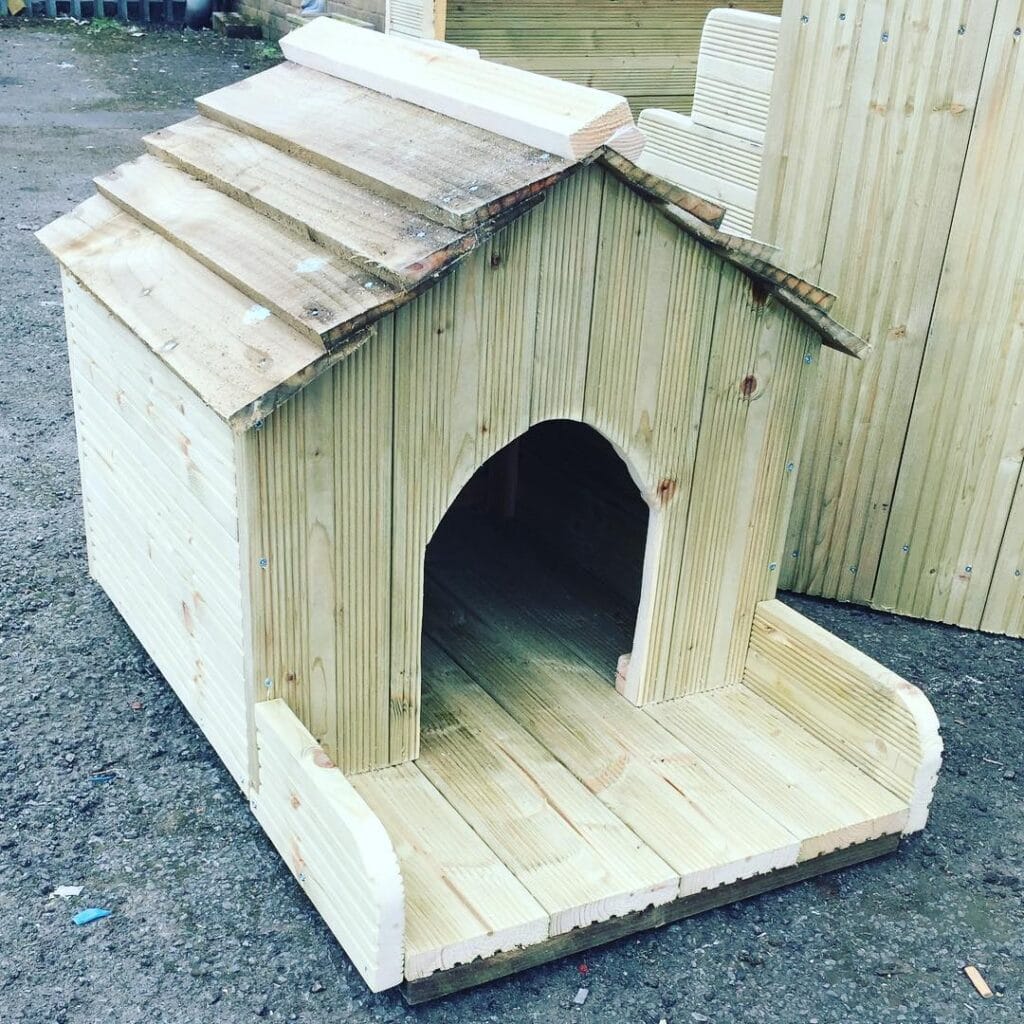
Of course Rosie would never do that. But if you have another dog that does not like to be ignored, the dog will stare at you from its nice, cool place on the patio and will not come into the house with you for dinner.
This kennel is everything I could have asked for. Pressure-treated pine decking boards line the floor and walls giving it the look of honey-wood. It would look great on Pinterest next to your patio furniture.
Materials & Tools You’ll Need:
– 2×6 pressure-treated pine decking boards (for walls, floor, and roof slats)
– 1×4 ridge board (roof peak)
– Jigsaw (for the arched entry cut)
– Deck screws, 2.5 inch
– Circular saw
– Sandpaper, 120-grit
– Wood glue
– Measuring tape and carpenter’s square
Instructions
Start by building a base platform for Rosie to stand on. This base is simply two, 4×4 ft, sheets of decking boards screwed side by side into a 2×4 frame to raise the foot rest up off the ground to keep any moisture out of the base and to provide a nice splinter free place to stand on for Rosie after it has rained.
Build the four walls next using vertical tongue and groove pine boards to lock together without gaps so the wind stays out. For the front panel, trace a 14-inch wide arched doorway, centered low, and cut it out using your jigsaw. Sand those edges smooth, because golden retrievers rub up against every surface they pass through.
The roof is two angled panels that meet at a ridge board on top. The overhang extends past the front wall by 6 inches, so that a small covered porch is formed where your dog can lounge in the shade and not get rained on. The covered deck feature keeps Rosie dry during light rain, so that she actually uses it year-round instead of scratching at my back door every drizzly afternoon.
screw everything tight and sand the whole thing once its built. no stain needed if you like the natural wood color, but a clear weatherproof sealant will protect the grain and stop the wood turning grey.
If you’re going to put your dog’s crate in a corner, keeping the entry of the crate lower than the interior height of the crate will trap your dog’s body warmth inside on cooler nights. Remember: you want to make the arch just large enough to fit your dog. If you love functional pet furniture that will also look good inside, we have 14 Stylish DIY Dog Crate Furniture Ideas You’ll Love to help you get started!
Prep Time: 45 minutes | Active Project Time: 6–8 hours | Difficulty Level: Intermediate
📸 Photo credit: Instagram @welsh_wood_wizard
#5: The Gabled Roof Kennel With Wire Run — Built to Last, Easy on the Budget
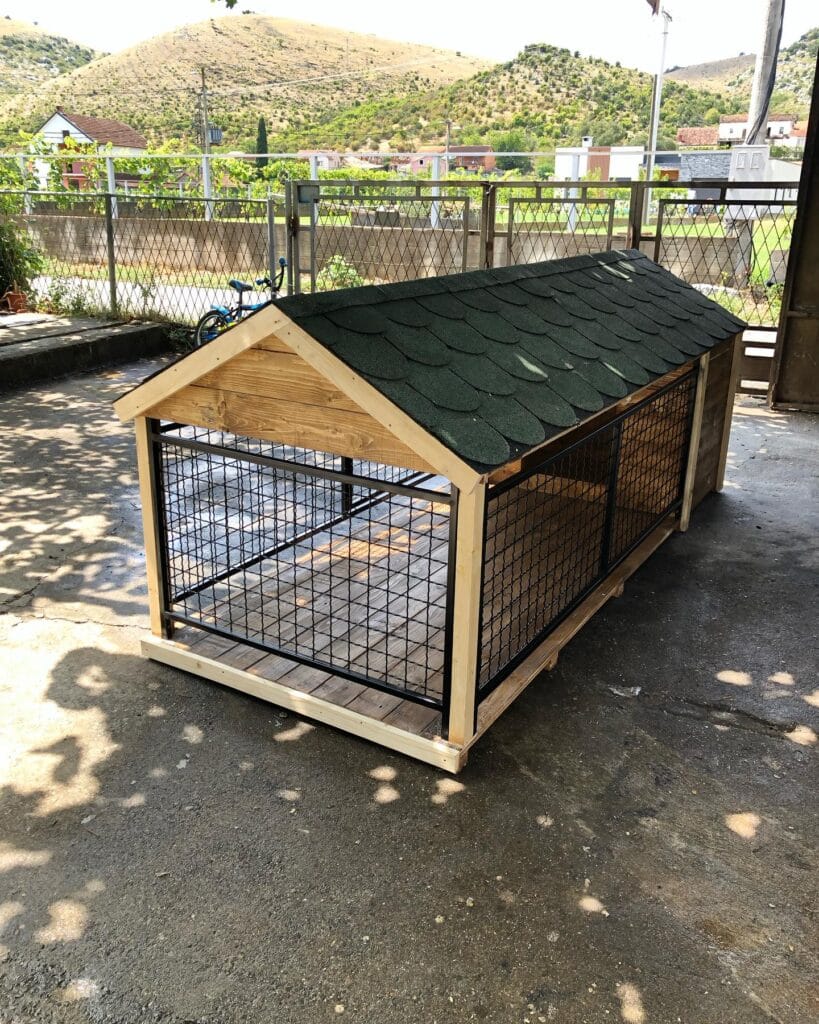
If you have ever had one of those times where your golden comes in the house absolutely soaked, tracks mud all over the kitchen, and you realize you have no control of where she hangs out outside, this is the build for you.
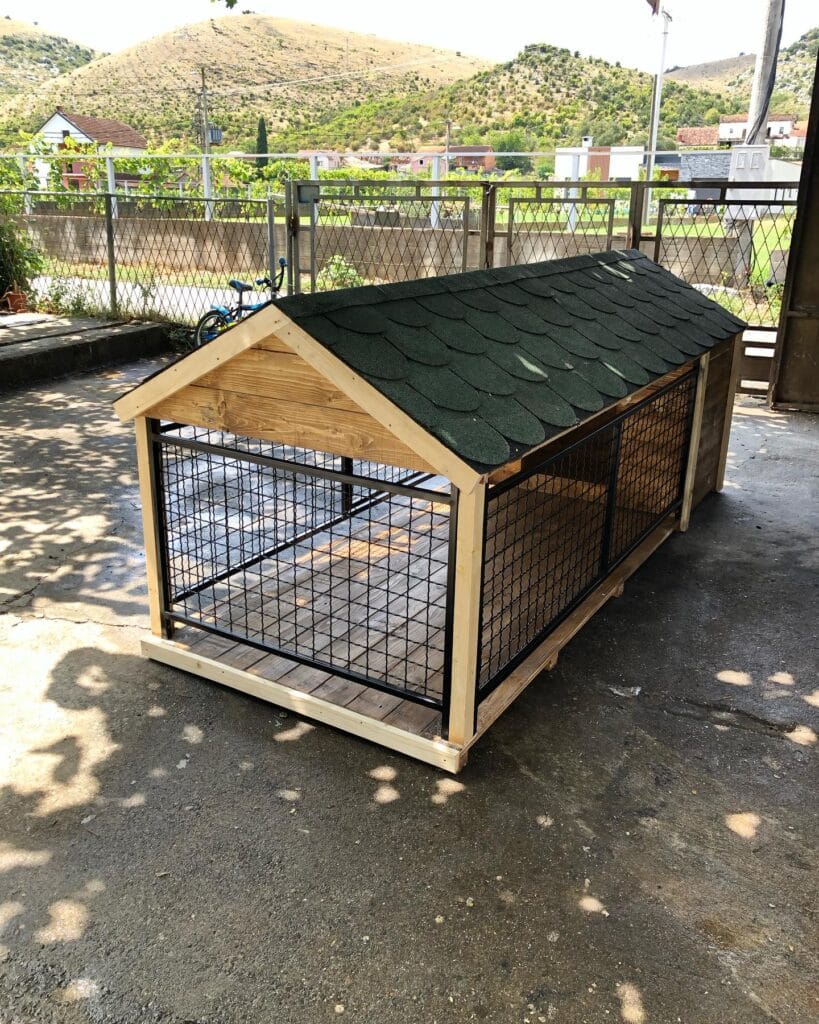
Seriously, this kennel is giving me serious Pinterest board energy. I really dig the natural pine wood frame, dark-stained wood plank flooring, black powder-coated wire mesh panels and that green fish-scale asphalt shingle roof that looks like a little cabin. It’s very cute and best of all, it keeps your girl safe, dry, and contained.
Materials & Tools
– 2×4 pine lumber (frame and gable ends)
– 1×6 cedar planks (floor decking)
– Black welded wire mesh panels (16-gauge)
– Green asphalt roof shingles (fish-scale style)
– OSB board (roof sheathing)
– Wood screws (2.5 inch and 1.5 inch)
– Roofing nails
– Black metal L-brackets
– Wood stain (dark walnut)
– Circular saw, drill, hammer, tape measure, staple gun
Instructions
So now you have your 2×4 pine to cut into a rectangular base frame. This should be at least 6 feet long by 3 feet wide if you have a golden retriever. You want to add the 1×6 cedar planks across the bottom, leaving half a gap between each board so the rainwater can run through and not pool underneath your dog.
Next, you will make 2 identical gable end frames from 2×4 pine. You will make a simple A frame and lay it on top of a rectangular wall. The peak of the gable end should be about 5 feet high so that your dog can stand and move about without feeling cramped. Screw the gable end frames onto the front and back of the base.
Cut the other side of the OSB board into two pieces to form the other matching roof panel. Attach these pieces to the gable peaks to form the pitched roof. Attach the green fish-scale asphalt shingles to the roof starting at the bottom and working up. Overlap the shingles in each row, shedding the rain away from the wood frame. Your dog can lie on the roof and not get wet, and you won’t worry every time you see a cloud.
Attach the black welded wire mesh panels to the front and side walls using black metal L-brackets and 1.5 inch screws. The wire mesh keeps predators out, while giving the dog full airflow and visibility to enjoy the view, watch the birds fly by, feel the breeze, yet still be safe. The visibility helps to keep a dog that gets anxious and barks when he can’t see out from being anxious, thus reducing his barking!
Let’s finish the wood with a dark walnut stain. Two coats minimum. And if you want to finish off the backyard, 7 Creative Ideas for Your Outdoor Dog Area has some really good ideas for making the area around the kennel also look intentional.
Prep Time: 1 hour | Active Project Time: 6–8 hours | Difficulty Level: Intermediate
I would suggest that you add a simple door latch with a carabiner clip to the wire mesh door. it would take no more than two minutes and could save a lot of trouble in the future, if the dog decides that it would be a great idea to open the kennel door.
📸 Photo credit: Instagram @alu_bravarija_sv
#6: Chain-Link Dog Kennel Panel System (The No-Dig Concrete Solution)
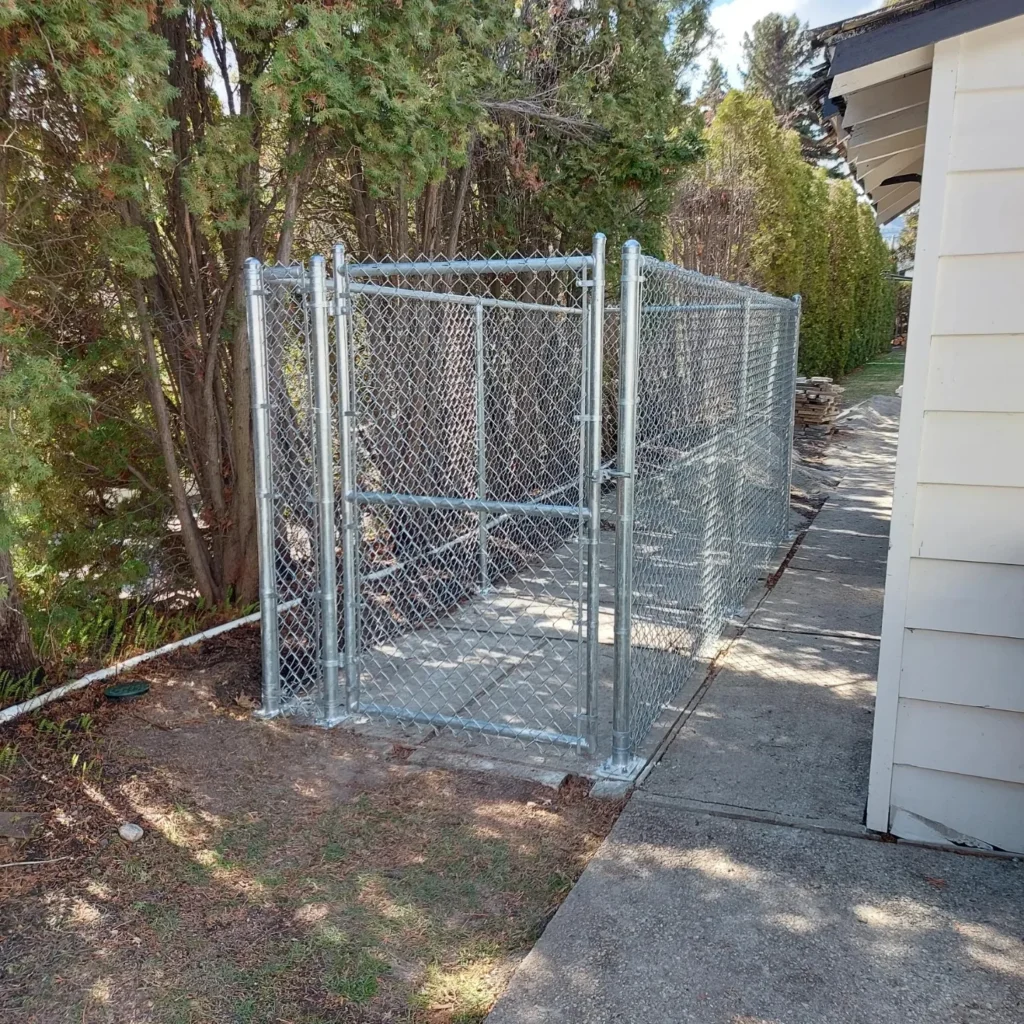
Has your golden bolted out the side yard again and you have to chase her in your pajamas past your neighbor’s house? This kennel is your answer.
Prep Time: 1 hour | Active Project Time: 4–6 hours | Difficulty Level: Intermediate
Materials & Tools:
– 6 galvanized steel posts (at least 1-5/8″ diameter)
– Chain-link fence panels (4 ft high, galvanized steel mesh)
– Heavy-duty base plates with anchor bolts
– Post caps (round, galvanized)
– Tension bars and brace bands
– Fence ties/hog rings
– Concrete slab or existing paved surface
– Power drill, wrench set, level, tape measure
Instructions
Start by laying out a line for the perimeter on the existing concrete pad. I used this as a floor so no digging was required. Next, mark the six post positions with a piece of chalk. They should be far enough apart so the finished enclosure is about a 10 ft x 6 ft enclosure.
M. Rideout: Nice work! Bolt your galvanized base plates directly into the concrete using anchor bolts and a hammer drill. Slide each 1-5/8″ steel post into the plate and tighten. Make sure each post is level with a level before proceeding to the next step.
Once the posts are plumb, attach your chain-link panels. Secure the panels to the posts with a tension bar that slides through the end of the link. Then use a brace band to clamp the tension bar to the posts. Attach the panels to the posts from one corner working out. Tie the fence every 12 inches along each post to keep the mesh flat.
Then, before you attach the horizontal mid-rail to the top of the panels, install the mid-rail halfway up each panel. The mid-rail prevents the mesh from bowing outwards if your dog leans or presses against it, which a big golden will do.
I recommend hanging the gate last. When installing, center it in the front panel opening. Attach with heavy-duty hinges and a latch that locks from both sides. The double-side locking latch will prevent your dog from being able to figure out how to release the gate with her nose (believe me, goldens are clever).
Finishing off every post with a round galvanized post cap keeps rain out of the hollow post and prevents rust from starting at the top.
With galvanized steel construction, this kennel will resist rust during even the wettest season so you don’t have to spend time patching and painting your kennel every spring.
For some extra enrichment inside the kennel she has a 7 DIY Dog Agility Course Ideas for Fun setup nearby just in case.
Leave a small space between the kennel wall and your house siding (maybe 3-4 inches). I know it doesn’t sound like much but it will save you a lot of trouble. You will be able to sweep out the leaves without taking down the kennel.
📸 Photo credit: Instagram @beslerpresa
#7: DIY Collapsible Soft-Sided Dog Kennel for the Backyard (Under $60!)
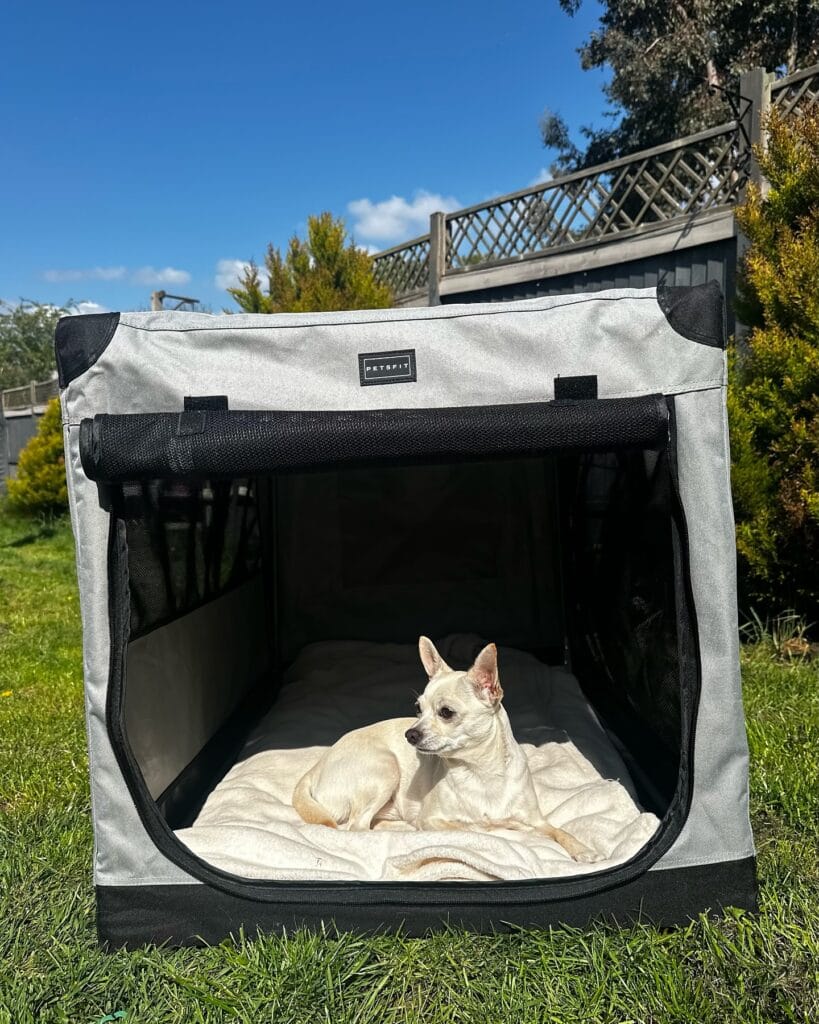
I’m sure you know that feeling when your golden has just been outside and is rolling around in the grass and you are desperately trying to stop her from dragging all that into your cream linen sofa. This was my cousin’s lab and honestly, having a spot outside for her to relax and chill out changed everything!
This setup is exactly that.
Prep Time: 20 minutes | Active Project Time: 1.5–2 hours | Difficulty Level: Beginner
Materials & Tools:
– Heavy-duty gray canvas fabric (at least 600D polyester oxford)
– Black mesh ventilation panels (front and sides)
– Steel wire frame or collapsible PVC pipe frame (¾ inch diameter)
– Black corner reinforcement brackets (4 pieces)
– Hook-and-loop velcro strips for door roll-up closure
– Cream sherpa cushion insert (24″ x 36″ minimum)
– Fabric glue + heavy-duty thread
– Sewing machine or upholstery needle
– Scissors, measuring tape, fabric marker
Instructions
Begin by cutting your canvas into 6 panels: top, bottom, two sides, back and a front door panel. The front panel will need to be about 30% larger than the opening, so you have enough fabric to roll it up and attach it with the velcro strips, as shown in the picture.
Sew the mesh ventilation strips along the upper portion of each side panel before assembling. People often forget this step, and then their dog overheats. The mesh allows air to flow between the interior walls, keeping the interior 10-15 degrees cooler on a sunny afternoon.
Slide your ¾ inch steel wire frame through the sewn channels along each panel edge. The wire-through-channel design means you can’t see any hardware, and the structure collapses flat in under two minutes. How great is that when you’re heading out with the girl to the weekend farmers market.
Don’t forget to put the black corner brackets at all four top corners, so that the roof does not sag from light rain or the morning dew.
Pop your sherpa cushion in flat on the base. It will give your dog extra joint support on the hard outdoor ground. The cushioned base will also cut down on the pressure on your dog’s joints, and less whining from him to come back inside!
I built one of these for my neighbor last spring for her new rescue pup, and she painted the frame a matte black to match her deck railing. It looked like it belonged on Pinterest.
If your golden enjoys post-bath outdoor hangs, a kennel will go great with these 7 Creative Ideas for Your DIY Dog Washing Station — just rinse her off and send her to her outdoor spot to dry.
It’s a good idea to have your outdoor cushions removable with a zipper or velcro backing so you can easily throw them in the washer each week. Outdoor cushions can be really dirty. As you can see, me and my dogs have very dirty outdoor cushions.
📸 Photo credit: Instagram @nellitathechi
The One Mistake That’ll Cost You Your Whole Build (And How to Dodge It)
Here’s the pro secret no one wants to talk about: pressure treated lumber will poison your dog.
I learned this the hard way when my neighbor had to tear down a kennel she had just built. She used cheap pressure-treated wood she picked up at the hardware store and her vet flagged it immediately. The chemicals in this type of wood leaches into the soil and is absorbed by the dogs’ paws.
Go for a cedar or pine one instead. Cedar may cost a little bit more, but it is rot-resistant and safe for your pup!
One thing to remember: If you are thinking of building a kennel in your yard, make sure to take into consideration the amount of ground level it will be. It only takes about 2-3 inches of being raised off of the ground to stop the moisture from rotting the bottom of your kennel within 1 season! Once your kennel floor becomes rotten, your dog can fall through and get hurt!
Also, the size of the run needs to be large enough for your dog to do adult dog things, not pup things. You don’t want your dog stuck in a kennel of puppy size.
If you have plans of a full backyard setup anyway, why not pair it up with DIY dog playground ideas for your backyard as well?
Your Couch (and Your Sanity) Deserves This
You’ve probably put a lot of love and care into your home. Your throw pillows, your cozy textures, and your overall vibe. Don’t let muddy paws ruin all that.
Pick any one product from the list below and just try it! It may be the key to changing your whole routine with your golden.
Keep this in mind: The best pet-proof solution is the one that you can consistently use. So go with whatever feels right for your space and your dog’s chaos level.
What’s the one spot in your home your golden retriever has basically claimed as their own? For us, it’s this cozy spot right here. I’ve been getting some pretty funny looks from my fiance as I took a bunch of photos of the dog.

Amr Mohsen is a software engineer who traded his keyboard for a leash — at least on weekends. His love for dogs inspired him to share what he learns as a dog owner and enthusiast, bringing a detail-oriented, research-driven perspective to every article he writes. If it’s about dogs, he’s probably already looked it up twice.