

You can safely feed your dog parsley, basil, rosemary, ginger, turmeric, oregano, and thyme as long as you use the right amount, which is generally no more than ¼ teaspoon of dried herbs for dogs under 20 pounds, ½ teaspoon for medium dogs, and up to 1 teaspoon for large dogs. These herbs can help to freshen breath, help with digestion, reduce inflammation and boost immunity. Keep in mind that you’ll want to avoid giving your dog garlic, onion, chives and nutmeg, as these are toxic to dogs. Always introduce new herbs slowly, watch for vomiting or lethargy and talk to your vet if your dog takes medications or has health conditions that may react poorly with the herbs.
Key Takeaways
- Parsley freshens breath and supports kidneys; ginger calms digestion; turmeric fights joint pain with curcumin’s anti-inflammatory properties.
- Oregano boosts immunity with antimicrobial properties; basil provides antioxidants; rosemary enhances alertness; thyme promotes healthy gut bacteria.
- Always check with your vet before introducing herbs, especially if your dog has existing health conditions or takes medications.
- Start with small amounts: ¼ teaspoon for small dogs, ½-1 teaspoon for medium dogs, 1-2 teaspoons for large dogs.
- Avoid these toxic herbs for your dog’s safety: garlic, onion, chives, nutmeg, pennyroyal, tea tree oil, and comfrey.
Herbs in Your Dog’s Bowl (What Actually Helps)
Not all herbs will benefit your dog’s health, so it is important to know which ones to look for and which ones are a waste of money.
Parsley freshens breath as it provides us with vitamin K, which supports bone strength and blood clotting.
Parsley is more than a breath freshener—it’s a bone builder and blood clotter thanks to vitamin K.
Ginger can settle an upset stomach and reduce inflammation in dogs with arthritis.
Turmeric, which contains curcumin, can also help fight joint pain. Take a quarter of a teaspoon per 10 pounds of body weight.
Oregano has antimicrobial properties that help to boost immunity during cold months.
In order to get the most out of these herb benefits, you have to use them every day.
Start with small amounts, watch for reactions, and gradually increase portions.
Your dog’s body will show you what works best. You will notice improved energy and comfort.
Safety Rules Before You Grab the Herb Jar
Knowing what herbs help your dog is nothing compared to knowing how to use them safely for your dog.
When starting a pet on a herbal program always discuss new herbs with your vet. This is especially important if your pet is on other medications or has other medical conditions.
For the commonest problems, start with small amounts, say a pinch for a small dog, to watch for an upset stomach or itching. Fresh herbs should be washed to remove pesticides, and dried herbs should be of human-grade quality.
Store herbs in airtight containers away from light and moisture.
If you’re not sure, don’t give it to your dog. Some herbs can be harmful if ingested by a dog that has a health condition.
1. Parsley: Fresh Breath and Gentle Detox Support
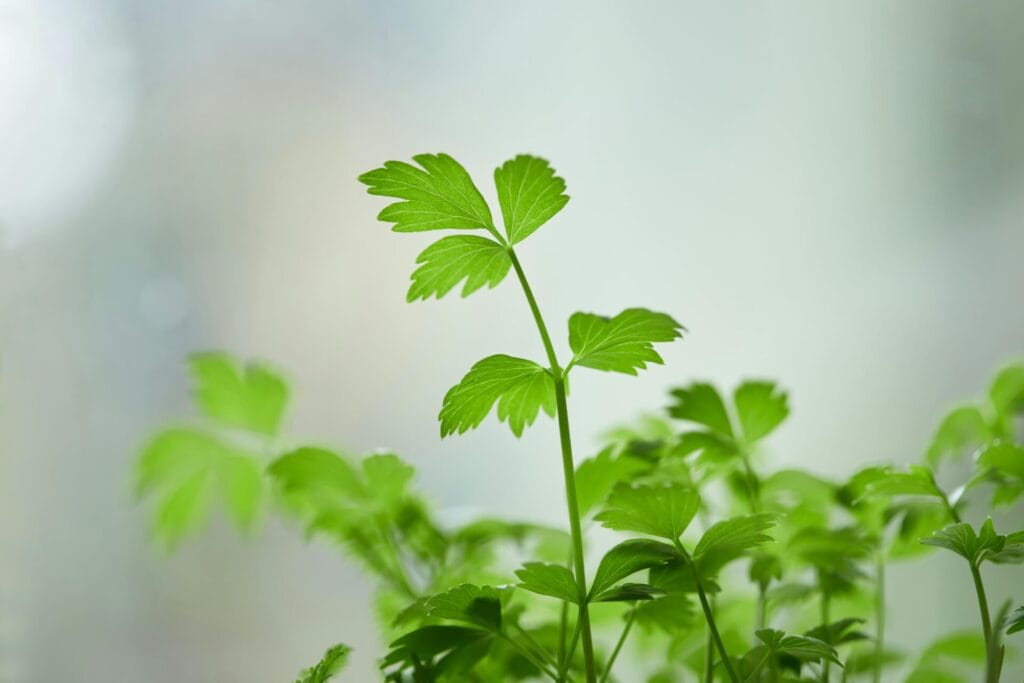
When your dog’s breath could peel paint off the walls, parsley may be the most unexpected odor remedy you’ve ever tried. For generations, fresh parsley has been used to freshen dog’s mouths because it contains chlorophyll, which naturally neutralizes odors from the inside out. You can easily add parsley to your dog’s meals.
Parsley can be used to combat bad breath because it has chlorophyll that neutralizes odor from within your dog’s digestive system.
Aside from fresh breath, the parsley herb can also help dogs’ kidneys and act as a mild diuretic, helping to flush toxins from the dog’s system. Sprinkle a teaspoon of chopped fresh parsley over your dog’s food two to three times weekly for small dogs, or up to a tablespoon for larger breeds.
Key points to remember:
- Use curly or Italian flat-leaf parsley, never spring parsley
- Chop fresh parsley finely for easier digestion
- Store unused portions in the refrigerator for up to five days
Basil: Everyday Antioxidant Boost for Active Dogs
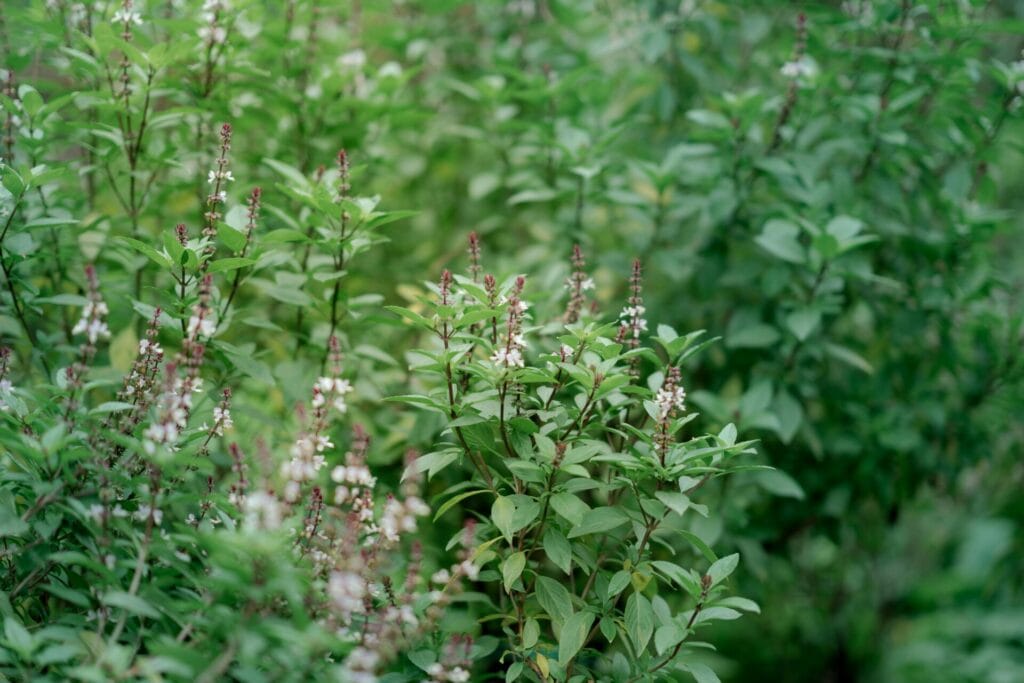
While parsley helps to clear up breath issues, basil works in the background as a powerful antioxidant that helps to protect your dog’s cells from the daily wear and tear.
The benefits of basil include fighting inflammation, supporting your dog’s immune system, and providing antimicrobial properties that help keep your dog healthy. It’s especially beneficial for dogs who are very active and need extra cellular protection from oxidative stress.
Adding fresh basil to your dog’s diet is quite simple. Use fresh leaves and chop them finely then sprinkle over meals starting with a quarter teaspoon for a small dog up to a teaspoon for larger breeds.
You can mix it into homemade treats or sprinkle it on top of their regular food. Your dog might not appreciate basil’s aromatic punch at first, but introduce it gradually and watch for acceptance.
Rosemary: Focus and Immune Support for Aging Pups
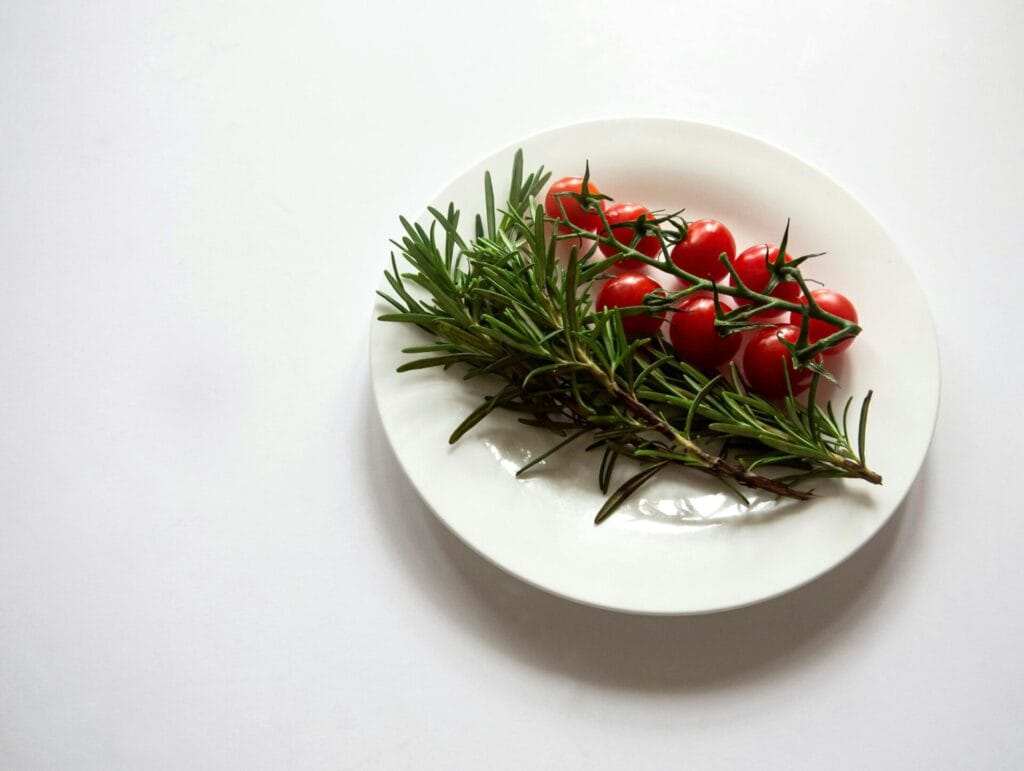
Rosemary can also offer your dog something that basil can’t – cognitive support. And as your dog gets older, it becomes increasingly important for your dog’s health. This wonderful herb contains carnosic acid, which research suggests can help protect against age related mental decline in dogs.
Rosemary is also beneficial for your dog’s brain, but it also supports your pup’s immune system and has anti-inflammatory properties that aging joints will appreciate.
Key points about rosemary for your dog:
- Fresh or dried rosemary works well sprinkled over meals or mixed into homemade treats
- Rosemary dosage matters: limit intake to 1/8 teaspoon per 20 pounds of body weight daily
- You should see improvement in alertness and focus within several weeks of consistent use.
Rosemary is also particularly useful for senior dogs showing early signs of cognitive changes.
Thyme: Tiny Leaves, Big Digestive Help

In terms of the tiny and delicate leaves of the thyme, it is hard to imagine that they will make a difference. But we can assure you that thyme will bring your dog a lot of benefits in terms of digestion.
Thyme also has the benefits of soothing an upset stomach, reducing gas, and supporting the good bacteria in the gut that keeps a dog’s tummy happy. You will find cooking with thyme is easiest if you sprinkle it on top of your dog’s meals as it cooks, as it releases more thymol and other beneficial properties.
Thyme’s natural compounds can help soothe an upset tummy as well as encourage beneficial bacteria in the gut – so it’s a great addition to your dog’s diet.
Just start out by giving them a pinch (1/8 teaspoon for smaller dogs or 1/4 teaspoon for bigger dogs), mixed into their food 2 times a week. Thyme (fresh or dried) will provide the same antimicrobial properties as cinnamon, which will combat against harmful bacteria.
Your dog might sniff the new addition suspiciously at first, but most readily accept it.
Mint: Cooling Herb for Stinky Breath in Moderation
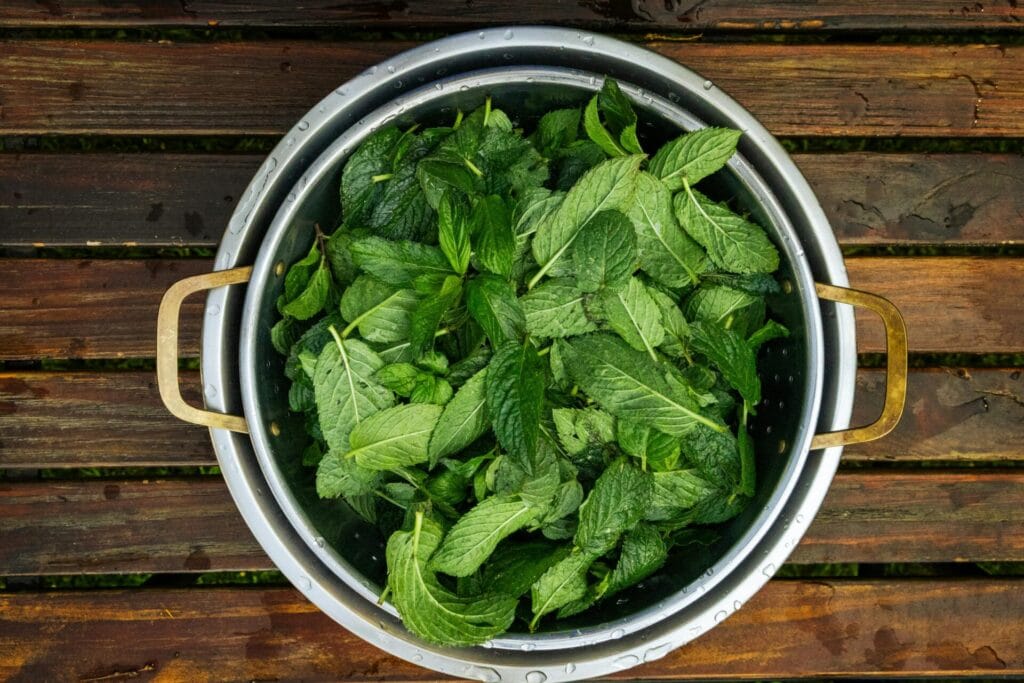
If your dog’s breath could knock out a small village, try the power of fresh mint to revive and soothe your pooch’s digestive issues.
To get more of the mint benefits, you can use them to calm an upset stomach and reduce gas. Be careful, however, some varieties of mint, such as pennyroyal, are toxic to dogs.
Safe mint options include:
- Spearmint and peppermint – Add 1-2 fresh leaves to meals or freeze in ice cubes for a rejuvenating treat.
- Dried mint sprinkles – Mix a pinch into food once or twice weekly for better breath.
- Mint-infused water – Steep leaves briefly, cool completely, then offer as an occasional drink.
Start by trying a very tiny amount of the tea, and leave out the essential oils. Dogs are generally sensitive to anything with concentrated plant parts.
Dill & Fennel: Bloat-Friendly Herb Duo for Gassy Dogs
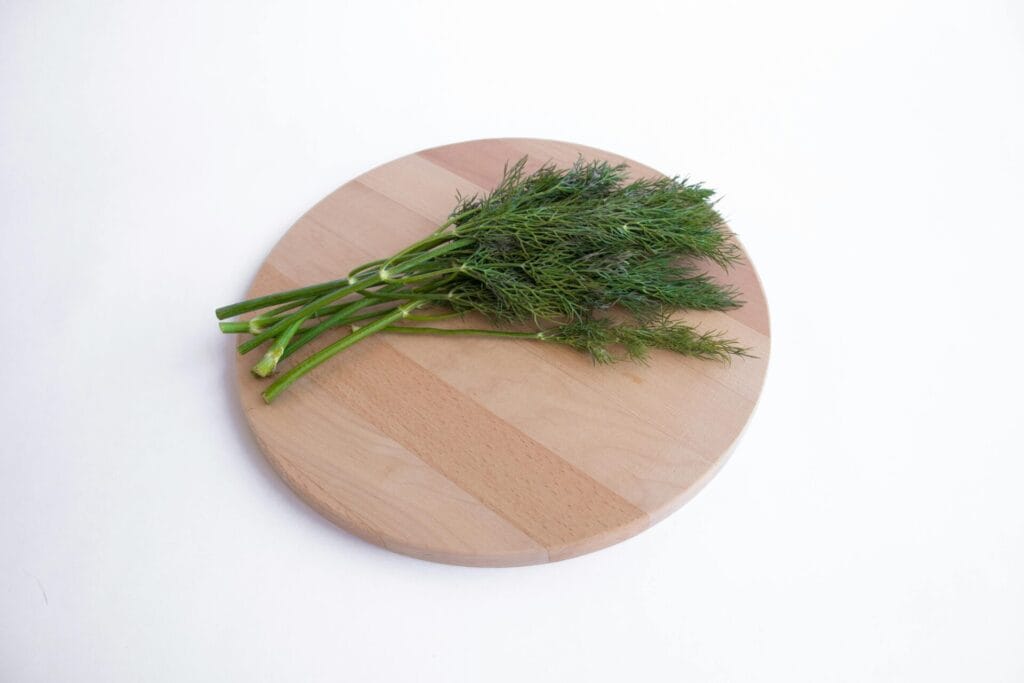
If your dog sounds like a deflating balloon after he’s eaten, dill and fennel are effective natural carminatives that can release trapped gas and prevent dangerous bloating.
These herb benefits are proven to soothe the digestive tract, to reduce stomach cramping, and to aid in proper food transit. You can sprinkle your dog’s kibble with fresh or dried dill, about half a teaspoon for every 20 pounds of your dog’s body weight.
For a small dose, fennel seeds work in the same manner, but I’d advise you to crush them into powder to facilitate absorption. Fennel works as a great, gentle bloat remedy. It’s also a remedy that vets often recommend before they would resort to medication.
Especially useful for deep-chested dogs, such as the Great Dane, German Shepherd, etc., who are at higher risk of bloating.
Start with a little amount in case your dog does not tolerate it.
Turmeric: Golden Root for Sore Joints and Stiff Hips

That stiff-legged morning walk that your senior dog takes is more than just old age. In fact, that’s most likely inflammation settling into the joints. Not only can turmeric help reduce joint pain but curcumin also has powerful anti-inflammatory properties to help your dog with arthritis, hip dysplasia, and any other general mobility issues.
How turmeric helps your dog:
- Reduces swelling in inflamed joints and tissues
- Supports liver function and digestive health
- Acts as a natural antioxidant fighting cellular damage
For treatment, start with a 1/8 teaspoon per 10 pounds of body weight, mixed into food daily.
You will want to combine it with black pepper and a good fat, like coconut oil, because curcumin is not absorbed very well by itself. Most dogs show improvement within two to three weeks.
Herbs You Should Avoid Completely (Garlic, Onion, Nutmeg, And More)
While turmeric can do wonders for your dog’s achy joints, not every herb in your spice rack deserves a spot in your dog’s food bowl.
Garlic toxicity can cause damage to red blood cells. This can lead to anemia even in small amounts. Onion poisoning can cause weakness, vomiting and anemia.
Avoid chives as well since chives dangers are similar to their allium relatives.
Nutmeg can also cause tremors, seizures, or central nervous system problems that can turn fatal. Even a teaspoon of nutmeg can be harmful to smaller dogs.
I also steer clear of pennyroyal, tea tree, and comfrey.
When you are cooking with these dangerous seasonings keep them far away from noses and wagging tails.
How Much Herb Your Dog Can Safely Eat
However, once you know what herbs are safe and which ones to avoid, you will still need to determine the right amount to give your dog.
The portion size will depend on your dog’s weight, and even safe herbs can cause stomach upset if you give too much.
A small Chihuahua needs less basil than a large Golden Retriever, so lets break this down into portions for small, medium, and large dogs.
Sample Portions for Small, Medium, and Large Dogs
It’s important to get the right portion size when adding herbs to your dog’s diet and this depends on the weight of your pet.
I suggest that you start with small amounts of the herb, increasing the amount, if you do not have any digestive upset or allergic reaction.
Here’s a simple guideline for fresh herbs based on dog weight:
- Small dogs (under 20 lbs): Start with ¼ teaspoon of fresh herbs or a small pinch of dried herbs per day
- Medium dogs (20-50 lbs): Offer ½ to 1 teaspoon of fresh herbs or ¼ teaspoon dried herbs daily
- Large dogs (over 50 lbs): Provide 1-2 teaspoons of fresh herbs or ½ teaspoon dried herbs each day
The above portion sizes represent maximum amounts, not a requirement for every meal.
Easy Ways to Add Herbs Without Ruining Dinner
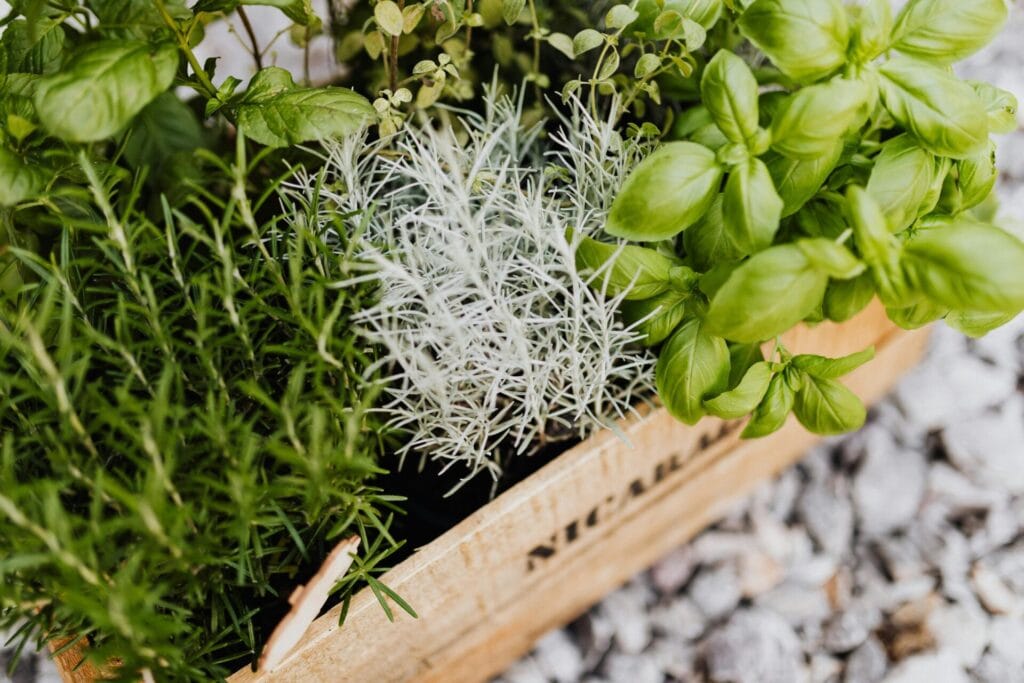
You don’t need to become a canine chef or to spend hours preparing special meals for your dog to benefit from the use of fresh herbs.
As dog owners, most of us just want quick and easy ways to boost our dog’s regular food without creating more work or wasting ingredients.
Here are three new and improved herb upgrades that you can add to your store-bought kibble in under five minutes. These herbs are probably already in your kitchen.
Three 5-Minute Herb Upgrades for Store-Bought Kibble
While the idea of a “fancy meal prep” sounds impressive, most of us don’t have time to spend hours in the kitchen concocting elaborate herbal feasts for our pooches. You can enhance your dog’s regular kibble with herbs in under five minutes without any fancy recipes.
Three Quick Herb Upgrades:
- The Sprinkle Method – Mix 1/4 teaspoon dried parsley into your dog’s kibble with a splash of warm water for kibble texture improvement.
- The Broth Boost Pour cooled chamomile tea over kibble, letting it soak for two minutes before serving.
- The Fresh Fold – Chop fresh basil leaves and fold them into moistened food.
These small changes can transform boring kibble into nutrient rich meals your dog will get excited about. Not only will these tasty additions increase your dog’s interest in his meal, adding herbs can be a great health benefits for dogs as well.
When Herbs Are a Bad Idea (Red-Flag Symptoms You Must Not Ignore)
Even safe herbs can be dangerous if your dog has allergies, eats too much, or reacts to a new ingredient in an unexpected way.
You must look for the warning signs like vomiting, diarrhea, excessive drooling and even sudden lethargy within 24 hours after introduction of any herb.
If you notice any of these signs, stop the use of the herb immediately, and call your vet. What seems like a small upset stomach can escalate quickly.
Signs Your Dog Is Reacting Badly to an Herb
Is there a way to tell when an herb has gone from helping to hurting? Yes. One is to watch for symptoms of allergy, such as excessive scratching, hives, or facial swelling within hours after an herb has been introduced.
Common warning signs include:
- Digestive upset: vomiting, diarrhea, or refusing meals for more than 12 hours
- Behavioral changes: unusual lethargy, restlessness, or hiding in spots they normally avoid
- Physical reactions: drooling, trembling, difficulty breathing, or pale gums
If you notice any of the above symptoms, immediately stop the herb and contact your vet. Some herbs can also lead to dog constipation issues, which can add to a dog’s problem, so always watch for negative side-effects and reactions.
Don’t wait to see if things get better on their own. You can always explore safe herb alternatives once your dog has recovered and you’ve talked to a veterinarian.
Grow-Your-Own: Setting Up a Dog-Safe Kitchen Herb Station
Growing fresh herbs on your kitchen windowsill sounds idyllic but you will need to ensure that your dog cannot access them easily or he will think you have provided him with a salad bar.
The set up keeps the herbs thriving at nose level, and prevents my curious canine from munching on the entire plant, digging in potting soil, and knocking over terracotta pots onto tile floors.
A few smart choices now will mean that instead of having to clean up shattered shards of ceramic and explain to your vet why Buddy ate three cups of potting mix, you can harvest parsley for months on end.
Placement, Pot Choices, and Keeping Curious Noses Out of Trouble
When you are ready to start a new herb garden and grow fresh herbs at home, the physical set up of your herb garden can be just as important as which plants you choose to grow.
Place pots of herbs out of reach of little curious noses – on a table or bench, or on an elevated surface such as windowsills or in a hanging planter. Choose pots which are sturdy, for example ceramic or heavy plastic ones that won’t tip over when you go to bump them, and which have drainage holes.
Consider these practical tips:
- Place herbs near south-facing windows for 6-8 hours of sunlight daily
- Use decorative plant stands or corner shelving units
- Choose pots with wider bases for stability against investigating snouts
Conclusion
Adding small amounts of herbs to your dog’s meals is easy, and there are a few that are particularly safe and tasty. Start out with tiny amounts and watch how your pup responds. You can use parsley, basil or rosemary. Of course, they are best fresh, but dried herbs will work too. If your dog vomits, becomes lethargic, or acts strange after eating herbs, stop feeding them immediately and call your veterinarian. Your dog’s bowl just got a whole lot more interesting.

Amr Mohsen is a software engineer who traded his keyboard for a leash — at least on weekends. His love for dogs inspired him to share what he learns as a dog owner and enthusiast, bringing a detail-oriented, research-driven perspective to every article he writes. If it’s about dogs, he’s probably already looked it up twice.