You’ve probably misinterpreted your dog’s signals at least a dozen times this week. You didn’t even know it. That “friendly” tail wag might have been a warning. And that yawn might have been a sign of serious stress. Dogs speak a complex language with their bodies, and owners only catch about half of what their dogs are saying. Learn these 17 critical signals and your interactions with your dog will change.
Key Takeaways
- Tail position and wagging speed reveal emotional states: high and stiff signals warning, while low indicates fear or submission.
- Whale eye, lip licking, and flattened ears show discomfort or stress and require immediate attention to prevent escalation.
- The freeze—a 2-10 second stiff posture with fixed gaze—is a critical warning signal that can precede aggression.
- Context determines if teeth-showing means aggression or play: stiff body indicates threat, loose body suggests playfulness.
- Heavy panting without heat, raised paw, and excessive yawning signal stress rather than normal behavior or politeness.
Why Most Owners Misread Their Dog (And What It Costs Them)
I’m sure many dog owners have missed the signs that their dog is anxious, uncomfortable, or about to snap. Well, the reason we do this is because we’re looking at our dog’s body language through human eyes.
When your dog yawns, you think he’s tired. When he licks his lips, you think he’s hungry. But those are actually stress signals – calming behaviors dogs use to manage the pressure they’re feeling. Not seeing these can lead to preventable bites, increased anxiety in your dog and broken trust between the two of you.
Studies show that 82% of dog bites occur because the owner has failed to recognize the warning signs, your dog has been communicating with you all along, you just haven’t been listening.
What Your Dog’s Tail Is Really Saying
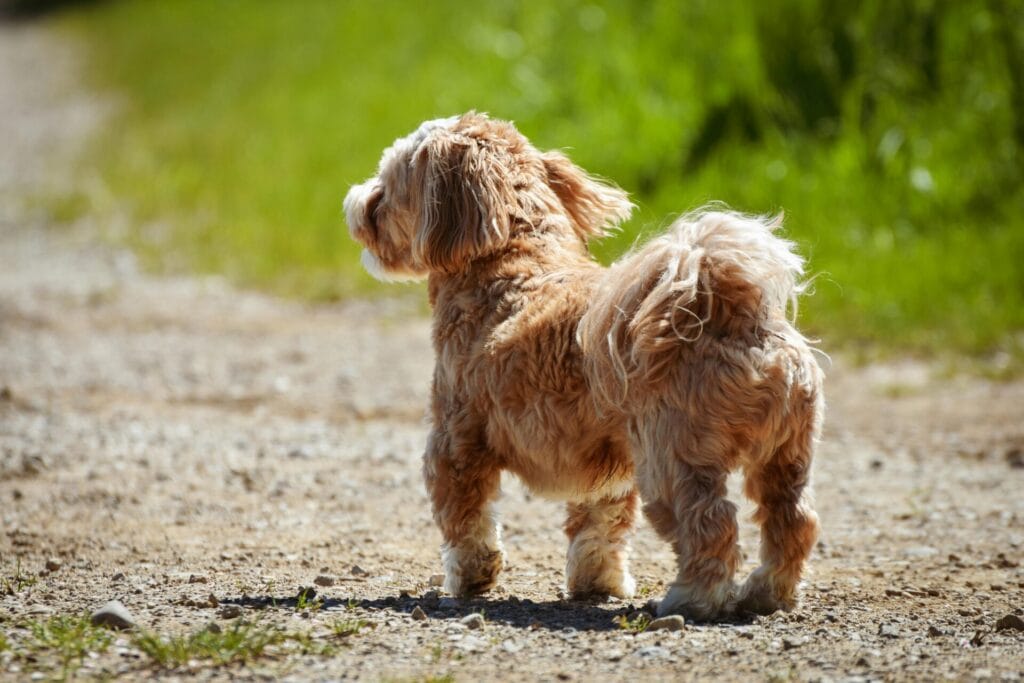
You’ve probably been told that a wagging tail means a happy dog, but there’s more to it than that.
The position of your dog’s tail can tell you a lot more than you may realize about what your dog is feeling. A high tail doesn’t necessarily mean friendliness and a slow wag isn’t always a good thing, so we’ll go over some things to look out for.
Tail Held High and Stiff: Confidence or a Warning?
A high, stiff tail doesn’t always mean your dog is happy and confident, though, and it can lead to a tense situation if you misread this signal. If your dog’s tail is high and stiff, he’s probably on high alert, possibly feeling threatened or in the process of asserting dominance.
The stand-up is not a sign of aggression, but I would pay it some attention.
Watch for these accompanying signs that indicate escalating tension:
- Stiff, forward-leaning body posture with weight on front legs
- Direct, unblinking eye contact or hard stare at another dog
- Raised hackles along the spine and shoulder area
- Closed mouth with lips pulled forward, suggesting potential reactivity
You will want to calm the dog down before it gets out of control, use distance and positive reinforcement to help it relax.
Low or Tucked Tail: Fear, Stress, or Submission
When your dog lowers his tail below the horizontal plane or tucks it tightly between his legs, he’s showing discomfort, anxiety, or the desire to avoid conflict.
When your dog is scared or nervous, he will hold his tail between his legs. This is a sign your dog feels vulnerable, unsure, or submissive. You will often see this tail position when your dog is at the vet, during a thunderstorm, when meeting other dogs and unfamiliar people.
A slightly lowered tail means that they are uncertain about something. A tail that is tucked firmly against the belly means that they are afraid or stressed.
Other signs, such as flattened ears, lowered body and whale eye (where your dog shows the whites of his eyes) can help you to understand his emotional state.
If your dog often displays this tail position, they may benefit from reassurance, socialization training or a change in their environment.
Slow Wagging vs. Fast Wagging: They Don’t Mean the Same Thing
We often assume that any tail wag means that our dog is happy but the speed of that wag reveals different things about our dog’s emotional state.
A slow, “lazy” wag usually means your pup is unsure or curious about the situation and is taking in everything around them. A fast, enthusiastic wag usually means your dog is super-excited and overjoyed, especially if their whole body is moving and they look relaxed.
Here’s what different wagging speeds reveal:
- Slow, stiff wag: Your dog is uncertain, possibly preparing to react defensively.
- A moderate, sweeping wag: Indicates friendly curiosity and calm interest.
- Fast, loose wag: Pure happiness and enthusiastic greeting behavior.
- Rapid, small movements: High arousal, which could mean excitement or agitation.
Also keep in mind the entire tail movement, not just the speed, when determining the dog’s overall mood.
Reading the Face and Head
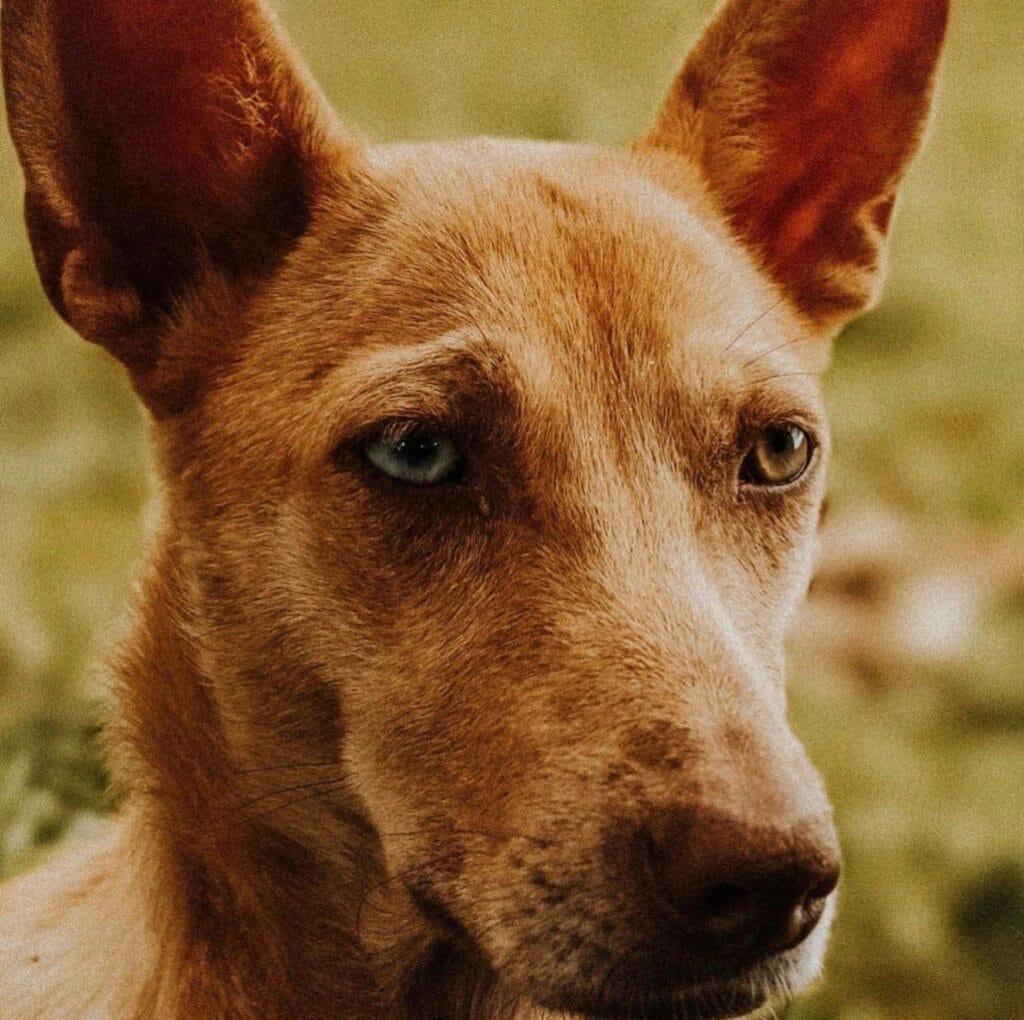
You may be surprised to know that there are a lot of things your dog reveals on their face that you don’t even know. Read the article to know more.
Although wagging tails often get all the attention, the expressions on a dog’s face, including whale eye, lip licking, and ear position can provide clues about a dog’s emotional state.
From the submissive grin to the pinned-back ears, these gestures can mean the difference between a comfortable pup and one that’s feeling stressed, threatened, or overstimulated.
Whale Eye: The White Crescent That Means Back Off
If you have ever caught a glimpse of the whites of your dog’s eyes in a crescent moon shape, then you have seen a behavior known as “whale eye” in dogs.
When a dog’s head is turned away from something but their eyes are locked on it, you will notice a white arc along the side of the eye.
Whale eye signals discomfort, stress, or guarded concern.
You’ll often spot it when:
- Your dog feels cornered or trapped in a situation
- Someone approaches their food bowl or favorite toy
- A stranger gets too close, too fast
- They’re uncomfortable with handling, like nail trims
As a warning sign that another reaction might be imminent, you should try to spot this one early so you can give the dog space before the reaction takes place.
Lip Licking and Yawning When There’s No Food in Sight
If your dog licks his lips, but there aren’t any treats around, or yawns even though he’s wide awake, he probably isn’t thinking about dinner or wanting a nap.
These are known as displacement behaviors and they are the stress signals of a dog that is in distress. You’ll recognize it by the lip licking that is quick and darting in a different way than the long and slow lick after eating or the yawn that is more exaggerated than a tired yawn accompanied with a longer exhale.
Sometimes your dog will display signs of fear or anxiety when you take them to the vet, when meeting a stranger or when you are scolding them. They are trying to say, “I’m feeling anxious here!”.
Once you’ve recognized these subtle cues, you can step in and remove the stressor or let your dog have space so he’ll feel safer and more secure.
Ears Pinned Back vs. Ears Pushed Forward
Moving up to the ears, you can learn a lot about your dog’s state of mind by reading them. Your dog’s ears act like emotional radar dishes. They’re constantly adjusting to reflect how your dog feels.
Pinned back ears typically signal:
- Fear, anxiety, or submission in tense situations
- Appeasement behavior when meeting dominant dogs or unfamiliar people
- Discomfort from current handling, noise levels, or environmental stressors
- Uncertainty about what’s happening around them
If your dog is pushing his ears forward, he is showing active interest, alertness, or confidence.
Forward ears mean they’re focused, engaged, and processing information. You’ll notice this position during play, when investigating new smells, or when they hear something intriguing.
This article will help you to understand the position of a dog’s ears and help you to appropriately respond to the needs of your dog.
Showing Teeth: Aggression, Play, or the Submissive Grin
Few sights spark such strong emotions as when a dog shows its teeth, but this one behavior can mean completely opposite things depending on the context.
An aggressive display includes pulled-back lips, wrinkled muzzle, stiff body posture, and direct eye contact. You’ll feel the tension. During play, teeth appear, along with a loose, bouncy body, soft eyes, and that unmistakable playful energy.
Many owners are confused by the submissive grin. Your dog will pull their lips horizontally rather than vertically and may squint the eyes, lower the body and wag their tail maniacally.
It’s appeasement behavior, not a threat. Notice the whole dog, not just his mouth. A snarling face with a wiggling rear end tells a very different story than bared teeth with a frozen, forward-leaning stance.
What the Body Posture Tells You
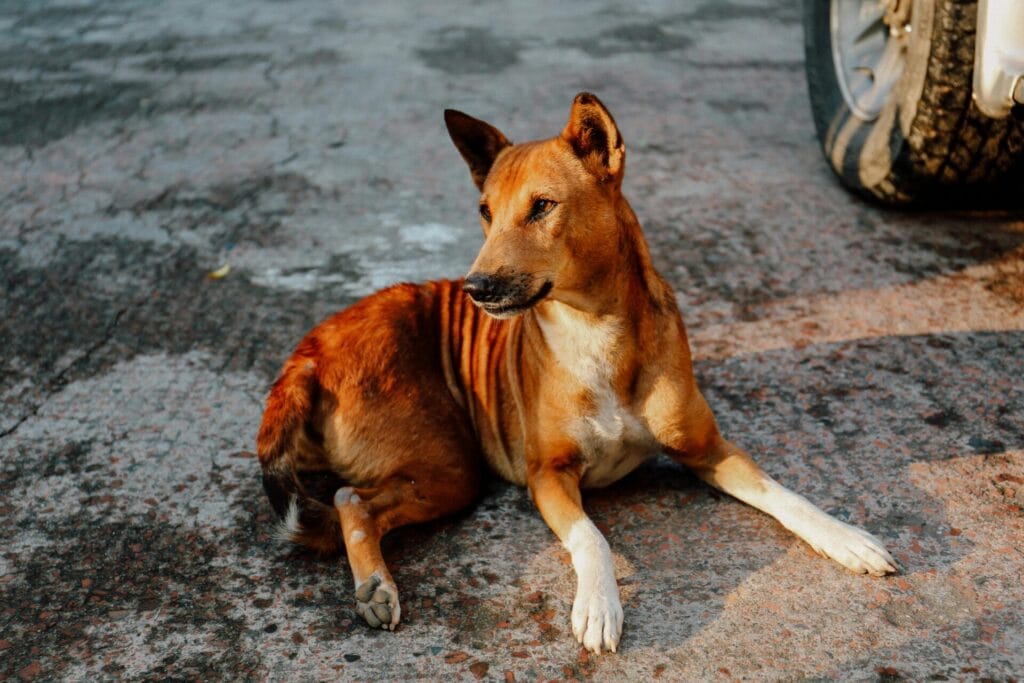
Your dog’s overall body posture, or his body language, can often tell you what he is feeling, and can help prevent misunderstandings or potentially dangerous situations.
A “play bow” doesn’t always mean what you think, a low crouch means more than a mopey dog, and those raised hairs along the spine tell more of a story than a simple angry dog.
The freeze, however, is the one signal you can’t afford to miss.
The Play Bow: An Invitation, Not Just a Stretch
This posture typically appears when your dog wants to:
- Initiate play with another dog or person
- Signal that rough behavior is friendly, not aggressive
- Re-engage a playmate who’s lost interest
- Communicate excitement about an upcoming activity
If you see this bow next time you take your dog to the dog park, you will have a much better idea of your dog’s social intentions.
Cowering Low to the Ground: What Your Dog Needs Right Now
If a dog presses his body close to the ground with hunched shoulders and a tucked tail, he is showing one of the clearest stress signals.
This is a submissive posture. Your dog feels threatened or scared by something in their environment. You will notice his ears are back, perhaps showing whale eye, and he is trying to make himself appear smaller.
If possible, move your dog away from the stressor. Speak to your dog in calm, soothing tones and give them an escape route.
NEVER PUNISH THE DOG FOR BEING AFRAID. This will only confirm their fear. Let the dog come to you when they are ready. Praise them and give them a treat for being brave.
Raised Hackles: Arousal, Not Always Aggression
Although raised hackles, the strip of fur standing up along the dog’s spine, can look alarming, they don’t necessarily mean aggression or danger.
This physiological response, called piloerection, is simply a sign that your dog’s arousal has spiked. Think of it as the dog version of goosebumps.
Your dog’s hackles can rise during various emotional states:
- Meeting a new dog or unfamiliar person
- Feeling excited about playtime or treats
- Experiencing fear or uncertainty in new environments
- Responding to sudden, unexpected stimuli
To decipher what your dog is feeling you will need to observe other body language signals.
Look at their tail position and ear placement and just overall posture. A dog with raised hackles, relaxed ears, and a wagging tail is probably just excited, not aggressive.
The Freeze: The Most Dangerous Signal Owners Ignore
Most dog owners recognise growling and bared teeth as a warning sign. However, many owners don’t realise that their dog has a “freeze” response – where their dog goes completely still – before an attack, and may not realise this until it is too late.
When your dog suddenly stops moving, stiffens his entire body, stares intently at something, this is a critical warning signal. A motionless posture, lasting anywhere from 2-10 seconds, is often a precursor to a bite or lunge.
Their muscles become tense, their breathing may pause, and they may stare without blinking at their target.
It can happen during play that is escalating too quickly, when children approach during meals, or when your dog feels cornered.
If you spot this statue-like stillness, make sure to put some distance between your dog and whatever is triggering this behaviour. Never assume your dog is just ‘watching something’.
Signals That Show Up During Stress
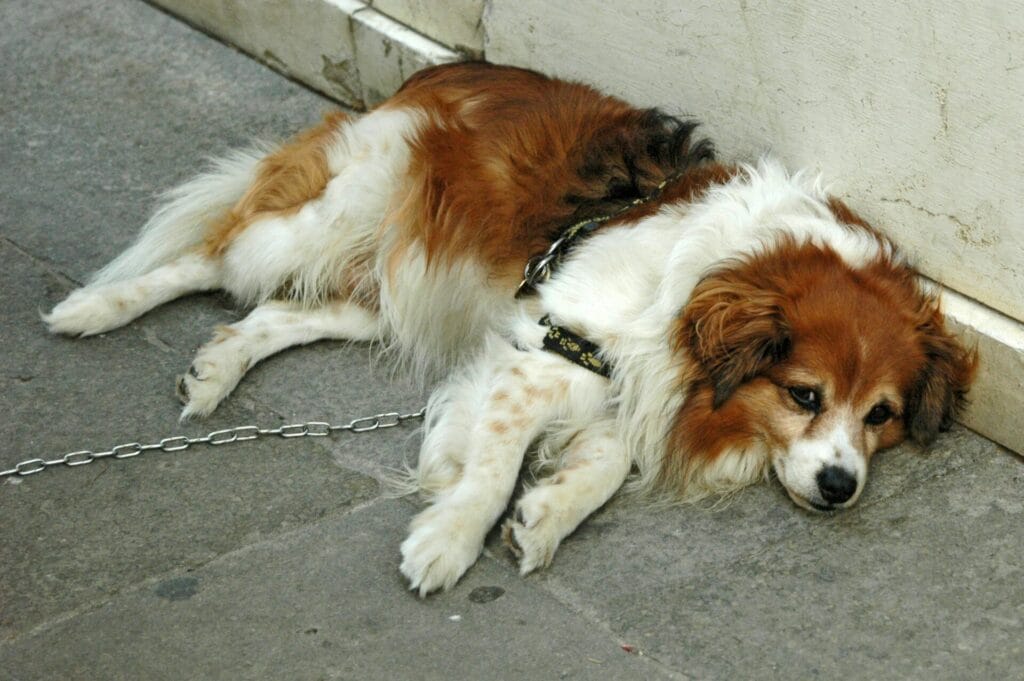
When your dog feels stressed or anxious you might notice that their body gives off signals that could be missed.
These are known as “stress indicators,” sometimes referred to as calming signals. They include panting when it’s not hot, raising a paw in an uncertain moment, and excessive yawning for no apparent reason.
You may also notice your dog blinking more frequently or turning their head away, all of which indicate that your dog is feeling uncomfortable or overwhelmed in their current situation.
Panting Without Heat or Exercise
Dogs pant to cool off. If your pooch is panting heavily when he’s not running around or lying in the sun, he might be stressed.
This panting will be much faster and more shallow than normal panting to cool. It will look different and your dog’s mouth will look tight instead of loose and relaxed.
Watch for these accompanying signs of stress panting:
- Tight facial muscles and pulled-back ears
- Wide, worried eyes showing more white than usual
- Rigid body posture with weight shifted forward
- Excessive drooling or dry, sticky saliva
Stress panting can happen during vet visits, during thunderstorms, or in unfamiliar situations.
If your dog has this pattern of hair loss without any obvious triggers, talk to your veterinarian about any underlying health issues.
Paw Raise: Uncertainty More Than Politeness
This raised paw that your dog is doing might look like he is waving hello or wants to shake your hand, but in reality it means something else.
When dogs lift one front paw and hold it suspended in the air, it is often because they are uncertain or mildly stressed about something going on at the moment. For example, this may occur when you try to make a dog do something, when a dog is trying to figure out what you want, or when dogs are meeting a new person.
You might have seen this before, I call it a paw lift. It is a gesture that in canine body language studies is called, for example, a paw lift, or a paw curl. It is not your dog being polite and it is not being manners but it looks cute.
Additionally, you should watch for other signs such as the direction in which your dog’s ears are positioned and the height at which its tail is held. In addition to these, you should watch your dog’s eyes to understand its emotional state.
Excessive Yawning, Blinking, or Turning Away
So, your dog is yawning like crazy during your training session? This sudden yawnathon probably isn’t about being tired. Excessive yawning, blinking and head turning are actually calming signals. These are displacement behaviors that dogs use when they are stressed, anxious, or overwhelmed. These behaviors help dogs self-soothe during uncomfortable situations (i.e., the vet visit or meeting a new dog).
Watch for these stress indicators:
- Repeated yawning without obvious tiredness, especially during training or social interactions
- Slow, deliberate blinking or squinting, distinct from normal blinking patterns
- Head turning or looking away when you approach or make direct eye contact
- Combination signals appearing together, like yawning while turning away simultaneously
If your dog does these things all together, it may be a sign that he needs some space or a break.
The best you can do is to respect these efforts to communicate. This will help them to trust you and to reduce their anxiety levels.
Signals That Show Up During Excitement or Affection
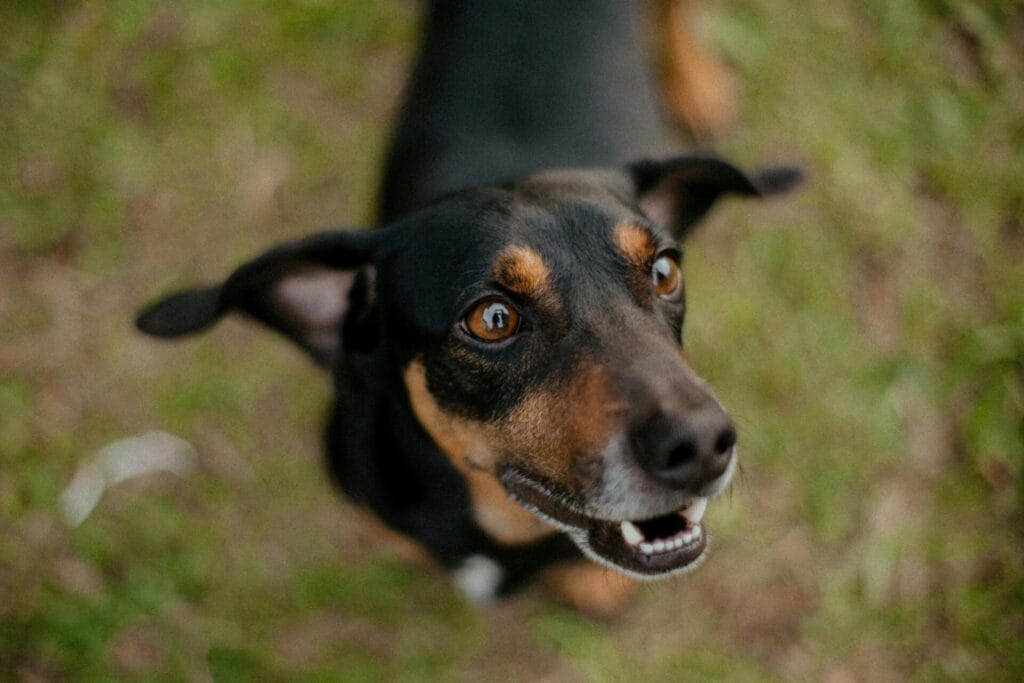
When your dog is happy to see you, their body language can be unmistakable. Whether it’s that adorable full-body wiggle that starts at their nose and ripples all the way to their tail, to the less cute habit of jumping up to greet you at face level.
Although sometimes overwhelming, these displays are your dog’s way of expressing real affection and happiness.
Understanding the difference between a gentle lean into your leg that shows trust and bonding or a full weight launch at you that needs to be redirected can help you respond to your dog’s emotional state.
The Full-Body Wiggle and What It Means for Your Bond
There are few things that warm a dog owner’s heart more than seeing the full-body wiggle, that delightful dance where your dog wags his entire body from nose to tail.
You know what this unmistakable display means? It means happy! And it means LOVES you, and you’ll probably see it if you leave the room for a few minutes and come back or if you’re playing with him.
The wiggle is how your dog shows his emotion of love, playfulness, joy, and happiness. When you see this, you know you are loved!
- Loose, fluid movements indicate relaxation and comfort in your presence
- Eye contact combined with wiggles shows intentional engagement with you
- Accompanying vocalizations like whines or barks show overwhelming excitement
- Lower body involvement means the emotion is genuine, not just polite tail wagging
This behavior strengthens your bond through positive emotional exchanges.
Leaning Into You vs. Jumping On You
Dogs tend to show their affection by making physical contact. But not all contact is created equal. If your dog is leaning into you, pressing his weight against your legs or side, he’s looking for closeness and security.
I like that, it feels to me like a sort of a hug in dog language. But when a dog jumps up, it depends on the context. Puppies and young dogs will jump up on people because, in their pack, they would lick their mother’s face. It is generally excitement and affection mixed with nerves, though!
A leaning dog respects your space; a jumping dog hasn’t learned boundaries yet. Both are happy to see you but leaning shows a level of emotional maturity and self control which jumping cannot.
How to Read Multiple Signals Together (Not Just One at a Time)
Knowing the emotional state of your dog may not be that easy as it seems. Sometimes, a wagging tail or perked ears may not be enough for you to be assured of the dog’s emotions.
The key is to be able to read your dog, in combination of what you see, not just what you hear or see.
As a result, you will get a more accurate reading when more than one signal is used simultaneously to uncover what is happening under the surface of that warm, furry exterior.
Consider these signal combinations to decode your dog’s feelings:
- Relaxed body + soft eyes + loose tail wag = genuinely happy and comfortable
- Stiff posture + whale eye + tucked tail = fearful and potentially defensive
- Play bow + bouncy movements + open mouth = ready for fun interaction
- Tense muscles + direct stare + raised hackles = aroused and possibly aggressive
Context matters tremendously too.
A dog barking at the mailman is different than one greeting his favorite person, even though both will bark at you.
Using Body Language Knowledge to Prevent Bites and Anxiety
If we can recognize the signs of stress or fear, we can avoid countless issues before they become a full bite or chronic anxiety.
You may notice your dog staring out the corner of their eye (often called “whale eye”), licking their lips, or freezing in place. These are all signs you should intervene and remove your dog from the situation before the stress gets worse.
You’ll be able to create space between your dog and the trigger, whether it’s a wiggly, overeager child or another dog, or a frightening vacuum cleaner.
This prevents your dog from feeling cornered – when they bite. ! …
In time, you are also reducing their overall anxiety levels because they’ll learn that you understand their discomfort.
You become their advocate, their safe person, the one who understands their silent language, and responds appropriately every time.
Frequently Asked Questions
How Does My Dog’s Body Language Differ From Wolf Body Language?
Furthermore, [the dog’s] body language is more exaggerated and submissive than that of the wolf, and dogs have evolved to communicate with humans using enhanced facial expressions, wagging tails and playful behaviour that wolves don’t display toward people.
Can Puppies Communicate Differently Than Adult Dogs Through Body Language?
Your puppy’s body language may not be as precise as an adult dog’s. They are more likely to use clumsy exaggerated movements, and may not have mastered the subtle signals that adult dogs use.
Do Different Dog Breeds Have Variations in Body Language Signals?
You may notice the slight differences in the way these dogs communicate using body language. Dogs with cropped ears, docked tails, or who have a “flat” face may have difficulty communicating with their body. Dogs that have thick coats may also hide body movements that you normally would be able to read.
How Can I Teach Children to Recognize Dangerous Dog Body Language?
Our kids will learn through pictures of dogs who look stiff and frozen, with whale eyes, teeth bared, and raised hackles. We will practice scenarios and let our children identify “stop signals” before approaching any dog they see.
What Body Language Indicates My Dog Is Experiencing Pain or Illness?
If you notice that your dog is hunched over or trembling, is panting excessively, is reluctant to move, or is eating less than normal or is avoiding contact, you should suspect that your dog is in pain. Your dog may also lick at one area more than normal, be reluctant to be touched, be restless and whine.
Conclusion
You have learned seventeen signals that help you clear confusion and build confidence instead of fear. But knowing them does not help unless you watch for them. Your dog has been trying to communicate with you all along, sending stress signals before a snap, showing affection you may have missed. The difference between a reactive dog and a trusting dog is an owner who looks for signals. Start noticing today because every tail wag, whale eye, yawn means something your dog needs you to understand.

Amr Mohsen is a software engineer who traded his keyboard for a leash — at least on weekends. His love for dogs inspired him to share what he learns as a dog owner and enthusiast, bringing a detail-oriented, research-driven perspective to every article he writes. If it’s about dogs, he’s probably already looked it up twice.