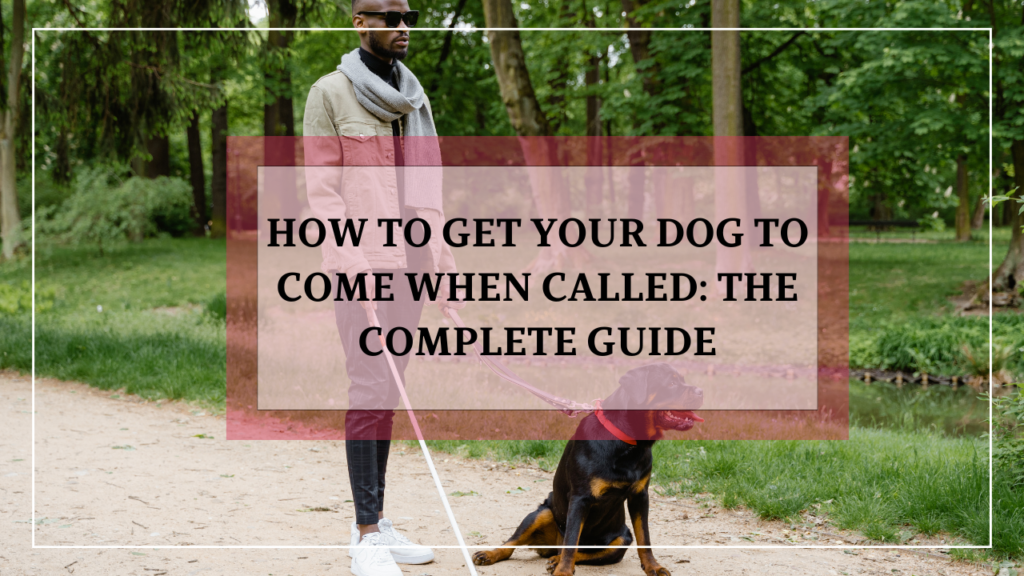
Start indoors with just one word and high-value treats delivered within 1-2 seconds of your dog reaching you. Start at just a few feet away, say the word in a happy voice, and take a few steps back once your dog reaches you. As soon as they reach you, reward them. Practice for 3 minutes at a time, and increase the distance by 1 foot a day. Once you’re at 90% success inside, start working outside in your backyard or a quiet place, and then in busier areas. You want coming to you to be more rewarding than anything else going on around you. Check out the video for more info.
Key Takeaways
- Choose one word to recall your dog and use high-value treats to get your dog to come when called.
- Start indoors and in distraction-free areas to practice at short distances. Build your confidence before moving on to more challenging situations.
- Say “come” in a happy voice, take 2 steps back, and reward within 1-2 seconds.
- Keep sessions short (3 minutes) and add one foot a day based on enthusiasm and success.
- Slowly move from indoors to outdoors when you’ve reached 90% success at each level of training.
How to Get Your Dog to Come When Called (Without Yelling in the Park)
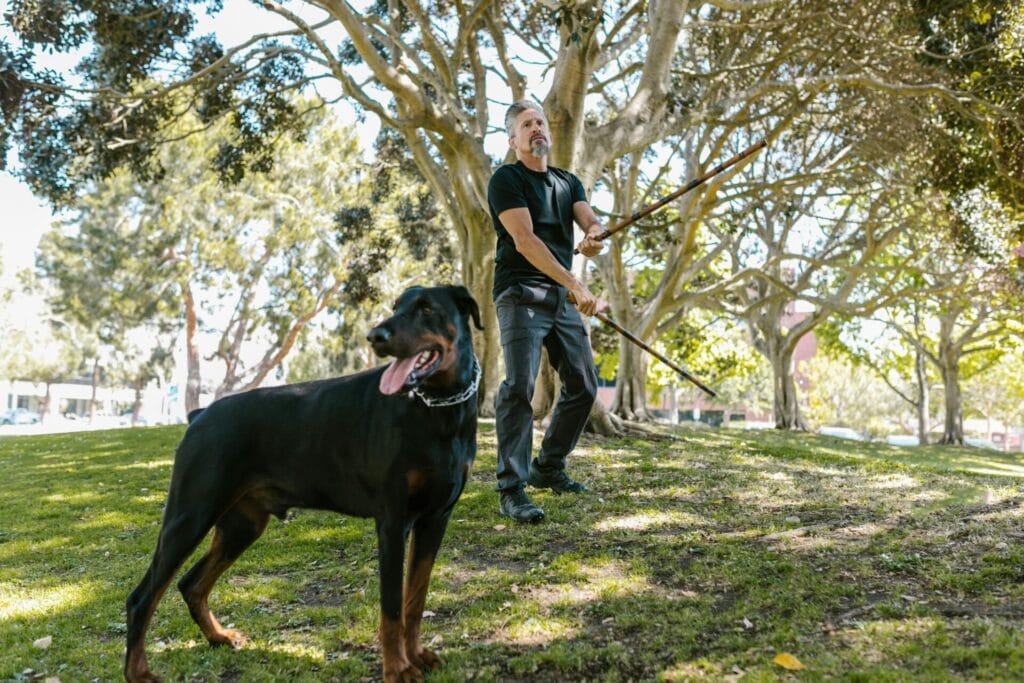
You’ve probably gotten upset and yelled as loudly as you can at the dog park, yelling louder and louder “Here, Bailey!” while your dog chases after the interesting stick and ignores you.
What if he comes to you on command when you say his name in the living room? What if you could get your dog to come to you when he sees a squirrel flying by, or when other dogs are playing nearby, or when he’s in the middle of sniffing something he’s not supposed to.
But before you can train such a bombproof response, you need to know what “everyday situations” your dog is being tested in and what “success” means. Using positive reinforcement, such as rewarding with treats, can significantly improve your dog’s motivation to come when called.
The Everyday Moments When Recall Actually Matters
But before you start drilling recall commands to your dog in your backyard, know when this skill is actually useful.
You’ll need it when your dog sees a squirrel on a walk, the doorbell rings and he’s off to the door, or when he’s about to eat something bad for him at the park.
You’re going to remember that face when he’s at the vet, at the off-leash park, or worst of all in an emergency if he gets out, slips his collar, and bolts toward the road.
I also need him for day to day life – like when I’m calling him in from the yard away from the cat’s food bowl or when we’re hiking.
They happen all the time, all the time, many times an hour. That’s why this is one of the most practical investments you will make.
What “Reliable Recall” Looks Like in Real Life
That doesn’t mean that your dog comes to you immediately every single time, in every situation, no matter what. No it doesn’t. Not even your working dogs do.
We don’t want a dog that always answers correctly, we want a dog that answers consistently in the most important situations (safety) and many situations.
Here’s what success actually looks like:
- If you call your dog and he turns and moves towards you in 3-5 seconds, even with moderate distractions, you’ve got a winner.
- You feel comfortable letting your dog off-leash in certain situations without worrying about losing control.
- Your recall works when it counts – near roads, around other dogs, or when something interesting pops up.
- You don’t need to repeat yourself and get frustrated.
That’s the goal worth working toward.
Why Your Dog Ignores You Now
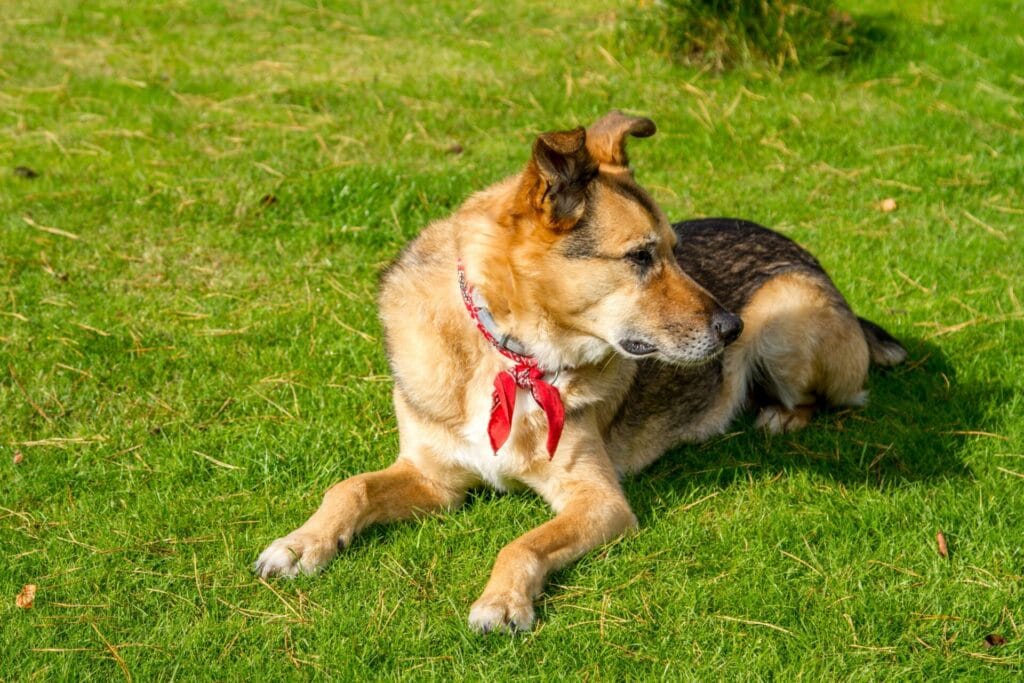
He’s not out to get you. He’s not trying to play a trick on you. He’s not purposely being a “bad dog” to punish you. He’s just dealing with distractions that are more appealing than what you’re offering him, and cues that are either ambiguous or poisoned.
Maybe you have called come during the middle of a squirrel chase or you’ve called them several times in a row, thus teaching them that come is optional.
1. This is the most common mistake and I’m sure it’s done with the best intentions. Your dog will get used to it.
Distractions, Competing Rewards, and Confusing Cues
Envision this: When you are at the dog park and you yell your dog’s name, they might look at you as if you have become a ghost.
You want to say something, but your voice is fighting against a smorgasbord of sniffs, sounds, and possible playmates. Your dog isn’t being stubborn, he’s choosing the more rewarding option in that moment.
Here’s what’s working against you:
- That squirrel darting across the lawn is a million times more interesting than your lame “come here.”
- Because they see other dogs playing around, they want to join in the fun.
- Commands like “come”, “here” and their name won’t help. **Lack of consistency** in training means the dog won’t learn to generalize commands.
- The lure of low-value rewards at home is no match for the exciting distractions that await you elsewhere.
That will help tilt the odds in your favor.
Common Mistakes That Quietly Kill Recall
However, aside from these, there are also distractions that exist from within – the well meaning habits that are destroying your dog’s desire to respond.
You called your dog and he didn’t come. Or you called him over and over — “Buddy, Buddy, BUDDY!” — teaching him that the first three calls don’t count. You may even have chased him when he didn’t come, teaching him that recall equals playtime.
Maybe you screamed at him because he was late, once he finally made it. Then you punished him for being late. That is the problem. Over time, you teach him that your cue is irrelevant.
If you think of your dog when you’re done having fun (i.e. “Oh, I have to walk my dog!”) you will poison your command “come”. If “come” means, “Oops, its time to go home and clip on the leash and give a bath” the dog will figure out the command is a trap.
He will start looking for another solution and you will lose every time.
Set Up Recall Training for Success
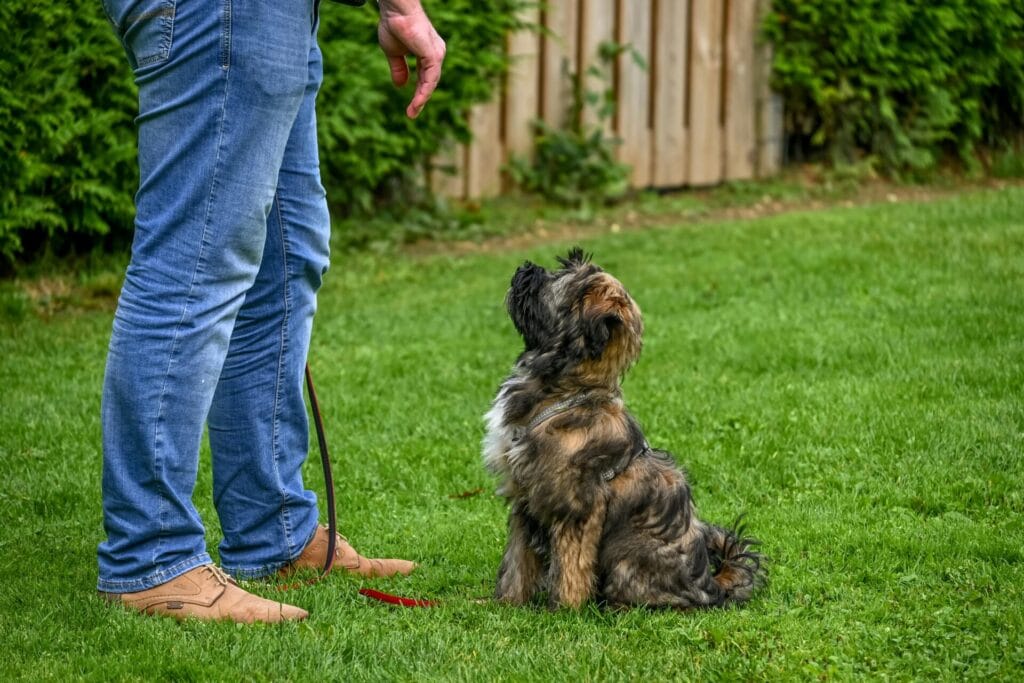
Before you start, make sure that you have the right tools, and decide on the area where you’re going to be training.
Choose a recall word (come or here), fill up on high-value treats that your dog will go nuts over, and find a low-distraction area (your backyard or a quiet park).
It’s also good to have a 15-30 foot long line, a harness that won’t slide off and a treat pouch so you don’t have to dig around in your pockets when your dog finally listens.
Choose a Cue, Reward, and Training Spot That Set Your Dog Up to Win
Once you’ve chosen your dog’s recall cue, next you will choose the reward that will get your dog’s attention and finally, the place you will train.
Your four essential setup decisions:
- Pick one consistent recall word – Choose “come,” “here,” or another short, distinct word you’ll use every time so you don’t get confused.
- Identify what your dog’s ultimate reward is – Most dogs will react better to high-value treats like chicken, cheese, or hot dogs than kibble.
- Start indoors or in a quiet, fenced yard – Begin in a distraction-free zone. You don’t want your dog to be pulling on the leash to get to a squirrel.
- Start from a distance – Start 3-5 feet away and build confidence with easy wins before you raise the stakes.
Great picks. He has no other choice but to be successful.
Gear You Need for Safe Practice (Long Line, Harness, Treat Pouch)
You are now armed with your cue and reward, and have prepared to gather the equipment you need to start practicing recall from a distance with your dog.
A long line: “I like my dogs on a line about 15-30 feet long. I want them to have room to explore, but not so far that I can’t still keep them safe while I am training them. I put the line on a well-fitting harness (NOT a collar) so that if he hits the end of the line running he won’t hurt his neck.
4. Treat pouch: You have your treats on your waist. Your hands are free. You can reward your dog in 1-2 seconds. It’s the timing of the quick reward that counts.
It also trains your dog to ignore you in a safe place.
Teach the Recall Cue Indoors First
First, clear any area that your dog is used to having off-leash access to, and then hold your most high-value treats in your hand. Now show your dog that “come” means good things are going to happen when she comes racing to you.
Start in the living room or hallway where your dog already feels comfortable. Use a back-and-forth game to make coming back to you the most exciting choice he can make.
It’s not so much that you only call your dog once. It’s that you reward them so enthusiastically they’ll run back every time.
Step-by-Step Game to Teach “Come” in Your Living Room
4. Train in your living room. Comfortable and free of distractions. You’re in charge.
Keep your dog a few feet away from the box, so that you can get off to a winning start.
Here’s your step-by-step game plan:
- “Come” one time in a happy voice and take two steps back to add some movement and excitement.
- Reward your dog immediately when they get to you. Use high-value treats like chicken or cheese, not boring kibble.
- Release and repeat after 30 seconds of play or calm petting, practicing 5-8 repetitions per session.
- Gradually increase distance by 1 foot each day, but only if your dog is responding with enthusiasm and speed.
Keep sessions under three minutes.
Good point. Now you have something to build on, you won’t let yourself be distracted.
How to Reward So Your Dog Thinks Racing Back Is the Best Game
The first secret to bulletproof recall is not just teaching the command, but making the reward irresistible so that your dog cannot wait to come back to you.
Give him treats such as chicken, cheese, hot dogs, etc. to make him want to work. Also, when your dog gets to you, throw a jackpot party and give him 3-5 treats one after another while praising him. This will give him a dopamine rush.
Sometimes, however, it is best to do something else, or to give your dog a treat. Throw the toy, start a short play session with your dog, just to show her you like her. (The dog will never know what great thing is going to happen.) It’s called variable schedule of reinforcement.
Reward on your side, not as your dog approaches but when it races all the way back, is now part of the game.
Add Distance, Distractions, and Real-Life Scenarios
You may have a dog that comes in to the house every time. Well, it’s time to put your dog’s skills to the test out in the real world where squirrels, other dogs, and yummy smells await.
Just keep going, moving further and further away, 10 feet to 50 feet (or more), distract yourself with kids playing or people walking by and practice in different locations such as parks, trails, and busy sidewalks.
If your dog hesitates, slows down, or comes half way and then goes off again, you’ve probably moved too fast. Make it easier again before you start building up again.
Moving from Backyard to Park Without Losing Your Dog’s Focus
Once you have taught your dog to recall in your back yard, you think you can go to the dog park and do the same thing. Unfortunately, most owners run into trouble at this point.
Bridge the gap gradually with these steps:
- Start in your quiet front yard, where you have minor distractions like passing cars and neighbors.
- Go to a fenced in tennis court or an empty baseball field with lots of space and new smells.
- Go to the park when it’s not crowded – like 7 AM or weekday afternoons – and you’ll find fewer dogs.
- Don’t move on to busier times until you’re at a 90% success rate in quieter times.
It is a way of keeping the dog from practicing failure so that he will learn to ignore you.
What to Do When Your Dog Hesitates or Half-Commits
Your dog comes over to you again but she veers off and sniffs some grass that just won’t let go. Or maybe your dog stops halfway and looks at you like you’re not worth her time.
If your dog just barely follows through, you have gone too quickly. Go back one step or distraction and work 3-5 more sessions.
5. When you go on again, push it only 10-20% harder. If your dog stops mid-recall, don’t repeat the command because that just teaches him to ignore you.
You need to use your body language (squat down, clap your hands, back away, etc.) to make yourself more interesting than a patch of grass.
Make “Coming to You” the Most Fun Option
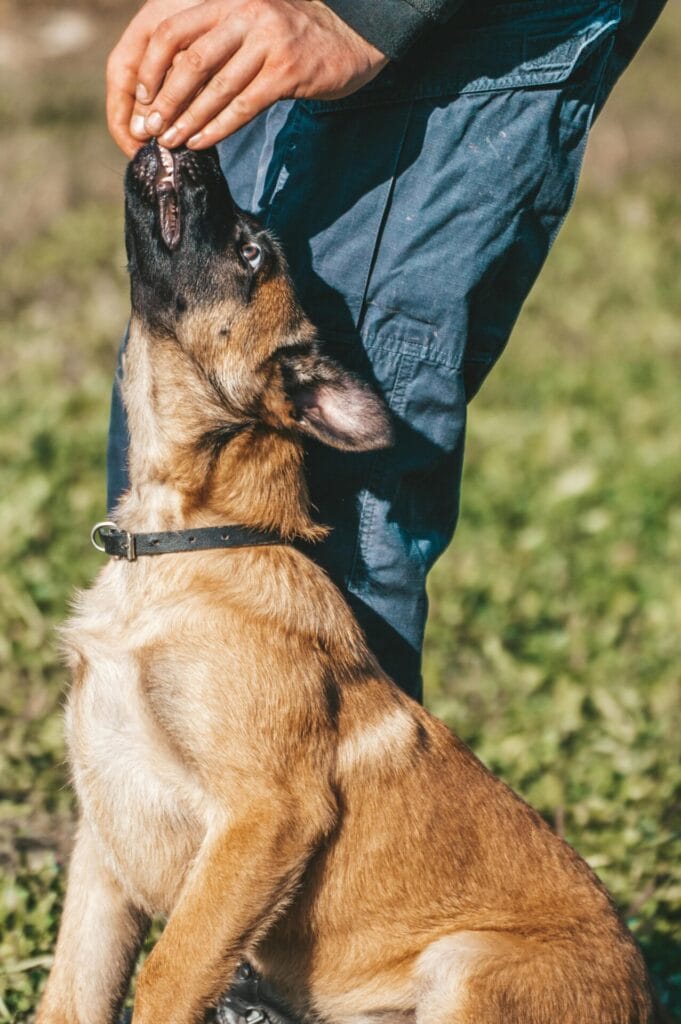
The real secret to bulletproof recall is not all the training sessions I throw at you, but making yourself the most exciting thing in your dog’s world.
You can include these games in your everyday routine so that every phone call you make is a mini-party for your dog’s tail!
These little habits, when practiced each day for a week or month or more will make recall a treat your dog can’t wait to do.
Recall Games Your Dog Will Beg You to Play
So, now you have an awesome recall. What’s next? How do you keep it going? With games, of course! Suddenly recall training becomes your dog’s favorite thing to do and it’s all fun again. If your dog comes to you with a wag of the tail and a smile on their face you will never have a recall problem again.
Four Irresistible Recall Games:
- Hide and Seek – Hide behind a piece of furniture or a tree, call your dog and go nuts when they find you with treats and praise.
- Puppy Ping Pong – Two people stand 15-20 feet apart, each calling your dog back and forth, rewarding each successful recall.
- Chase Me – Call your dog’s name, then run in the opposite direction. Become the chase.
- Treasure Hunt – Hide in your house or yard and call your dog to come find you for their reward.
Tiny Daily Habits That Keep Recall Strong for Years
One thing that many dog owners forget to do is to continue to practice recall after their dog is fully trained.
Your dog’s memory needs a refresher, too. And yours. Practice recall 2-3 times a day during normal activities, not just training.
You can call your dog to your side just before meal time. Throw a treat at your dog when they come to see you (as a normal action or during commercial breaks if you’re watching TV) to keep the behaviour fresh without making it feel like a chore. These sessions last only 10-15 seconds.
Hide on walks so that your dog can find you and turn the walk into an impromptu game.
The secret is to make “coming to you” fun, even years after the puppy days.
This is a sure way of making sure the recalls don’t go down the drain like most dogs’ do by the time they are 3.
Fixing Stubborn Recall Problems
Sometimes your dog’s poor recall is more than just a case of the stubborn puppy – you’ll notice that your dog always runs away from you when you call them, or that they stand very still with a “I can’t hear you” expression.
Sure, but it can also be a pain in the ass, and downright dangerous, if you’re anywhere near traffic, wildlife, or aggressive dogs.
If you’ve been working with your dog for at least 3-4 weeks and still haven’t seen an improvement, or your dog bolts every time he gets the chance to be off-leash, you might want to call in a certified professional trainer who specializes in recalls.
If Your Dog Runs the Other Way (Or Just Stares at You)
You know, the one you get when you call your dog and they either run away in the opposite direction or give you that stare.
You are dealing with a trust problem. Your dog is not being stubborn. He or she has learned that coming when called is bad or figured out that ignoring you works.
Here’s how to rebuild that broken connection:
- 5. Don’t call them at all for 2 weeks – I know, I know – and only call them.
- 2. Never chase your dog. You are just playing keep away.
- 1. Practice the opposite direction technique: When they ignore you, turn and jog away with glee.
- Use a long line leash during training to keep your dog from getting away.
When to Call in a Professional Trainer Before It Becomes Dangerous
While most memory problems will disappear with time and training, some are just plain scary.
But what if your dog is running into traffic, chasing critters into dangerous situations, or not listening to you around aggressive dogs? Or, what if your dog is afraid of everything, or out-of-control with prey drive or aggressive? You need a certified trainer.
They will create a plan to deal with your dog’s specific triggers and personality. Don’t wait until your dog gets hurt or causes an accident.
3. “If your dog keeps getting into trouble you’re going to call the cops on us. We’ll tell you that you can’t bring your dog here.” If you think you can pay a dog behaviorist or trainer and avoid heartache, expensive emergency vet bills and maybe even the law – go for it.
Some things just can’t be solved by YouTube tutorials and treats.
Conclusion
Teaching your dog a strong recall can be time consuming, and you have to have a lot of high value rewards. It takes practice to get it down, and you always want coming when called to be a reward, not a trick to make the fun stop. If you can stick to positive reinforcement, and you’re more interesting than a squirrel, your dog will eventually catch on. And your dog’s life may depend on it.

Hi, I’m Ali Tarek, co-founder of Animalsman. I’ve always been passionate about pets, especially dogs and cats, and I created this website to share practical tips, easy recipes, and helpful care advice for fellow pet lovers. My goal is to make pet care simple, enjoyable, and accessible for everyone. When I’m not writing or curating content, you’ll usually find me spending time with my furry friends or learning new ways to keep them happy and healthy.