Most dog owners have no idea that their dog can understand up to 165 words and yet a trained dog may only respond to about 10 commands. We, as dog owners are missing out on tremendous potential and it is not what we are teaching our dog that is the issue, it’s how we are teaching our dog. The difference between a dog that knows commands and one that actually obeys commands lies in the understanding of a few principles that most dog trainers don’t tell you up front.
Key Takeaways
- Commands like “stay” and “drop it” help keep people safe, preventing dangers like traffic accidents and toxic ingestion.
- Obedient dogs respond reliably in all environments, while trained dogs only know commands; proofing training builds consistent responsiveness.
- Master core commands—sit, stay, come, down, leave it, heel—through daily sessions using positive reinforcement and consistent terminology.
- Apply the 2-second rule: reward immediately after commands to strengthen learning; delayed rewards confuse dogs about reinforced behaviors.
- Advanced commands like “place,” “wait,” and “off” give you more control over your household and require mastery of basic commands first.
Why Commands Are the Foundation of a Safe, Happy Dog
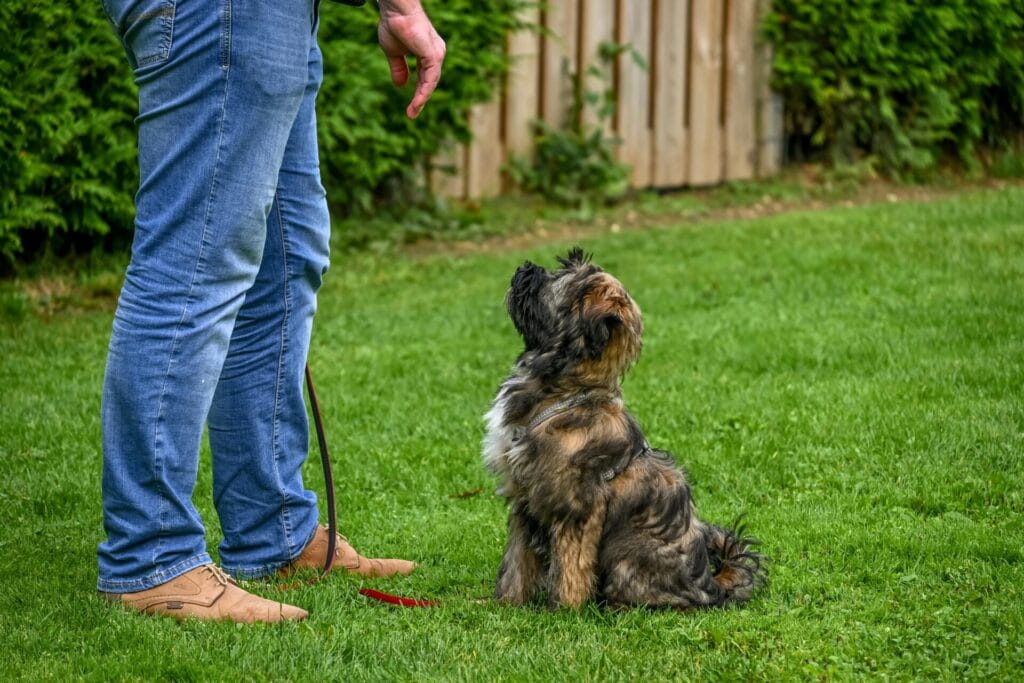
Being able to command your dog can do more than just amuse you, it’s a built-in communication system, that can save your dog’s life. “stay” and “drop it” are just two of the many commands that can be lifesavers.
Commands are also important for safety reasons, but also because commands help reduce your dog’s stress by providing clear expectations in confusing situations. In other words, your dog wants to please you, but without commands, your dog is constantly guessing what you want and that is stressful!
Commands also help to bond you with your dog through the positive interactions and communication that goes into them. If you are always using verbal cues and praise (or treats) to guide them, you are creating a common language that turns your day to day chaos into a calmer & cooperative game of teamwork.
The Difference Between a Trained Dog and an Obedient Dog
While most of us use the terms “trained dog” and “obedient dog” as though they were interchangeable, they are in fact not. A trained dog knows sit, stay, down, and other commands, but will only perform them when conditions are perfect.
My dog, who would respond beautifully at home, ignored me at the park when squirrels appeared.
A dog who is easy to call does not rely on being in the same environment or setting in order to be easy to call. The dog who is easy to call understands that “come” means “come” whether he is in your living room, in your backyard, or at the playground with a bunch of kids.
Obedience requires that you proof your training through different scenarios, and gradually increase the difficulty level of the training exercises.
The reason we would practice at multiple locations or even in different situations is to help teach the dog to respond in a consistent manner. If the dog is only being trained to simply perform a command, then that is not obedience.
The 7 Essential Commands Every Dog Must Know First
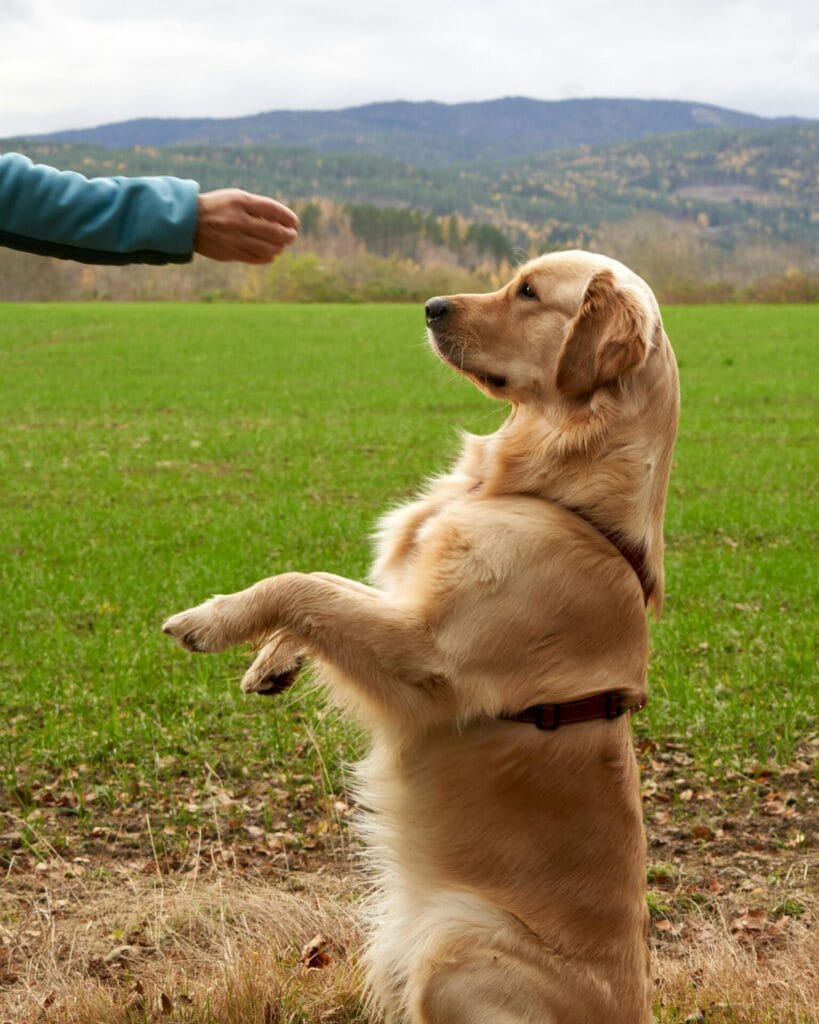
You cannot create a reliable dog without the mastery of some of the core commands. These seven are the foundation to each of the others.
Some commands, such as “sit”, are necessary for almost every command you will teach your dog, while commands such as “come” can literally save your dog’s life in an emergency situation. To successfully teach these commands, it is important to use consistent training techniques and reinforce your training. Often, this involves establishing a routine that includes daily training sessions to reinforce what your dog already knows.
We will start with the easiest gateway command, and move through the ones that require more patience. We will also discuss why the command “down” seems to give so many dogs problems even after they have mastered the basics.
Also, if you consistently use positive reinforcement techniques when you’re training your dog, it will make his experience more positive.
Sit: The Gateway Command You Teach Everything Else From
The ρsit command is your dog’s foundation skill. It’s the one command you will teach that will reveal every other command you will teach. Your dog will learn that sitting on command will result in communication, impulse control, and good things happening.
This one command will give you a foundation to teach your dog stay, down, or even to teach your dog more complex tricks.
Here’s why sit matters so much:
- Creates a behavior your dog does when uncertain or excited
- Builds focus by requiring your dog to make eye contact and wait
- Prevents jumping on guests, since dogs can’t sit and jump simultaneously
- Establishes leadership through consistent, positive reinforcement patterns
You will be referencing sit constantly as you train. It is absolutely essential that you get sit perfected first.
Stay: How to Build Duration Without Breaking Your Dog’s Focus
“Most dogs can learn to sit within minutes, but staying put is another story.” We started with just three seconds of stillness, rewarding before our dog tried to break position.
It’s not so much endurance that you’re looking for here, but rather, impulse control. I would add a second every few sessions and over several sessions. I would keep your expectations realistic.
If your dog is breaking at five seconds, you went too fast. Go back to three seconds and strengthen that.
Once you’ve got duration nailed, you need to move on to distance. Many owners rush this step, but it’s also the most confusing. “Stay” means “don’t move until I say,” so your release word is important.
Start in a low distraction environment and increase the time that you can focus as you gradually introduce distractions such as doorways, visitors, food bowls etc. Initially new distractions need to be practiced for only a short time.
Come (Recall): The One Command That Could Save Your Dog’s Life
Failed recalls are the cause of more lost dogs, more vet runs, and more near-miss tragedies than any other training gap.
In addition to the “come” command being one of the most important commands to teach your dog, it is also one of the most difficult. You’ll need to train your dog to respond to the command in a distraction-free environment, gradually building to a more distracting environment.
Here’s what makes recall training effective:
- Always reward generously – Use high-value treats, not kibble or praise alone
- Never call your dog for something unpleasant – No nail trims or baths after “come”
- Practice daily in short sessions – Three 5-minute sessions beat one 15-minute marathon
- Add a long line for safety – Use a 20-30 foot leash when training outside
Your enthusiasm is very important in this regard. Implementing some positive reinforcement techniques in your training can enhance your dog’s response to the recall command.
Down: When to Use It and Why It’s Harder Than Sit
You may be surprised to find that what took your dog two days to learn with “sit”, may take two weeks with “down”.
This is because if you command your dog to down, she will be on her stomach which is not very comfortable. If your dog is uncomfortable lying down, she may not want to follow you commands. This is why it’s important to know how to read a dog’s body language so that you can train your dog to feel comfortable down. This article will tell you some signs that your dog is stressed or uncomfortable and ways that you can get your dog used to lying down.
Use the word “down” when you need your dog to be calm for an extended period of time like at dinner or when your guests arrive. The word “sit” is more exciting to the dog.
The command gets harder because it requires a full body commitment from him instead of a quick rear-end drop. Small dogs will often resist more than large breeds because getting low feels more submissive.
practice on soft surfaces first and you will see faster progress than on a concrete floor. also, adding in some basic obedience commands in training will help your dog be more responsive to the “down” command.
Leave It: Stopping Dangerous Grabs Before They Happen
If your dog is about to swallow something toxic, “leave it” could be your command of choice. This command teaches your dog to ignore something that might be dangerous to eat or play with, like chocolate left on the sidewalk, a dead squirrel, or your dinner plate.
Teaching “leave it” requires patience and high-value treats. Here’s what makes this command essential:
- Prevents poisoning from common toxins like xylitol, grapes, and antifreeze
- Stops resource guarding before it escalates into aggressive behavior
- Protects wildlife by discouraging chase instincts toward small animals
- Saves money on emergency vet bills averaging $800-$1,500 per incident
Start with low-temptation items and gradually increase the difficulty of the situation. You should practice this command 10-15 times a day as you go for a walk. That is where there will be a lot of temptations and the importance of your dog’s impulse control will be most obvious.
Heel: Walking Without the Leash Battle
If your dog gets underfoot a lot and “leaves it” when you tell him to, it keeps him safe from accidents on the ground. However, if you walk your dog and he drags you past things on the ground, “heel” can make those walks into controlled, pleasant outings.
Teaching your dog what heel means is very easy. To start with, you will need to do this in a distraction free area. Hold some treats in your hand and walk forward. As your dog positions himself near your left leg, say “heel” and start to walk forward. Every few steps, give him a treat when he stays next to your leg.
If he goes ahead of you or lags behind, call him back to position and resume.
Make sure you practice daily for 10-15 minutes, gradually increasing the distance. Remember that you are not trying to be perfect. The important thing is consistency. Eventually your dog will learn that when they stay close they will receive a reward and can move forward.
No/Correction Marker: Teaching Boundaries Without Fear
While the word “sit” and “stay” tell your dog what to do, a “correction marker” tells him what not to do. There is a difference between the two.
You are essentially setting up a verbal boundary that will interrupt the unwanted behavior without frightening your dog.
Think of your correction as if you are saying “nope, try again,” not “No! How dare you!” or “How stupid are you?” Most trainers use a simple “no” or “uh-uh,” said in a neutral, matter-of-fact tone.
Here’s how to implement it effectively:
- Use the same word consistently, every single time
- Keep your tone calm and emotionless, not harsh
- Mark the behavior immediately, within 1-2 seconds
- Follow with redirection to an acceptable alternative
The key is timing and consistency. Your dog learns boundaries through clear communication, not fear-based corrections.
How to Teach Commands Based on Your Dog’s Age

The age of your dog will play a big role on how quickly he will learn commands and what you can expect from his growing brain.
A wobbly, 10-week-old puppy can only learn so much. She’s not ready for the same kinds of training that a confident two-year-old dog is.
Whether you’re starting out with a brand new puppy or teaching an older dog who never learned these basic commands, understanding these age-related differences will save you a lot of frustration and set you both up for success.
Puppies (8–16 Weeks): What They Can Actually Learn at This Stage
A puppy this age is very much like a sponge just waiting to soak up a few basic commands, but these sessions should be kept relatively short and sweet.
Try focusing on five-minute intervals, twice a day, so that your child does not become overwhelmed.
During this critical socialization window, your puppy can master foundational skills:
- Say their name cheerfully, reward immediate attention
- Sit: Guide their bottom down gently, treat within two seconds
- Come: Use it in safe spaces only, make yourself irresistibly exciting
- Crate training: Build positive associations through treats, never punishment
Adult Dogs: Retraining and Starting From Scratch
Contrary to the old saying, adult dogs can absolutely learn new tricks (and often learn them more quickly than puppies, since they’ve got better focus and impulse control).
Whether you’re adopting a shelter dog or need to correct bad habits in your own dog, start with the basics: sit, stay and come. Give 15-minute training sessions twice a day, keeping it positive and consistent.
If you’re dog knows the command, but still ignores you, it’s a respect or motivation issue. You will need to go back to square one, with high value treats, like chicken or cheese.
While some dogs may have developed habits that are undesirable, adult dogs are very adaptable if clear expectations, patience, and rewards that mean something to them are offered.
The Science Behind Why Dogs Learn Commands

Your dog’s brain processes rewards incredibly fast, and if you miss that critical 2-second window after they perform a command, they won’t connect the treat to the behavior you wanted.
Think of it like this: If your pup lives in the moment, a reward given a few seconds later might accidentally reinforce them sniffing the ground, rather than sitting on command.
Timing, backed by studies of behavioral science, helps us understand why some dogs “get it” quickly while others seem confused even when you use the same treats.
Reward Timing: The 2-Second Rule That Changes Everything
If you reward your dog 3 seconds after he sits instead of immediately, he’ll struggle to connect the treat with the correct behavior. That’s where the 2-second rule can be your secret weapon.
As for us humans, our dogs form the strongest associations when the reward is delivered within 2 seconds of the desired action. This means timing is more important than treat quality.
Here’s why immediate rewards work better:
- Neural pathways strengthen faster when the reward follows immediately after the behavior
- Your dog’s dopamine response peaks within those vital first seconds
- Delayed rewards often reinforce whatever your dog is doing at reward-time, not the original command
- Consistent timing builds muscle memory and reduces training confusion
Master this timing for breakthrough results in days, not weeks.
Common Mistakes That Undo Your Training Progress
Even the most experienced dog owner sometimes ruins the success of training for weeks in a few minutes.
You might be making at least one of these mistakes: – inconsistent commands, for example “down” one day and “lie down” the next, or – rewarding your dog after a 5 second delay, or – only practicing indoors.
Training in one spot all the time creates dogs that obey beautifully at home, but ignore you at the park.
Repeating commands before the dog is rewarded, which teaches the dog that “sit” really means “sit on the fifth request.”
You can also set your dog’s progress back by allowing family members to use different hand signals, or by insisting that he be trained when he is tired.
The consistency of the lesson over different people, places and time is more important than its perfection.
Advanced Commands Worth Teaching After Mastering the Basics
Once you’ve mastered sit, stay and come, you may be ready for some commands that handle real-life situations.
Place is a command that teaches your dog to go to a specific spot and stay there. Wait is a pause before action (different from stay). Off stops your dog from jumping or climbing on you.
These commands are in addition to the basic training that we do in class and are meant to be used as the need arises. These commands can be used when guests arrive, when you are carrying groceries, or when your pup decides the kitchen counter looks interesting.
Place, Wait, and Off: When Basic Commands Aren’t Enough
Once you’ve taught your dog sit, stay, come, down, and heel you’ll want to add other commands that are used in specific situations.
Place is teaching your dog to go to a designated spot (like their bed or mat) and stay there until released. It is great when company comes or during mealtime.
Wait is different from stay because it is only for a few seconds. You can use it when you are at the door of a place, before you start eating, or when you’re getting out of your car.
Off – Tell your dog to get off furniture, people or other places they shouldn’t be.
These commands address common household challenges:
- Place: Prevents door-dashing and begging behavior
- Wait: Creates impulse control at thresholds
- Off: Stops jumping and furniture surfing
- All three: Build patience and self-control
Frequently Asked Questions
What Training Equipment Do I Need to Start Teaching Commands?
You will need a 6 foot leash, a well-fitted collar or harness, and some really good treats that your dog likes. That’s it! You’re ready to begin training. If you like you can always add a clicker later on, but it is not necessary.
How Long Should Each Training Session Last for Best Results?
Try to keep your sessions short, 5-10 minutes for puppies and 10-15 minutes for adults. Train for short sessions several times a day rather than one long session.
Can I Train Multiple Dogs at the Same Time Effectively?
Experts have discovered that training dogs together reduces learning by 40%. Better results are gained by training the dogs separately and then doing the same commands together. Training each dog separately also means you are guaranteed they will know what you are asking of them without the distraction of their siblings.
Should I Use the Same Commands in Different Languages?
Do not use different languages for the same commands. Stick with one language. Dogs learn through repetition and consistency. If you change languages, it will confuse your dog and make him think you are talking about something different.
How Do I Maintain Commands When My Dog Is Distracted?
Begin with a quiet, low-distraction area and gradually increase distractions. Use high value rewards, keep your dog’s attention using an enthusiastic tone, and keep training sessions short. If your dog does not respond to you, reduce the level of distraction for a moment.
Conclusion
Knowing that commands are not a tool of control but of connection is an essential concept. Every “Sit”, “Stay”, “Come” is a bond that deepens the connection between you. Your dog does not require perfection only your consistency, patience and willingness to continue trying. Try starting with one command today, spend five minutes practicing it and watch your relationship change. You are building a foundation that will last a lifetime.

Amr Mohsen is a software engineer who traded his keyboard for a leash — at least on weekends. His love for dogs inspired him to share what he learns as a dog owner and enthusiast, bringing a detail-oriented, research-driven perspective to every article he writes. If it’s about dogs, he’s probably already looked it up twice.