
Just like Pavlov discovered with his bells, timing is everything when training your dog. You have probably rewarded your dog a few seconds too late and wondered why that behavior never stuck. The difference between a dog that learns in days versus weeks can come down to three specific timing windows, one critical mistake most owners make without realizing it, and a handful of practical shortcuts professional trainers often use but rarely share.
Key Takeaways
- Reward desired behaviors within 1-2 seconds to make sure dogs understand their actions.
- Keep training sessions under 5 minutes and do 3-4 sessions each day to prevent mental fatigue and improve retention.
- Train before meals when dogs are hungry to increase motivation and responsiveness to treat-based rewards.
- Use clicker training to precisely mark correct behaviors, bridging timing gaps between action and treat delivery.
- Capture and reward naturally occurring good behaviors throughout the day to reinforce positive actions consistently.
The 5-Second Rule: Why Timing Your Reward Makes or Breaks Training
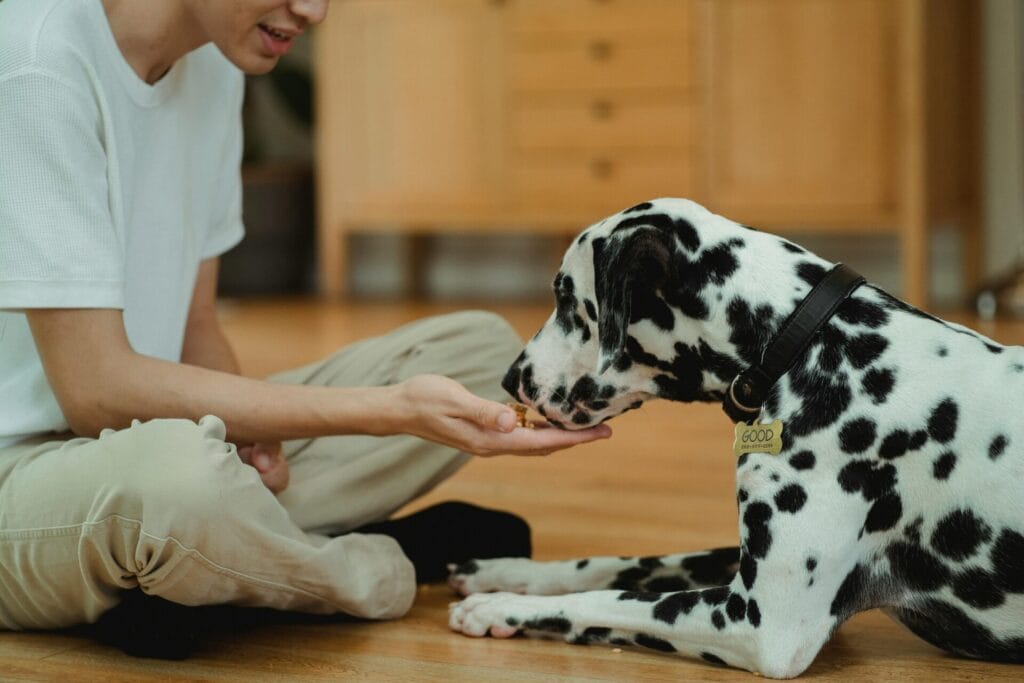
Your dog’s brain is on a 3 to 5 second timer. If you don’t reward them for a behavior they exhibited within that tiny window, they’re going to associate the treat with whatever it was they were doing. A comfy place like a dog bed can help with focusing on training.
Enrich your dog’s training experience with some interactive dog toys and keep him engaged. Add a few essential dog gear to your dog’s repertoire of supplies and help him to excel with the training by having the right tools for success. One of the most effective tools in dog training is positive reinforcement to encourage good behavior.
This is where clickers can really help you out. With a clicker, you can mark the very instant your dog sits, stays, or drops that shoe — even if your hands are buried in a treat pouch or holding the leash. Think of the clicker as a way to snap a picture of what your dog just did, giving you a few extra seconds to actually deliver the reward. Another idea is to add a DIY dog fence to create a safe area for your dog to practice her training while minimizing the distractions.
How dogs link rewards to behavior (and the window you can’t miss)
The secret to successful dog training is not necessarily what you reward, but when you deliver that reward.
Dogs associate things based on temporal contiguity which means that they make associations to what happened just before they got a reward. You have about 1-2 seconds to mark a behavior before your dog moves on to something else.
If you’re not careful, you might accidentally reward sitting instead of lying down. This is one reason why clicker training is so effective – you capture the exact moment the dog is doing the right thing.
Your dog isn’t being stubborn, he’s just connecting dots you didn’t intend to draw. Precise timing is the key to teaching your dog what you intended.
Using a clicker as a timing bridge if your hands are full
Clickers solve a practical problem: sometimes we can’t always give a treat at the exact moment our dog does something right.
Maybe you’re across the room fumbling with the treat bag, or you’re hands are tangled up in the leash.
Most likely the clicker acts as a bridge. This marks the exact moment of good behavior while you go get the reward.
The click is a distinctive sound that tells your dog “Yes, that’s it!” and keeps your dog focused on you even if the treat comes a few seconds later.
This buys you essential time without breaking the learning chain.
It is like a bookmark that holds your dog’s place until the actual reward arrives.
It’s especially handy during fast-paced training sessions.
10 Training Hacks That Actually Speed Up Results
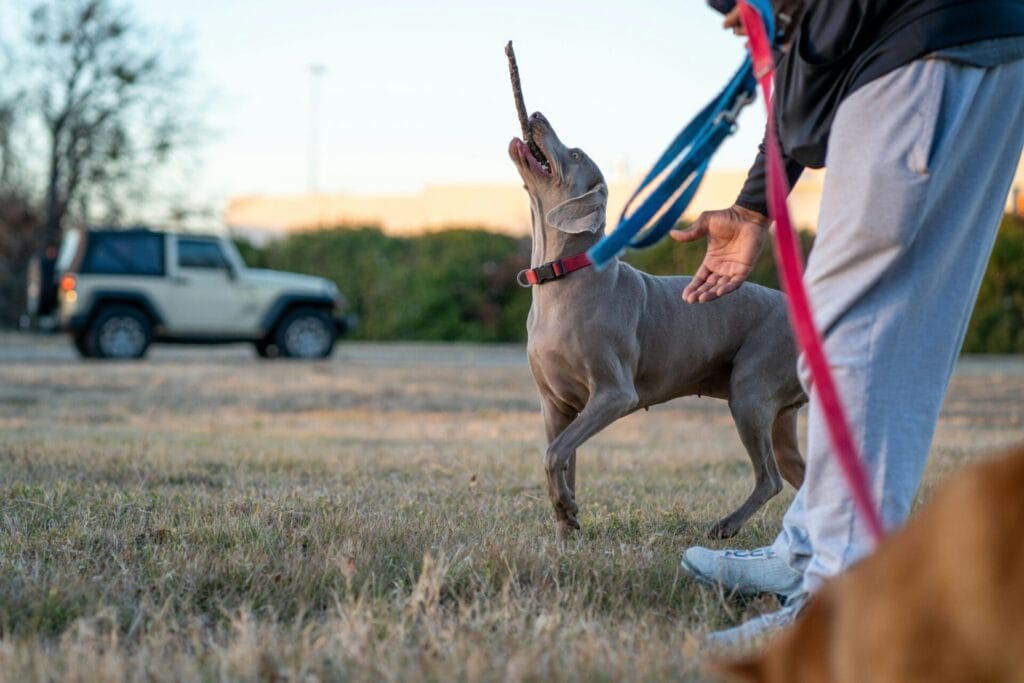
You are confident in the timing and now it is time to give you a little edge with techniques that cut your training time in half.
These aren’t gimmicks; they are changes in when, how, and what you practice, working with your dog’s natural drives and attention span.
The best trainers don’t work harder; they work smarter. These five hacks will prove it.
Capture good behavior instead of always prompting it
Most dog owners miss out on their best training opportunities because they are waiting for the “right time” to practice. Instead, keep treats in your pocket and look for naturally occurring good behaviors throughout the day.
Let’s say that you dog sits quietly by the door, or lies quietly down, or looks at you during a walk. Immediately give a “yes” and then offer a reward (food, play). This process is called capturing because you are catching your dog’s behavior as it happens. It is easier to teach a dog a new behavior using capturing than it is to teach the dog to offer it after you have cued it. This is because the dog learns that offering the behavior is more likely to earn a reward. Another way to increase the likelihood that your dog will offer a new behavior is to use the behavior for which you will give the reward. For example, if you want to teach your dog to sit on command, every time the dog offers to sit (i.e. when she sits down on her own) “yes” and then give a reward. Being consistent about the behavior you will reinforce (i.e. sitting) is the key to being successful. Staying calm and clear also helps.
If you want to further strengthen your dog’s health and behavior, consider making some homemade dog food recipes for your dog. Choosing the right ingredients for your dog can go a long way. A balanced diet is always important and nutritious meals can make your dog feel happier and more energetic. Providing nutritious homemade meals for your dog high in fiber and low in carbohydrates can be beneficial for your diabetic dog.
Capture 3-5 good behaviors everyday for two weeks, and your dog will be so busy trying new things to earn rewards!
Train before meals, not after, to spike food motivation
When your dog has just devoured dinner, that kibble in your hand is about as interesting to them as a used tennis ball.
If you train before your dog has had the chance to eat something for the day, you’re holding pure gold. A hungry dog is a motivated dog. Because of the biological drive behind the need to eat, the treats we use to reinforce our dogs are so much more valuable to a dog that hasn’t eaten anything all day. During these sessions, you will see faster responses, more focus and better retention.
This doesn’t mean starving your pup, just strategic timing. If you feed twice a day, train before breakfast and dinner.
Keep the length of the session short, only 5-10 minutes, so that your dog does not get frustrated. Finish training with your dog’s regular meal, and reinforce that when she does good work she gets to eat her bigger meal.
It’s simple scheduling that amplifies your training efficiency.
Keep sessions under 5 minutes to prevent mental fatigue
If you’ve ever been in the classroom of a skilled dog trainer, you will know that they don’t mess around. They get on with training and keep that dog sharp and focused. Dogs can tire out much faster than humans when they are learning something new, so short bursts of training can make a big difference in how much your dog retains.
Here’s how to maximize those precious minutes:
- Set a timer for 3-5 minutes – when it beeps, you’re done, even if things are going great
- End on a successful repetition—always finish with something your dog nails, not a mistake
- Wait at least 30 minutes between sessions – this gives their brain time to consolidate what they’ve learned
- Do 3-4 sessions daily – consistency matters more than duration
You’ll see results faster with micro-sessions than with long hours of marathon training.
Use a release word so your dog knows when to stop holding a command
If your dog knows how to sit, but still gets up and breaks the sit, you may be in need of a "release word". A release word is a word you say when you are done with the command. Without a word to release your dog from a sit, your dog may break the sit at any point wondering if they are still supposed to be in it.
Pick a simple word (like “okay”, “free”, or “release”) and say it every time you’re ready to let your dog out of a command. For example, after your dog “stays” for 10 seconds, say your release word and then reward your dog.
It teaches your dog to know the difference between WORKING and RELAXING. That is, your dog is going to learn to “hold” a command until they hear that magic word, not until they feel like moving.
Like giving them permission to stop being a good statue. This single hack prevents early breaks and builds rock-solid duration on commands.
Teach “place” to solve 90% of unwanted behaviors at once
If I could teach my dog only one command to fix jumping on guests, begging at dinner, door dashing and counter surfing, that command would be “place”. Place is a powerhouse command that sends your dog to a designated spot (mat or bed) where they stay until released.
Here’s how to train it:
- Start with a visible target – Use a raised dog cot or textured mat so your dog clearly understands the boundary.
- Lure them onto it – Toss treats on the place, then reward them for staying there for 5 seconds.
- Add your verbal cue – say “place” as they step onto it, gradually fading the lure.
- Increase slowly over time – Build up to 30 minutes while you eat dinner or answer the door.
You’ll essentially be creating an “off” switch for your dog’s chaos.
Fade treats gradually using a variable reward schedule
But now that your dog listens to your command “place” you might find yourself becoming the human treat dispenser who can’t get your dog to sit down without bribing her with food.
How do you fix this? Easy, the solution is implementing a variable reward schedule. In a variable reward schedule you randomise when you will reward a correct behavior, so you don’t reward it every time it is performed, but every third time or every other time or occasionally.
This unpredictability actually strengthens the behavior because your dog never knows when the jackpot’s coming, which keeps him motivated and engaged. Think of slot machines keeping gamblers hooked.
In as little as two weeks, your dog will be just as responsive and attentive, but you will have trained behaviors on command with just the occasional treat and verbal praise.
Train in 3 different locations before calling a command “learned”
When your dog learns a new command in your living room, she’s really learning how to do the command “sit” in the living room on the carpet near the couch.
This effect is known as context-dependent learning, and it explains why your perfectly obedient indoor dog suddenly forgets the word “stay” at the park.
The solution? Practice each command in three distinct environments before considering it mastered:
- Home base: Start where distractions are minimal, like your quiet living room or bedroom.
- Moderate challenge: Go to your backyard or a calm street with occasional passing cars.
- High distraction: Test at a busy park, pet store, or anywhere with other dogs and people around.
- Bonus location: Add a friend’s house to really reinforce the behavior across different contexts.
This approach builds true understanding, not just location-specific responses.
Use your dog’s name only for good things — never corrections
When you say your dog’s name, it should light up his brain like a notification on your phone – every time he hears it, he should get a “good” feeling.
Once you say “Max!” and follow it with a correction, you’ve poisoned the cue. Now your dog hesitates when called, not sure if trouble is coming.
In case the dog gives a wrong response, I would simply use a neutral “eh-eh” or “nope” to correct and not use his name at all. I would use his name ONLY when he is called to be given a treat, to play with him or to praise him. In this way, his name will always be positively charged, so that he will respond faster when we need him to.
Test this principle: Try it yourself. Say the name of your dog right now. He should perk up and his tail should wag.
If he looks worried or ignores you, you’ve probably been pairing his name with bad things. You can start to rebuild that association today.
Shape complex behaviors by rewarding tiny steps forward
Most dog owners will try to teach “roll over” in one giant leap, and then get frustrated when their dog just stares blankly at them.
Breaking a behavior down into micro-steps is called shaping. Shaping is used when you want to get your dog to perform a trick that seems impossible.
Here’s how to shape any complex behavior:
- Reward the tiniest movement toward your goal – If teaching “spin,” reward even a slight head turn in the right direction, roughly 15-20 degrees at first.
- Raise criteria gradually – Once your dog nails one step consistently, perhaps 8-10 successful repetitions, add the next small piece.
- Keep sessions ultra-short – Three to five minutes max prevents frustration and burnout.
- Accept imperfect progress – Your dog’s awkward half-spin deserves celebration, not criticism.
End every session on a win, even if you have to make it easy
Nothing will quash your dog’s enthusiasm faster than to end a training session on a failed attempt. Your dog remembers that final moment and it colors his attitude towards the next session.
If you are having difficulty with a difficult behavior, drop back to a behavior that your dog already knows well. Ask for a sit, a down or touch command. Reward generously, and end with genuine praise and celebration.
This prevents you from getting frustrated and your dog from becoming frustrated. That way you can feel good about the success and look forward to having fun again tomorrow!
Even the most professional trainers do this when sessions get too hard because ending strong matters more than one more rep.
Why Your Dog “Knows It at Home but Not Outside”
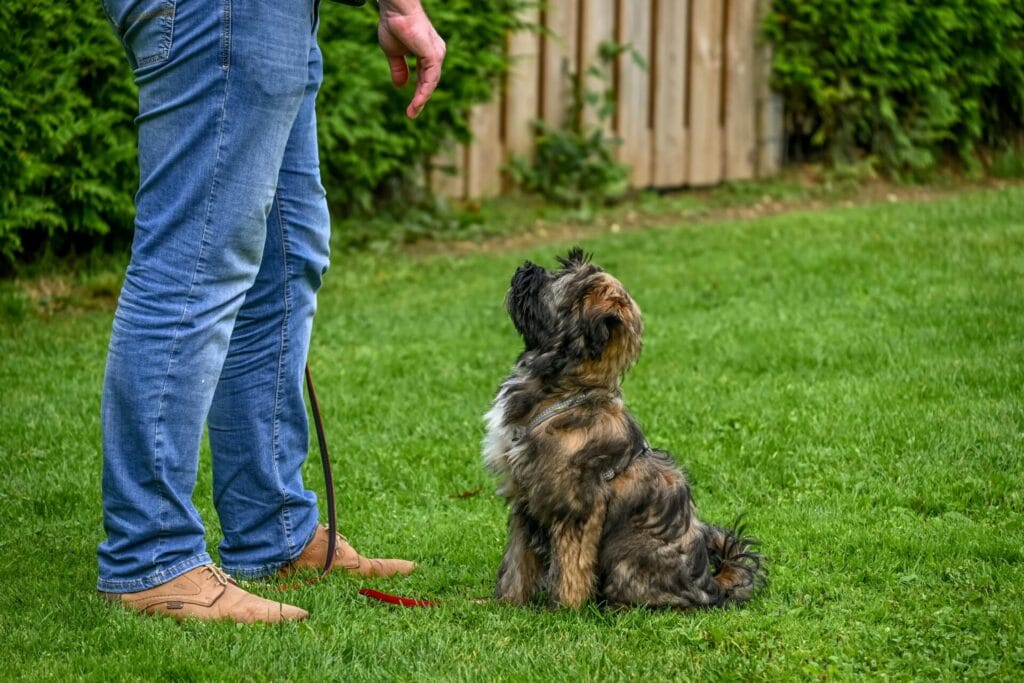
My dog nails “sit” in the living room, but acts like he has never heard the command at the park. No he is not just being stubborn.
Remember that dogs don’t generalize like we do, which means that they will associate commands with specific environments, distractions, and even with your body language in that exact context.
The good news is that you can teach your dog proper generalization in a systematic 3 week proofing plan that will build skills in different settings over time. The first step in proofing is to get your dog comfortable with the place you’ll do the actual training.
Generalization explained: how dogs actually learn context
I’m sure everyone who owns a dog has experienced this frustrating scenario…. Fido sits just fine in your living room, but when you step out on the sidewalk, he acts like he’s never heard the word “sit” in his life.
“This isn’t stubbornness. This is generalization, or rather, a lack thereof.
Dogs learn commands in context. That means that they learn what “sit” means in one situation, and not in others. They need to be trained to know that “sit” means the same thing everywhere.
Here’s what your dog actually processes:
- Location cues: Your kitchen floor feels, smells, and looks different than grass.
- Environmental distractions: Squirrels, other dogs, and car sounds are novel stimuli.
- Your body language: You stand differently, hold the leash, and stand differently outside.
- Stress levels: New environments trigger arousal, making focus harder.
You’ll need to actively teach each command in multiple settings.
A 3-week proofing plan to fix this fast
We are talking about three weeks of practice here. Every week gets progressively harder than the last, so it is important to have a grasp on the first week before we move on to the next one.
Week one: Adding mild distractions to home environment, such as a bouncing ball or doorbell sounds when practicing commands.
Week two of training, we head out to the driveway or front yard. Introducing you to outdoor smells and sights.
In week three, you will continue to practice in new environments. You will practice in progressively busier areas and environments, starting with quiet parks at off-hours and slowly moving on to more populated areas.
Each session should last 5-10 minutes, repeated twice daily. This way your dog will learn to sit anywhere you ask him to sit, not just in your living room.
In other words, you are rewiring their understanding through consistent, incremental exposure to the real world.
The One Mistake That Slows Down Every Dog Owner
And you’re probably making the same mistake right now, and it’s costing you weeks, even months, of training progress.
When you say ‘sit, sit, SIT’ or ‘come, come here, come on’ multiple times, you are inadvertently teaching your dog that the first command doesn’t count.
Your dog will learn to wait until the third or fourth repetition of the cue before responding because that is when you usually add the urgency, move closer or reach for the treat.
Repeating commands and why it teaches your dog to ignore you
Did you know that when you say sit to your dog, three times in a row, you are actually training your dog to wait for the third command and sit.
It weakens the value of the word. With each repetition, your dog learns that the first “sit” doesn’t really count.
Here’s why this happens and what to do instead:
- Give the command once – Say it clearly, then wait 5 seconds for compliance.
- Use a consequence immediately – If your dog doesn’t respond, gently guide them into position or take away their reward.
- Reward instant obedience – The faster they respond, the better the treat or praise they get.
- Reset and try again – After guiding them, wait thirty seconds before commanding again.
The readers will develop respect for your words from day one.
Reading Your Dog’s Stress Signals During Training

Your dog won’t tap you on the shoulder and say, “I need a break,” but he communicates through body language that most owners miss.
Here are some subtle signs of stress that your dog may exhibit, such as yawning when they aren’t tired, licking their lips between commands or turning their head away from you. These signs are letting you know that your dog is starting to get overwhelmed and may need a 5 minute break.
Learning to spot these red flags will save you weeks of frustrating training sessions because a dog under stress simply cannot learn anything new.
Subtle signs your dog is overwhelmed and needs a break
Dogs also communicate their stress during training sessions through body language that we can often miss if we’re focused on commands and treats.
Watch for these warning signs that indicate your dog needs a break:
- Whale eye – When your dog shows the whites of their eyes, forming a crescent moon shape, they’re stressed or uncomfortable.
- Excessive yawning or lip licking – These are calming signals that appear when your dog isn’t tired or hungry, indicating mental overload.
- Sudden scratching or sniffing – Your dog avoids eye contact and seems distracted during commands they know.
- Stiff body posture – Notice tension in their muscles, a tucked tail, or ears pinned back, signaling they’re shutting down emotionally.
Recommended Tools That Genuinely Help
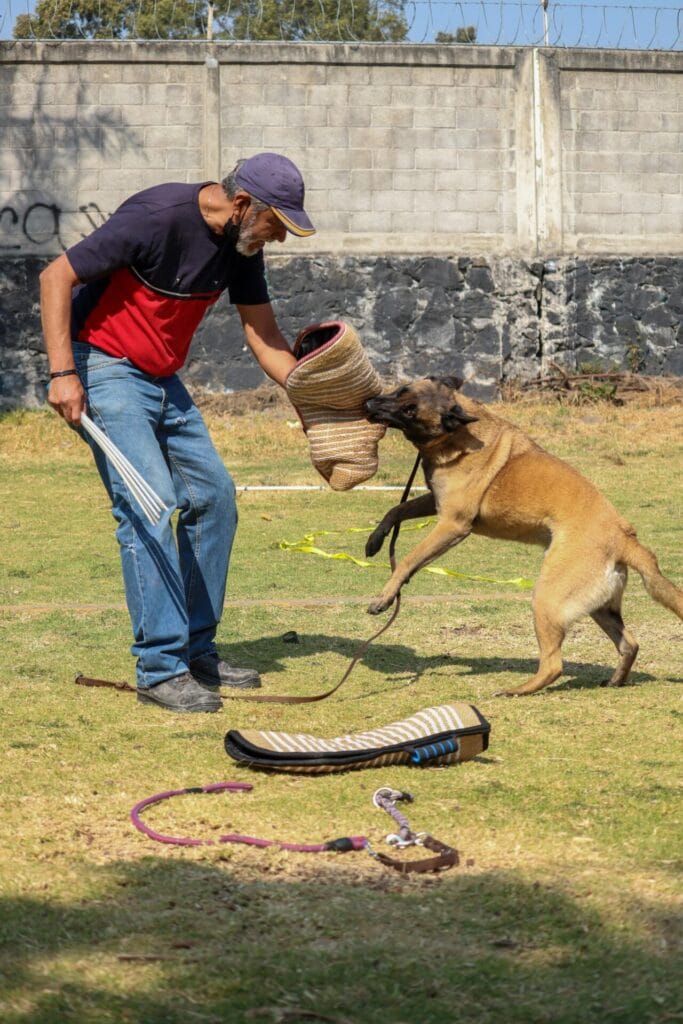
You don’t need a garage full of gear to train your dog, but three items in particular will make your life a whole lot easier.
To help ensure treats stay accessible, consider having a sturdy treat pouch on you. A 15-30 foot long line is a great way to give your dog freedom while you maintain control when practicing recall, and a clicker can be used to mark exact behaviors (or at least very specific behaviors) in split-second timing.
None of these things are “fluffy” extras; they are practical and will help you make your training sessions easier and clear your communication with your dog.
Treat pouches, long lines, and clickers worth buying
The right gear can make training a little less frustrating and a lot more effective.
Here’s what you’ll actually use:
- Treat pouches with magnetic closures – They snap shut instantly, keep kibble fresh, and won’t spill when your dog suddenly lunges at a squirrel. Look for ones with belt clips and washable liners.
- Long lines (15-30 feet) – These give your dog freedom during recall training while you maintain control. Choose lightweight biothane material, which won’t absorb water or get muddy like cotton versions.
- Box clickers with wrist straps – The i-Click or StarMark models make consistent sounds and stay attached during chaotic training moments.
- Bait bags with drawstring tops – They’re cheaper than magnetic pouches but still beat pockets full of crumbs.
Frequently Asked Questions
What Age Should I Start Training My Puppy?
Start training your puppy as early as eight weeks old. At this age your puppy can learn simple commands such as sit, stay, and come.
How Long Should Each Training Session Last?
Keep your training sessions between 5-15 minutes. Studies show that dogs retain 80% more information after a short training session verses a long one. The more training sessions you do, the better results you will see.
Can Older Dogs Still Learn New Tricks and Commands?
You can definitely teach an older dog new tricks! It might take a little more patience and repetition, but with older dogs you might have to modify your approach a little.
Should I Use a Professional Trainer or Train Myself?
Want to save money and bond with your dog? You can train yourself with simple commands and positive reinforcement. However, if you’re struggling with aggression or other serious behavioral issues, it may be best to hire a professional dog trainer.
How Do I Stop My Dog From Barking Excessively?
Before you can stop the dog from barking, you need to know what’s setting your dog off. Once you know the triggers, you can teach the dog the “quiet” command. Reward the dog when he stops barking and then ask him for a different command, such as “sit,” “down,” or “come.” Do not reward attention seeking barking by giving your dog attention. Instead, redirect him into performing another command.
Conclusion
You are well-equipped with the tools and tricks of the trade and can recognize the various stress signals. Now all you have to do is use them, instead of watching training videos on your computer at 2 A.M. while your dog chews your favorite pair of shoes. Your dog is not stubborn; you are just inconsistent. Set the timer for 3-5 minutes, grab the clicker, and stop blaming your dog for your procrastination. Training starts now.

Amr Mohsen is a software engineer who traded his keyboard for a leash — at least on weekends. His love for dogs inspired him to share what he learns as a dog owner and enthusiast, bringing a detail-oriented, research-driven perspective to every article he writes. If it’s about dogs, he’s probably already looked it up twice.