If you’ve ever watched those perfectly behaved dogs at the park, and wondered what their owners know that you don’t, read on. Training your dog doesn’t have to be magic tricks or endless repetition, it’s all about understanding how your dog thinks. From stubborn puppies, to older dogs with bad habits, the right approach can make all the difference, and it starts before you even say your first command.
Key Takeaways
- Start with “leave it” to build impulse control, then gradually add distractions and practice in different locations for reliable responses.
- Keep training sessions short: 5-10 minutes for puppies, 15-20 minutes for adults, ending while engagement remains high.
- Use high-value treats exclusively for training, rewarding specific behaviors immediately with marker words like “yes” or “good.”
- Ensure all household members use the same commands and rules to avoid confusion and keep training on track.
- Practice recall daily with high-value treats, never calling your dog for unpleasant tasks to maintain positive associations.
Start With These 5 Rules Before Any Training Begins
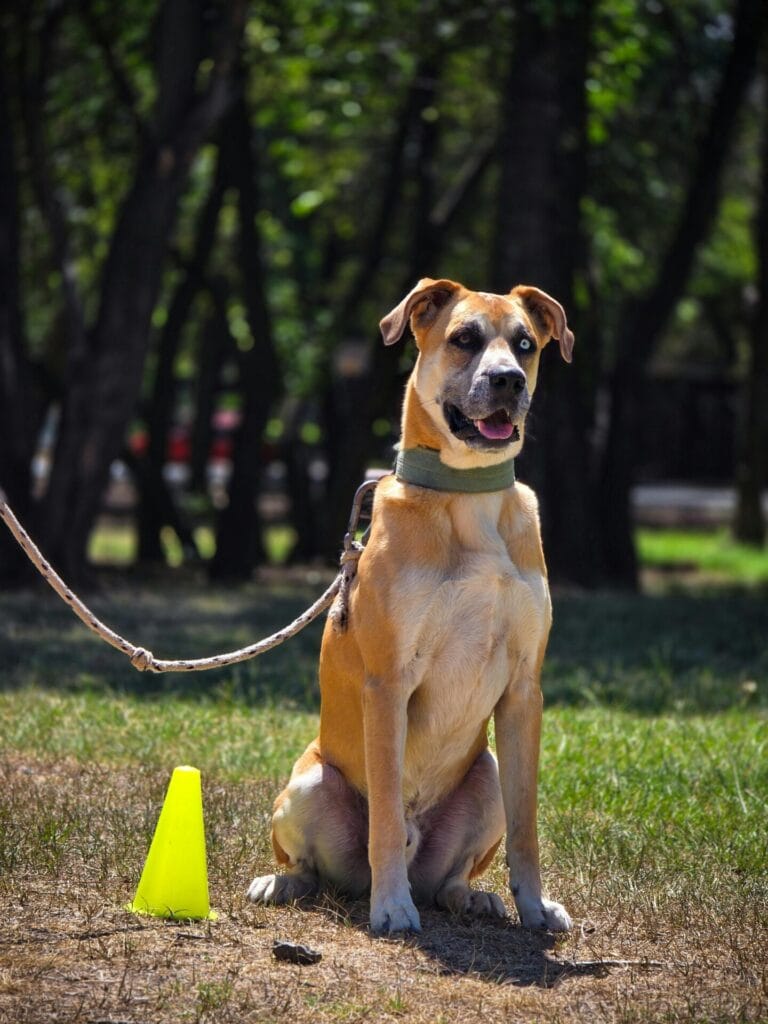
And before you even get to the point of teaching your dog to “sit”, it is important that you realize that a three month old Golden Retriever will not respond the same way as a seven year old Beagle. And that’s perfectly normal.
Your dog’s breed instincts, energy level and life stage all dictate a training blueprint that you can’t ignore.
However, the biggest training killer is inconsistency. When you let your pup on the couch today, but scold them tomorrow, you are essentially hitting the reset button on everything they have learned.
Moreover, you should know that positive reinforcement techniques can be a great way to help your dog learn new things and it can also strengthen your bond with your dog. So, go for it.
Why Your Dog’s Breed and Age Change Everything About Training
If you are working with a bouncy 8 week old Golden Retriever puppy you will need to use completely different training strategies to if you were working with a 7 year old German Shepherd or a stubborn 2 year old Beagle.
Herders, like Border Collies, have to be mentally stimulated. You have to have a lot of different commands and make them do a lot of different things. Hounds follow their noses and your commands second. Your dog’s learning style can also affect how well you communicate with him. Choosing the right dog names can also help make a stronger bond with your dog. Ensuring you have the right dog gear essentials can also make your dog more comfortable and focused in the process. A comfortable dog bed can also help your dog relax and focus when training.
Puppies under 16 weeks have attention spans of only 5-10 minutes so you should keep the sessions short and more frequent. Adult dogs can handle 15-20 minutes training at a time but by this time they will have formed some habits you need to work around.
Senior dogs (over 7 years old) learn slower, but respond well to gentle, patient repetition.
Your dog’s training schedule, amount and type of exercise, and the nature and frequency of rewards must be tailored to his particular stage of development and breed characteristics. Regular grooming practices can make him feel more comfortable during training sessions.
The One Mistake That Resets All Your Progress (And How to Stop It)
What is the biggest training saboteur for your dog? Maybe it is not even your dog, but perhaps your dog’s inability to keep his attention on you. The biggest training saboteur is inconsistency.
If you say ‘down’ but your dog takes it to mean ‘lie down’, or you sometimes ignore the jump and sometimes give a signal, you are teaching your dog that commands are optional suggestions. Dogs thrive on predictability – if you give mixed signals, they have to start from scratch each time.
Stomp on this progress-killer: Hold a family meeting before training begins to agree on exact command words, hand signals, and consequences for every behavior. Write them down if necessary.
It is very important that you enforce the same rules 100% of the time. It doesn’t matter if you’re watching a movie or you have friends over. Don’t waiver or let your guard down – it only confuses your dog.
15 Dog Training Tips That Actually Work
You have the foundation in place. Now it’s time to get tactical with techniques that actually create lasting behavior change.
These tips are not theory. They are real life methods that work with your dog’s natural learning patterns.
If you want to see faster progress, fewer setbacks, and a dog that is excited about learning, then you’ve got to master these five methods.
Tip 1: Use High-Value Treats Your Dog Goes Crazy For
Every dog has that one irresistible treat that turns them from a casual listener to a laser-focused student. Finding that treat is the first step towards effective training. You can use homemade dog chew treats in your training regimen to provide both rewards and entertainment for your pup. Using high-quality ingredients in your homemade treats can enhance the flavor and make them even more enticing. You can even make your own treats using simple recipes for DIY dog treats that are nutritious and delicious.
It is best to avoid giving your dog foods like pieces of cooked chicken, freeze dried liver, or cheese that he doesn’t get at meal times. You should give your dog treats that are the size of a pea, that way you can give him a lot of treats without overfeeding him.
Test different options to discover what makes your dog’s eyes light up:
- Small cubed cheese (cheddar or mozzarella work wonderfully)
- Freeze-dried meat treats from pet stores
- Cooked chicken breast cut into tiny pieces
- Hot dog slices for the truly food-motivated pup
Save these treats for training only. Your dog will be so excited and enthusiastic to do whatever it takes to earn one of these high-value treats. And, using high-value treats during training can only help your dog learn.
Tip 2: Keep Sessions Under 10 Minutes (Science Says So)
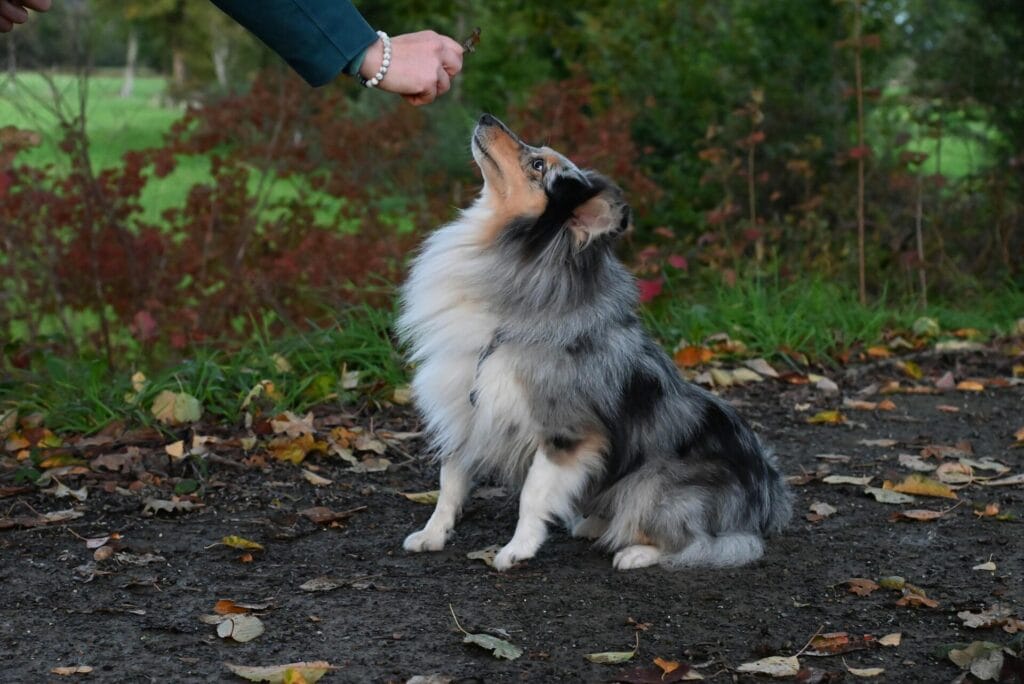
It may just be that your dog’s attention wanders after just a few minutes of practice. Recent research on dog cognition has found that dogs’ attention can only be optimally sustained for 5-10 minutes of training. Indeed, this aligns with their natural attention span as hunters, for which extended periods of sustained attention would not have been beneficial for survival.
You will get much better results doing three 8-minute sessions, once in the morning, once in the afternoon, and once at night, than one 30-minute session. By doing three 8-minute sessions throughout the day, you are giving your dog’s brain the opportunity to consolidate the information between each session, which will help strengthen the neural pathways in your dog’s brain by what is known as distributed practice.
Ending when your opponent is still playing with the ball means that he will look forward to the next round. And not dread it.
Tip 3: Say the Command Once — Repetition Kills Obedience
Do short training sessions mean nothing if you’re accidentally training your dog to ignore you? If you repeat sit-sit-sit or down-down-down you’re training your dog that the first command is optional. It should be said once and then you wait 3-5 seconds for your dog to comply.
If your dog does not respond, guide him into position without repeating yourself. This builds stimulus control, where one command equals one action.
Common mistakes that undermine your authority:
- Repeating commands in increasingly louder voices
- Adding extra words like “come here, Buddy, come on, let’s go”
- Saying the command while your dog is distracted
- Using different variations of the same command inconsistently
So your dog has super hearing. So it heard you the first time. Make that first command count every time.
Tip 4: Always End on a Win
If your session ends with frustration or failure, your dog will remember this until the next time he is trained.
Not every session should end on a negative note. You don’t want your pup to leave feeling like they haven’t accomplished anything. It’s ok to ask for something easy that you know they can do, and reward them. This way they leave on a positive note. For instance, if your pup is having a hard time with the “stay” command, switch it up and ask them for the “sit” command, which you know they can do, and reward them.
This will leave them with a positive association with the time spent in training, which in turn will keep their motivation high for tomorrow. In the same way, you remember the feeling of that great ending after leaving the movies.
Sessions should be 5-10 minutes for puppies and 15-20 for adult dogs. Always quit while you’re ahead, before your dog gets tired or bored.
Tip 5: Reward the Behavior, Not the Dog
That’s important because dogs learn by association, not abstraction, and by naming the behavior you are providing a verbal bridge to help him associate the action with the reward.
Key ways to reward behaviors effectively:
- Say the behavior’s name within one second of completion
- Say your marker word (“yes” or “good”) before treating
- Keep praise specific to avoid confusion during training sessions
- Pair verbal markers with treats for stronger reinforcement
Your timing creates clarity, and clarity accelerates learning.
Tip 6: Teach “Leave It” Before You Teach Anything Else
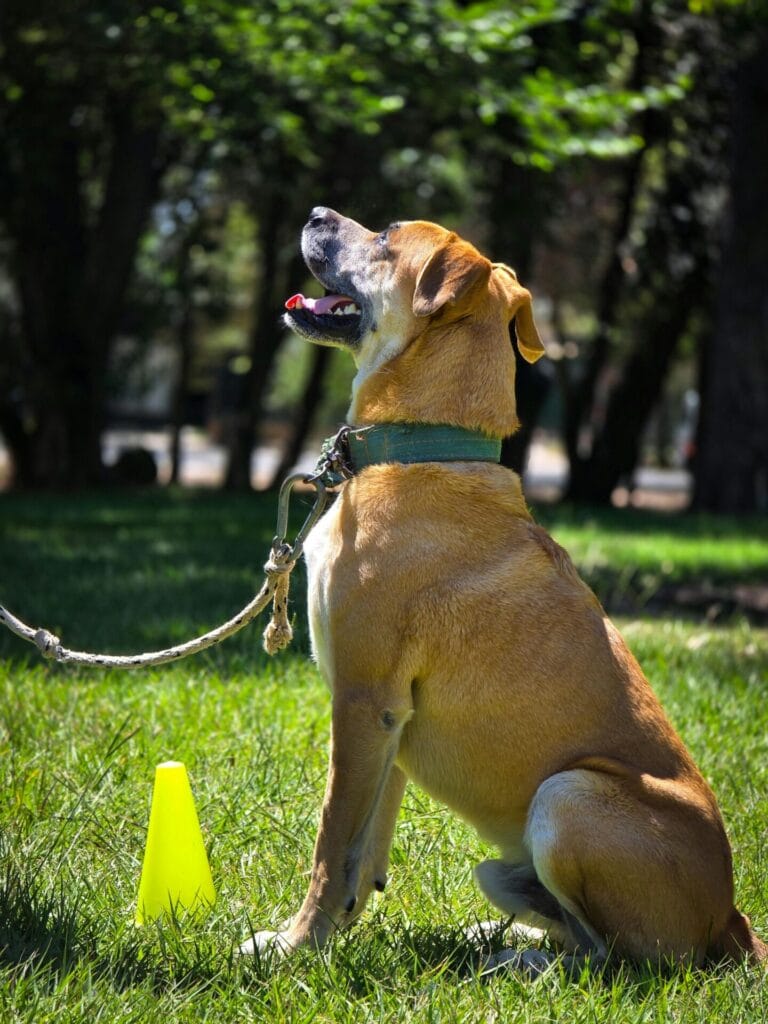
Before your dog masters “sit” or “stay” he will need to learn impulse control. “Leave it” is the command used to keep your pup from grabbing chicken bones off the sidewalk, your toddlers snack from their hand, or a unknown substance found in the park.
Start by holding a treat in your closed fist. When your dog stops pawing or sniffing, say “leave it” and reward with a different treat from your other hand. Practice this three to five times daily for one week.
Start off easy, then gradually increase the difficulty by placing treats on the floor and then adding distractions such as squeaky toys. You can train for obedience’s sake, but the ultimate goal is to teach your dog self-control that could mean life or death.
Now, having mastered the first command, every other command becomes easier.
Tip 7: Train in Different Locations to Proof the Behavior
For instance, the perfect “sit” in the living room may become a confused head tilt at the grocery store parking lot. Dogs do not always generalize commands to different environments.
This can happen, but you will have to proof this behaviour, which means you will have to train your dog with commands in various situations, but with increasing distractions.
Start with low-distraction areas like your backyard, then gradually progress to busier locations:
- Quiet neighborhood streets during off-peak hours
- Parks with moderate activity where other dogs are visible
- Pet store entrances with shopping carts and foot traffic
- Outdoor cafés where food smells create temptation
Each new environment essentially resets your dog’s learning, so expect some regression at first.
Practice your command at least 10-15 times in one location before moving to another more challenging location.
Tip 8: Fix Leash Pulling With This One Drill
Does your dog pull on the leash and turn your peaceful walks into arm wrenching battles? Learn the simple “red light, green light” drill that will have him walking nicely on leash in just two weeks!
The moment your dog starts pulling, you become a statue. Don’t walk for another step, and wait until the leash is slack, even if it means standing around on the sidewalk for 3 minutes.
If your dog is still pulling, begin walking again. Quickly they will learn that if they pull, they are getting nowhere fast and if they are on a loose leash, the adventure is still moving forward.
Do this drill twice daily for 15-20 minutes and you will notice dramatic improvements within days. This is more about being consistent than anything else. Remember that you should never reward pulling by continuing forward.
Tip 9: Use a Marker Word or Clicker to Pinpoint the Moment
Timing is everything, and as most dog owners know, it can be very difficult to time the exact moment your dog does the right thing.
Marker training can be done with either a clicker or a word such as “yes” used to mark the desired behavior. The click or the word lets the dog know exactly what he did right.
Here’s how to get started:
- Charge your marker: Click or say “yes,” then give a treat immediately, repeating 10-15 times until your dog perks up at the sound
- Mark during the behavior: Don’t wait until after, capture the exact moment it happens
- Follow with rewards: Every mark earns a treat, especially during initial training
- Stay consistent: Use the same marker word or clicker sound every time
Tip 10: Never Train a Hungry or Over-Excited Dog
However, there is one mistake that most trainers make that can sabotage their session from the get go and it’s working with dogs in the wrong state of mind. If your dog is ravenous, chances are they aren’t going to pay any attention to you as they are only interested in getting food into their belly. In the same respect, if your dog is over-excited they aren’t going to be able to listen to you as their brains are filled with adrenaline.
Wait at least two hours after meals to train. You should give your dog plenty of time to digest and settle, though. If your dog bounces off the walls with excitement, take him for a 15-minute walk before training. You want a calm, attentive dog, not a frenzied, distracted one.
This is a bit like trying to teach calculus to someone who really needs to go to the bathroom. No matter how clearly you instruct him, he will not be able to focus.
Tip 11: Teach Your Dog to Settle on a Mat
One of the most versatile skills you can teach your dog is settling on a mat. And this single behavior can solve dozens of real-world problems.
Use this command at the vet’s office, at the dinner table and when company comes to visit. Begin with a mat or towel in a quiet area and lure your dog on it with treats. Once your dog lies down, mark the behavior and reward generously.
This skill prevents common behavioral issues:
- Jumping on guests when visitors enter your home
- Begging at the dinner table during mealtimes
- Reactive behaviors in stimulating environments like cafes
- Anxiety during grooming or veterinary appointments
Gradually increase how long your dog stays on the mat, adding distractions slowly.
Practice this in different locations to make it a generalised behavior.
Tip 12: Practice Recall Every Single Day
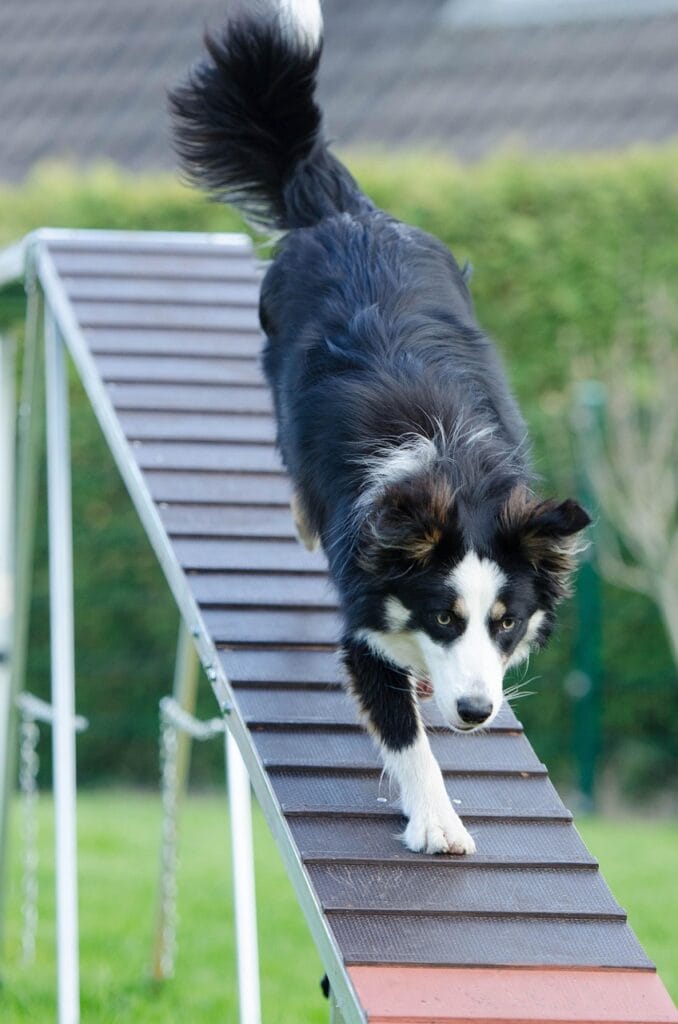
Your dog’s recall could literally save their life. It’s something you should consider when they go out for a walk or play and should be given the same attention as their food and exercise.
Start with the dog several feet away (indoors) and lure the dog back to you with a high-value treat (chicken, cheese, etc.) if the dog comes back, praise and give a treat. Repeat several times daily, gradually increasing distance and adding distractions (toys, other people, etc).
Never call your dog to do something he doesn’t like, for example, nail trimming or when it is time to go home. If you use a consistent cue word (for example, “come”, “here”, or their name), always make sure you sound excited when they respond.
If they are unreliable off-lead, continue to use a long training lead until they are more reliable.
Tip 13: Phase Out Treats Gradually (Not All at Once)
Treats aren’t supposed to be given forever, but pulling them away too soon can undo weeks worth of hard work, and leave your dog confused as to what changed.
Additionally, we want to switch to what is known as a variable reward schedule, where treats are given to the dog at a random rate (i.e. not every time that the dog performs a behavior). Believe it or not, the dog actually works harder for this type of reward.
It is suggested to begin by rewarding every other correct response and then after a few weeks to reward every third correct response.
Here’s your phasing strategy:
- Week 1-2: Reward 75% of successful behaviors
- Week 3-4: Drop to 50% while adding verbal praise
- Week 5-6: Reduce to 25%, mix in play or petting
- Week 7+: Occasional surprise treats only
Keep some treats handy for challenging situations though.
Tip 14: Socialize Beyond the Dog Park
The dog park seems like an obvious choice for socialization, but it’s actually one of the riskiest environments. Crowded spaces, unsupervised dogs, and varying skill levels often turn dog parks into chaos instead of learning experiences.
If you decide to try this, make sure to arrange a controlled playdate with one or two calm, well-mannered dogs.
Visiting places such as a hardware store or outdoor cafes will allow your dog to meet people and other dogs without over-stimulating them.
Parece oxymorón, pero no es tan malo como pueda parecer. Sign up for one of our classes and we will watch over your interactions.
Walk through different neighborhoods a few times a week to expose your dog to children, joggers, strollers and skateboards.
These scenarios are a much better way of teaching children how to act in real life. In a chaotic playground it’s difficult to teach anything at all.
Quality socialization means controlled, positive experiences, not quantity.
Tip 15: Address Resource Guarding Early Before It Escalates
Why do some dogs suddenly snap at you when you reach for their food bowl, while other dogs have no problem sharing their favorite toy? Insecurity, fear, or past experiences can teach a dog to protect valuable items.
As soon as you notice this behavior, it is important to deal with it because it can get dangerous and turn into aggression.
Start by teaching your dog that your presence near their resources means good things happen:
- Drop high-value treats near your dog while they’re eating, gradually moving closer
- Practice “trade-up” exercises, offering something better in exchange for what they have
- Never punish growling, as it’s your dog’s warning system communicating discomfort
- Work with a certified professional trainer if guarding persists or intensifies
You will build trust and reduce anxiety and create a dog that is relaxed when people handle their prized possessions.
When Training Stalls: How to Diagnose and Fix a Plateau
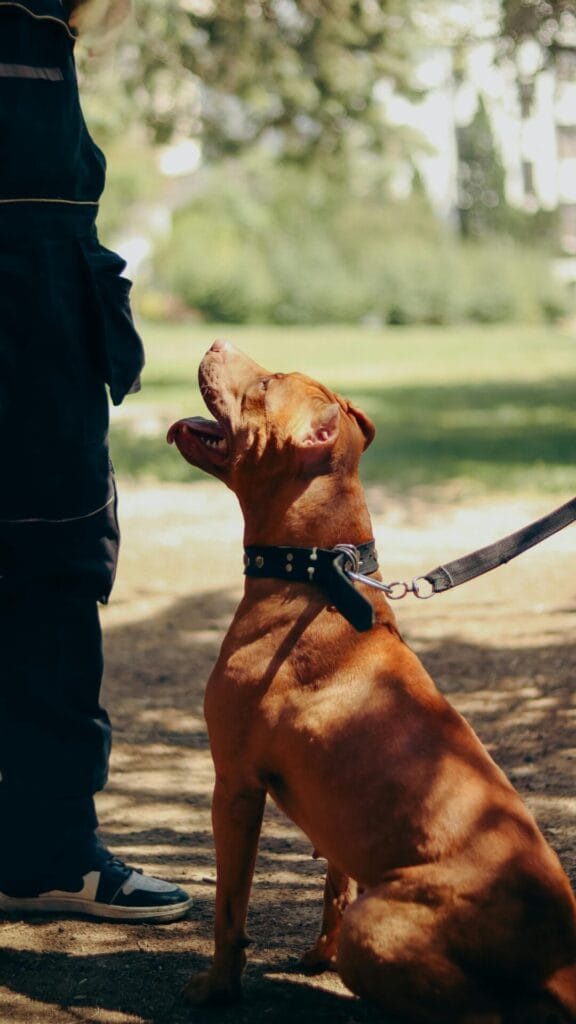
When your dog seems stuck on a command they almost had down, you’re probably hitting a training plateau and knowing when to push forward versus when to take a step back will make all the difference.
The 3-day rule gives you a simple framework: if your dog cannot do the same thing three sessions in a row, it’s time to change what you are doing instead of repeating the behavior.
This rule prevents you from accidentally frustrating your dog, or yourself, and keeps the momentum going.
The 3-Day Rule: When to Push and When to Reset
If your dog has been nailing the command you’ve asked for two days straight and suddenly acts like he’s never heard the word before, you’ve hit a training plateau.
When you’re consistently having a tough time getting your dog to do a particular behaviour during three sessions, it’s time to reset and simplify things.
Here’s when to push versus reset:
- Push forward if your dog succeeds 8 out of 10 times, even with minor hesitation or slower responses
- Stay put when success rates hover around 6-7 out of 10 attempts for consistent skill-building.
- Reset immediately if success drops below 50% for two straight days, indicating the task is too advanced
- Take a break after three frustrating sessions to prevent learned helplessness and training burnout
Tools Worth Buying (And What to Skip)
I can only imagine how overwhelming the dog training aisle must feel when you are trying to find that “miracle tool” for your dog.
Rather than invest in a 6-foot leash, flat collar or harness, and a variety of high-value treats like freeze-dried liver, a clicker (which costs about three dollars and makes marker training much easier), and Kongs, which keep my dogs busy and help with crate training.
Skip the retractable leashes, they teach pulling, and you have no control. Skip the prong collars or shock collars, they aren’t necessary for most dogs, and they are damaging to your relationship. Skip the fancy automatic treat dispensers, your dog doesn’t need them.
Start with the basics, and when you’ve mastered them, you can expand your toolkit to meet specific training needs.
Frequently Asked Questions
At What Age Should I Start Training My Puppy?
You should start training your puppy as early as 7-8 weeks old. At this age, your puppy is able to learn basic commands such as sit, stay, and come. Start early to reinforce good habits and bond with your new furry friend.
How Do I Stop My Dog From Barking Excessively at Strangers?
You will need to desensitize your dog to strangers by exposing them to strangers and by using positive reinforcement when they are quiet and command them to stay quiet or “look at me” when they start to get excited.
Can Older Dogs Learn New Tricks and Commands Effectively?
You have probably heard the saying, “you can’t teach an old dog new tricks”. This is not necessarily true. Your older pup will learn commands just as effectively as a young dog but you might need more patience or a shorter session with them.
Should I Use a Professional Trainer or Train My Dog Myself?
Although it’s possible to train your dog yourself, it’s better to hire a professional if your dog shows signs of aggression, anxiety or other complex behavioural problems.
How Long Should Each Training Session Last for Best Results?
you will feel like you are training forever, but keep the training sessions short (5 to 15 minutes each). This will help you to keep your pup’s focus and enthusiasm, and avoid mental exhaustion.
Conclusion
Think of training your dog as if you were tending a garden. You have planted the seeds with the foundational rules, watered them with consistent techniques and pruned away obstacles when progress has stalled. Now you have the tools in your shed to cultivate your garden. Your dog won’t bloom overnight, but with a little patience and daily care you will watch your dog grow into the well-behaved companion you have envisioned.

Amr Mohsen is a software engineer who traded his keyboard for a leash — at least on weekends. His love for dogs inspired him to share what he learns as a dog owner and enthusiast, bringing a detail-oriented, research-driven perspective to every article he writes. If it’s about dogs, he’s probably already looked it up twice.